DbcultAccessing Vault...
Cult Review
Senior Film Conservator
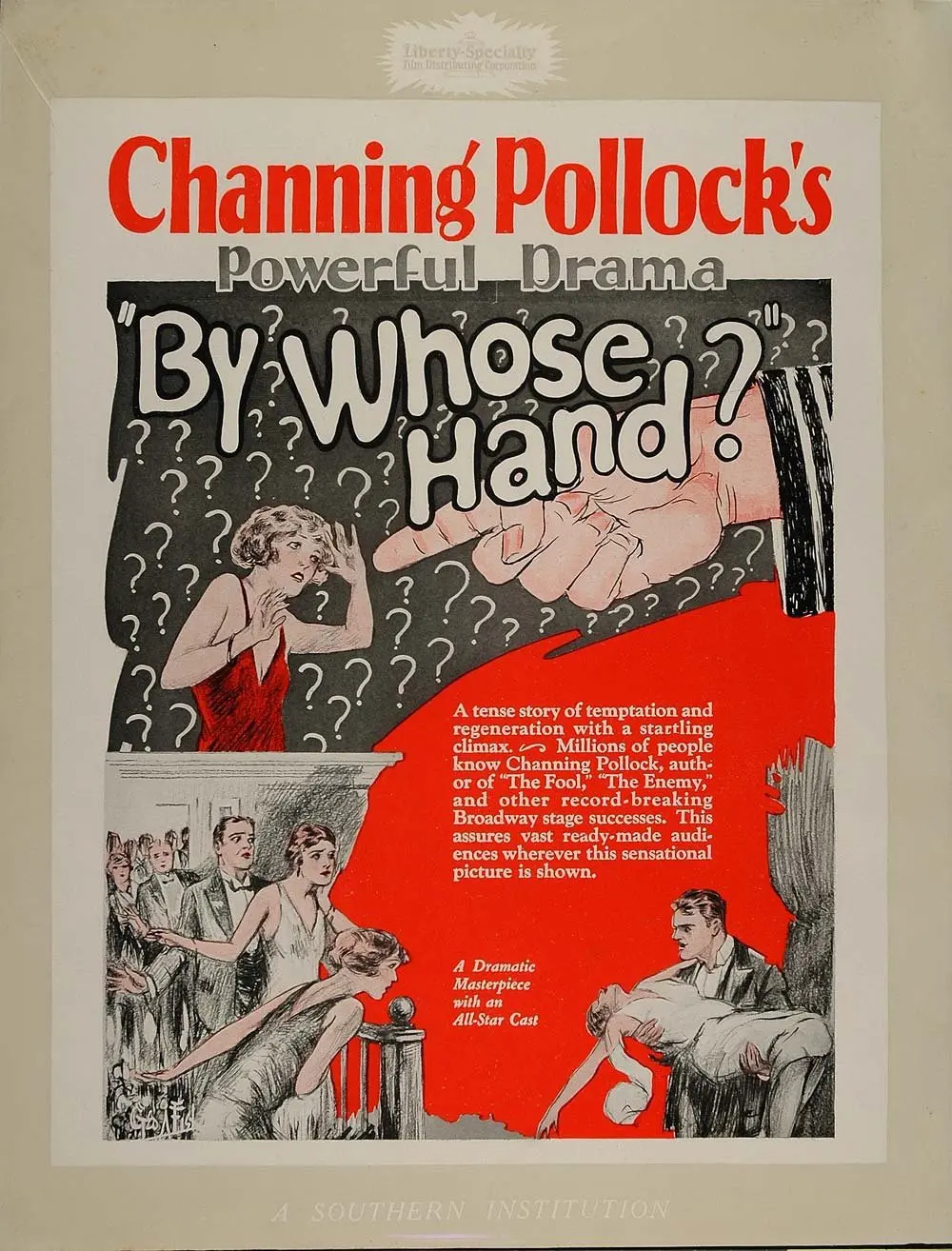
Is 'By Whose Hand?' a silent film that warrants your attention in the cacophony of modern cinema? Short answer: yes, but with a significant caveat. This isn't a casual watch; it's an archaeological dive into the foundations of cinematic storytelling, offering a unique window into how suspense was meticulously crafted before the advent of spoken dialogue.
This film is unequivocally for cinephiles, historians, and those with an appreciation for the subtle artistry of the silent era. It caters to an audience willing to engage actively with visual narrative, to interpret emotion from gesture, and to appreciate the historical context of its production. Conversely, if your cinematic palate demands rapid-fire dialogue, explicit exposition, and the high-fidelity soundscapes of contemporary blockbusters, 'By Whose Hand?' will likely feel like an arduous, perhaps even frustrating, exercise in patience. It's not for those seeking instant gratification or a passive viewing experience.
This film works because: It masterfully leverages the visual language of silent cinema to build palpable tension and character depth without a single spoken word, relying on the sheer power of performance and evocative cinematography.
This film fails because: Its pacing, while deliberate and effective for its time, can feel glacially slow to modern audiences accustomed to a faster narrative rhythm, demanding a significant adjustment in viewing expectations.
You should watch it if: You are fascinated by the evolution of film, curious about the art of visual storytelling, or a devoted admirer of early Hollywood's unique charm and challenges, particularly within the mystery genre.
The very title, 'By Whose Hand?', immediately conjures images of classic whodunits, a question etched into the silent frames of a bygone era. This 1920s mystery, penned by Marion Orth, stands as a testament to the ingenuity required to weave a compelling narrative when spoken words were yet to grace the silver screen. It's a film that asks its audience to lean in, to observe, to deduce – a true exercise in cinematic engagement.
To truly appreciate 'By Whose Hand?', one must first shed the conventions of modern cinema. This isn't a film to be passively consumed; it demands your full attention, your willingness to read between the lines of every glare, every nervous twitch, every carefully composed shot. It’s a puzzle, not just in its plot, but in its very form.
In the silent era, an actor's face was their most potent weapon. Ricardo Cortez, a figure who would later transition successfully into talkies, delivers a performance here that is a masterclass in understated intensity. Cortez, often cast as the dashing rogue or the enigmatic suitor, brings a brooding charisma to his role, conveying suspicion and perhaps a hidden agenda with little more than a slight narrowing of his eyes. His presence, even in moments of stillness, crackles with an unspoken energy, a testament to his understanding of the medium's demands.
Eugenia Gilbert, a prominent leading lady of the period, counters Cortez with a portrayal that balances vulnerability and resilience. Her character's emotional journey, from initial shock to determined pursuit of truth, is conveyed through a series of expressive gestures and facial contortions that, while perhaps melodramatic by today's standards, were the lingua franca of silent acting. The chemistry between Cortez and Gilbert, often conveyed through longing glances or sudden, charged proximity, forms a crucial emotional anchor, drawing the audience into their intertwined fates.
The supporting cast, featuring talents like William Scott and Tom Dugan, fills out the world with convincing portrayals of red herrings, loyal confidantes, and shadowy figures. Blue Washington, an actor who navigated the challenging landscape of early Hollywood for African American performers, likely brings a distinct gravitas to his, unfortunately, often marginalized roles, even if brief. Each actor contributes to a tapestry of suspicion, where every individual seems to harbor a secret, every smile a potential deception. It’s a testament to the era's casting directors that even minor roles often left a lasting impression, building a believable, if heightened, reality.
Marion Orth, credited as the writer, faced the formidable challenge of crafting a mystery that could unfold solely through images and intertitles. This required an almost architectural precision in plotting, where every scene had to serve a dual purpose: advancing the plot and revealing character. The screenplay's strength lies in its ability to introduce a complex web of relationships and motives without the luxury of dialogue-driven exposition.
Orth’s narrative relies heavily on classic mystery tropes: a confined group of suspects, a shocking discovery, and the slow, deliberate unveiling of past grievances. The pacing, while demanding, is not without its rewards. It allows moments of visual contemplation, letting the audience absorb the implications of a dropped handkerchief or a furtive glance. This deliberate rhythm is a far cry from the rapid-fire editing of modern thrillers, and it's a difference that truly highlights the unique aesthetic of silent cinema. The very slowness becomes a character, a brooding presence that heightens the tension.
While the director is not explicitly listed in the provided details, the visual language of 'By Whose Hand?' speaks volumes about the directorial choices made. The film likely employs classic silent-era techniques to convey mood and atmosphere. Think of stark, Expressionistic lighting, where shadows stretch long and ominous, hinting at unseen dangers and moral ambiguities. A close-up on a character's trembling hand or a wide shot emphasizing the isolation of a grand, empty room would have been crucial tools in building suspense.
The cinematography would have been tasked with creating a sense of claustrophobia and paranoia. Imagine a scene where the camera slowly tracks a character down a dark corridor, the only light source flickering, each step amplifying the sense of dread. Or a shot framed through a doorway, subtly implying surveillance and the constant threat of unseen eyes. This visual storytelling, devoid of sound, forces a deeper appreciation for the composition and lighting of each frame. It’s a bold choice, and one that, when executed well, can be profoundly effective. The use of iris shots and dissolves would also have guided the audience's eye, focusing attention on critical details or transitioning between scenes with a dreamlike fluidity.
The pacing of 'By Whose Hand?' is undeniably a product of its time. Silent films moved at a rhythm dictated by the need to convey information visually, often through intertitles, and to allow actors to fully express emotions through pantomime. This deliberate pace can be jarring for contemporary viewers, but it is also one of the film's most distinctive features. It forces the audience to slow down, to absorb each image, and to actively participate in the narrative construction.
The tone is one of pervasive suspicion and simmering dread. The mystery isn't just about *who* committed the crime, but the psychological toll it takes on everyone involved. There's a palpable sense of unease that permeates the film, a feeling that no one is truly safe and everyone is a potential suspect. This is achieved not through jump scares, but through sustained visual tension and the subtle interplay of character reactions. It’s a slow burn, but a deeply effective one if you allow yourself to sink into its rhythm.
To dismiss 'By Whose Hand?' as merely a historical curiosity would be to miss its profound artistic merit. Silent films, particularly well-crafted mysteries like this one, offer a unique lesson in pure visual storytelling. They strip away the crutches of dialogue and sound effects, forcing filmmakers to rely on composition, performance, editing, and lighting to convey every nuance of plot and emotion. This constraint, far from being a limitation, often fostered incredible creativity.
Consider the impact of a single, prolonged close-up in a silent film. Without dialogue to explain a character's thoughts, the audience is left to interpret the subtle shift in their eyes, the slight tremor of their lip. This active engagement creates a deeper, more personal connection to the characters and their plight. It's a form of cinematic empathy that is often lost in the more explicit narratives of modern cinema. In this sense, 'By Whose Hand?' isn't just a film; it's an interactive experience, a collaborative effort between the filmmakers and the audience to decipher meaning.
Furthermore, silent films provide an invaluable historical record, reflecting the social anxieties, fashions, and cultural norms of their time. Viewing 'By Whose Hand?' offers a glimpse into how audiences in the 1920s grappled with crime, morality, and the burgeoning power of the cinematic medium. It’s a time capsule, preserving not just a story, but an entire way of life and entertainment.
While 'By Whose Hand?' might not possess the same enduring fame as, say, The House of Fear or other more widely known silent mysteries, its contributions to the genre are evident. It showcases the emerging sophistication of narrative structure in early cinema, moving beyond simple chase scenes to more intricate psychological dramas. The influence of films like this can be seen in later silent thrillers and even in the visual storytelling techniques that persisted into the sound era.
One could even argue that the very challenge of telling a complex mystery silently honed the skills of filmmakers, forcing them to become more adept at visual exposition and character development. This foundation ultimately enriched the entire cinematic landscape. Without these early experiments, the evolution of film might have taken a very different, and arguably less visually rich, path.
'By Whose Hand?' is more than just a historical artifact; it is a compelling, if demanding, example of silent cinema's power to enthrall. While its pacing and stylistic conventions may require an adjustment from modern viewers, the rewards are substantial. It’s a film that speaks volumes without uttering a single word, relying on the sheer artistry of its performances and the meticulous crafting of its visual narrative. For those willing to immerse themselves in its unique rhythm, it offers a fascinating journey into the heart of early cinematic mystery.
This film works. But it’s flawed. It's a crucial piece of the cinematic puzzle, illuminating the ingenuity required to tell stories in an era defined by silence. It’s a testament to the enduring appeal of a well-told mystery, regardless of the technological limitations of its time. I highly recommend it for anyone interested in the foundational elements of film, and a true appreciation for the craft of early Hollywood. Just be prepared to engage with it on its own terms, and you'll find a rewarding experience waiting.
IMDb —
1918
Community
Log in to comment.