DbcultAccessing Vault...
Cult Review
Senior Film Conservator
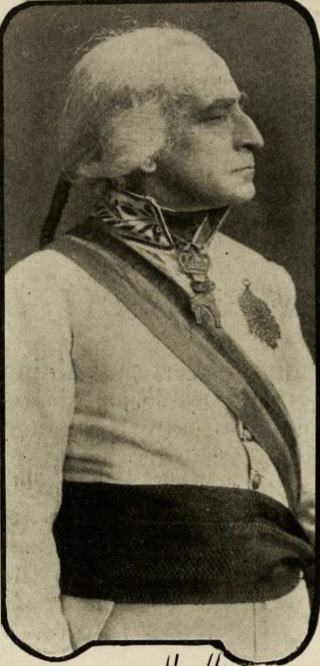
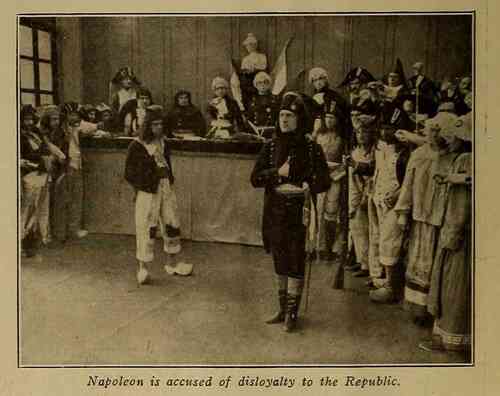
The film’s opening act—a young Bonaparte, portrayed with brooding intensity by Oreste Grandi, leaving his mother’s home to rejoin the Republican artillery—sets the tone. The siege of Toulon is rendered in a cacophony of cannonfire and ideological fervor, where the line between revolutionary justice and mob violence blurs. It is here that the film’s first tragedy is seeded: Bonaparte’s rescue of Eugenia Chabrillant, the orphaned royalist daughter, becomes a moral pivot point. Her death, a silent requiem for unrequited love, is not just a personal loss but a symbol of the collateral damage of political upheaval. The actor Carlo Campogalliani, as Bonaparte, captures this duality—his character’s steely resolve and tender regret—without ever leaning into melodrama.
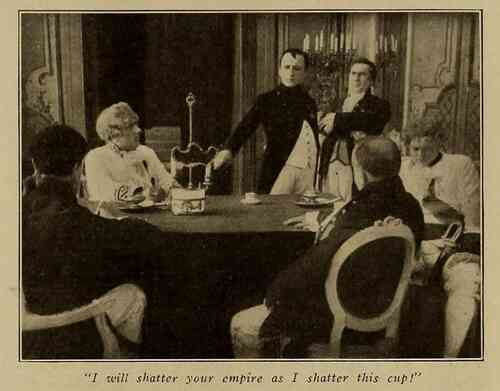
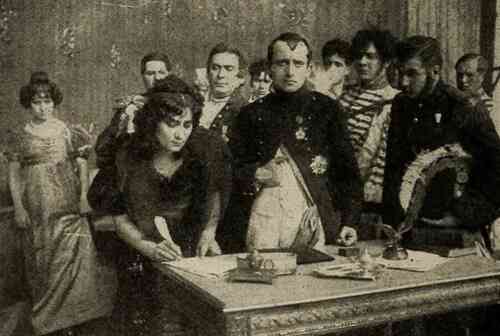
Josephine Beauharnais, played by the luminous Giulietta De Riso, is the emotional axis of the film. Her relationship with Bonaparte is dissected with surgical precision, revealing a marriage of convenience that spirals into a collision of duty and desire. The scene where Bonaparte, now Emperor, signs the divorce papers is a masterclass in restrained acting. De Riso’s Josephine crumbles not with histrionics but with a stillness that speaks volumes of her inner desolation. This moment is juxtaposed with the film’s most audacious set piece: the declaration to Emperor Francis of Austria, where a glass cup is shattered to symbolize the destruction of dynasties. The visual metaphor is as chilling as it is poetic—a man who shatters empires and yet is himself shattered by them.
The film’s technical achievements are staggering. The cinematography, a blend of chiaroscuro and wide, sun-drenched battlefields, mirrors the duality of Bonaparte’s reign—its brilliance and its ruin. The siege of Toulon is a standout sequence, with its frenetic editing and layered sound design creating a sensory overload that mirrors the chaos of revolution. Equally compelling are the quieter moments, such as the scene where Bonaparte, after his Italian campaign, thanks his soldiers. The speech, delivered with a mix of pride and weariness, is intercut with close-ups of the soldiers’ faces—men who see in their leader both a savior and a tyrant.
Comparisons to other historical epics are inevitable, but The Napoleonic Epics distinguishes itself by its focus on the personal over the political. Unlike L'hallali, which prioritizes action over character, or The Crucible, which leans into allegory, this film is grounded in the specificity of its subject. The subplot involving Armand Pouget’s Barras and the casket of Eugenia’s memorabilia adds a layer of intrigue that feels both intimate and politically charged. It is a thread that could have been overwrought but is instead handled with the delicacy of a watchmaker’s hand.
The film’s structure is both its strength and its potential weakness. Spanning over three hours, it demands patience from its audience. The pacing in the second act, particularly the interminable political maneuvering around the divorce from Josephine and the alliance with Maria Louise of Austria, risks alienating viewers more invested in action. Yet, these sequences are not without their rewards. The courtship of Maria Louise, rendered in glittering but hollow formality, contrasts sharply with the raw passion of Bonaparte’s earlier relationships. It underscores the film’s central theme: that power, once attained, becomes a cage as much as a throne.
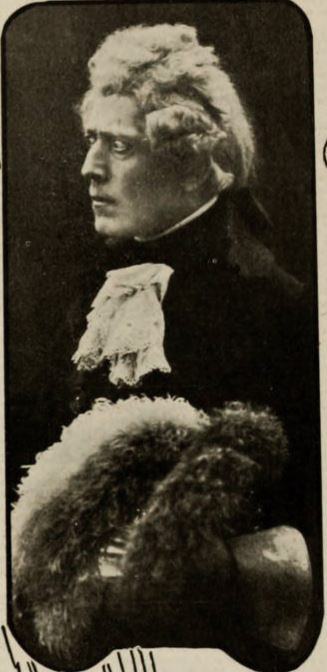
The performances are uniformly stellar. Grandi’s Bonaparte is a study in contradictions—a man whose eyes gleam with ambition yet flicker with doubt. In quieter moments, such as his farewell at Fontainbleau, where he offers his soldiers a chance to shoot him, his vulnerability cuts deeper than any battle scene. The supporting cast, including Carlo Campogalliani’s stoic Barras and Matilde Granillo’s dignified Josephine, add heft to the narrative. Even minor characters, like the doomed Prince of Polignac, are given moments of pathos that elevate the film beyond mere biography.
Visually, the film is a feast. The use of color—dark oranges for the fires of revolution, sea blues for the melancholy of exile—creates a mood that is both grand and intimate. The score, a blend of classical motifs and dissonant string work, mirrors the chaos and order of the era. The final shot, of the Bellerophon departing for Saint Helena with Napoleon on its prow, is a haunting coda. The camera lingers on the horizon, where the sun sets on an empire and a man, leaving only the echo of a man who dared to conquer the world.
In the pantheon of historical dramas, The Napoleonic Epics stands as a testament to the enduring allure of Napoleon’s story. It is a film that dares to ask not what he did, but what he felt. The answer, as the film suggests, is a mosaic of pride, grief, and the inescapable weight of legacy. For those seeking a cinematic experience that is as emotionally resonant as it is intellectually rigorous, this epic is an invitation to witness history through the lens of its most enigmatic figure.
IMDb —
1925
Community
Log in to comment.