DbcultAccessing Vault...
Cult Review
Senior Film Conservator
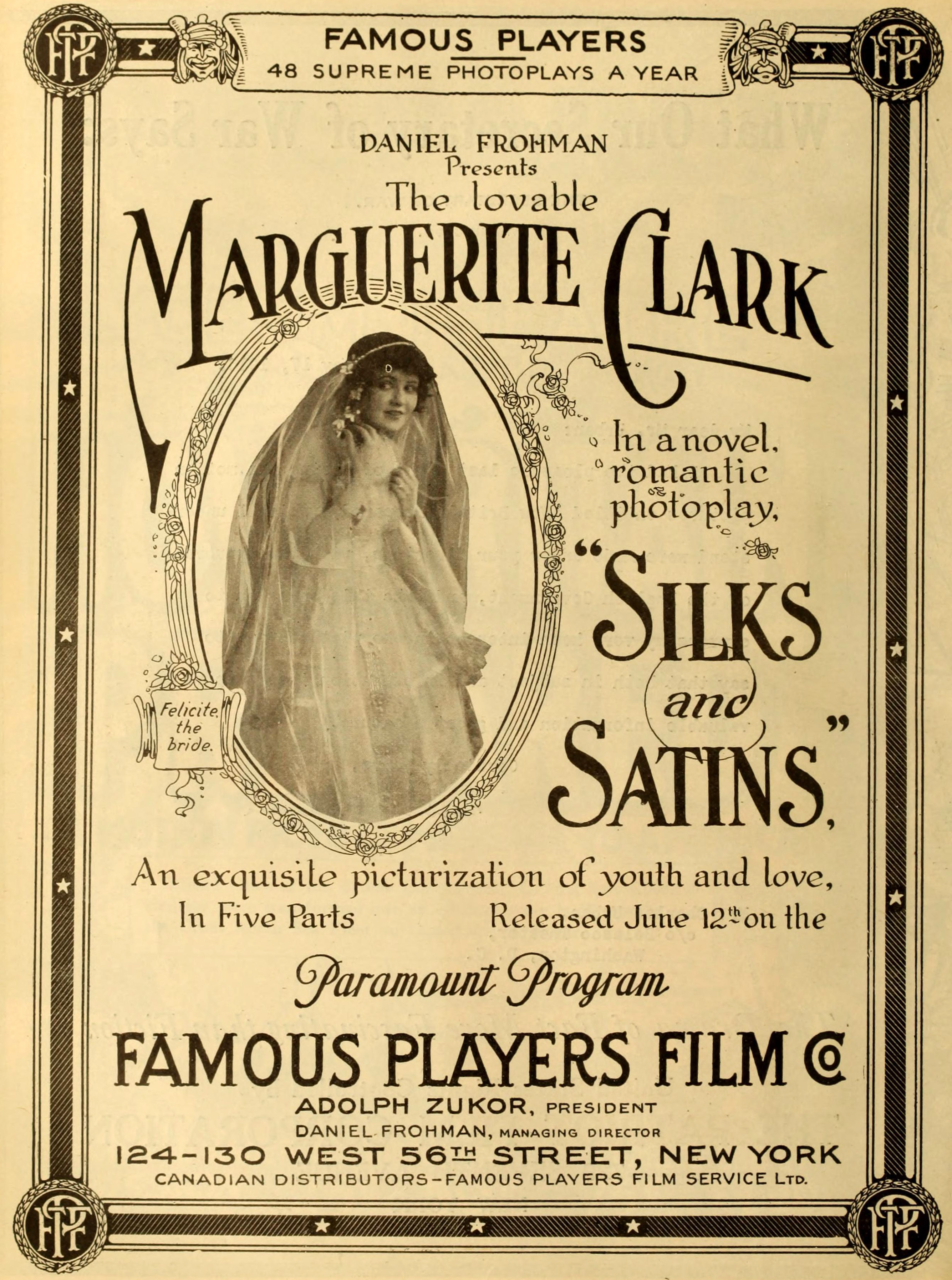
Step back in time with me, dear readers, to an era where the flicker of celluloid told tales of grand ambition and societal masquerades, where the unspoken word held more weight than any dialogue could convey. Today, we turn our critical gaze upon Silks and Satins, a silent film that, despite its age, continues to resonate with a timeless exploration of identity, class, and the often-perilous pursuit of belonging. Directed with an acute understanding of human frailties and aspirations, and penned by the insightful duo of Hugh Ford and Betty T. Fitzgerald, this cinematic gem, starring the effervescent Marguerite Clark, invites us into a world where appearances are everything, and the truth, a dangerous luxury.
At the heart of Silks and Satins lies Eleanor Vance, a character brought to life with remarkable nuance by Marguerite Clark. Clark, a luminary of the silent screen, whose magnetic presence often elevated her roles beyond mere damsels, imbues Eleanor with a captivating blend of vulnerability and steely resolve. Our protagonist begins her journey from the periphery of privilege, a young woman whose life, until a twist of fate, had been devoid of the opulent trappings of wealth. This sudden inheritance, a deus ex machina of sorts, propels her into the dizzying vortex of high society, a realm governed by unspoken rules and rigid hierarchies. It is here that Eleanor, with a shrewd intelligence often underestimated by those around her, quickly apprehends the fundamental truth: in this world, one does not merely exist; one performs. The title itself, Silks and Satins, becomes a potent metaphor for the elaborate costume Eleanor must adopt. These aren't just fabrics; they are the very threads of her new, carefully constructed identity, a shimmering facade designed to deflect scrutiny and command respect.
The film excels in its visual storytelling, utilizing the stark contrasts between Eleanor's modest origins (implied through subtle set design and early character interactions) and the lavish grandeur of her new surroundings. The cinematography, while typical of its era, often employs striking compositions to emphasize Eleanor's isolation amidst the crowd, or her moments of internal conflict. This is not merely a tale of social climbing; it is a profound psychological study of a woman grappling with the erosion of her authentic self in pursuit of acceptance. The very act of 'fitting in' becomes a form of self-erasure, a theme that resonates powerfully even today. The tension between who Eleanor truly is and who she pretends to be forms the narrative's pulsating core, a masterstroke from writers Hugh Ford and Betty T. Fitzgerald.
A film of this thematic depth requires a cast capable of articulating complex emotions without the benefit of spoken dialogue, and Silks and Satins delivers. Thomas Holding, as the enigmatic artist Julian Thorne, provides a compelling counterpoint to Eleanor's carefully guarded persona. Holding's portrayal is one of quiet intensity, his eyes conveying a depth of perception that suggests he sees beyond the superficial layers Eleanor so diligently maintains. Their burgeoning romance is not one of immediate, fiery passion, but a slow burn, built on a mutual recognition of spirit. Julian represents the possibility of genuine connection, a sanctuary from the relentless performance Eleanor endures. His character serves as a crucial moral compass, challenging Eleanor's choices and ultimately forcing her to confront the true cost of her deception.
Fayette Perry, in the role of the conniving Mrs. Harrington, is a formidable antagonist. Her performance is a masterclass in silent film villainy, her gestures and expressions conveying a chilling blend of aristocratic disdain and ruthless ambition. Mrs. Harrington is not merely a rival; she is the embodiment of the very societal forces Eleanor is trying to infiltrate and, paradoxically, overcome. Her relentless pursuit of Eleanor's past, and her malevolent delight in the prospect of exposure, create a palpable sense of dread that permeates the narrative. Perry's ability to convey such intricate malice without a single line of dialogue is a testament to her skill and the expressive power of silent cinema. This kind of social predator, lurking in the shadows of high society, can be seen in other films of the era, though perhaps with less overt menace than Perry brings to Mrs. Harrington.
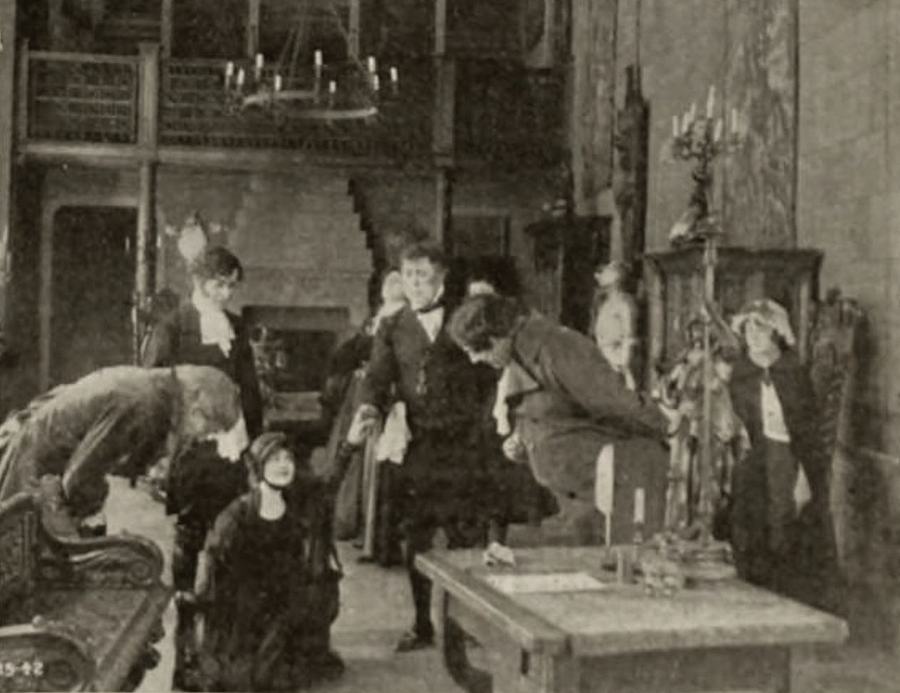
The supporting cast further enriches this intricate world. Vernon Steele, often cast in roles demanding a certain suave sophistication, likely portrays a rival suitor or a cynical observer of the elite, adding another layer to the social dynamics. His presence subtly underscores the pressures Eleanor faces, perhaps representing a more conventional path she could take, one that might offer security but demand further compromise of her true self. William A. Williams, whose filmography often included roles of loyal friends or earnest companions, could be imagined here as a steadfast confidant to Eleanor, or perhaps a voice from her past, inadvertently complicating her present. Clarence Handyside, a veteran character actor known for his authoritative presence, fits perfectly into the role of a stern but ultimately benevolent family lawyer, a figure who might hold the keys to Eleanor's inheritance and, implicitly, her new identity.
What truly elevates Silks and Satins beyond a simple melodrama is its nuanced exploration of themes that remain pertinent. The film delves deeply into the concept of identity – how it is shaped by circumstance, societal expectations, and personal choices. Eleanor’s journey is a poignant meditation on the struggle to reconcile one's origins with one's aspirations. Is identity a fixed entity, or a fluid construct adaptable to new environments? The film, through Eleanor’s internal turmoil, suggests a complex interplay, where the true self, no matter how deeply buried, yearns for recognition.
"The silks and satins may adorn the body, but they cannot cloak the soul's yearning for authenticity."
Class struggle, a recurring motif in early cinema, receives a sophisticated treatment here. Unlike overt dramas of social injustice, Silks and Satins examines the psychological toll of class mobility. Eleanor's experience highlights not just the barriers to entry, but the immense pressure to conform once inside. The film critiques the superficiality of a society that values inherited wealth and polished exteriors over genuine character and innate talent. This critique, delivered subtly through character interactions and visual cues, prevents the film from devolving into simplistic moralizing. It instead offers a complex portrait of a system that both entices and entraps.
The film also touches upon the elusive nature of truth. Mrs. Harrington's relentless quest to expose Eleanor's 'true' origins raises questions about what constitutes truth in a world built on artifice. Is a past truth more valid than a present, carefully constructed reality? The narrative challenges viewers to consider the implications of unmasking, not just for the individual, but for the delicate social fabric itself. This thematic thread resonates with other films that explore hidden identities and societal judgments, such as A Butterfly on the Wheel, which similarly dissects the devastating impact of societal scrutiny and scandal on individual lives.
The directorial choices throughout Silks and Satins are consistently astute. The pacing, a crucial element in silent film, is masterfully controlled, allowing moments of quiet introspection to breathe amidst the dramatic confrontations. The use of intertitles is economical yet impactful, conveying essential dialogue and internal monologues without disrupting the visual flow. The film understands the power of the close-up, particularly in capturing Marguerite Clark's expressive face, allowing audiences to connect intimately with Eleanor's internal struggles. This intimate approach to character portrayal distinguishes it from some of the more grandiose spectacles of the era, aligning it more with character-driven dramas like The Little Gray Lady, which also focused on the quiet resilience of its female protagonist.
Writers Hugh Ford and Betty T. Fitzgerald deserve immense credit for crafting a narrative that, while adhering to certain genre conventions, manages to feel remarkably fresh and psychologically rich. They avoid simplistic resolutions, instead opting for a climax that forces Eleanor to make a difficult, yet ultimately empowering, choice. The screenplay’s strength lies in its ability to build suspense not just through external threats, but through the internal conflict raging within Eleanor. The tension between her desire for acceptance and her yearning for authenticity is expertly maintained, making her eventual decision feel earned and deeply resonant. The narrative arc, from initial aspiration to profound self-discovery, is meticulously mapped, providing a satisfying emotional journey for the audience.
Placing Silks and Satins within the broader landscape of silent cinema reveals its unique contributions. While films like The Seventh Noon might have explored themes of fate and dramatic twists, Silks and Satins grounds its narrative in a more palpable social realism, albeit within the confines of a dramatic romance. It shares a certain elegance with films like May Blossom, particularly in its romantic sensibilities, but injects a sharper, more critical edge regarding societal expectations. The film's portrayal of a woman navigating a treacherous social landscape also brings to mind the quiet strength seen in characters from A Welsh Singer, though Eleanor's battle is less about artistic pursuit and more about sheer survival within the gilded cage.
The moral complexities presented in Silks and Satins, particularly the ethical dilemmas faced by its protagonist, align it with the more sophisticated dramas of its time, moving beyond simple good-versus-evil narratives. It explores the gray areas of human motivation, where ambition can be both a driving force and a destructive impulse. This nuanced approach to character morality is a hallmark of strong storytelling, differentiating it from more straightforward adventure or action-oriented films like The Good Bad-Man or The Convict Hero, which, while entertaining, often operated with clearer delineations of right and wrong.
In its ultimate resolution, Silks and Satins offers a powerful, albeit hard-won, message: true happiness and genuine connection stem not from the elaborate facades we construct, but from the courage to embrace our authentic selves. Eleanor's journey, fraught with peril and emotional sacrifice, culminates in a choice that prioritizes self-respect over societal approval, love over superficiality. This thematic core ensures the film's enduring relevance, speaking to anyone who has ever felt the pressure to conform, to hide their true self, or to navigate the complex labyrinth of social expectations.
The performances, particularly Marguerite Clark's incandescent portrayal of Eleanor, remain captivating. Her ability to convey such a vast spectrum of emotion with mere gestures and expressions is a testament to the artistry of silent film acting. The creative synergy between director, writers, and cast results in a film that is not just a historical artifact, but a vibrant, engaging piece of storytelling. Silks and Satins is more than just a period drama; it is a timeless reflection on the human condition, a testament to the power of truth, and a quiet triumph of early cinematic art. It reminds us that while silks and satins may shimmer and catch the light, it is the unadorned soul that truly glows.
IMDb —
1928
Community
Log in to comment.