DbcultAccessing Vault...
Cult Review
Senior Film Conservator
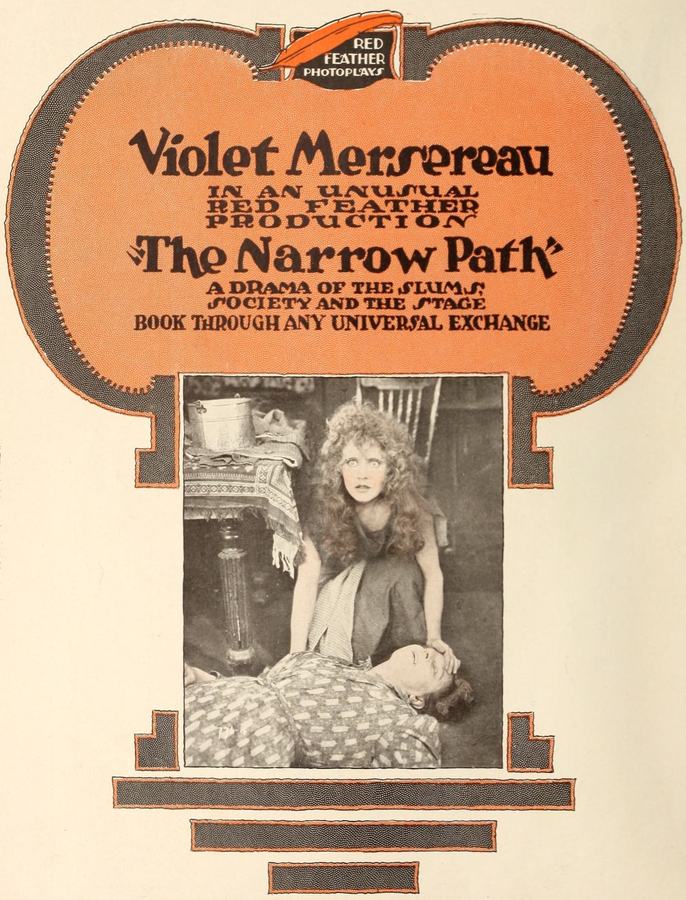
Stepping back into the nascent days of cinematic storytelling, one unearths treasures like The Narrow Path, a silent film that, despite its age, resonates with a timeless exploration of human resilience, moral integrity, and the capricious nature of destiny. Directed with a keen eye for dramatic tension and penned by Catherine Carr, this 1918 production unfurls a narrative tapestry rich in social commentary and personal struggle, demonstrating that even in an era devoid of spoken dialogue, the power of visual storytelling could be profoundly moving and intricately detailed. It’s a compelling reminder of the foundational artistry that shaped the medium, inviting us to ponder the enduring questions of class, virtue, and the pursuit of happiness against formidable odds.
The film introduces us to Bessie, a child of the urban underbelly, whose existence is etched into the harsh realities of the slums. Her early life is a crucible of deprivation, culminating in a tragedy of Shakespearean proportions. Her father, a man consumed by the demon of drink, commits the ultimate act of domestic violence, taking his wife's life before his own desperate flight ends in his demise. This brutal, swift stroke of fate leaves Bessie utterly destitute, a poignant symbol of innocence cast adrift in a world of stark indifference. It’s a stark, uncompromising opening, immediately establishing the film’s willingness to confront the grittier aspects of societal malaise. Her subsequent adoption into the makeshift family of two young newsboys, where she assumes the role of housekeeper, underscores her innate capacity for survival and her quiet dignity amidst abject poverty. This early segment of the film, though brief, paints a vivid portrait of her foundational character: resilient, resourceful, and burdened by circumstances far beyond her control.
Bessie’s trajectory takes a dramatic turn through a seemingly unfortunate incident: a collision with an automobile belonging to the affluent Mrs. Latham. This accident, rather than merely a moment of misfortune, serves as the pivotal nexus connecting Bessie's humble origins with the glittering, yet often superficial, world of high society. Mrs. Latham, perhaps moved by genuine remorse or a fleeting sense of noblesse oblige, visits Bessie in the hospital, and from this encounter springs an unexpected patronage. Bessie is offered a position at a modiste's shop, a significant step up from her previous existence, providing her with a veneer of respectability and a glimpse into a more refined life. This transition is not merely economic; it’s a symbolic journey across the rigid class divides that permeated society, a theme powerfully echoed in contemporary works like Liberty Hall, which also explored the intricate dance between social strata and personal ambition. Yet, the modiste's shop is but a way station on Bessie's path, a brief respite before the true calling of the stage beckons.
The vibrant, alluring world of the cabaret is Bessie's next destination, a realm of dazzling lights and veiled temptations. Discovered by the shrewd theatrical agent Abrams during a casual visit to a dance hall, Bessie's natural grace and nascent talent secure her a spot as a cabaret dancer. It's here, amidst the swirling skirts and pulsating rhythms, that she captures the attention of Shirley Martin, a wealthy clubman whose appreciation extends beyond mere artistic admiration. Shirley, captivated by Bessie's undeniable charisma, promises to elevate her to the grand stages of Broadway, envisioning her as a "great dancer." He orchestrates her debut, paving the way for a career that promises fame and fortune. However, Shirley’s generosity is not without an unspoken expectation, a 'price for his favors' rooted in the transactional nature of societal power dynamics of the era. This sets up the central moral conflict of the film: Bessie's unwavering incorruptibility against the insidious pressures of a world that often demands compromise. Her steadfast refusal to yield to Shirley's advances, despite the glittering opportunities he presents, distinguishes her as a character of profound integrity, a stark contrast to the moral ambiguities often depicted in narratives such as Dope, which explored the darker undercurrents of urban life and temptation.
Bessie's Broadway debut is a resounding success, affirming Shirley's belief in her talent. Yet, her triumph casts a long shadow, stirring the latent jealousy of Mrs. Latham. The very woman who initially offered Bessie a lifeline now perceives her as a rival, a threat to her own meticulously crafted designs on Shirley's substantial fortune. Mrs. Latham embodies the insidious nature of social climbing and the lengths to which individuals will go to protect their perceived interests. Her character, reminiscent of the calculating antagonists found in melodramas like Lady Audley's Secret, becomes the architect of Bessie's potential downfall. She devises a cunning scheme to compromise Bessie's reputation and thereby "cure" Shirley of his affections. The plan is simple yet devastatingly effective: invite Bessie and Shirley on a weekend country trip, then, at the eleventh hour, withdraw her own participation, ensuring they arrive at the hotel to find rooms booked under the scandalous guise of "Mr. and Mrs. Shirley Martin." This calculated act of manipulation highlights the fragility of reputation and the power of societal judgment in an era obsessed with propriety.
The stage is set for Bessie's ultimate test. Arriving at the hotel under false pretenses, the weight of the situation bears down on her. When Bessie, with a heart full of burgeoning affection, confesses her love for Shirley, his response is a misguided attempt to exploit the compromising situation, believing her confession implies consent to his physical advances. This moment is crucial, revealing Shirley's initial flawed character, steeped in the entitlement often afforded to men of his social standing. However, Bessie, true to her unyielding moral compass, repulses him. Her defiance, born not of coldness but of self-respect, forces Shirley into a moment of profound introspection. He recognizes the cad he has become, the dishonorable nature of his actions. This realization marks a turning point for his character, leading him to a genuine, heartfelt proposal of marriage the very next day. Bessie, seeing the sincerity in his eyes and the genuine transformation, agrees. This sequence, fraught with tension and moral reckoning, powerfully conveys the film’s central message about the triumph of virtue and the potential for redemption, even for those initially blinded by privilege.
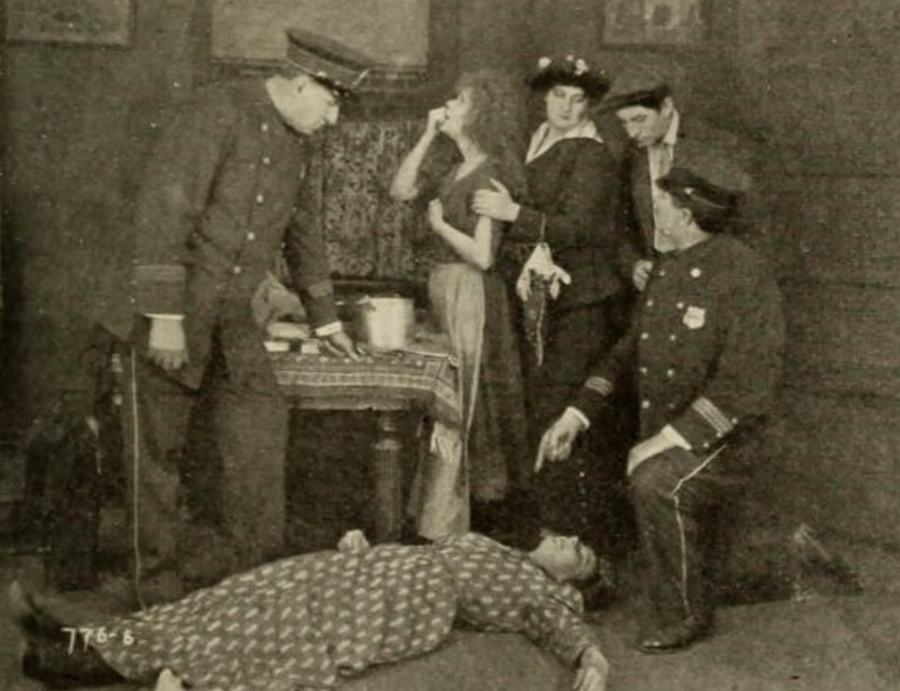
Just as love seems to conquer all, another formidable obstacle emerges in the form of Old Man Martin, Shirley's formidable patriarch. Mrs. Latham’s malicious letter, painting Bessie as a conniving opportunist intent on ruining his son's life and tarnishing the family name, ignites the elder Martin’s fury. The letter, a masterclass in calumny, warns of impending scandal if he doesn't intervene immediately. Rushing to the hotel, Old Man Martin confronts the couple, his accusations against Bessie biting and unjust. He forbids the marriage, asserting his patriarchal authority with unyielding resolve. Bessie, faced with this overwhelming opposition and fearing that her presence might indeed bring dishonor upon Shirley and his family, makes a heartbreaking decision. In an act of profound self-sacrifice, she agrees to leave, believing that perhaps, despite her love, the marriage would not be for the best. She departs without a trace, leaving no address save for the one she entrusts to Old Man Martin himself, a silent plea for understanding, or perhaps a subtle act of defiance, ensuring he knew where she could be found should circumstances ever change. This echoes the noble, yet often tragic, sacrifices seen in films like The Sacrifice of Pauline, where personal happiness is forsaken for perceived greater good.
Shirley, upon discovering his father's cruel intervention and Bessie's subsequent disappearance, is consumed by a righteous fury. He adamantly refuses to return home until his father consents to the marriage, a testament to his matured love and newfound conviction. His search for Bessie proves futile, as she has vanished, leaving only a whisper of her whereabouts with his father. The narrative then introduces a new element of crisis: Shirley's mother falls gravely ill, her recovery hinged, as the doctor gravely informs Old Man Martin, upon a reunion with her estranged son. This unexpected turn of events acts as the ultimate catalyst for the elder Martin's change of heart. Faced with the potential loss of his wife, his rigid pride finally cracks. He seeks out Shirley, persuading him to return home for his mother's sake, a poignant reminder of the enduring power of familial bonds. Having secured his son's return, Old Man Martin, now humbled and perhaps recognizing the injustice he inflicted, embarks on a quest to find Bessie. The climax is a heartwarming reunion, a testament to the perseverance of true love, much like the thematic core of Love Never Dies. The long-delayed wedding is finally agreed upon, a joyous culmination of Bessie's journey through hardship and Shirley's path to redemption.
The Narrow Path, at its core, is a profound meditation on the rigid class structures of early 20th-century society and the indomitable spirit required to transcend them. Bessie's journey from the abject poverty of the slums to the glittering, yet perilous, world of Broadway and high society is a powerful indictment of social stratification. Her moral fortitude, her unwavering incorruptibility in the face of temptation, serves as the narrative’s anchor. She navigates a treacherous landscape where wealth often dictates morality, yet she never succumbs. This steadfastness positions her as a proto-feminist figure, asserting her agency and self-worth in an era when women, particularly those from lower classes, were often viewed as commodities. The film also delves into the complexities of love and forgiveness, showcasing Shirley Martin's transformation from an entitled clubman to a devoted partner. His journey of self-realization, spurred by Bessie's steadfastness, adds another layer of depth to the narrative. The machinations of Mrs. Latham and the patriarchal authority of Old Man Martin serve as external manifestations of societal pressures, highlighting how external forces conspire against individual happiness and moral integrity. The film skillfully explores the tension between individual desires and societal expectations, a theme often explored in melodramas of the era, such as The Lady of Lyons; or, Love and Pride, which similarly grappled with love across class lines.
While specific performance details for silent films can be elusive without direct viewing, the intricate plot devised by Catherine Carr suggests a reliance on strong, expressive acting, typical of the period. Mary Alden, as Bessie, would have been tasked with conveying a wide spectrum of emotions – from the quiet despair of orphanage to the dazzling confidence of a dancer, and the heartbreaking resolve of self-sacrifice – all without the aid of dialogue. Her ability to project incorruptibility and resilience through gesture and facial expression would have been paramount to the film's success. George Gardner, as Shirley Martin, would have needed to convincingly portray his character's arc from privileged entitlement to genuine remorse and devoted love. The film’s narrative pacing, even in summary form, suggests a brisk yet deliberate unfolding of events, maintaining dramatic tension through a series of escalating conflicts and resolutions. The writing, by Catherine Carr, is particularly noteworthy for its ability to weave complex character motivations and societal critiques into a compelling, emotionally resonant storyline. It's a testament to the power of well-structured melodrama, where every turn of fate, every character's decision, feels earned and impactful. The supporting cast, including Violet Mersereau and William Welsh, would have contributed to the rich tapestry of the film, adding layers of intrigue and gravitas to the unfolding drama. The subtle nuances of loyalty and betrayal, for instance, would have been crucial for characters like Mrs. Latham, requiring performances that could convey malice without resorting to overt villainy, much like the complex character dynamics in Loyalty.
The Narrow Path serves as an exemplary artifact of early 20th-century cinema, showcasing the era's fascination with moral tales, social mobility, and the triumph of virtue. It stands as a testament to the foundational storytelling techniques that would evolve into the sophisticated narratives of later decades. The film’s ability to tackle weighty themes—orphanhood, domestic violence, class struggle, sexual harassment (implied by Shirley’s initial advances), and patriarchal control—within a seemingly straightforward melodrama is remarkable. It reminds us that silent films were far from simplistic; they were often sophisticated vehicles for exploring the human condition, relying heavily on visual metaphor, expressive acting, and well-crafted plot points to communicate profound ideas. For modern audiences, revisiting such films offers not just a historical perspective on cinema, but also a chance to appreciate the raw power of visual narrative divorced from dialogue. It underscores the universal appeal of stories about overcoming adversity, finding true love, and maintaining one's integrity in a world that constantly tests it. The film, like many of its contemporaries, might seem melodramatic by today's standards, but within its historical context, it was a potent and popular form of entertainment that also served as a mirror to society's values and anxieties. Its intricate plot, rich character development, and ultimately uplifting resolution ensure its place as a compelling entry in the annals of silent film history.
In conclusion, The Narrow Path is more than just a forgotten film from a bygone era; it is a vibrant narrative that speaks to perennial human experiences. It champions the virtues of perseverance and incorruptibility, demonstrating that genuine love and moral strength can, ultimately, surmount the most daunting of societal barriers and personal challenges. It’s a compelling journey that, even without a single spoken word, articulates a powerful and enduring message.
IMDb 6.8
1927
Community
Log in to comment.