DbcultAccessing Vault...
2.1/10
Senior Film Conservator
A definitive 2.1/10 rating for a film that redefined the boundaries of cult cinema. The Great Romance remains a cornerstone of transgressive art.
Step into a bygone era of cinematic grandeur, where the flickering images on screen wove tales of love, intrigue, and societal upheaval with an earnestness that modern cinema often struggles to emulate. Finis Fox's 'The Great Romance' (1919) is precisely such a film, a sprawling melodrama that, despite its age, resonates with timeless themes of destiny, democracy, and the human heart's unwavering pursuit of both liberty and affection. It’s a narrative tapestry woven with threads of desperate monarchy, American ingenuity, and revolutionary fervor, culminating in a denouement as surprising as it is satisfying. This isn't merely a silent film; it's a vibrant historical document, reflecting the aspirations and anxieties of a world still grappling with the aftermath of global conflict and the promise of new political horizons.
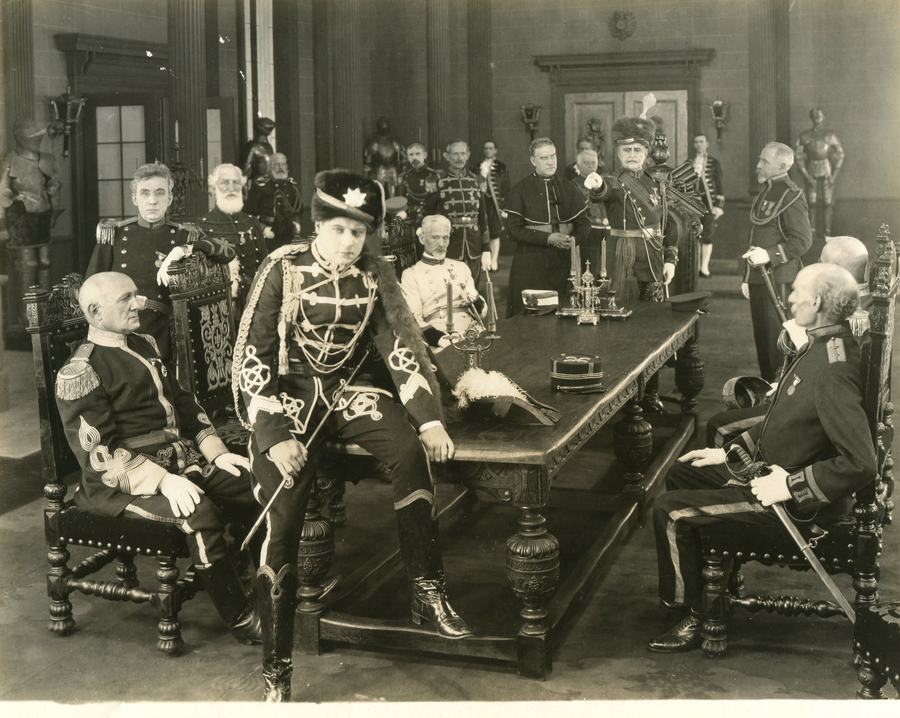
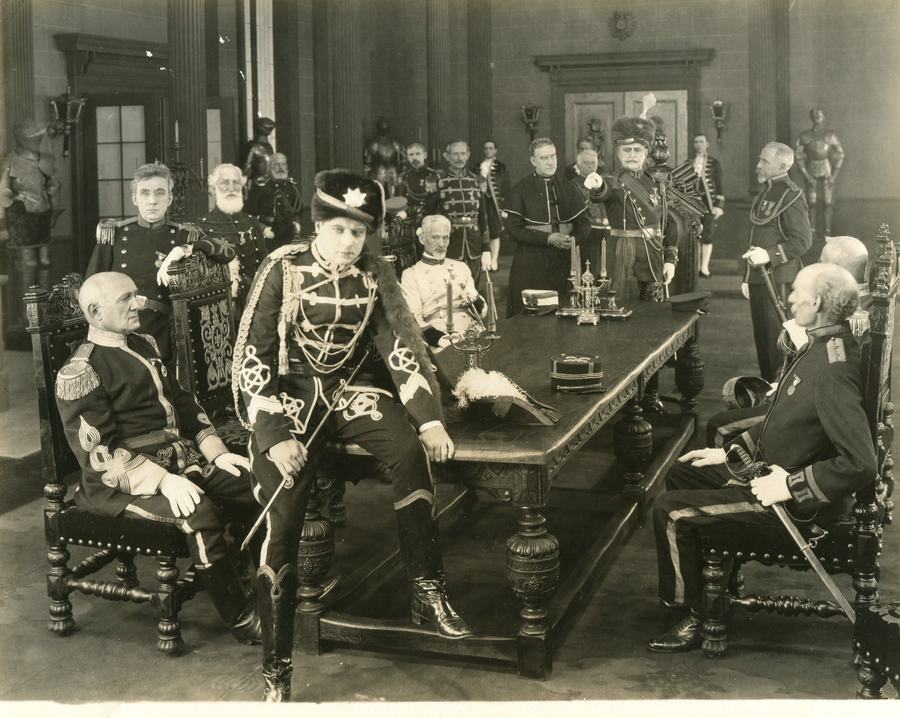
The narrative unfurls in the fictional kingdom of Rugaria, a realm teetering on the brink of financial collapse. Its venerable sovereign, King Rudolph, portrayed with a poignant gravitas by Morgan Thorpe, finds himself in a most unenviable predicament. The royal coffers are depleted, and the weight of his kingdom's economic exigencies presses heavily upon his regal shoulders. In a desperate, yet historically common, attempt to avert utter ruin, the king resorts to a solution as old as monarchy itself: an arranged marriage. His son, Prince Boris, is dispatched across the vast expanse of the Atlantic to America, a land synonymous with burgeoning wealth and boundless opportunity. The prince's mission is clear: to secure a union with a wealthy American heiress, thereby replenishing Rugaria's imperiled treasury and safeguarding its future. This initial premise immediately establishes a compelling tension between the archaic traditions of European royalty and the burgeoning materialism of the New World, setting the stage for a dramatic clash of cultures and ideologies.
Enter Mrs. Hanway, an American socialite whose ambition is as formidable as her fortune. Her desire to see her daughter, Althea, ascend to the prestigious rank of royalty is palpable, a reflection of the era's fascination with European titles and aristocratic grandeur. With visions of coronets and castles dancing in her head, Mrs. Hanway eagerly facilitates Althea's journey with Prince Boris back to Rugaria. This seemingly straightforward transaction, however, is merely the prelude to a far more intricate and perilous saga. The film masterfully uses these early scenes to establish the superficiality of such alliances, hinting at deeper, more authentic connections that will inevitably challenge these pre-ordained paths. It's a classic setup that echoes the grand romantic melodramas of the era, where societal expectations often collide head-on with individual desires, creating fertile ground for dramatic conflict.
While royal machinations unfold, another, far more revolutionary, plot is brewing. In the bustling academic halls of Columbia University, we are introduced to Rupert Danza, a student seemingly absorbed in his studies, yet destined for a destiny far grander than any textbook could describe. Harold Lockwood imbues Rupert with an earnest charm and an underlying intellectual fire, making his transformation believable and compelling. A mysterious envoy approaches Rupert with an astonishing proposition: he is needed in Rugaria, not as a tourist or a scholar, but as the leader of a burgeoning revolution. Initially, Rupert, like any rational individual confronted with such a fantastical claim, dismisses it with a laugh. The notion of an American college student leading a European uprising seems preposterous, a flight of fancy too outlandish to be true. Yet, the seeds of destiny have been sown.
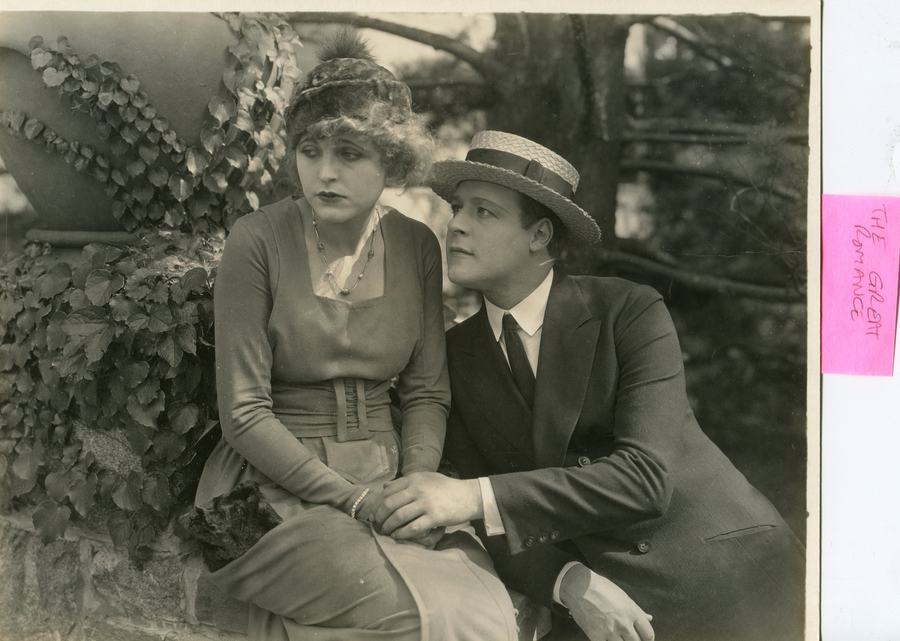
The catalyst for Rupert's change of heart, and indeed the true 'romance' of the title, is revealed to be his sweetheart, Althea. Upon learning that she has journeyed to Rugaria, ostensibly to be married to Prince Boris, Rupert's academic detachment dissolves into a fierce determination. His personal affection for Althea becomes inextricably linked with the political destiny of Rugaria. This intertwining of personal love and national fate is a powerful narrative device, elevating the stakes beyond mere political maneuvering. It transforms Rupert from a reluctant participant into a driven hero, his journey to Rugaria imbued with both romantic urgency and revolutionary purpose. This narrative choice brilliantly grounds the grand political drama in relatable human emotion, making The Great Romance accessible and engaging. Much like the heroic figures in adventure serials of the time, or the determined protagonists found in films like Captain Starlight, or Gentleman of the Road, Rupert embodies a spirit of proactive heroism, driven by personal loyalty and a burgeoning sense of justice.
Upon his arrival in Rugaria, Rupert Danza quickly establishes himself as a force to be reckoned with. His academic background, far from being a hindrance, proves to be his greatest asset. His profound knowledge of democratic principles, gleaned from American ideals, electrifies the nascent revolutionary movement. He articulates a vision of self-governance and liberty that stands in stark contrast to the oppressive monarchical rule, inspiring the populace with fervent hope. The film effectively portrays the power of ideas, suggesting that the true strength of a revolution lies not just in arms, but in the compelling articulation of a better future. This intellectual leadership, however, is surprisingly complemented by a more visceral skill. In a testament to the film's melodramatic flair, Rupert's unexpected prowess with a sword proves instrumental in a dramatic confrontation, enabling him to rescue his beloved Althea from the clutches of Prince Boris. This blend of intellectual might and physical heroism makes Rupert a multi-faceted and appealing protagonist, a true champion of both mind and body.
The narrative then hurtles towards its climactic sequence. An anarchist's attack on King Rudolph throws the kingdom into further chaos, creating an opportune moment for the revolutionaries but also implicating Rupert. He is swiftly arrested, accused of regicide and treason, and finds himself facing the grim prospect of a firing squad. The tension in these scenes, though rendered in the silent medium, is palpable, a testament to the dramatic staging and the expressive performances of the cast. Just as all hope seems lost, and the ultimate sacrifice appears imminent, a dramatic intervention occurs. Countess Olga, a character whose presence up to this point may have seemed secondary, steps forward to reveal an astonishing truth. Clare Grenville delivers this pivotal moment with a compelling urgency, turning the tide of fate with a single, earth-shattering pronouncement. This kind of sudden, profound revelation is a hallmark of the era's grand narratives, a plot device that can be found in other intricate dramas like Toys of Fate, where destiny's hidden hand is finally unveiled.
The truth, when it finally emerges from the lips of Countess Olga, is nothing short of sensational: Rupert Danza, the American student and revolutionary leader, is not merely a commoner, but the king's own son, spirited away as a child. This revelation fundamentally reshapes the entire narrative, transforming Rupert's accidental involvement into a destined return. He was sent to America, not by chance, but by design, to absorb the very democratic ideals that would eventually fuel Rugaria's transformation. This twist is both a clever narrative contrivance and a powerful thematic statement, suggesting that the future of monarchies might lie in embracing, rather than resisting, the spirit of democracy. It's a bold assertion for a film of its time, reflecting a post-World War I world where old empires were crumbling and new political orders were emerging.
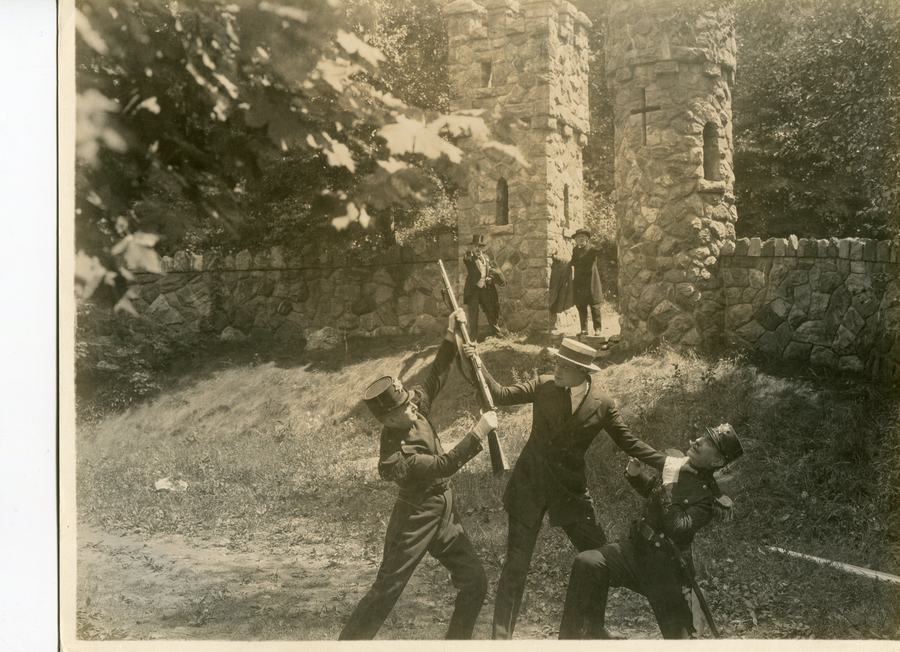
Following the tragic demise of King Rudolph, the stage is set for Rupert's ascension. However, in a profound and deeply symbolic act, he declines the crown, rejecting the very monarchy he was born into. His American upbringing, his absorption of democratic principles, has instilled in him a conviction that transcends inherited power. Instead, he embraces the will of the people and is elected president of the newly created Rugarian republic. This pivotal moment underscores the film's core message: that true leadership stems from the consent of the governed, not from accidents of birth. Althea, his steadfast love, then becomes his First Lady, solidifying the union of personal romance with national destiny. The film concludes not with a traditional royal wedding, but with the inauguration of a new political order, a testament to the transformative power of love, liberty, and democratic ideals. This grand, sweeping conclusion, merging personal triumph with national rebirth, resonates with the epic scale of other period dramas like The Merchant of Venice, albeit with a distinctly modern political sensibility.
'The Great Romance' is far more than a simple love story; it is a profound exploration of contrasting political ideologies and the enduring human quest for self-determination. The central conflict between monarchy and democracy is handled with a surprising degree of nuance for a silent film. While the monarchy of Rugaria is depicted as financially vulnerable and politically rigid, King Rudolph is not a caricature of tyranny but a tragic figure, desperately trying to preserve his kingdom. The film doesn't merely advocate for democracy; it shows the arduous path to achieving it, highlighting the role of an informed and inspired populace. Rupert Danza embodies the American ideal of the citizen-leader, one who earns his position through intellect and action rather than birthright. His rejection of the crown for the presidency is a powerful statement, emphasizing the film's belief in meritocracy and popular sovereignty.
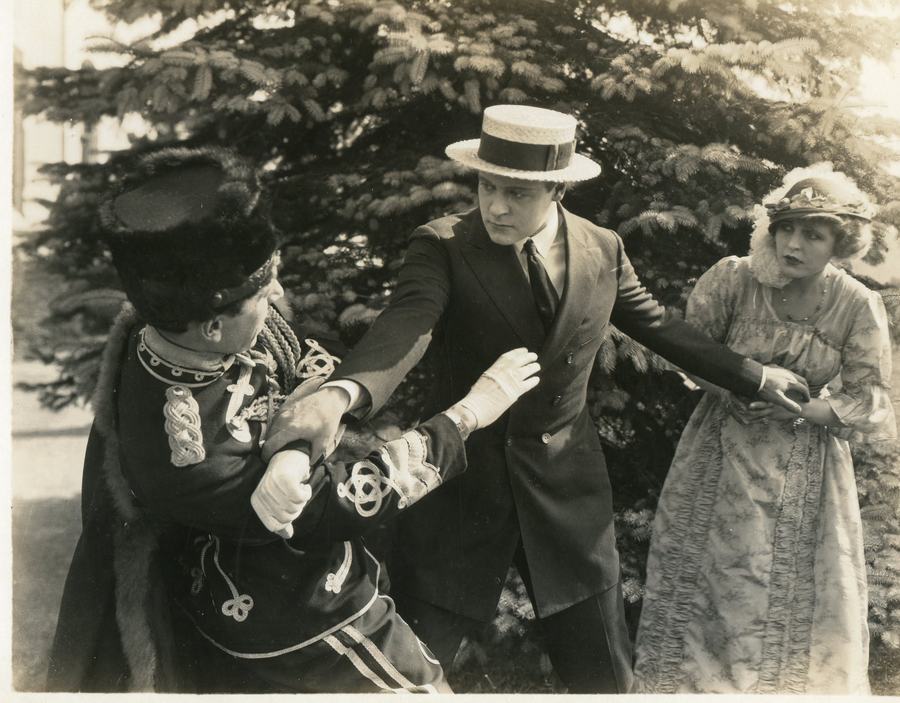
The theme of love versus duty is also intricately woven into the narrative. Althea's initial journey is driven by her mother's social ambition, a duty to secure a royal title. Yet, her heart belongs to Rupert, and their romance becomes a symbol of personal freedom against societal constraints. This personal love story serves as a microcosm for the larger political struggle, suggesting that true happiness, both individual and national, can only be found when one is free to choose. The film elevates their romance beyond mere sentimentality, positioning it as an integral component of the new Rugarian republic, with Althea as its principled First Lady. Their union signifies a new kind of royal family, one founded on democratic values rather than inherited privilege.
Perhaps the most compelling thematic thread is that of identity. Rupert's journey from an American student to a revolutionary leader, and finally to a long-lost prince and elected president, is a remarkable arc. His identity is not fixed by birth but shaped by experience and choice. The revelation that he was intentionally sent to America to absorb democratic ideals adds a layer of predestination, yet his ultimate decision to decline the crown and embrace the presidency reaffirms his agency. He chooses his identity, forging a path that aligns with his acquired values rather than his inherited lineage. This exploration of identity, particularly one that transcends traditional societal roles, is a sophisticated element for a film of its time, making The Great Romance surprisingly modern in its psychological depth. It speaks to the idea that one's true self is forged through experience and conviction, rather than simply being a product of one's origins.
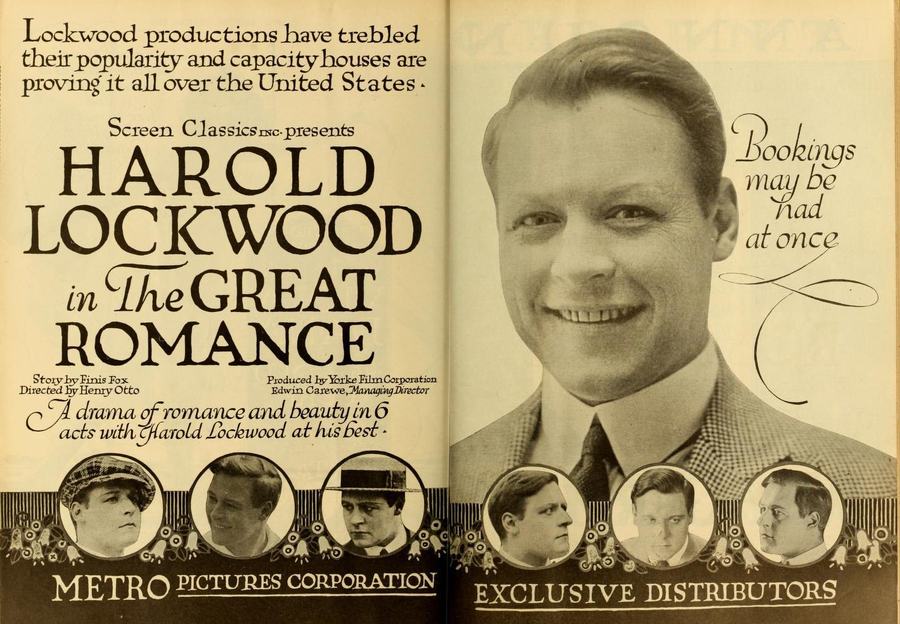
The success of 'The Great Romance' hinges significantly on the compelling performances of its cast, who, through gesture, expression, and the occasional intertitle, convey a rich tapestry of emotion and motivation. Harold Lockwood, as Rupert Danza, carries the film's moral and romantic weight with admirable conviction. He projects an intelligent earnestness that makes his transformation from academic to revolutionary leader entirely believable. His charisma is evident, a crucial factor in convincing audiences of his ability to inspire a populace and win the heart of Althea. Rubye De Remer, as Althea Hanway, embodies the spirited American heiress, caught between her mother's ambitions and her own burgeoning affections. Her portrayal is nuanced, showcasing both vulnerability and strength, making her a compelling romantic interest whose fate feels genuinely intertwined with the political destiny of Rugaria.
Morgan Thorpe delivers a memorable performance as King Rudolph, a monarch burdened by the weight of his crown and the impending ruin of his kingdom. His portrayal is not of a villain, but of a man trapped by tradition and circumstance, eliciting a degree of sympathy even as his actions drive the initial conflict. Clare Grenville, as Countess Olga, plays a pivotal role, particularly in the film's climax. Her dramatic revelation is arguably the most impactful moment, and Grenville's intensity ensures that this crucial plot twist lands with maximum effect. The supporting cast, including Louis Stern, James Laffey, Neil Hamilton, Joseph Granby, Frank Currier, Helen Lindroth, and Franklyn Hanna, all contribute to the rich tapestry of Rugarian society, lending authenticity and depth to the unfolding drama. Their collective efforts bring to life a world both grand and intimate, making the stakes of the revolution feel profoundly personal.
As a product of the late 1910s, 'The Great Romance' offers fascinating insights into the cinematic techniques and narrative conventions of the silent film era. Directed by Finis Fox, whose prolific writing career spanned decades, the film showcases a mastery of visual storytelling. Without the aid of spoken dialogue, filmmakers relied heavily on expressive acting, intricate mise-en-scène, and carefully crafted intertitles to convey plot, character emotion, and thematic depth. The pacing, while perhaps deliberate by today's standards, allows for a meticulous development of character and plot, building suspense and emotional resonance through sustained sequences. The grand scale of the production, with its depiction of a European kingdom, revolutionary crowds, and dramatic confrontations, speaks to the ambition of early cinema to transport audiences to fantastical realms.
The film's enduring appeal lies not only in its historical significance but also in its ability to tap into universal narratives. The struggle for freedom, the triumph of love, and the discovery of one's true identity are themes that transcend time and medium. While the political context of Rugaria might be fictional, the aspirations for democracy and self-governance resonated deeply with audiences in a post-World War I world, where many European monarchies had indeed collapsed or were facing severe challenges. The film can be seen as an optimistic vision of a future where American democratic ideals could inspire positive change across the globe, a sentiment that was prevalent in the United States at the time. Its dramatic flair and moral clarity place it firmly within the tradition of grand melodramas, yet its progressive political message distinguishes it from more conventional romantic narratives. It's a testament to the power of storytelling that even without sound, such complex ideas and emotions could be conveyed so effectively, leaving a lasting impression on its audience. Much like other narratives that grapple with societal upheaval or grand moral questions, such as The Church and the Woman, The Great Romance uses its dramatic framework to explore profound human and political dilemmas.
'The Great Romance' stands as a captivating example of early 20th-century filmmaking, a vibrant blend of political drama, romantic intrigue, and a powerful message about the enduring strength of democratic ideals. It's a film that, despite its age, continues to engage with its intricate plot, compelling characters, and surprisingly progressive themes. The journey of Rupert Danza, from an American student to the elected president of a newly formed republic, is a testament to the idea that true leadership transcends birthright and instead rests upon the will of the people and the pursuit of justice. It reminds us that even in an era of silent cinema, stories could speak volumes, inspiring audiences with visions of a better world and the belief that love and liberty could indeed conquer all, forging a 'great romance' not just between two individuals, but between a people and their destiny.
IMDb —
1932
Community
Log in to comment.