DbcultAccessing Vault...
Cult Review
Senior Film Conservator
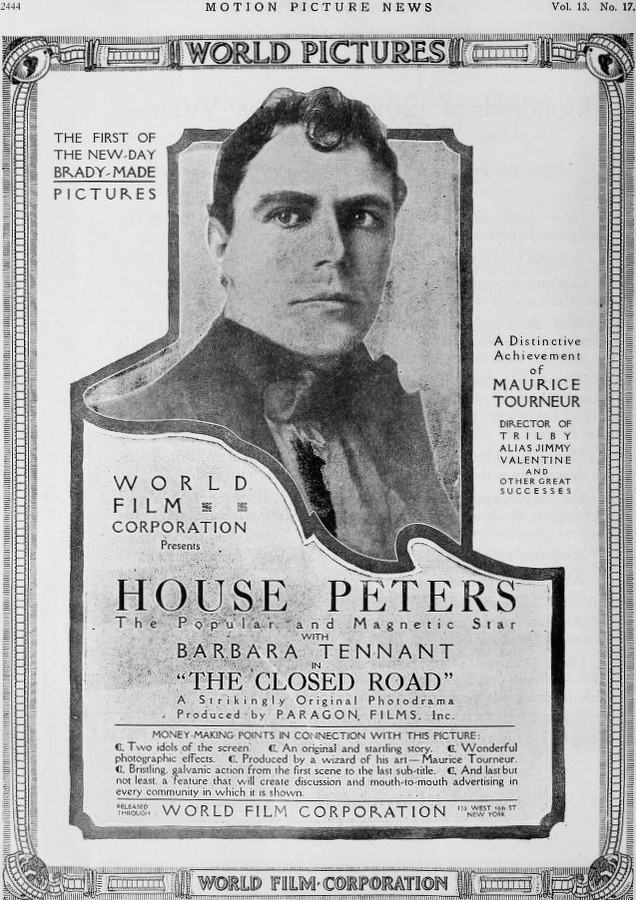
In an era when cinema was still finding its voice, often relying on exaggerated gestures and stark moral contrasts, Maurice Tourneur’s The Closed Road emerges as a surprisingly intricate and psychologically dense melodrama. Far from a simple potboiler, this film plunges headfirst into the murky waters of scientific ambition, financial desperation, and the chilling ease with which justice can be perverted. It’s a narrative that, even today, resonates with a profound sense of human fallibility and the enduring power of selfless love. The film’s silent frames speak volumes, painting a vivid picture of a world where noble intentions can be twisted into catastrophic outcomes, and where the line between sanity and madness blurs with terrifying consequence.
At the heart of this dramatic maelstrom stands Dr. Hugh Annersley, portrayed with a compelling blend of scholarly gravitas and simmering frustration by George Cowl. Annersley is no ordinary physician; he is a man on the cusp of a medical revolution, having, alongside his colleague Dr. Appledan, purportedly discovered a cure for cancer. Imagine the weight of such a discovery, the potential to alleviate untold suffering, yet to have it held hostage by the mundane, soul-crushing reality of unpaid bills. The film masterfully establishes this tension early on, illustrating how even the grandest scientific endeavors can be derailed by the most pedestrian of financial woes. Griswold, a former patient and a man of significant debt, becomes the unwitting fulcrum upon which Annersley’s fate will pivot. This initial setup is remarkably effective, grounding the fantastical premise of a cancer cure in a very real, relatable predicament, immediately drawing the audience into Annersley’s desperate struggle.
The arrival of Griswold, though he doesn't even step inside the Annersley home, injects a palpable sense of urgency. Annersley's lament to Appledan — that Griswold's payment is the key to continuing their vital research — underscores the precariousness of their groundbreaking work. This isn't just about personal finances; it's about the future of humanity. Annersley's subsequent decision to write a letter, an ultimatum demanding payment within twenty-four hours, is born of this desperation. It's a testament to the film's nuanced characterizations that we understand, even sympathize with, Annersley's rashness. He's not malicious; he's a man pushed to his limits, a genius shackled by worldly concerns. This emotional foundation makes the subsequent descent into chaos all the more tragic and compelling.
Dr. Appledan, played by Leslie Stowe with a subtle menace that belies his initial appearance, is the true architect of the film's central tragedy. Tasked with delivering Annersley's threatening letter to Griswold, Appledan seizes an opportunity born of malevolent impulse. During a consultation, he administers a fatal overdose, extinguishing Griswold’s life with chilling precision. This act alone is horrific, but Appledan's subsequent actions elevate him to a truly diabolical antagonist. He meticulously orchestrates a frame-up, placing Annersley's incendiary letter on Griswold's table and firing two shots from a revolver, a weapon conveniently carved with Hugh Annersley's name. It's a theatrical, almost baroque display of cunning, designed to create an inescapable web of circumstantial evidence. The film excels in portraying this cold, calculated act, allowing the audience to witness the birth of a monstrous lie. The silence of the era only amplifies the horror, forcing viewers to fill in the gaps with their own dread.
The police investigation, swift and unyielding, finds the revolver and the letter, creating an seemingly irrefutable case against Annersley. This sequence, common in melodramas of the time, often risked feeling formulaic. However, in The Closed Road, it's infused with a sense of grim inevitability, a snowballing injustice that feels both agonizing and deeply personal. Annersley's arrest is not merely a plot point; it's the crushing weight of a world turned upside down, a brilliant mind condemned by the machinations of a madman. This scenario, where an innocent is ensnared by manufactured evidence, echoes themes found in other silent-era dramas like Schuldig (Guilty), where the burden of false accusation drives the narrative. Yet, The Closed Road pushes further, introducing an element of psychological instability that complicates the simple good-versus-evil dichotomy.
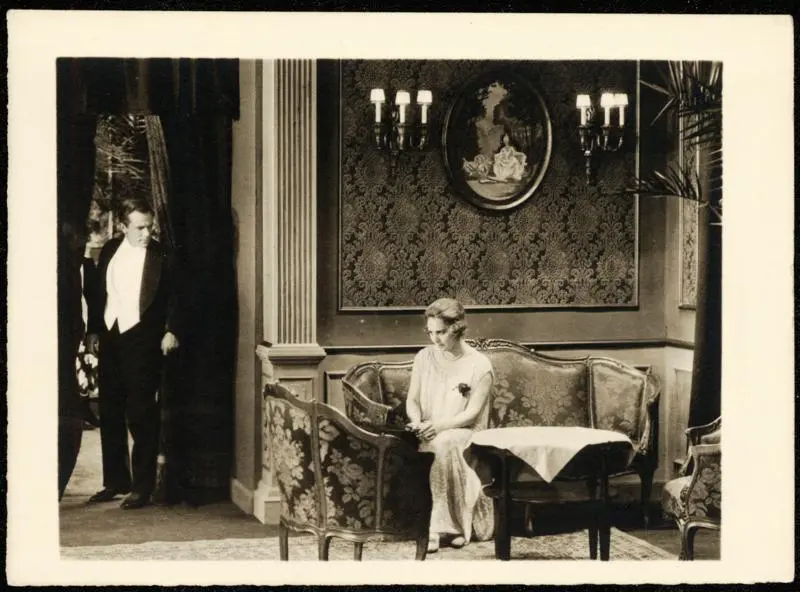
Enter Julia, Dr. Annersley’s sister, played by Barbara Tennant with a captivating blend of vulnerability and steel-spined determination. Julia is the moral compass and the driving force of the narrative’s second act. Her visit to Appledan, seeking answers or perhaps just solace, inadvertently reveals the old doctor's true nature. Witnessing Appledan's hysterical laughter as Frank Sargeant, a seemingly well-to-do young man, departs his office, Julia catches a glimpse behind the facade. Appledan's casual, almost gleeful declaration that he has just warned Sargeant of an imminent death due to a poor heart condition is a chilling moment, exposing the doctor's profound mental imbalance. This scene is pivotal, shifting the audience's understanding of Appledan from a mere villain to a truly deranged individual, adding a layer of psychological horror to the unfolding melodrama. It's a moment that could easily be overplayed in lesser hands, but here it's delivered with a stark, unsettling effectiveness.
Armed with this horrifying knowledge, Julia embarks on a desperate quest to find Sargeant. Her search leads her to an old quarry, a desolate landscape that perfectly mirrors Sargeant’s internal despair. She finds him at the precipice of suicide, a scene charged with raw emotional intensity. This is where the film transcends simple crime drama and delves into profound philosophical territory. Julia’s impassioned plea to Sargeant is a tour de force of moral persuasion. She unravels her brother’s plight, the world-changing potential of his cancer cure, and the terrible injustice that has befallen him. Her argument is simple yet devastatingly effective: since Sargeant believes his life is ending and contemplates taking it himself, why not make that end a profound act of altruism? Why not clear Annersley, save millions of lives, and imbue his final days with unparalleled meaning? This daring proposition, a request for the ultimate sacrifice, is the narrative's boldest stroke, challenging both characters and audience to confront the boundaries of morality and self-interest.
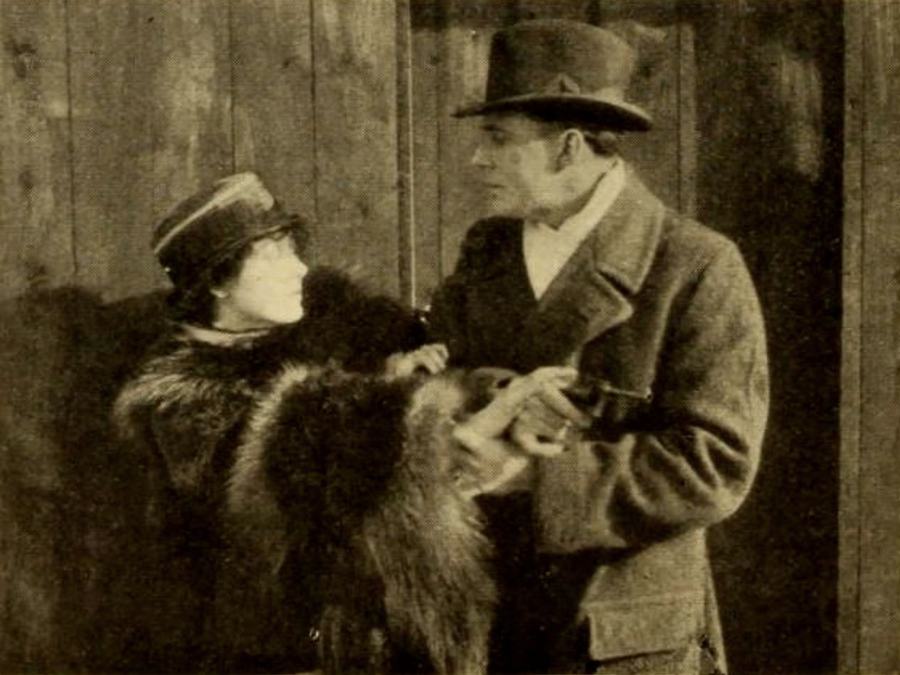
"A life on the brink, a world on the cusp of a cure – Julia's desperate gambit for justice and humanity's future is a testament to unwavering sisterly love and the profound weight of sacrifice. It’s a moment that resonates with the desperate pleas found in films like Her Triumph, where a woman's unwavering spirit defines the narrative."
Sargeant, portrayed by House Peters with a nuanced blend of despair and burgeoning nobility, agrees to Julia’s audacious plan. His subsequent actions—fabricating circumstantial evidence against himself with such conviction that he is arrested and convicted of Griswold's murder—are harrowing to witness. This isn't a mere plot device; it's a profound exploration of self-sacrifice, a man willingly walking towards his own doom for the greater good. The film doesn't shy away from the gravity of this decision, allowing the audience to feel the full weight of Sargeant's impending electrocution. This narrative choice elevates The Closed Road beyond a simple crime thriller, transforming it into a meditation on heroism, ethics, and the complex interplay between individual fate and collective well-being. The tension is palpable, reminiscent of the gripping suspense in films like Under the Gaslight, where characters face seemingly insurmountable odds.
Yet, just as the narrative seems destined for a tragic conclusion, a startling revelation emerges. While awaiting his execution, Sargeant learns the truth: his heart was never affected, and old Doctor Appledan was indeed mentally unbalanced, now confined to an insane asylum. This twist is a narrative gambit, perhaps a concession to the melodramatic conventions of the era, but it serves to re-ignite Julia's determination. Learning of Appledan's true state and Sargeant's sound health, Julia sets out once more, this time to clear Sargeant's name and reverse the wheels of destiny that she herself had, in part, set in motion. This reversal provides a powerful engine for the film's final act, transforming a story of sacrifice into one of redemption and the relentless pursuit of truth. It's a testament to the film's commitment to delivering a satisfying, albeit hard-won, resolution.
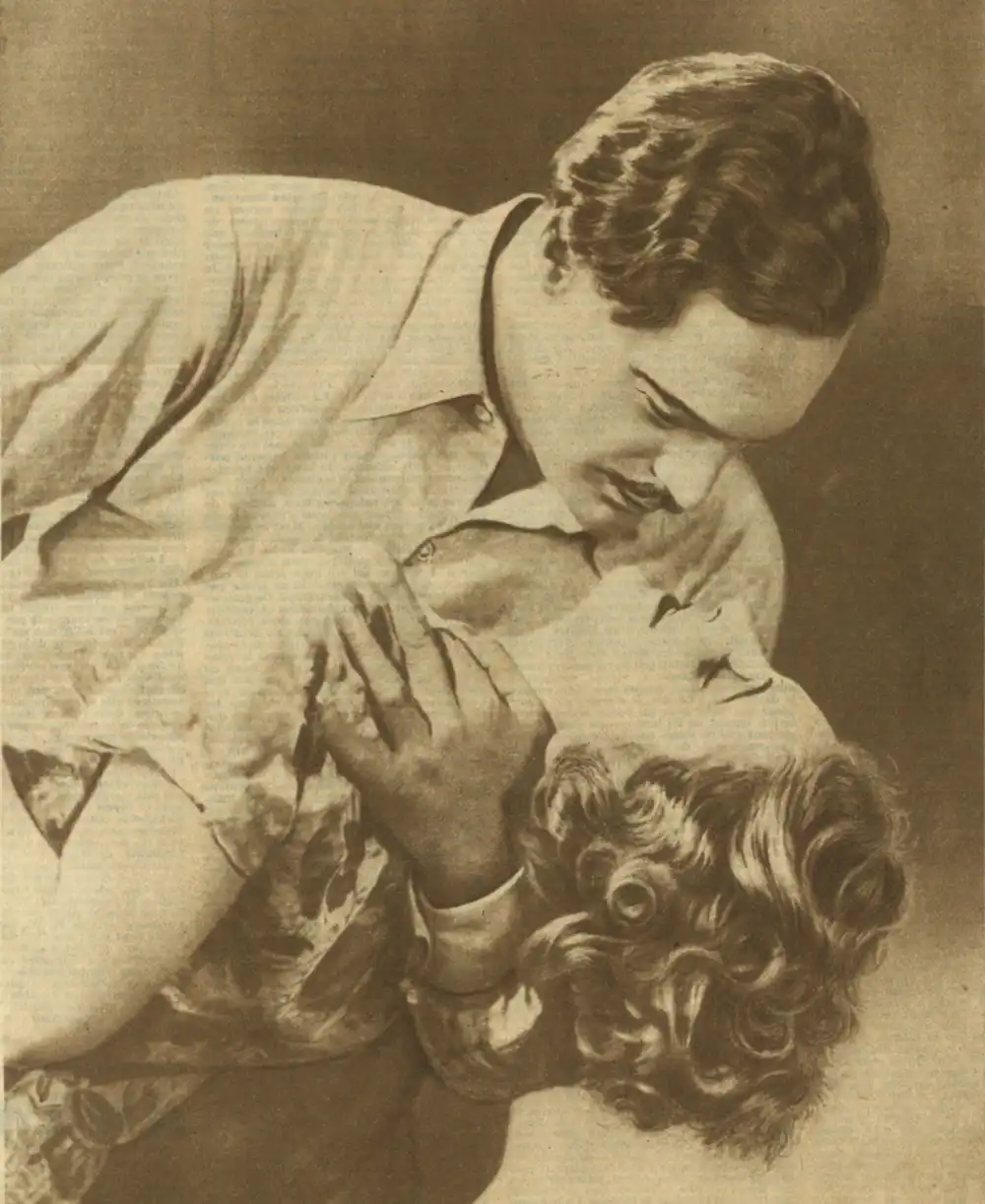
Julia's relentless pursuit of justice culminates in a dramatic confrontation with Appledan, now a confined madman. In a scene brimming with tension, the old doctor confesses to Griswold's overdose and the elaborate frame-up of Annersley. This confession, the final piece of the puzzle, exonerates both Annersley and Sargeant, untangling the complex web of deceit that had ensnared them. The film's resolution is not merely a legal victory; it is a profound emotional triumph. The narrative beautifully illustrates how Julia repays Sargeant for his immense sacrifice, not with words alone, but through her unwavering love and affection. Their bond, forged in the crucible of injustice and selfless acts, brings the picture to a dramatic and unequivocally happy ending. It's a conclusion that, while perhaps leaning into the romantic ideals of the time, feels earned through the characters' arduous journey and profound moral choices.
Maurice Tourneur, listed as the writer here, was also a highly influential director of the silent era, known for his artistic sensibilities and sophisticated visual storytelling. While the prompt identifies him as the writer, his directorial style often imbued his films with a distinctive visual flair and a keen understanding of dramatic pacing. One can infer that his narrative construction here, even if solely as a writer, would have been deeply informed by a director's eye. The Closed Road showcases a narrative tightness and a psychological depth that elevates it beyond many of its contemporaries. The way the plot points unfold, each revelation building upon the last, speaks to a masterful command of storytelling. Tourneur’s work, whether writing or directing, often possessed a certain elegance and a willingness to explore complex themes, setting him apart from those who merely churned out formulaic melodramas. His approach here suggests a deliberate attempt to craft a story that is not just exciting, but also thought-provoking, much like the intricate plotting found in Fedora or the moral quandaries of Help Wanted.
The performances are uniformly strong, a testament to the nuanced acting required in the silent era. George Cowl embodies Annersley's intellectual anguish with conviction, while Barbara Tennant’s Julia is a compelling portrait of strength and vulnerability. House Peters brings a quiet dignity to Sargeant’s profound despair and eventual heroism. Leslie Stowe's portrayal of Appledan is particularly noteworthy, subtly conveying the character's descent into madness without resorting to overt histrionics. These actors, through their expressions and body language, carry the emotional weight of the narrative, ensuring that the audience remains deeply invested in their fates. The film manages to convey complex emotional states and moral dilemmas through purely visual means, a hallmark of effective silent cinema.
The Closed Road stands as a powerful example of early cinema's capacity for complex storytelling and profound emotional resonance. It's a film that, despite its age and the technical limitations of its time, manages to grapple with timeless themes: the pursuit of scientific advancement, the corrupting influence of desperation, the fragility of justice, and the enduring power of human connection and sacrifice. The narrative's twists and turns, while sometimes bordering on the sensational, are always grounded in character motivation and the ethical dilemmas presented. It’s a compelling journey through the darkest corners of human nature and the brightest sparks of altruism, leaving a lasting impression that transcends its historical context. This film reminds us that even in an era of nascent cinematic language, the power of a well-told story, driven by compelling characters and high stakes, could captivate and move audiences just as profoundly as any modern blockbuster.
In its exploration of medical ethics, false accusations, and the ultimate redemption, The Closed Road offers much for contemporary viewers to appreciate. It's a stark reminder that the human spirit, when pushed to its limits, can yield both unimaginable cruelty and breathtaking acts of courage. The film's conclusion, while offering a happy resolution, doesn't diminish the arduous journey or the profound sacrifices made along the way. It’s a testament to the enduring appeal of stories where justice, though delayed and hard-won, ultimately prevails, and where love proves to be the most potent force for healing and restoration. A hidden gem from the archives of cinema, it deserves to be rediscovered and appreciated for its narrative ambition and emotional depth.
IMDb 5.9
1923
Community
Log in to comment.