DbcultAccessing Vault...
Cult Review
Senior Film Conservator
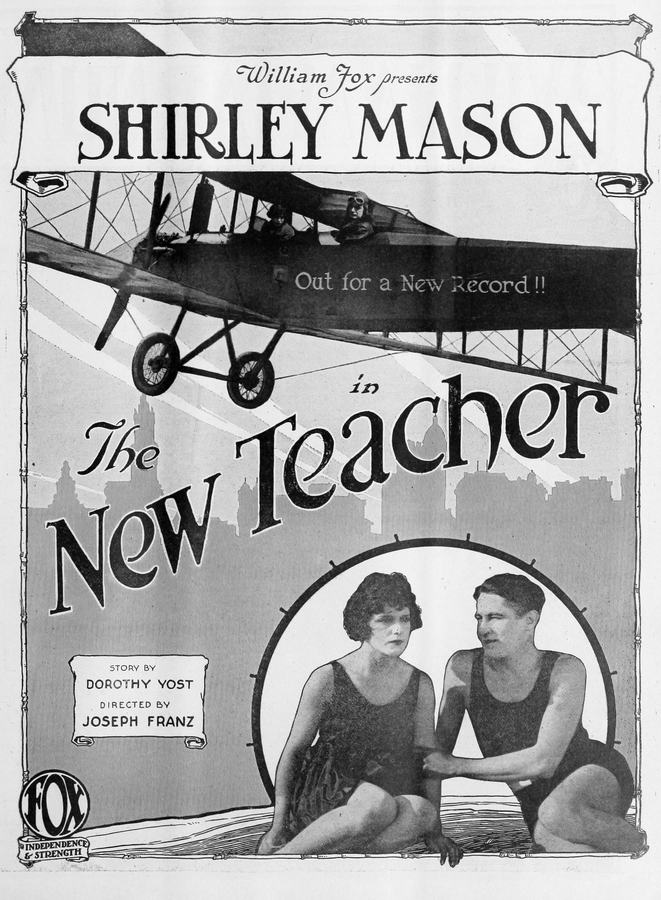
The first time we see Constance Bailey she is a silhouette framed by a stained-glass skylight, her cigarette-holder poised like a conductor’s baton above a score of gossip. Within sixty seconds that gilded cocoon is shredded: she lies to her fiancé, boards no Atlantic liner, and instead descends into a world where the air itself feels borrowed. Directors Penrhyn Stanlaws and Edwin L. Hollywood shoot her transformation with a vertiginous tilt—camera angled so the tenement stairs appear to swallow her whole. It is 1921, but the visual grammar feels modern: the iris that closes around Constance’s face mirrors the subway grates that will later belch steam beneath her skirts.
Helen Stone plays Constance with the brittle hauteur of a porcelain doll who suspects she might crack but refuses to blink first.
Her cheekbones are so sharp they could slice the title card, yet when she mouths the word “children” to a roomful of ragamuffins her voice (via intertitle) trembles like a violin string. Earl Metcalfe’s Van Griff, by contrast, is all beefsteak shoulders and patent-leather hair, a man who enters every frame as if expecting applause. Their chemistry is less romantic than forensic: she the specimen, he the magnifying glass. Watch the way he circles her classroom door—hands clasped behind back, eyes narrowed—as though measuring the exact cubic feet of trouble she embodies.
The screenplay, stitched together by Dorothy Yost and Margaret Elizabeth Sangster, is a patchwork of social pamphlet and pulp valentine.
It wants to indict class disparity but cannot resist the siren call of matrimony. One moment Constance is lecturing on the triangular fire that killed a hundred seamstresses; the next she is fainting into Van Griff’s arms while a title card swoons: “Even the bravest heart needs a harbor.” The whiplash is intentional: the film knows its audience—shopgirls dreaming of princes, society matrons slumming for thrills—and it serves them both a moral lecture and a wedding cake.
Visually, the picture is a chiaroscuro fever dream.
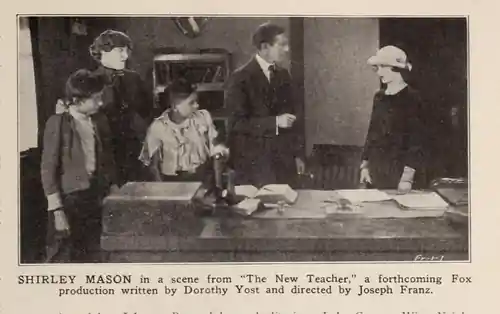
Cinematographer Frank Zucker bathes the tenement interiors in tallow-yellow light that pools like melted butter, while exteriors are blasted with sodium glare—streetcars shrieking past like iron comets. The fire sequence, shot on a rooftop set built over a Long Island soundstage, uses double-exposure so flames appear to dance inside the celluloid itself. Embers swirl toward the lens; for a moment the audience becomes the burning building.
Compare this to the snowstorm episode in Builders of Castles where flakes look like confetti; here they are shrapnel, stinging the cheeks of urchins who trudge barefoot because shoes are pawned for kerosene. The film’s social conscience flickers like that kerosene lamp—never steady, yet capable of sudden illumination.
Performance-wise, the standouts are not the leads but the orbitals.
Julia Brown as the widowed mother Mrs. O’Malley has a face that looks carved from laundry soap, eyes red-rimmed yet defiant. When she tells Constance, “You can’t eat Shakespeare, miss,” the line lands like a slap. Kate Price, playing the landlady Mrs. Ginsberg, steals every scene with a shrug that conveys centuries of pogroms and rent hikes. And little Pat Moore as the pickpocket “Snip” moves with feral grace, his cap always two seconds from falling yet never does—he is the id of the Lower East Side, all appetite and angles.
The film’s gender politics, viewed through a century’s distance, creak like a dumbwaiter weighted with leaded expectations.
Constance’s classroom triumphs—teaching a deaf boy to spell “hope,” rescuing a pregnant teen from the butcher’s knife—are undercut by the narrative insistence that her uterus is the ultimate certificate. Yet Helen Stone complicates the capitulation: watch her eyes in the final shot, veil lifted just enough to catch the camera. There is a glint there—part triumph, part terror—that suggests the marriage might be another kind of classroom, one where the curriculum remains unwritten.
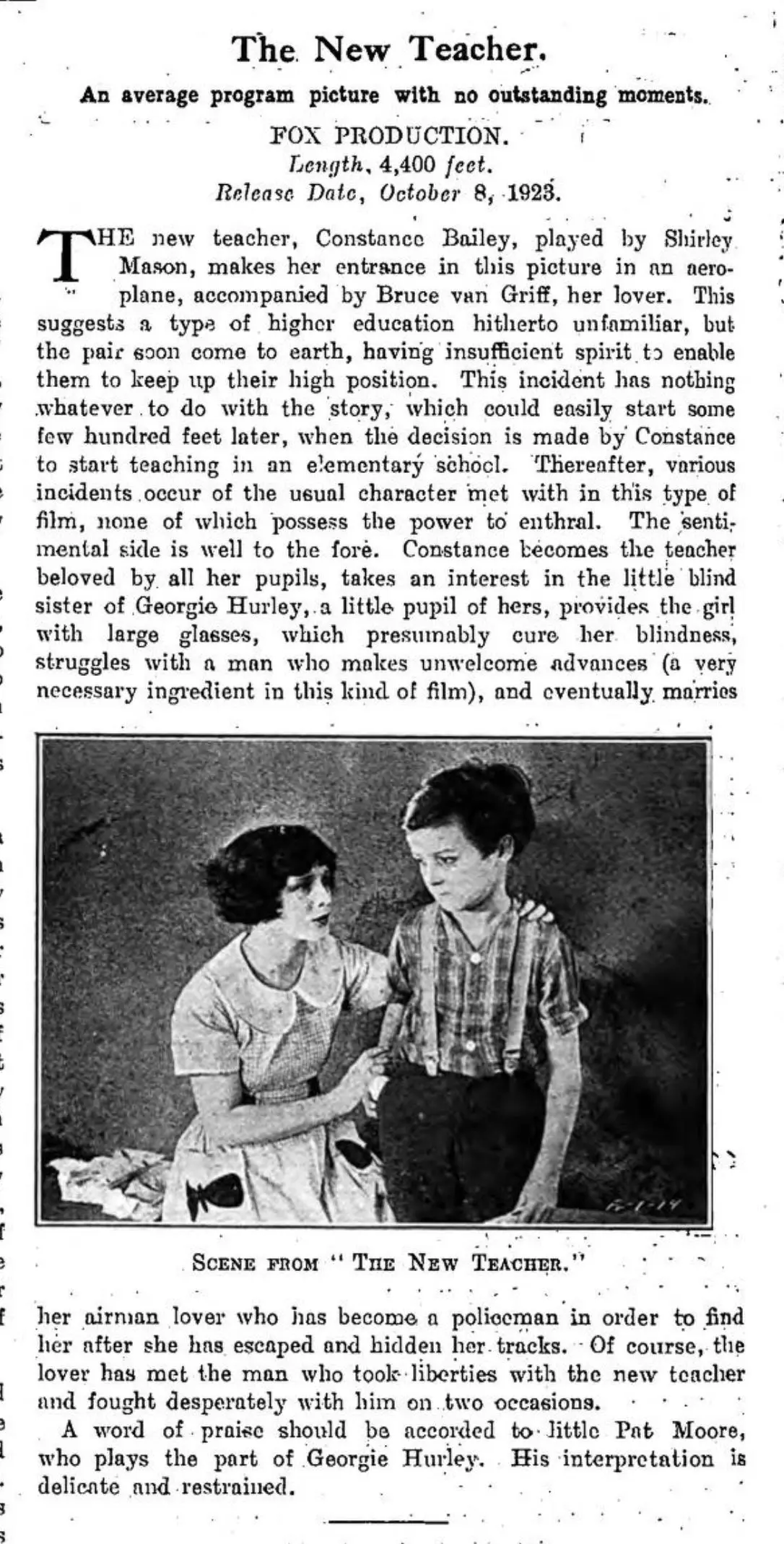
Sound-wise, the film never had any; but silence here is a dialect.
The creak of desks, the thud of Van Griff’s boots, the chalk squeak across slate—these are scored by the projector’s rattle in your skull. Modern accompanists often lay a saccharine waltz beneath the courtship scenes; I prefer the version I saw at Brooklyn’s Morbid Anatomy Museum where a single violinist played klezmer scales that turned every embrace into a question mark.
Compare this to the sonic exuberance of You’ll Be S’prised—a film that whistles past graveyards—or the eerie hush of The Spirit of Good where silence feels punitive. The New Teacher weaponizes quiet differently: it makes the audience complicit, forcing us to supply the roar of the fire, the children’s hungry coughs, the rustle of petticoats as Constance kneels in soot to pray.
Restoration status? A 4K scan from a Dutch print surfaced in 2019, its nitrate emulsion bubbled like burnt sugar. The tinting—amber for interiors, cerulean for exteriors—has been reconstructed using handwritten notes from the Library of Congress’s Paper Print Collection. The result is a film that looks bruised yet alive, like a rescued fresco.
Final arithmetic: is it progressive or regressive? Both, in the same breath.
It dangles the fantasy of female autonomy then snatches it away like a schoolmistress confiscating a toy. Yet within that snatch lies a snapshot of 1921 America—women two years shy of the vote, labor unions striking for the eight-hour day, immigrants cramming through Ellis Island like beans through a funnel. The film is both mirror and smoke: it shows us what we were, and how desperately we wanted to believe we could be rescued rather than rescue ourselves.
Watch it for the textures: the herringbone pattern of Van Griff’s coat, the way Constance’s silk stocking wrinkles at the ankle when she kneels, the chalk dust that hangs in a beam of light like银河系. Watch it for the contradictions: a social-problem picture that ends with a diamond solitaire; a heroine who teaches self-reliance yet surrenders to patriarchal arms. Watch it because in an age of algorithmic sameness, here is a artifact that stutters, flickers, refuses to resolve—like history itself, still learning how to spell the word “future.”
IMDb —
1929
Community
Log in to comment.