DbcultAccessing Vault...
5.8/10
Senior Film Conservator
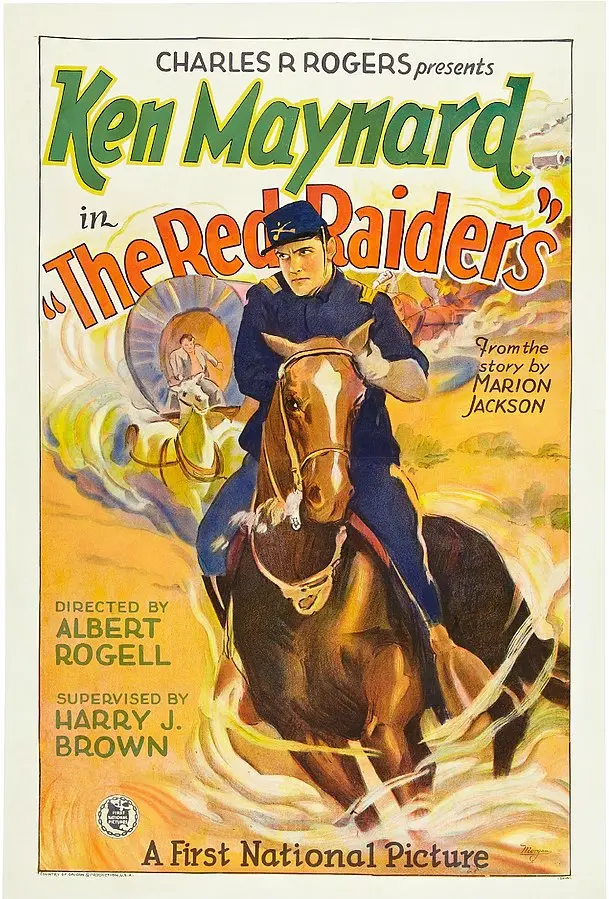
A definitive 5.8/10 rating for a film that redefined the boundaries of cult cinema. The Red Raiders remains a cornerstone of transgressive art.
Is The Red Raiders worth watching today? Short answer: absolutely, if you approach it with the right historical lens and a genuine appreciation for early Western cinema. For fans of silent films, particularly those fascinated by the genre's formative years and its often-problematic portrayals of indigenous peoples, this 1927 feature offers a surprisingly nuanced, albeit still flawed, experience. However, if your taste runs exclusively to modern, fast-paced narratives or you have little patience for the conventions of the silent era, this might prove a challenging, even frustrating, watch.
This film works because of its audacious attempt to inject a semblance of moral ambiguity into a genre often content with simplistic heroes and villains, particularly through the character of Lone Wolf. It also benefits immensely from Ken Maynard’s undeniable screen presence and the sheer spectacle of his horsemanship. However, this film fails because its progressive intentions are frequently undermined by the pervasive stereotypes of its era, leading to a narrative that, while trying to be different, often defaults to familiar, uncomfortable tropes. You should watch it if you are a silent film scholar, a dedicated Western history buff, or someone who appreciates early stunt work and the raw, unrefined energy of pre-talkie action cinema.
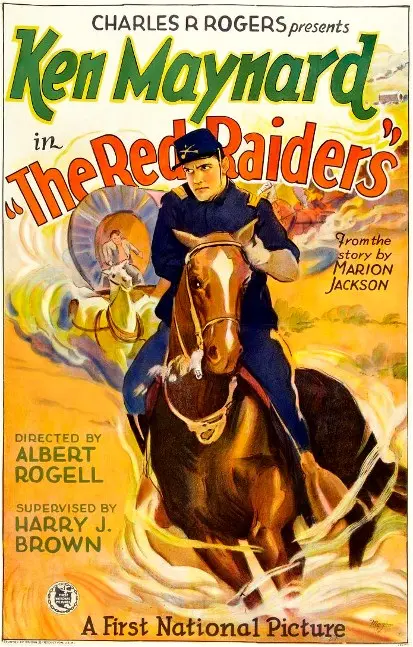
In the sprawling, untamed landscape of 1927, as cinema was still finding its voice, the Western genre was a booming industry. Amidst the likes of Tom Mix and William S. Hart, Ken Maynard emerged as a formidable cowboy star, renowned for his daring stunts and his magnificent horse, Tarzan. The Red Raiders, directed by J.P. McGowan, stands as a testament to this era, a film that attempts to grapple with themes of conflict, loyalty, and the collision of cultures on the American frontier. It's a product of its time, deeply embedded in the conventions and limitations of silent storytelling, yet occasionally reaching for something more profound than mere spectacle.
To truly appreciate this film, one must shed the expectations of modern filmmaking. This isn't a sweeping epic of the scale of a John Ford later in his career, nor does it possess the psychological depth that would come to define more complex Westerns. Instead, it offers a snapshot of a specific moment in cinematic history, a period when narrative ambition often outstripped technical capacity, and social commentary was still largely rudimentary.
The narrative of The Red Raiders centers on Lone Wolf, portrayed with a compelling intensity by Chief Yowlachie. He is not merely a stock antagonist; he's a young, ambitious leader, chafing under the cautious wisdom of his elders. His desire to incite an uprising against the encroaching white settlers is a complex mix of perceived injustice and a thirst for power. This internal tribal conflict, while not fully explored, offers a glimpse into a more nuanced understanding of indigenous communities than many contemporary films dared to portray.
Lone Wolf's infiltration of the fort as a scout is a clever plot device, allowing for both internal tension and external conflict. The stakes are raised considerably with the news of a new reservation's approval, a peace initiative that directly threatens Lone Wolf's warpath. The race against time to deliver this information, led by Captain Scott (Ken Maynard), forms the backbone of the film's action. This setup, while archetypal for the Western, gains a certain urgency due to the dual-layered conflict: the external battle between cavalry and warriors, and the internal struggle within the Native American community itself.
However, it's crucial to acknowledge that the film, despite its slightly more complex portrayal of Lone Wolf, still operates within the problematic framework of its time. The 'good' Indians are those who seek peace with the white man, while those who resist are painted as misguided or outright villainous. It’s a subtle but persistent reinforcement of colonial narratives, a common failing of many films of this era, including even those with purportedly progressive intentions like A Tale of Two Worlds, which similarly grappled with cultural clashes.
J.P. McGowan, a veteran director of countless B-Westerns and serials, helms The Red Raiders with a practical, no-nonsense approach. His direction prioritizes action and clear storytelling over artistic flourishes, which is both a strength and a limitation. The film's outdoor sequences, shot against authentic Western backdrops, are genuinely impressive. McGowan makes excellent use of wide shots to establish the vastness of the landscape, emphasizing the isolation and peril faced by the characters. One particular sequence involving a cavalry charge across a rocky canyon is particularly well-staged, showcasing a kinetic energy that belies the film's age.
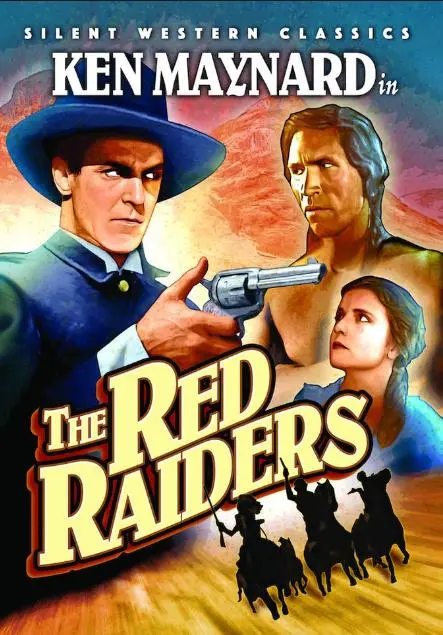
The cinematography, while not groundbreaking, is competent. It effectively captures the dust and grit of the frontier, and the use of natural light adds a layer of realism. There are moments where the camera work feels dynamic, especially during the numerous chase scenes, which are a hallmark of Maynard’s films. However, close-ups are often functional rather than expressive, serving primarily to convey emotion through exaggerated silent film acting rather than subtle visual cues. This isn't a film designed for visual poetry; it's built for thrilling escapism.
"McGowan's strength lies in orchestrating chaos, and the ambush sequence, while predictable, is executed with a raw, visceral energy that still resonates."
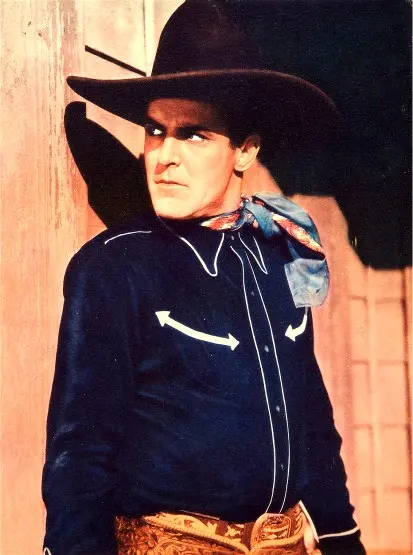
Ken Maynard, as Captain Scott, embodies the quintessential silent Western hero. He is stoic, brave, and possesses an almost superhuman ability to ride a horse. Maynard’s acting style is typical of the era: broad gestures, clear facial expressions, and a reliance on physical prowess. While he conveys determination and heroism effectively, his emotional range is somewhat limited. He's more of a force of nature than a deeply conflicted individual, a common trait for cowboy stars whose appeal lay more in their action capabilities than their dramatic chops.
His chemistry with Tarzan, his legendary horse, is arguably the film's strongest performance duo. Tarzan is not just a prop; the horse performs incredible feats, often stealing scenes with its intelligence and agility. From dramatic leaps to coordinated maneuvers, Tarzan is a character unto itself, underscoring Maynard's unique appeal as a stunt rider first and an actor second. This dynamic is a surprising observation, as the human drama often pales in comparison to the equine heroics.
Chief Yowlachie’s portrayal of Lone Wolf is, without doubt, the most compelling performance in the film. Despite the script’s limitations and the prevailing stereotypes, Yowlachie brings a gravitas and intensity to the role that elevates it beyond mere villainy. His expressions convey a sense of genuine conviction, even if his character’s ultimate motivations are simplified. There’s a palpable sense of his defiance and ambition, making him a more memorable antagonist than many of his silent-era counterparts. His scenes are imbued with a quiet power, a stark contrast to the more flamboyant acting around him.
The rest of the cast, including Anne Drew as the obligatory love interest and Lafe McKee as the sympathetic elder, fulfill their roles adequately, if somewhat conventionally. Anne Drew, while charming, is largely relegated to the 'damsel in distress' archetype, a common trope that, while historically accurate for the genre, offers little in terms of character development. Paul Hurst, as a cavalryman, provides some comic relief and a gruff but loyal presence. Their performances are functional, supporting the central conflict without adding significant depth.
The pacing of The Red Raiders is typical of silent action films: it starts with a steady build-up of exposition and character introduction, punctuated by bursts of intense action. The film dedicates considerable time to establishing Lone Wolf's motivations and his clandestine activities within the fort, building a sense of impending doom. This initial slow burn is then dramatically accelerated during the climactic chase and ambush sequences. The editing during these action scenes is surprisingly brisk, creating a sense of urgency that effectively draws the viewer in.
The tone is largely adventurous and dramatic, with moments of genuine tension. There's a clear emphasis on heroism and the triumph of good over perceived evil, even if that 'evil' is given a slightly more complex origin story. The film occasionally dips into melodramatic territory, particularly in scenes involving Anne Drew’s character, but these moments are balanced by the raw energy of the outdoor action. It works. But it’s flawed.
Yes, The Red Raiders is worth watching if you have an interest in silent Westerns. It offers a valuable look into the filmmaking techniques of the late 1920s. The film showcases early stunt work and effective action sequences for its time. It also presents a nuanced, though still flawed, portrayal of indigenous characters. For those studying film history, it's a significant example of the genre's evolution. Casual viewers, however, might find its pacing and silent film conventions challenging.
The Red Raiders is more than just another forgotten silent Western; it's a fascinating artifact. While undeniably a product of its time, complete with the problematic racial politics and broad acting styles common to the era, it also offers glimpses of something more. Chief Yowlachie's performance is a revelation, lending a gravitas that challenges the simplistic hero-villain dynamic. Ken Maynard, while not a dramatic powerhouse, delivers on the action front, making his scenes with Tarzan genuinely thrilling. The film's attempt to portray a Native American character with complex motivations, even if ultimately undermined by genre conventions, is a commendable, if imperfect, step for its time.
For the curious film historian or the dedicated silent film aficionado, The Red Raiders offers a rewarding, if sometimes uncomfortable, viewing experience. It's a testament to the enduring appeal of the Western, even in its nascent form, and a reminder of how cinema has evolved in its storytelling and its social conscience. Don't expect a modern masterpiece, but do expect a robust piece of early American cinema that, against all odds, still has something to say.
IMDb 6.5
1935
Community
Log in to comment.