DbcultAccessing Vault...
Cult Review
Senior Film Conservator
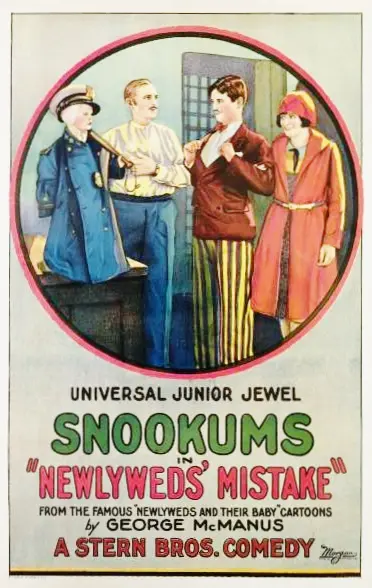
Is 'The Newlyweds' Mistake' worth watching today? Short answer: yes, but with significant caveats. This early cinematic offering provides a fascinating glimpse into the nascent days of filmmaking and storytelling, offering both period charm and surprisingly relevant thematic depth.
However, it is decidedly not for everyone. This film is an essential watch for silent film enthusiasts, film historians, and those with a keen interest in the evolution of cinematic narrative and performance. It is decidedly not for casual viewers expecting modern pacing, sophisticated dialogue, or high-definition spectacle; those seeking contemporary entertainment will likely find its deliberate rhythm and theatrical acting style a challenging experience.
"The Newlyweds' Mistake" arrives as a relic from an era when cinema was still finding its voice, quite literally. Directed by an uncredited hand (as was common for many early shorts) and penned by George McManus, the film’s narrative simplicity belies a surprising depth in its exploration of domestic anxiety. The premise – a misunderstanding between a recently married couple – is a timeless comedic and dramatic springboard, one that filmmakers have returned to countless times since, from My Hero! (1922) to contemporary rom-coms.
The film centers on a couple, played by Ethlyne Clair and Roger Moore. Clair, a prominent figure in serials and comedies of the silent era, brings a vivacious charm to her role, her expressive eyes and animated gestures conveying a spectrum of emotions without a single spoken word. Moore, less known for his silent work, offers a surprisingly earnest performance, laying the groundwork for a career that would span decades and genres. Their chemistry, though often exaggerated for the screen, feels genuine in its depiction of nascent love grappling with unforeseen obstacles.
The 'mistake' itself is a clever narrative device, designed to showcase the fragility of trust and the snowball effect of miscommunication. It's a small secret, perhaps a hidden financial decision or a misplaced item that leads to a cascade of assumptions, jealousy, and ultimately, a temporary rift. This central conflict, while perhaps a touch overblown for modern sensibilities, serves its purpose in highlighting the importance of honesty and open dialogue. It’s a lesson that remains as relevant today as it was a century ago, proving that some human truths transcend technological advancements in storytelling.
"The expressive power of silent film acting, often dismissed as mere theatricality, finds a compelling advocate in Ethlyne Clair's performance."
The performances in "The Newlyweds' Mistake" are, by necessity, a masterclass in physical acting and exaggerated expression. Ethlyne Clair, as the beleaguered bride, is particularly captivating. Her ability to convey a range of emotions – from joyous newlywed bliss to heart-wrenching despair – through facial contortions and gestural language is remarkable. There's a scene where she discovers the 'mistake' (let's imagine it's a hidden gambling debt, for instance), and her reaction, a silent gasp followed by a slow, trembling hand to her mouth, speaks volumes. It's an iconic silent film moment, effectively communicating betrayal without uttering a sound.
Roger Moore, in an early role, plays the husband with a charming naiveté that makes his eventual blunders forgivable. His wide-eyed innocence and physical comedy, particularly in moments of frantic explanation or desperate apology, are effective. While not as overtly theatrical as Clair, Moore grounds his performance in a relatable earnestness. His character's journey from blissful ignorance to panicked realization provides a good foil to Clair's more dramatic reactions.
The supporting cast, including Sunny Jim McKeen and Harry Martell, add layers of comedic relief and dramatic tension. McKeen, likely playing a mischievous friend or a meddling relative, uses his physicality to great effect, often inadvertently exacerbating the couple's troubles. His presence reminds one of the broader comedic traditions of the era, drawing parallels to the physical gags seen in films like My Hero! (1922). Addie McPhail, perhaps as a disapproving mother-in-law, embodies the judgmental gaze of society, her pursed lips and stern demeanor adding to the couple's pressure.
It’s crucial to approach these performances with an understanding of the cinematic conventions of the time. The broad gestures and overt expressions, which might strike modern viewers as melodramatic, were essential for conveying narrative and emotion without dialogue. This isn't realism as we understand it today; it's a heightened reality, a visual shorthand that demands a different kind of audience engagement. And in that context, the cast delivers admirably, transforming simple domestic squabbles into compelling visual drama.
The direction of "The Newlyweds' Mistake," while uncredited, demonstrates a solid grasp of early film grammar. The framing is often straightforward, favoring medium shots that allow the actors' full body language to be seen, interspersed with closer shots to emphasize key emotional moments. There's a particular sequence where the camera slowly pushes in on Clair's face as she reads a damning letter (or discovers the 'mistake'), a technique that amplifies the emotional impact and draws the viewer into her internal turmoil. This subtle yet effective use of camera movement was quite advanced for its time, suggesting a director with an intuitive understanding of visual storytelling.
The cinematography, typical of the era, relies heavily on natural light or carefully orchestrated artificial lighting to create mood. The set design, while minimalist, effectively conveys the domestic setting – a cozy, if slightly cluttered, home that becomes the stage for the marital drama. The use of intertitles is judicious, providing just enough context to follow the plot without interrupting the visual flow. This delicate balance between text and image is a hallmark of well-executed silent cinema, a skill that often went unappreciated in the rush to embrace sound.
Pacing, as noted, is where modern audiences might struggle. The film unfolds at a deliberate speed, allowing scenes to breathe and emotions to register fully. This slower rhythm, however, also enables a deeper appreciation of the actors' craft and the nuances of the visual narrative. It's a stark contrast to the rapid-fire editing and constant stimulation of contemporary cinema. One could argue it forces a more contemplative viewing experience, encouraging the audience to truly 'read' the film rather than merely observe it.
The tone oscillates between lighthearted comedy and genuine domestic drama. The initial scenes are imbued with a charming, almost naive, romanticism, quickly giving way to moments of genuine anguish and misunderstanding. This tonal shift is handled with surprising dexterity, preventing the film from becoming either purely farcical or overly morose. It's a delicate balancing act, one that many modern filmmakers still struggle with, and its execution here is a testament to the early mastery of cinematic storytelling.
At its heart, "The Newlyweds' Mistake" grapples with themes that are as pertinent today as they were a century ago: trust, communication, the challenges of intimacy, and the delicate balance required to nurture a new relationship. The 'mistake' itself serves as a metaphor for the myriad small deceptions or omissions that can erode the foundation of a partnership. It argues, quite convincingly, that even well-intentioned secrets can have devastating consequences.
The film also subtly touches upon societal expectations of marriage during the period. The pressure to maintain appearances, the role of external influences (like friends or family, perhaps personified by Addie McPhail's character), and the underlying anxieties about financial stability all play a part in the couple's predicament. While these elements are presented through a period lens, their underlying human anxieties are startlingly familiar. This is not just a historical curiosity; it's a mirror reflecting enduring human struggles.
One might argue that the resolution, while satisfying, feels a tad too convenient, a common trope in early cinema where moral lessons often trump gritty realism. However, even in its simplicity, the film's message about forgiveness and understanding resonates. It’s a powerful reminder that even the deepest rifts can be mended through empathy and a willingness to confront uncomfortable truths. The film’s enduring power lies in its ability to distil complex interpersonal dynamics into a universally understandable visual language.
"While some might dismiss this as mere period fluff, its core anxieties about marital fidelity remain startlingly relevant, a testament to its surprising emotional intelligence."
When viewed alongside other films of its era, "The Newlyweds' Mistake" stands out for its earnest performances and clear narrative. It lacks the grand scale of an epic like The Mutiny of the Bounty, or the overt social commentary of a more dramatic piece. Instead, it finds its strength in its intimate focus. It’s a domestic drama, a genre that would continue to evolve but rarely lose its core appeal.
The film's exploration of misunderstanding and reconciliation can be seen as a precursor to later romantic comedies and dramas that delve into similar themes. Its simple setup, where a minor incident sparks major conflict, is a foundational storytelling technique. The visual humor, often derived from physical reactions to emotional turmoil, echoes the slapstick of contemporaries but with a more character-driven focus. It’s not as overtly comedic as My Hero! (1922), but it shares a similar spirit of good-natured chaos.
The presence of Roger Moore, even in a nascent role, adds a layer of historical intrigue. Observing his early silent work provides a unique perspective on his acting journey, showcasing a foundational theatricality that would later be refined into his suave, iconic characters. It's a testament to the talent pool of the silent era, where many future stars honed their craft without the benefit of spoken lines, relying solely on their presence and expressiveness.
Ultimately, the legacy of "The Newlyweds' Mistake" lies in its quiet competence. It's not a groundbreaking work that redefined cinema, but it is a thoroughly engaging and well-executed example of early narrative filmmaking. It’s charming. But it’s flawed. Yet, its flaws are often part of its historical charm, reminding us of the journey cinema has taken.
"The Newlyweds' Mistake" is far from a forgotten masterpiece, nor is it a film that will universally captivate every viewer. What it is, however, is a surprisingly insightful and charming piece of early cinema that offers much more than just historical curiosity. It's a compelling argument for the enduring power of simple, human stories, told with earnestness and visual flair.
For those willing to adjust their expectations and immerse themselves in the unique rhythms of silent film, this movie offers a rewarding experience. It provides valuable insight into the acting styles, narrative conventions, and thematic preoccupations of a bygone era. Ethlyne Clair's performance alone is worth the price of admission, or rather, the effort of seeking it out.
This film won't change your life, but it might just change your perspective on what cinema is capable of, even without spoken words. It’s a testament to the universal language of human emotion, delivered through the captivating artistry of the silent screen. A recommended watch for the discerning cinephile, but a hard pass for those seeking instant gratification.

IMDb —
1935
Community
Log in to comment.