DbcultAccessing Vault...
Cult Review
Senior Film Conservator
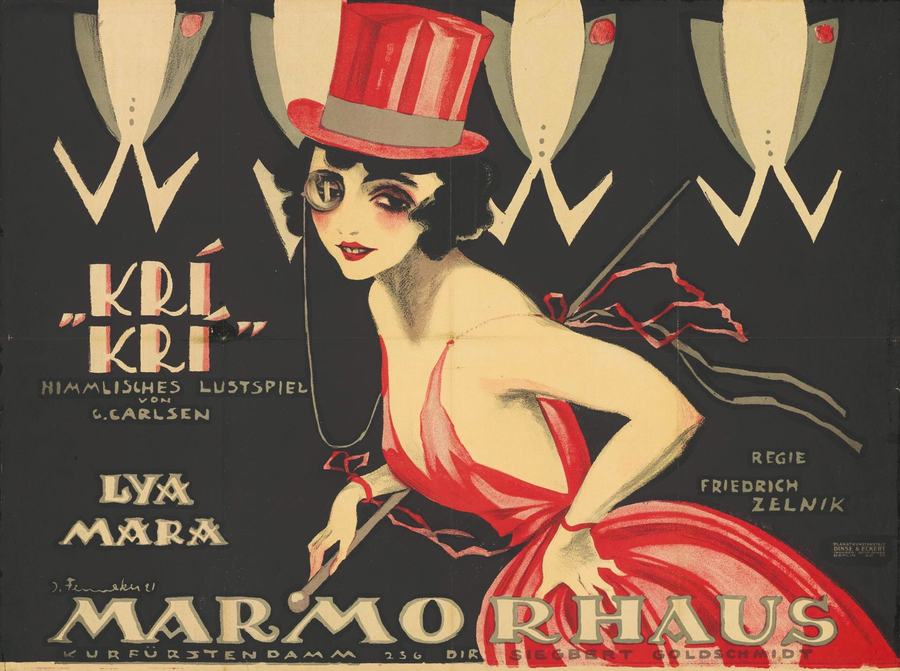
There are films that document history and films that hallucinate it; Kri-Kri, die Herzogin von Tarabac opts for the latter, conjuring a kingdom that evaporates faster than schnapps on a hot saucer. Fanny Carlsen’s screenplay—equal parts sugar-dust and strychnine—treats nobility as a carnival mask you rent by the hour. When Kri-Kri first pins the ducal brooch to her thrift-store lace, the jewel’s glass facets catch the projector beam and fracture into a thousand counterfeit stars. It’s the first visual gag in a movie that refuses to separate glamour from forgery.
Johannes Riemann’s would-be prince sports a mustache so thin it could slice ledger paper, yet he underplays the buffoonery until you almost believe his IOUs are redeemable. Opposite him, Lya Mara pirouettes between naïf and shark; her Kri-Kri never lets the audience settle on a single reading of sincerity. Watch her eyes during the auction scene: they flicker from triumphant to terror-struck in the span of a violin pizzicato, a feat of micro-expression that prefigures the neurotic close-ups in Stolen Moments by a full decade.
Director Frederic Zelnik shoots Tarabac’s palace as a mausoleum of baroque props scavenged from bankrupt royal theaters—cracked cherubs, moth-eaten velour, gasoliers dripping wax stalactites. The camera glides through corridors like a grifting ballroom ghost, pausing to linger on empty coat racks that once bore ermine. Compare this to the crisp republican offices in The Social Secretary and you grasp how deliberately the film rubs powdered decadence against the sandpaper of modernity.
The lost Verdi aria functions as MacGuffin and moral litmus: whoever possesses the sheet music, the film implies, inherits the right to feel. When Kri-Kri finally vocalizes those yellowed notes, her voice cracks—not from incompetence but from the existential recognition that art is the final currency once gold turns to lead. The scene’s rawness anticipates the wounded crooning in Fires of Faith, yet here the emotion detonates inside a gilded operetta frame, making the rupture doubly heartbreaking.
Carlsen’s script delights in gendered drag: men wear monocles as breastplates, women brandish fans like switchblades. In the masked ball sequence, every waltz partner is a potential confidence trick, and the traditional operetta unveiling becomes a striptease of social mobility. Kri-Kri’s final self-coronation—placing the dented tiara on her own head while the menfolk squabble over forged deeds—feels quietly revolutionary, a proto-feminist jab delivered with silk-gloved knuckles.
Hermann Picha’s cigar-puffing banker could have waddled straight from a Baffled Ambrose two-reeler, yet Zelnik lets him deliver a drunken soliloquy on inflation that feels ripped from tomorrow’s headlines. Karl Platen’s notary, all tremulous stammer and ink-stained cuffs, embodies bureaucratic absurdity so precisely you half expect him to stamp the celluloid itself. Their slapstick timing is razor, but the laughter catches in your throat once you realize their schemes are only a hyperbolic hop from the real Weimar wheeling-dealing.
The tinting strategy alternates between nicotine amber for interiors and a sickly sea-foam green for exteriors, suggesting that the only healthy air exists under a roof about to collapse. Spot-color flashes of tangerine and chartreuse ignite whenever a character lies—an early, wordless form of truth tracking. Restorationists at Deutsche Kinemathek have resurrected these hues so vividly that the screen appears to exhale schnapps fumes.
Editorial pacing mimics a three-quarter-time waltz: two steps forward, one step bankruptcy. Every cut on a musical downbeat underscores the gamble of keeping up appearances. When the orchestra stalls mid-gala—musicians unpaid, of course—the sudden silence lands like a slap, reminding viewers that rhythm itself is a line of credit.
Carlsen pens intertitles that read like aphorisms from a bankrupt apothecary: “A title is a promissory note written on water” or “Love, like rent, is due on the first and evicts on the second.” The letters jitter across the screen, refusing to stay centered—an early visual correlative for economic vertigo that rivals the Expressionist jaggedness of The Terror.
Where The Simp settles for chuckles and His Wife’s Money for matrimonial coin, Kri-Kri dares to laugh while the ground caves in. Its operetta gloss foreshadows the sugar-coated venom of Prinz Kuckuck, yet its compassion is broader, its social scalpel sharper. By staging collapse as carnival, the film grants its audience the giddy permission to keep dancing even when the ballroom is on fire.
Thought vanished like the Habsburgs, a nitrate print surfaced in a Slovenian parish attic in 2017, tucked beside communion wafers and land deeds. The chemical aroma reportedly made the projectionist tipsy—proof that the film’s alcoholic subtext had literally soaked the emulsion. Digital 4K restoration preserved every flake of gold leaf, every moth hole, every wince of Riemann’s overdrawn smile.
Today, when identity is a filter and status a follower count, Kri-Kri’s cautionary cotillion feels eerily topical. Swap the ducal coronet for a blue-check verification and the plot still pirouettes on the same precipice. Watch it at 2 a.m. with cheap Riesling; let the cracked aria lodge in your ear like a financial hangover. And when the credits dissolve into emulsion static, you may find yourself clutching your own dented crown—wondering whether the joke is on the aristocracy, the bourgeoisie, or the endlessly refinancing self.
Verdict: A glitter-bomb of a film that explodes nostalgia from within, Kri-Kri, die Herzogin von Tarabac deserves pride of place beside the twitching consciences of Lucíola and the civic nightmares of The Fall of a Nation. It is both a truffle and a toxin—consume responsibly, then kiss your credit card goodnight.
IMDb —
1927
Community
Log in to comment.