DbcultAccessing Vault...
Cult Review
Senior Film Conservator
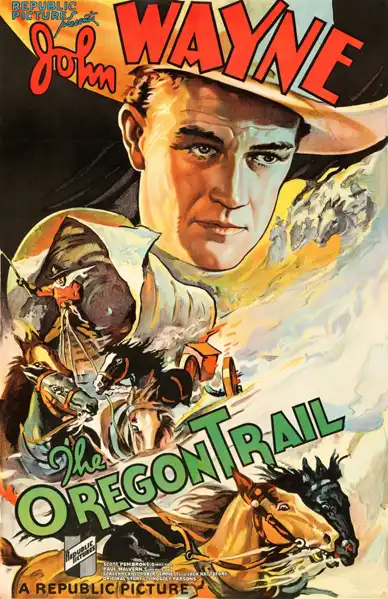
If you are a fan of early John Wayne stuff and don’t mind a plot that moves at the speed of a runaway stagecoach, sure, give it a watch. If you need logic, deep character development, or anything resembling a coherent transition between scenes, you might want to look elsewhere.
This is basically a series of vignettes glued together with gunpowder. It isn’t trying to be The Gay Divorcee in terms of polish, that is for sure. It’s raw, it’s cheap, and it’s weirdly fun in a 'what happens next' kind of way.
John Wayne is just... John Wayne. He is stoic, he walks with that specific heavy stride, and he handles his business without wasting breath on small talk. You can tell he was still finding his groove here, but he owns every frame he’s in. Even when the dialogue is clearly just filler, he makes it sound like a command.
There is a moment where he just stares down a villain that lasts way longer than it needs to. It’s almost uncomfortable. But then, *bam*, something blows up and you forget the awkward silence.
I found myself wondering if anyone on set actually read the full script or if they just got a memo every morning saying, "Okay, today we shoot a chase scene, and tomorrow we do the campfire argument." It’s messy. It’s disjointed. But it’s got that specific 1930s dust-in-your-teeth charm.
It’s nowhere near as clever as Seven Keys to Baldpate, but it isn't trying to be. It just wants to get from Point A to Point B before the sun goes down. Sometimes, that is enough. Don't think too hard about the plot holes; they're big enough to drive a wagon through.
Year
1936
IMDb Rating
—

Editorial
Deciphering the legacy of transgressive cult cinema.
Community
Log in to comment.