DbcultAccessing Vault...
Cult Review
Senior Film Conservator
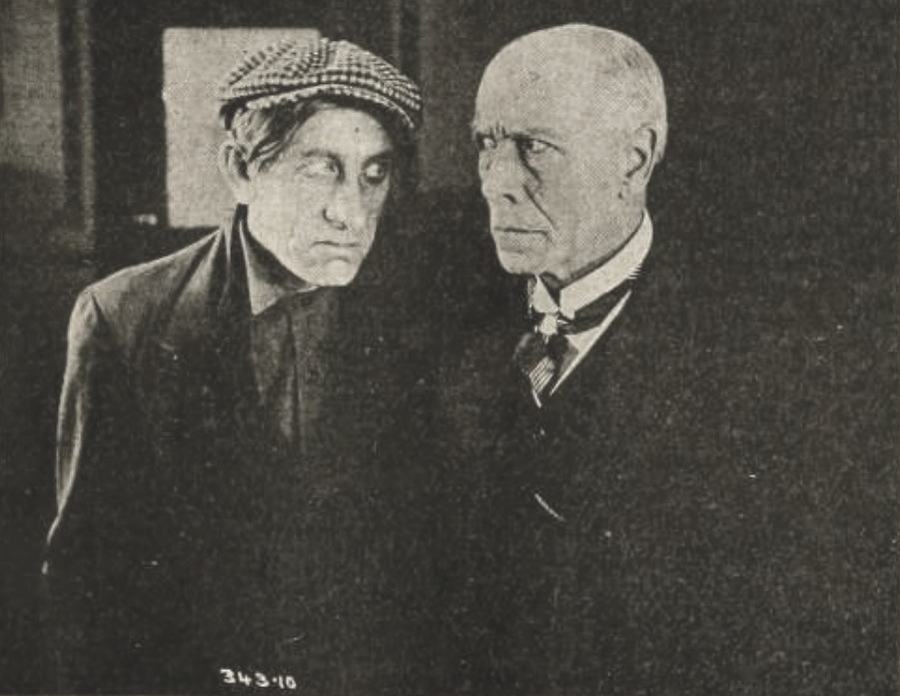
The silent era was never merely about the absence of sound; it was an era defined by the presence of profound visual metaphor. In 1917’s Hinton's Double, we find a narrative that anticipates the noir sensibilities of the 1940s while grappling with the raw, Dickensian tragedies of the early 20th century.
At its core, Hinton's Double is a study in the commodification of the human soul. Joshua Stephens, portrayed with a haunting vulnerability by the ensemble cast, represents the ultimate expendable asset. When he agrees to serve a sentence for John Hinton, he isn't just selling his time; he is selling his very existence. This theme of the 'disposable man' resonates deeply with other works of the period, such as the psychological weight found in Crime and Punishment, where the boundaries of legality and morality are perpetually blurred.
The film’s brilliance lies in its refusal to simplify the conflict. Hinton isn't just a villain; he is a product of a burgeoning capitalist frenzy that rewards the 'charlatan of the stock market.' The visual contrast between the high-stakes world of finance and the visceral hunger that drives Stephens to his decision is rendered with a stark, almost brutalist aesthetic. Unlike the more whimsical transformations seen in Pufi - Hogyan lett ünnepelt hös egy jámbor pesti férjböl?, the stakes here are existential and permanent.
The trope of the double is a recurring motif in cinema, often used to explore the duality of man, as seen in the legendary The Student of Prague. However, in Hinton's Double, the double is not a supernatural manifestation but a socio-economic one. Hinton uses Stephens as a literal shield against the consequences of his own avarice. The physical resemblance is a curse for Stephens, a biological trap that allows the wealthy to outsource their suffering to the poor.
The middle act of the film, where Joshua saves Detective Clancy, serves as the pivot point for the entire moral arc. It introduces a third party into the binary conflict—the Law, embodied by Clancy. This dynamic reminds me of the tense legal and moral frameworks explored in The Rack. When Stephens is pardoned, the narrative doesn't offer a traditional happy ending; instead, it plunges into a deeper exploration of Hinton’s depravity. The discovery that Hinton failed to provide the promised $500 a month—a staggering sum for the time—elevates the film from a simple melodrama to a scathing critique of the broken promises of the upper class.
One of the most heart-wrenching subplots involves Joshua’s daughter and the placement of her child in an asylum. This plot point underscores the absolute vulnerability of the working class during this era. It echoes the themes of familial dissolution seen in Her Atonement. The 'asylum' here serves as a metaphor for the systemic failure to protect the innocent when the patriarch is removed from the equation.
When Hinton attempts to 'hide' Joshua in a remote village, the film adopts a pastoral tone that is intentionally deceptive. This 'home of happiness' is nothing more than a gilded cage, a theme that contrasts sharply with the genuine rural simplicity found in The Country Mouse. Here, the country is not a place of refuge but a site of further betrayal. Hinton’s letter to Clancy, framing Joshua as a fugitive, is a masterstroke of villainy that highlights the character's total lack of remorse.
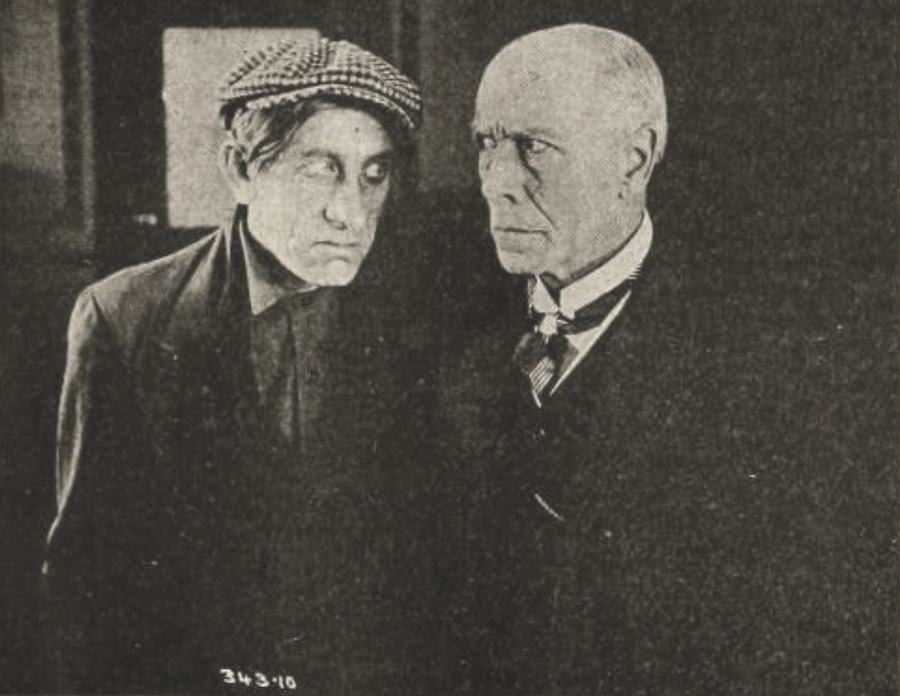
The performances of Frederick Warde and Kathryn Adams provide the film with its emotional anchor. Warde, in particular, captures the exhaustion of a man who has been used as a pawn by a grandmaster who doesn't even respect the game. The cinematography, while limited by the technology of 1917, uses lighting to great effect, often casting Joshua in shadow while Hinton occupies the bright, artificial light of his office. This visual storytelling is as sophisticated as the thematic depth found in The Salamander.
The pacing of the final act—the 'trap' set by Clancy—is a precursor to the modern thriller. The tension is palpable as the daughter’s 'earnest pleadings' bridge the gap between the cold letter of the law and the warm pulse of justice. This resolution is far more satisfying than the often-cynical endings of European counterparts like El beso de la muerte. It suggests that while the system can be manipulated by the likes of Hinton, individual integrity (represented by Clancy) can still prevail.
To fully appreciate Hinton's Double, one must view it alongside other films of the era that dealt with identity and social standing. While What Happened to Jones uses mistaken identity for comedic effect, Hinton's Double treats it as a tragedy of errors. It shares a certain DNA with The High Hand in its depiction of the ruthless nature of those in power, and with The Avenging Trail in its quest for a righteous reckoning.
The film also touches on the struggle for survival in a way that feels akin to Leben heisst kämpfen (Life is Struggle). Joshua Stephens is a fighter, not with his fists, but with his endurance. His willingness to sacrifice his freedom for his family is the ultimate act of resistance against a world that views him as a mere shadow of a 'great man.' This sense of being 'bound' by circumstances is a sentiment echoed in Souls in Bondage.
Hinton's Double remains a vital piece of cinematic history because it refuses to look away from the ugly realities of class and deception. It isn't just a story about two men who look alike; it’s a story about the masks we wear and the price we pay for them. Whether it’s the lightheartedness of Father and the Boys or the exoticism of Mexico, few films of the year managed to capture the specific American anxiety of the 'self-made man' being unmade by his own reflection.
The film concludes not with a simple triumph, but with a complex restoration of truth. Detective Clancy’s realization that he was a tool for Hinton’s malice is a powerful moment of professional and moral awakening. In an era where the stock market is still often a playground for charlatans, the warnings of Hinton's Double feel remarkably contemporary. It is a film that demands to be seen, not just as a relic, but as a mirror—much like Joshua himself—to our own societal failings.
A dense, emotionally resonant exploration of identity theft in its most literal form. The film excels in its pacing and thematic consistency, offering a bleak yet ultimately hopeful look at the possibility of justice in an unjust world. A must-watch for fans of early social dramas and silent psychological thrillers.
IMDb 8.4
1926
Community
Log in to comment.