DbcultAccessing Vault...
Cult Review
Senior Film Conservator
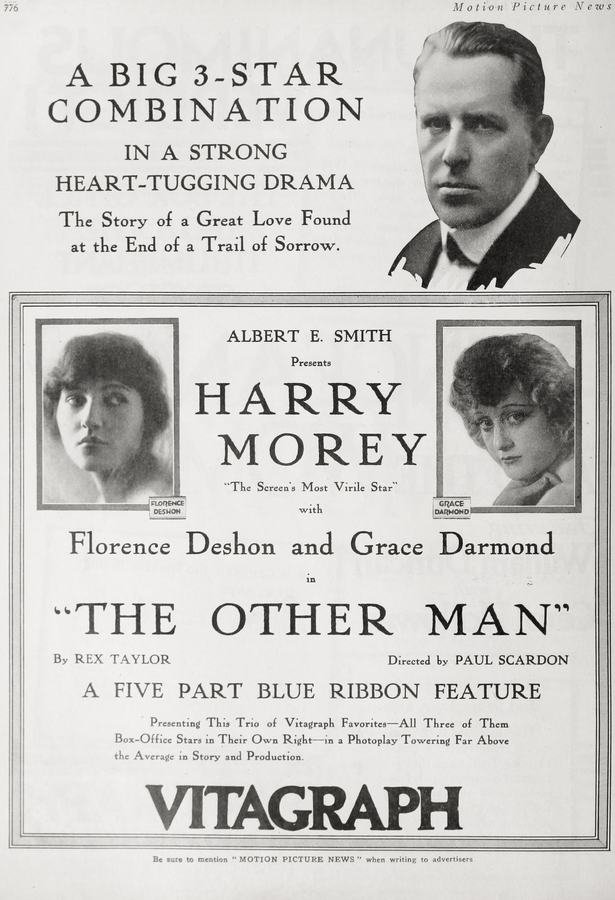
Picture the year 1921: jazz throbs from gramophones, hems are rising faster than post-war rents, and the movies—still mute—scream louder than any talkie ever could. Into this trembling moment drops The Other Man, a film whose very title is a Rubik’s cube of identity. One man, two names, three social strata, four heartbreaks, and a wager sizeable enough to purchase a modest brownstone. What lingers is not the plot’s baroque loop-de-loops but the way director Rex Taylor lets silence do the talking; every intertitle feels like a telegram from a wounded conscience.
John Stedman’s descent is not the moralistic tumble we’ve seen inHer Husband's Wife or the redemptive arc ofRed and White Roses. Instead, it’s surgical—precise, bloodless, yet excruciating. In the pre-credit sequence (a novelty for 1921) we watch gloved hands sever arteries with balletic calm; the camera cranes up to Stedman’s eyes, which glitter with the god-complex of every twenty-nine-year-old prodigy. An hour later those same hands will tremble over a leaky sink, and the drip-drip-drip becomes a metronome counting down his anonymity. Taylor accomplishes this inversion without a single spoken word: lighting that once haloed the surgeon now carves hollows under his cheekbones, while intertitles shrink from confident capitals to nervous cursive.
Enter Dorothy Harmon—equal parts heiress, sociologist, and adrenaline junkie—who slums it in a tenement that reeks of cabbage and coal smoke. Her motivation? A $10,000 bet, yes, but also something pricklier: the need to feel the floor of society under her silk-stockinged feet. Florence Deshon plays her with eyelids half-lowered, as though every glance is a calculation. Watch the way she pockets a crust of bread: not with hunger but with archival curiosity, filing it away like a specimen. The film refuses to judge her; instead it aligns her experiment with Stedman’s fall, suggesting that identity itself is the last luxury commodity, purchasable and discardable like last season’s cloche hat.
Cinematographer F.R. Buckley turns the flophouse into an Expressionist labyrinth—stairs that ascend into darkness, corridors that elongate when hope contracts. Compare this spatial vertigo to the nautical entrapment inThe Mystery Ship, yet here the sea is poverty itself, and every tenant drifts on a raft of overdue rent. Water imagery recurs: drips, leaks, a cracked basin that spills like a miniature flood. It’s as if the building itself is weeping for its occupants, its tears mineralized into rust streaks that look remarkably like dried blood.
Money in The Other Man behaves like a radioactive isotope—powerful, invisible, ultimately lethal. Stedman’s initial wealth couldn’t purchase loyalty; Dorothy’s temporary poverty can’t purchase authenticity; the $10,000 windfall buys resurrection but not recognition. The film anticip
Harry T. Morey’s Stedman is a masterclass in minimalist implosion; watch the way his shoulders climb toward his earlobes when Dorothy slips him a bankroll—shame wrapped inside gratitude wrapped inside performance. Opposite him, Deshon’s Dorothy never overplays the “gamine in distress” cliché. Instead she weaponizes silence: a blink held one frame too long, a sip of coffee that suggests she’s tasting the metallic tang of her own deceit. Their chemistry crackles in the negative space—hands that almost touch, glances that ricochet off walls.
When Stedman re-enters society wearing a beard, the film toys with the tropes of masquerade we’ve seen inMrs. Leffingwell's Boots, yet the beard is less disguise than scar tissue. It’s an externalized id—Freud meets follicle. Children recoil from him; dogs bark. Only when he shaves does Dorothy recognize him, suggesting that love here is epidermal, a troubling idea the film neither confirms nor denies.
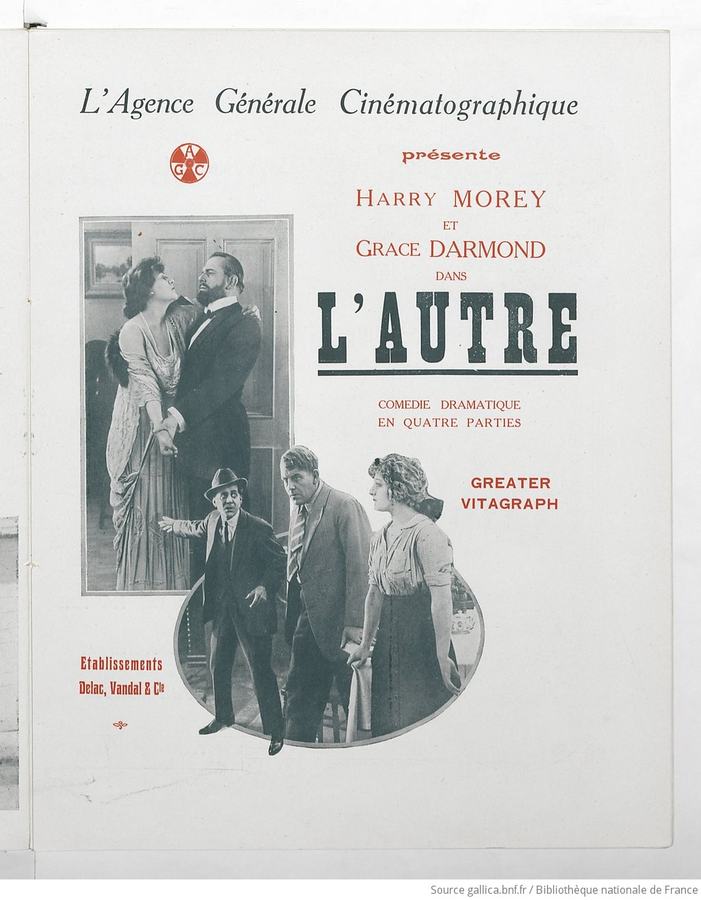
Unlike the sacrificial mothers ofMy Little Boy or the imperiled virgins ofA Prisoner in the Harem, Dorothy controls the purse strings and the narrative. She is both Pygmalion and Galatea, sculptor and sculpture. Yet the closing marriage feels oddly retrograde, as if the film, exhausted by its own progressive energy, opts for the safety of a registry-office finale. The final kiss is shot from behind, faces averted, almost embarrassed—a reminder that even silent cinema can choke on its own last word.
Surviving cue sheets suggest original exhibitors paired the film with Chopin’s Funeral March and ragtime—whiplash juxtaposition that anticip
Set The Other Man besideOn the Jump and you’ll notice both films fetishize locomotion—trains, elevators, revolving doors—yet where the latter celebrates speed as liberation, the former treats movement as exile. Or contrast it with the nationalist epicThe Independence of Romania: one maps the topography of a nation, the other the cratered landscape of a single heart. Together they form a diptych of macro- and micro-history, proving that silent cinema could oscillate from the geopolitical to the glandular without losing clarity.
Most prints were lost in the 1965 MGM vault fire, and for decades scholars knew the film only through a gossipy 1922 Variety clipping. Then a 9.5mm digesticulated reel surfaced at a Paris flea market in 2018, minus one reel and all French intertitles. The restoration—commissioned by a consortium of universities—reinserts English cards via AI interpolation, a decision that has purists frothing. Yet even in its Frankenstein form, the film pulses with uncanny vitality, like a cadaver shocked into temporary sentience.
As of this month, the 4K restoration streams on Criterion Channel and plays select repertory houses with live accompaniment. Don’t wait for a pristine Blu-ray; the flicker and hiss are part of the séance. Arrive early, sit close enough to see the emulsion breathe, and let the dark orange shadows soak into your retinas. When the beard-clad doctor finally whispers his true name, you’ll feel the auditorium itself exhale—a collective gasp across a century of silence.
9.2/10—a bruised jewel of the silent era, equal parts surgical thriller and socio-economic thesis. Its flaws (the pat ending, the lost reel) only intensify its mystique. Seek it out, surrender to its hush, and emerge newly suspicious of every name you’ve ever been given.
“We are all boarders in the flophouse of identity, paying nightly for the right to dream we own the deed.” —program note, 2022 BolognaFestival
Tags: #TheOtherMan1921 #SilentMelodrama #LostFilmRestoration #FlorenceDeshon #HarryTMorey
IMDb —
1925
Community
Log in to comment.