DbcultAccessing Vault...
4.5/10
Senior Film Conservator
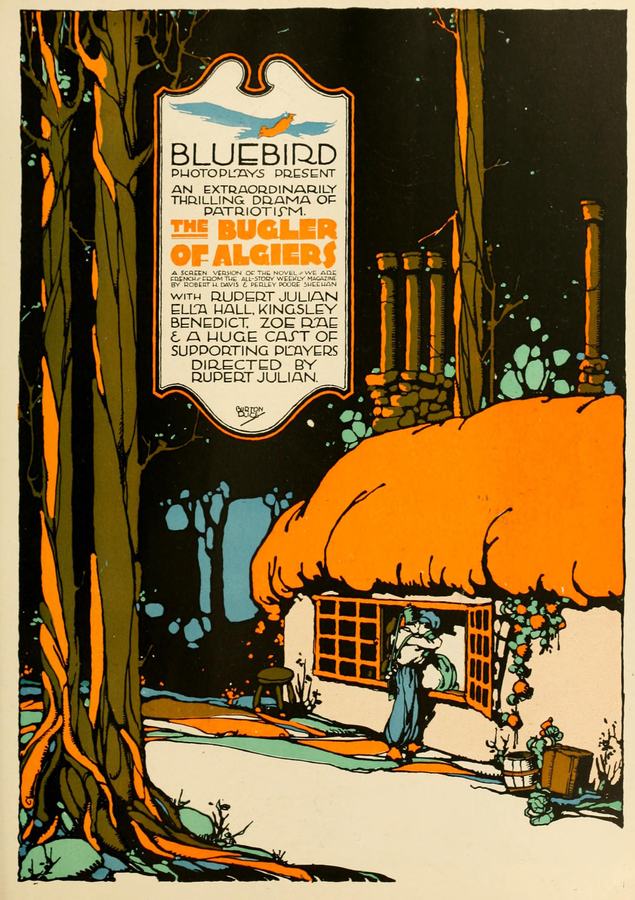
A definitive 4.5/10 rating for a film that redefined the boundaries of cult cinema. The Bugler of Algiers remains a cornerstone of transgressive art.
There's a certain ethereal quality to silent cinema, a power in its unspoken narratives that transcends the limitations of its medium. It forces the audience to engage, to project their own understanding onto the grand gestures and poignant glances that fill the screen. The Bugler of Algiers, a film from an era when storytelling was often a raw, visceral experience, stands as a testament to this unique artistry. It's a sprawling epic, not just in its narrative scope, but in the emotional terrain it traverses, weaving a tapestry of loyalty, sacrifice, and the enduring, often heartbreaking, cost of conflict. The film, a collaborative effort from writers Robert Hobart Davis, Perley Poore Sheehan, and Elliott J. Clawson, manages to distill the grandiosity of war and its aftermath into an intensely personal saga, centered on a few souls whose lives are irrevocably altered by the currents of history.
At its heart lies the profound, almost sacred, bond between orphaned siblings, Gabrielle and Anatole Picard. Their existence in a bucolic French village is painted with an idyllic brush, a stark contrast to the maelstrom that will soon engulf them. Gabrielle, portrayed with a quiet strength, has been a surrogate mother to Anatole, fostering a devotion between them that feels both natural and deeply moving. It is this foundational relationship that grounds the entire narrative, making every subsequent trial and tribulation resonate with profound emotional weight. Their friend, Pierre Dupont, played by Kingsley Benedict, introduces a romantic undercurrent, his love for Gabrielle a gentle counterpoint to the impending martial discord. This initial setup is crucial; it establishes the preciousness of what is about to be lost, the innocence that will be irrevocably shattered by the drums of war.
When the clarion call to defend France echoes through the tranquil village, it acts as a seismic shift, tearing at the fabric of their lives. Both Pierre and Anatole, embodying the spirit of their nation, answer the summons, their youthful idealism perhaps not fully grasping the horrors that await. It is here that Gabrielle, in a moment of desperate hope and heartbreaking pragmatism, extracts a solemn vow from Pierre: protect her brother, and upon their return, she will be his bride. This promise, heavy with the weight of uncertainty, becomes a central pillar of the narrative, a tether stretching across battlefields and years, binding their fates together. It imbues Pierre’s subsequent actions with a dual motivation—duty to country and an intensely personal commitment to the woman he loves. This narrative device effectively raises the stakes, transforming a national conflict into a deeply intimate struggle for survival and reunion.
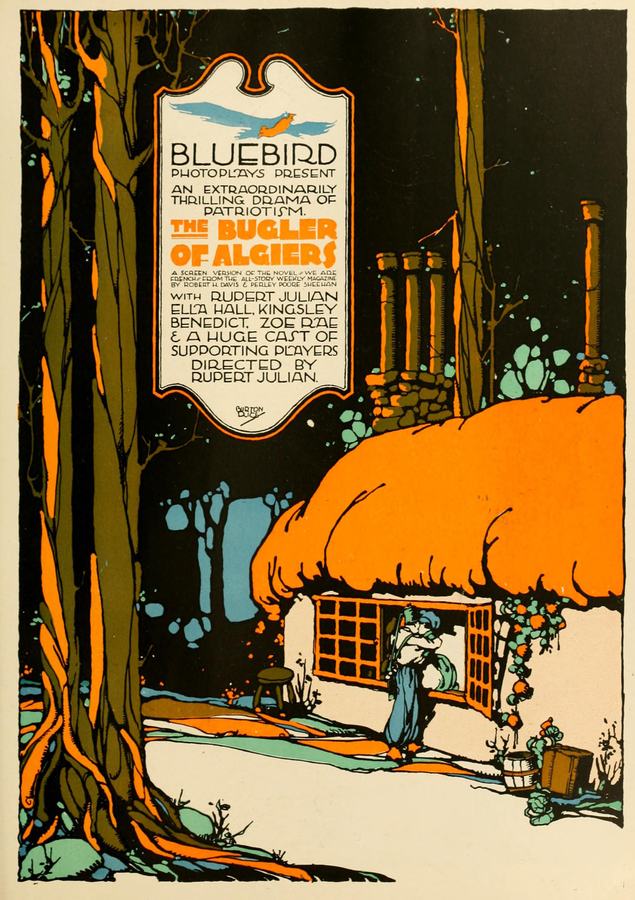
The film then plunges us into the brutal reality of the battlefield. Anatole, with his youth and perhaps a touch of poetic irony, becomes the regimental bugler, his instrument a symbol of both command and potential doom. The silent film medium, paradoxically, enhances the impact of sound-related roles. The audience *imagines* the bugle calls, the urgency, the fear, making Anatole's role particularly potent. During a fierce skirmish, the chaos of war separates Anatole and Pierre from their main division. With them is Peppy, the drummer boy, a poignant symbol of lost youth, whose death serves as a stark, early reminder of the war's indiscriminate cruelty. The report of their deaths, reaching the distant village, is a gut-wrenching moment, leaving Gabrielle in a state of desolate grief. This narrative turn, a common trope in war dramas, effectively isolates Gabrielle, setting the stage for her own act of defiance.
The invading army, a faceless force of occupation, eventually reaches Gabrielle's cottage. Her quiet act of defiance—refusing to toast against France and instead throwing the liquor in an officer's face—is a powerful, wordless declaration of resistance. It showcases her unyielding spirit, a resilience that mirrors the very soul of her beleaguered nation. This scene, though brief, is pivotal, solidifying Gabrielle's character not just as a grieving sister and lover, but as a symbol of national pride and unwavering resolve. It’s a moment that resonates with the quiet strength found in other cinematic portrayals of civilian resistance against overwhelming odds, perhaps echoing the stoicism observed in films like God's Country and the Woman, where individuals face immense pressures with their integrity intact. The immediate aftermath of this act, however, is left to our imagination, as Gabrielle disappears from the narrative for an extended period, her fate shrouded in mystery.
Years, unquantified but deeply felt, elapse. The passage of time is conveyed through the changed landscape, the rebuilt cottages, and the palpable sense of a world attempting to heal. When Anatole and Pierre finally return, survivors emerging from the crucible, they are met not with immediate celebration, but with a new, profound emptiness: Gabrielle is gone. Their exhaustive search across the now familiar yet subtly alien village proves fruitless. This period of uncertainty and loss is crucial. It highlights the lasting scars of war, not just physical destruction, but the dissolution of families and the erasure of personal histories. The narrative, at this point, becomes a quest, not just for a person, but for closure and understanding. Harry Carter, portraying Anatole, and Kingsley Benedict as Pierre, convey this weary hope and quiet despair with understated grace, a hallmark of powerful silent performances.
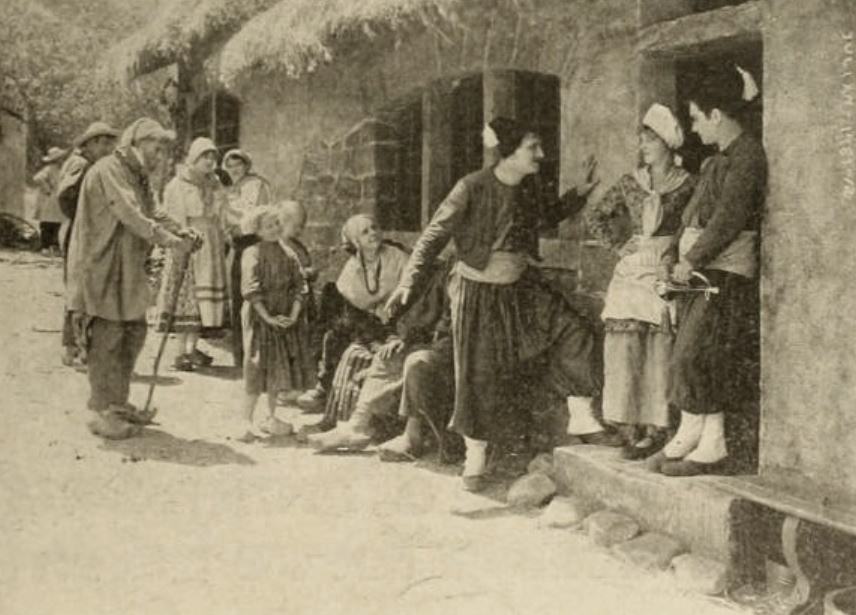
Amidst their personal sorrow, Pierre becomes the ardent chronicler of Anatole's heroism. He recounts, with unwavering pride, the moment Anatole defied the enemy commander. Offered his life in exchange for sounding the bugle call for retreat, Anatole instead chose the call to charge, a pivotal act that turned the tide and routed the foe. This single moment, re-told repeatedly by Pierre, elevates Anatole into a local legend, a symbol of unyielding courage. It's a powerful exploration of how narratives are constructed and maintained, how individual acts of bravery are woven into the larger tapestry of national myth. Anatole's act, in its defiance and impact, could be seen as a spiritual cousin to the fateful choices made in films like The Golden Chance, where a single decision irrevocably alters destinies and defines character.
Enter Dissard, a French government official, at the helm of a committee tasked with bestowing national honors. The bureaucratic machinery of recognition, often slow and impersonal, stands in stark contrast to the raw, immediate heroism of the battlefield. When a planned reception for a deceased hero falls through, Dissard’s committee searches for a suitable replacement. Anatole Picard, his valor now enshrined in official records, is chosen. This twist introduces a layer of tragic irony: recognition arrives, but only after years of struggle and the quiet passage of time. The film masterfully juxtaposes the grand pronouncements of the state with the deeply personal suffering and sacrifice that underlie such honors.
Summoned to Paris, Anatole and Pierre embark on their journey, a pilgrimage towards belated glory. Despite the villagers' protests and well-meaning warnings about Anatole's fragile health, they march towards the capital. The journey itself becomes a metaphor for Anatole's fading life force. Just as they stand on the precipice of Paris, the city of light and recognition, Anatole's strength gives out. He dies in a humble peasant's cabin, a final, heartbreaking irony. The hero, who inspired a nation, perishes just steps away from his long-overdue honor, a poignant reminder of the ultimate cost of war and the often-delayed, sometimes fleeting, nature of glory. This scene, rendered with the stark emotional clarity typical of silent film, is deeply affecting, forcing the audience to confront the fragility of life and the cruelty of fate.
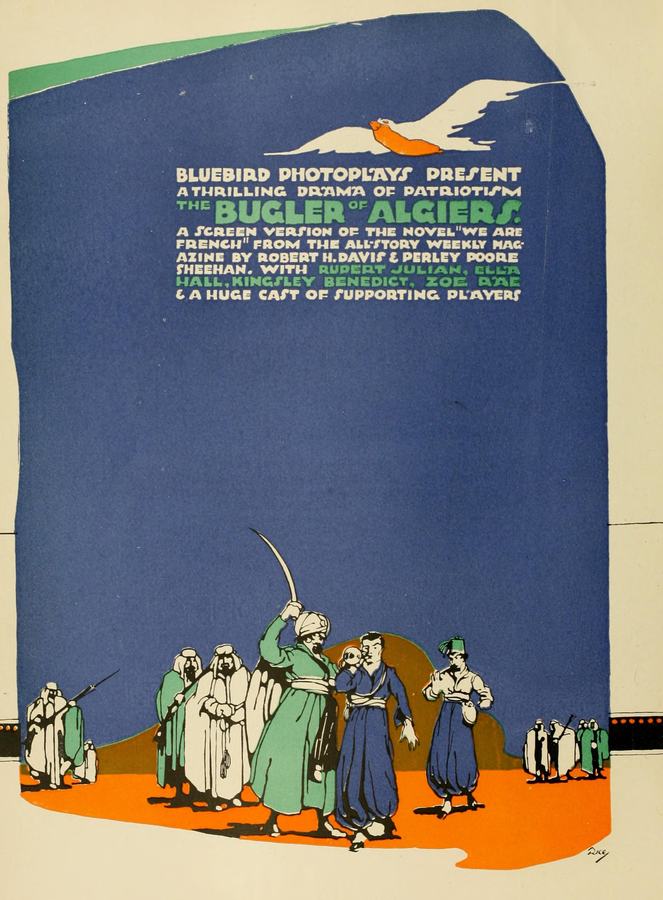
Pierre, now burdened with the ghost of his friend's unfulfilled destiny, continues alone to Paris. He receives the decoration from the President, a moment fraught with complex emotions. His speech, delivered with heartfelt sincerity, recounts Gabrielle's crucial role in shaping Anatole's heroism, inadvertently leading the audience to believe he is the decorated bugler himself. Kingsley Benedict's portrayal of Pierre here is particularly nuanced, conveying the weight of his promise, the sorrow of his loss, and the quiet dignity of his deception, all without uttering a single spoken word. This mistaken identity provides a powerful dramatic engine, creating a tension that is suddenly, breathtakingly, resolved.
In a moment of exquisite dramatic timing, much to Pierre’s astonishment, an aged Gabrielle, played by Florence Noar, enters the banquet room. Their reunion, after years of war, separation, and presumed death, is a profoundly moving cinematic experience. It's a testament to the enduring power of love and loyalty that transcends time and tragedy. This scene, a powerful emotional climax, echoes the dramatic weight of long-awaited reunions in films like The Bachelor's Romance or Mortmain, where the past abruptly collides with the present, forcing characters to confront decades of unspoken history. The film, through this reunion, suggests that while war can destroy, it cannot entirely obliterate the bonds of human connection.
On their journey back to the village, Gabrielle asks the question that has undoubtedly haunted her for years: where is her brother? Pierre, with a heavy heart, promises to take her to him. This final pilgrimage leads them back to the simple peasant cabin where Anatole drew his last breath. There, shrouded in the flag of France, lies the body of the true hero. Pierre, never intending to keep the honor for himself, places the cross he received upon Anatole’s flag-draped form. This act is the film's most potent statement on true heroism and the nature of remembrance. It’s not about the medals or the public acclaim, but about the quiet dignity of sacrifice and the enduring love of those left behind. The final shot, imbued with a profound sense of closure and sorrow, leaves an indelible mark, reminding us that the greatest honors are often bestowed in silence, by those who truly understand the depth of the sacrifice.
The Bugler of Algiers is more than just a historical artifact; it is a timeless exploration of themes that continue to resonate. The performances by the cast, including Rupert Julian and Ella Hall, are exemplary in their ability to convey complex emotions through gesture and expression, a testament to the power of silent acting. The film's narrative structure, with its sweeping arc of innocence, devastation, loss, and eventual, bittersweet reunion, is remarkably sophisticated for its time. It’s a powerful reminder of cinema’s capacity to capture the human spirit in its most vulnerable and most resilient forms, offering a poignant reflection on the personal cost of war and the enduring strength of the human heart. It asks us to consider what true honor means, and how, sometimes, the greatest acts of love are those performed in the shadows, for the sake of another.

IMDb —
1920
Community
Log in to comment.