DbcultAccessing Vault...
Cult Review
Senior Film Conservator
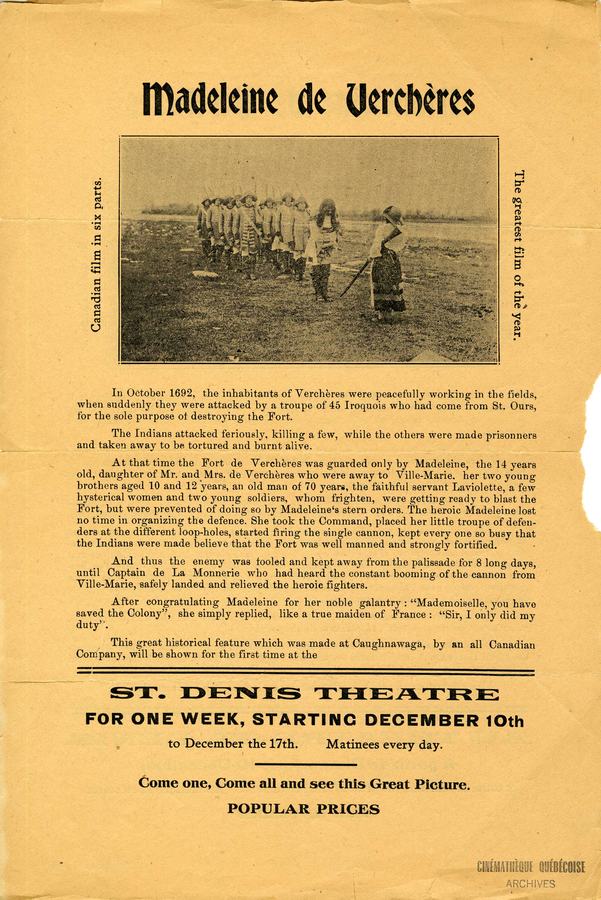
The cinematic landscape of Madeleine de Verchères is a masterful blend of historical accuracy and dramatic flair, transporting viewers to the uncharted territories of New France with ease. As the camera pans over the rolling hills and dense forests, the sense of immersion is palpable, drawing the audience into the world of 18th-century colonialism with its intricate social hierarchies and treacherous power struggles. The film's attention to period detail is meticulous, from the ornate costumes to the rustic architecture, each element working in tandem to create an immersive experience that is at once captivating and informative.
At the heart of this sweeping narrative is the eponymous Madeleine, a complex and multifaceted protagonist brought to life by the talented Estelle Bélanger. With her striking presence and nuanced performance, Bélanger imbues Madeleine with a sense of depth and vulnerability, deftly conveying the character's inner turmoil as she navigates the treacherous waters of adulthood. As the story unfolds, Madeleine's transformation from a naive and idealistic young woman to a determined and resilient leader is nothing short of remarkable, a testament to the enduring power of the human spirit in the face of adversity.
The supporting cast is equally impressive, with a range of memorable characters that add depth and richness to the narrative. From the gruff but lovable francophone settlers to the enigmatic and ruthless British soldiers, each player brings their own unique perspective to the story, weaving a intricate tapestry of alliances and rivalries that propels the plot forward with unrelenting momentum. The chemistry between the actors is palpable, their interactions infused with a sense of authenticity that belies the film's historical setting, making it easy to become fully invested in their struggles and triumphs.
One of the most striking aspects of Madeleine de Verchères is its thoughtful exploration of the complexities of colonialism, a theme that is both timely and timeless. Through Madeleine's experiences, the film sheds light on the often-overlooked perspectives of women and minorities in the colonial era, highlighting the ways in which their lives were shaped by the broader historical context. This nuanced approach to storytelling is reminiscent of other period dramas, such as Poppy and Trouble, which also explored the intricacies of social hierarchy and power dynamics in their respective settings.
The cinematography is equally impressive, with a range of stunning landscapes and meticulously composed shots that showcase the beauty and brutality of the natural world. From the sun-drenched fields of golden wheat to the dark, foreboding forests, each frame is a masterclass in visual storytelling, using light and shadow to evoke a sense of mood and atmosphere that perfectly complements the narrative. The use of warm colors to convey a sense of comfort and security, while cool tones are employed to create a sense of tension and unease, is a particularly effective technique, adding depth and complexity to the visual palette.
In comparison to other films of the era, such as Sunnyside and Felix in the Swim, Madeleine de Verchères stands out for its thoughtful pacing and measured approach to storytelling. While some viewers may find the film's deliberate pace to be slow or plodding, others will appreciate the opportunity to become fully immersed in the world of New France, to absorb the sights, sounds, and textures of a bygone era. As with Sunny Jane and The Lure of Jade, the film's use of long takes and static shots creates a sense of realism, drawing the viewer into the world of the story and refusing to let go.
The themes of identity and belonging that permeate Madeleine de Verchères are both deeply personal and universally relatable, speaking to fundamental human experiences that transcend time and place. As Madeleine navigates the complexities of her own identity, grappling with the tensions between her French heritage and her American surroundings, the film raises important questions about the nature of self and community, about the ways in which our sense of belonging is shaped by our experiences and environments. These themes are echoed in films like The Man Behind the Curtain and Hard Boiled, which also explored the intricacies of identity and the search for connection in a chaotic world.
As the film draws to a close, the sense of resolution is both satisfying and poignant, a testament to the enduring power of the human spirit in the face of adversity. Through Madeleine's journey, Madeleine de Verchères offers a profound meditation on the nature of courage and resilience, a reminder that even in the darkest of times, there is always hope to be found. As with Behula and Cissy's Saucy Stockings, the film's conclusion is both a commentary on the past and a reflection of the present, a powerful reminder of the ways in which our shared human experiences can transcend time and circumstance.
In the end, Madeleine de Verchères is a film that will linger in the mind long after the credits have rolled, a testament to the enduring power of storytelling to capture our imaginations and challenge our assumptions. With its richly woven narrative, memorable characters, and thoughtful exploration of the complexities of colonialism, this lost classic is a must-see for fans of period dramas and historical epics. As with Without a Wife and An American Live Wire, the film's influence can be seen in a range of other movies, from The Mark of Cain to The Road Demon, a reminder of the ways in which our shared cultural heritage can inspire and inform our artistic expressions.
As the curtains draw closed on this sweeping historical epic, the sense of awe and wonder is still palpable, a testament to the magic of the cinematic experience. With its stunning landscapes, memorable characters, and thoughtful exploration of the complexities of colonialism, Madeleine de Verchères is a film that will leave you breathless and inspired, a reminder of the power of storytelling to transport us to another time and place, to challenge our assumptions and broaden our perspectives. As with Hidden Charms, the film's ability to balance action, drama, and romance is a rare achievement, one that will leave viewers eager to return to the world of New France, to experience once again the beauty, brutality, and wonder of this captivating historical epic.
IMDb —
1929
Community
Log in to comment.