DbcultAccessing Vault...
Cult Review
Senior Film Conservator
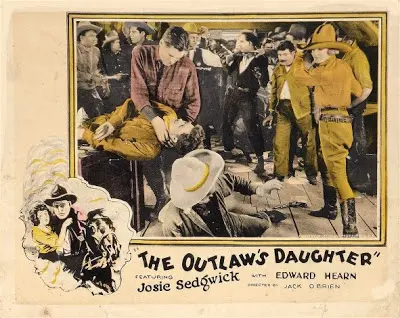
Is The Outlaw's Daughter worth watching today? Short answer: yes, but with significant caveats. This 1920 silent Western is a fascinating historical artifact for those keen on early cinema and the foundational tropes of the genre, yet it will likely test the patience of modern viewers accustomed to faster pacing and richer character development.
It's a film primarily for historians, dedicated silent film enthusiasts, and those with a deep appreciation for the origins of the Western. It is emphatically not for casual viewers seeking contemporary storytelling, intricate plots, or nuanced performances. Expect a rough-hewn charm, not polished perfection.
Harold Shumate’s screenplay for The Outlaw's Daughter presents a narrative that, by today’s standards, feels both remarkably straightforward and surprisingly progressive in its characterization of Flora Dale. It’s a tale steeped in the nascent mythology of the American West: the valiant prospector, the ruthless bandit, and the damsel who, against all expectations, becomes her own rescuer.
The film’s central conflict is established with brutal efficiency. Slim Cole, portrayed by Robert Walker, is not a character of complex motivations but rather an embodiment of frontier lawlessness. His initial act of violence, a stray bullet wounding Flora, sets in motion a chain of events that is both predictable and, for its time, quite effective.
This film works because of its pioneering action sequences and a surprisingly strong female lead who subverts expectations. It fails because of its rudimentary character depth and often sluggish exposition. You should watch it if you appreciate silent film history and early Westerns, understanding their limitations and their groundbreaking contributions.
The direction of The Outlaw's Daughter, while uncredited, showcases many hallmarks of early silent filmmaking. The camera work is largely static, relying on theatrical blocking and intertitles to convey dialogue and internal thought. There are moments, however, where the visual storytelling transcends these limitations, particularly in the climax.
The pacing is undeniably slow for a modern audience. Scenes often linger, allowing the audience to absorb the visual information and the exaggerated expressions of the actors. This deliberate rhythm, characteristic of the era, demands a different kind of engagement from the viewer. It’s a testament to a time when cinema was still finding its voice, experimenting with how to communicate emotion and narrative without spoken words.
Consider the sequence where Jim King, played by Edward Hearn, tends to Flora's wound. It's an extended moment of quiet care, conveyed through gestures and close-ups, designed to establish a bond between the characters. While it feels drawn out by today's standards, it was a crucial method for building empathy in an era without dialogue.
The most engaging aspect of the film’s direction comes during the final confrontation at the King mine. The use of the aerial ore bucket is a stroke of genius, transforming a utilitarian piece of machinery into a pivotal plot device. It demonstrates an early understanding of how to use environment to heighten tension and create a memorable, albeit somewhat crude, action sequence.
The cast of The Outlaw's Daughter delivers performances typical of the silent era: broad, expressive, and often melodramatic. Nuance was a luxury rarely afforded when every emotion had to be writ large across the face and body for an audience to grasp without auditory cues.
Josie Sedgwick as Flora Dale is the undeniable standout. Her portrayal evolves from injured vulnerability to resolute strength. While her initial scenes lean into the 'damsel in distress' trope, her agency in the climax is genuinely surprising. Sedgwick doesn't just react; she acts, making Flora a more dynamic figure than many of her contemporaries. Her final, decisive act, pushing Cole from the ore bucket, is performed with a conviction that elevates the entire film.
Edward Hearn, as Jim King, embodies the stoic, honorable frontiersman. He is the moral anchor of the story, his quiet strength conveyed through his posture and steady gaze. Hearn's performance is understated, a necessary counterpoint to the more flamboyant villainy of Robert Walker's Slim Cole. Walker, for his part, chews the scenery with relish, his sneering outlaw a clear precursor to countless Western villains to come.
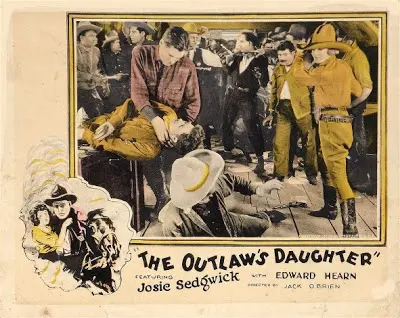
One might argue that the performances are more theatrical than cinematic, a common critique of early film. However, within the context of silent film, they are effective. They communicate clearly, if not subtly, the intentions and emotions of the characters. It's a reminder that acting styles evolve with technology, and judging these performances solely by modern metrics misses the point of their historical significance.
The cinematography in The Outlaw's Daughter is functional, prioritizing clarity over artistry. Shots are generally well-composed, ensuring that the action and character interactions are legible. There’s a raw authenticity to the outdoor sequences, likely filmed on location, which lends a sense of realism to the frontier setting.
While not groundbreaking, the visual language effectively establishes the world. The King mine, for instance, feels like a real, working environment, not just a set. This attention to detail in the production design, even in its simplicity, helps ground the fantastical elements of the plot in a believable reality. It’s clear the filmmakers understood the importance of setting the stage for their Western drama.
The film’s visual style is a fascinating study in how early cinema communicated atmosphere. There are no sweeping crane shots or intricate tracking movements, yet the static frames, combined with the actors' expressions and the intertitles, manage to evoke the harshness and potential for violence inherent in the untamed West. It works. But it’s flawed.
At its heart, The Outlaw's Daughter explores themes of justice, retribution, and the surprising resilience of individuals in a lawless land. Flora's transformation from victim to avenger is arguably the film's most enduring thematic contribution. It challenges the conventional portrayal of women in early Westerns, hinting at a more complex role than mere adornment or domesticity.
The film also touches upon the idea of earned heroism. Jim King doesn't seek glory; he simply acts with decency, and Flora's heroism is born not of a desire for fame, but from a desperate need for survival and justice. This understated approach to heroism feels refreshingly grounded, especially when compared to the more flamboyant, larger-than-life heroes that would populate later Westerns.
Its influence might not be as direct or overt as some of its contemporaries, but The Outlaw's Daughter contributes to the vast tapestry of early Westerns that collectively defined the genre. Elements seen here, such as the climactic confrontation with the villain on a precarious structure, would be echoed in countless films to follow, even if unconsciously. It’s part of the genre’s DNA.
For the right audience, The Outlaw's Daughter is absolutely worth watching. It offers a valuable window into the early days of Hollywood and the formative years of the Western genre. Its historical significance alone makes it a compelling watch for film scholars and dedicated cinephiles.
However, for a general audience expecting modern production values and narrative sophistication, it will likely prove a challenging experience. The slow pace, exaggerated acting, and reliance on intertitles require a degree of patience and an understanding of the cinematic conventions of the era.
It's a foundational text, not a modern blockbuster. Approach it with curiosity and an appreciation for its place in history, and you might find its simple charms quite engaging. Ignore the dated elements and focus on its pioneering spirit, and you'll be rewarded.
The Outlaw's Daughter is more than just a dusty relic; it's a testament to the foundational power of storytelling in the early days of cinema. While it undoubtedly shows its age in pacing and performance style, its historical value and the surprising agency of its female protagonist, Flora Dale, make it a compelling watch for a specific audience. It's not a film that will set the world alight with its artistic brilliance, nor is it a forgotten masterpiece like The Marriage Maker or even Komödianten, but it serves as a crucial building block in the Western genre.
For those willing to engage with its silent language and appreciate its pioneering spirit, there are genuine moments of satisfaction, particularly in its thrilling, if somewhat crude, climax. It's a film that asks for patience and rewards historical curiosity. While it doesn't quite ride high as a timeless classic, it certainly holds its ground as an important piece of cinematic history, offering insights into the evolution of a genre that would come to define American cinema. Don't expect fireworks; expect a flickering lantern illuminating the path for future giants.
IMDb —
1921
Community
Log in to comment.