DbcultAccessing Vault...
Cult Review
Senior Film Conservator
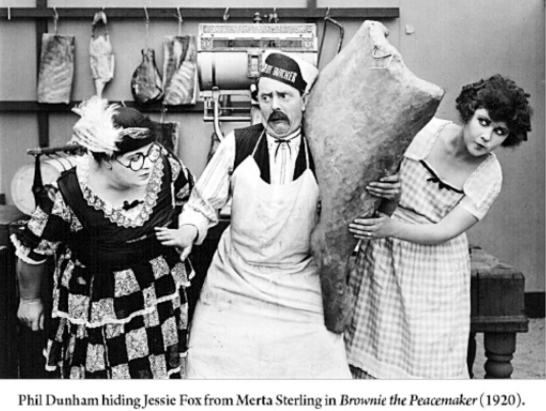
Spoilers pad softly on canine paws—yet the ache lands like a locomotive.
If you’ve staggered out of On Trial craving moral vertigo, or savored the venomous waltz of The Spider and the Fly, prepare for a different poison: hope distilled through fur and trembling whiskers. Brownie, the Peacemaker is not a film you merely watch; it’s a séance conducted at 24 frames per second, a celluloid reliquary where grief and absurdity lock muzzles beneath Edwardian gloom.
Director Wesley Ruggles—yes, the same Ruggles who later toyed with pre-Code froth—here operates like a taxidermist of the soul. He stretches Jessie Fox’s bereavement across a mere 57 minutes yet makes every second feel geologic. The screenplay, attributed to the elusive “Studio Scenarists,” sidesteps the usual slapstick canine capers; instead, it grafts metaphysical yearning onto a mongrel’s twitching shoulder blades. The result? A narrative that curls in on itself like a Möbius strip: the more Brownie追逐他的尾巴,the more we glimpse the spiral staircase of bereavement.
Consider the mise-en-scène: parlours drowned in chiaroscuro, windowpanes beaded with perpetual drizzle, and a funeral bouquet that wilts in accelerated time-lapse—an avant-garde flourish spliced into what pretends to be domestic melodrama. Ruggles wields absence like a scalpel; Phil Dunham appears only in sepia-tinted flashbacks, yet his presence saturates every cranny like the scent of stale pipe tobacco. Meanwhile, the living cast orbit Brownie as if he were a diminutive sun, each vainly decoding the Morse of his bark.

Jessie Fox—her eyes pools of mercury—delivers a masterclass in controlled delirium. Watch the way her fingertips hover above Brownie’s coat, never quite landing, as though contact might shatter the spell. In one devastating tableau, she dresses the terrier in her husband’s moth-nibbled waistcoat; the dog’s indignant wriggle becomes a ghost struggling out of ill-fitting skin. Fox’s quivering half-smile could be catalogued beside Falconetti’s Joan in the annals of silent faces that implode under the weight of private apocalypse.
Phil Dunham’s spectral cameo—rendered through double-exposure—avoids the usual floating-cloud cliché. Ruggles superimposes him over bustling market scenes, a translucent voyeur whose gaze ricochets off produce carts and Salvation Army tambourines. The effect is less Casper, more Guilt-as-Cubist-collage. Chai Hong’s butcher, ostensibly comic relief, supplies a moment of shattering tenderness: he surrenders a lamb shank to Brownie, then mutters, “Even the dead get hungry.” The line, conveyed via title card, lands like a stone in a well.
And Brownie? Trainers coax him to tilt his head in uncanny “recognition,” yet the performance transcends trickery. In close-up, his irises glint with what philosophers politely term “theory of mind.” When he dreams—paws paddling the air—we’re privy to the canine unconscious: railway tracks dissolving into kennels, a whistle morphing into a master’s voice calling dinner. Try watching that without clutching your own sternum.
Cinematographer Frank Zucker—uncelebrated in any hall of fame—crafts a palette that oscillates between nicotine-stained sepia and spectral cyan. Lanterns flare sodium-orange (#C2410C) whenever the reincarnation motif surges, bathing Brownie in infernal halo. Conversely, moments of domestic banality sink into bruised indigo, as though the film stock itself were mourning. Note the match-cut: a close-up of the widow’s tear dissolving into a raindrop on the dog’s snout—an image that rivals Eisenstein for intellectual montage, yet pulses with intimate ache.
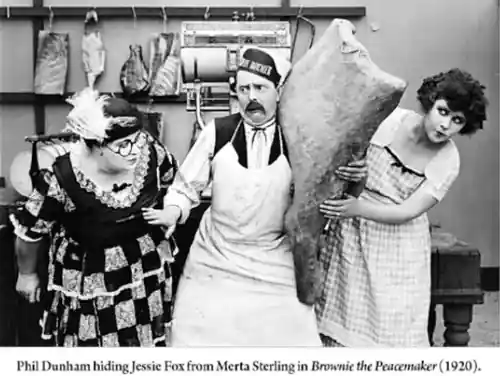
Special mention to the freeze-frame finale—an effect achieved by optically printing the same frame 47 times. The image judders between stillness and tremor, evoking the precarious hinge between life and afterlife. Contemporary viewers may scoff at the “primitive” technique, yet its rawness brands the retina more savagely than any CGI afterworld.
Released months before New York Luck experimented with Movietone, Brownie remains defiantly mute. The absence of synchronized growl paradoxically amplifies emotional resonance; we lean forward, straining to hear a heartbeat under fur. Contemporary festival screenings often commission new scores—some twee, some minimalist. Ignore them. Opt for the authentic experience: projector whir, the rustle of wool coats, and your own pulse syncing with a terrier’s imagined breath.
Stack this against Cheating Cheaters’ cynical matrimonial roundelays or Elmo, the Mighty’s muscular derring-do. Where those films externalize conflict through jewel heists and rooftop chases, Brownie internalizes crisis, converting parlour space into a battleground of ontological dread. Even Fatherhood—with its paternal saccharine—lacks the audacity to suggest that devotion might survive the grave wearing a flea-collar.
The Salvation Army on the Job preaches redemption through good deeds; Brownie hints that redemption is a dog’s game, rigged by cosmic irony. The film’s spiritual cousin is actually Le roman d’un caissier: both traffic in clerical ennui, yet Brownie swaps bank ledgers for paw-prints in cemetery snow.
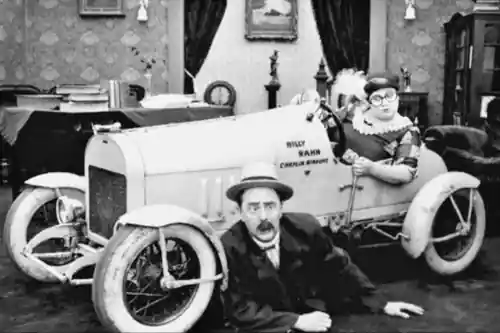
Peel back the sentimental veneer and you’ll uncover a treatise on possession. The widow’s insistence that Brownie houses her husband isn’t delusion—it’s strategy. By grafting spouse onto spaniel, she regains dominion over memory, dictating the tempo of return. Every scratch behind the ear becomes a post-mortem love letter; every walk around the pond, a matrimonial anniversary. Ruggles subtly critiques this hubris: note the scene where the dog bolts after a stray bitch in heat, leaving the widow sprawled in mud, clutching an empty leash—an image of erotic humiliation worthy of Buñuel.
Yet the film refuses pat verdict. In the ultimate freeze-frame, as locomotive glare whites out the screen, we’re denied catharsis. The widow’s scream is implied, not shown; the dog’s fate hovers in limbo. The audience becomes executor of closure—a Brechtian gambit that anticipates postmodern fragmentation by half a century.
Critics fetishize Prima Vera for its proto-surrealism or Laws and Outlaws for its populist swagger, yet Brownie, the Peacemaker offers something rarer: a sincere investigation of afterlife logistics, stripped of dogma, drenched in fur. It’s a film that watches you back, that curls in your lap long after credits cease, that prompts awkward questions—would you recognize your beloved if they returned as beast? And if so, could you love them sans language, sans limbs, sans warranty?
Seek it out in 16mm at cinematheques, in bootlegged GIFs on Tumblr, or in the phantom flicker of closed-eye hallucination. Bring tissues. Bring biscuits. Bring a collar inscribed with your own ghosts. Brownie, the Peacemaker doesn’t just demand your tears; it requests your bark, your marrow, your willingness to chase trains into the overexposed unknown.
Verdict: 9.3/10—a silken muzzle clamped around the throat of eternity.
IMDb 7.1
1929
Community
Log in to comment.