DbcultAccessing Vault...
Cult Review
Senior Film Conservator
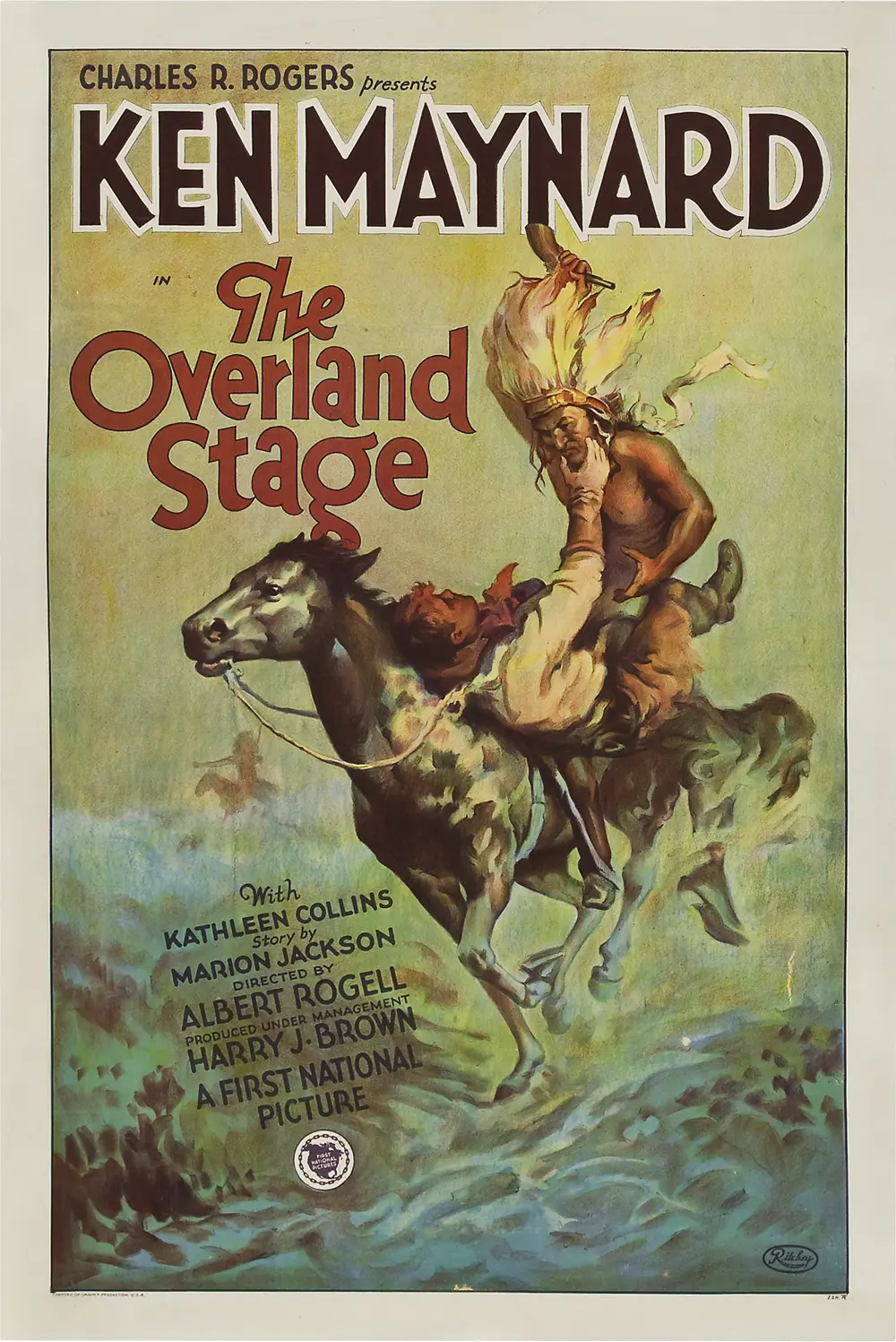
Is The Overland Stage worth your time in an era of high-definition blockbusters? Short answer: yes, but only if you are willing to trade modern polish for the raw, unadulterated kinetic energy of early American cinema. It is a film for the purist who finds beauty in the dirt and the mechanical precision of a well-executed stunt.
This film is for the historian and the Western enthusiast who wants to see the blueprint of the genre. It is not for the viewer who requires a complex, multi-layered plot or high-fidelity sound. It’s a silent relic that speaks loudly through its action. It works. But it’s flawed.
If you are looking for a deep psychological study of the frontier, look elsewhere. However, if you want to see Ken Maynard at the peak of his physical prowess, this is essential viewing. It captures a moment in time before the Western became a vehicle for heavy-handed moralizing.
This film works because: The stunt work and horsemanship are performed with a level of danger that modern insurance companies would never allow.
This film fails because: The middle act relies too heavily on repetitive landscape shots that, while beautiful, stall the narrative momentum.
You should watch it if: You appreciate the technical evolution of the Western and want to see how the 'stagecoach' subgenre was defined long before John Ford arrived.
Ken Maynard was never the most nuanced actor, but in The Overland Stage, he didn't need to be. His performance is one of pure physicality. When he sits atop that stagecoach, he doesn't just hold a prop; he looks like a man who has spent a thousand nights sleeping on the hard ground. His chemistry with his horse, Tarzan, is more convincing than many modern romantic leads.
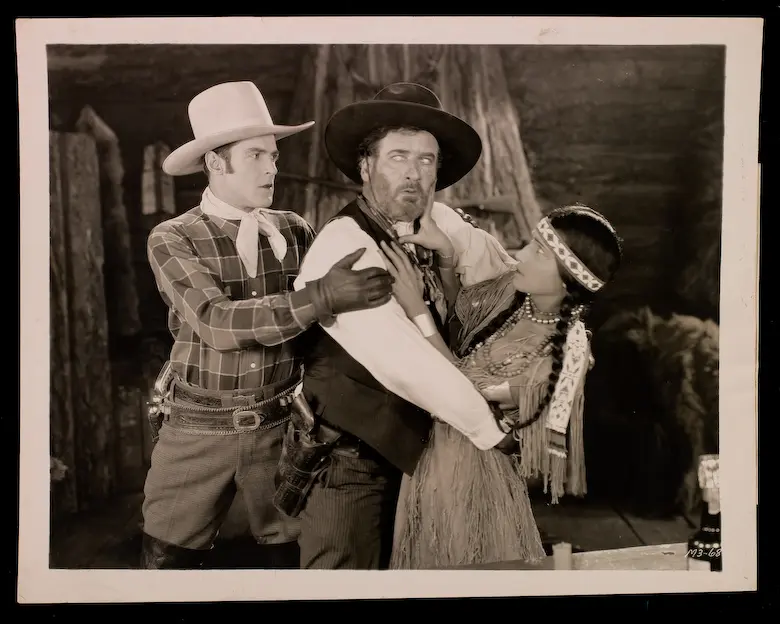
In one specific sequence, Maynard has to transition from the moving stagecoach to the back of his horse while at a full gallop. There are no wires, no CGI, and no safety nets. It’s a moment of pure, terrifying skill that makes contemporary action sequences look like child’s play. This is the same level of commitment we see in other films of the era, such as The Rat's Knuckles, where the physical comedy and stunts were the primary draw.
Maynard’s Jessup is a man of few words—partly because it’s a silent film, but mostly because the character is written as a functional tool of the frontier. He is the 'shotgun rider,' a role that has since become a cliché, but here it feels fresh and dangerous. He is the thin line between life and death for the passengers inside the coach.
The writing by Marion Jackson is surprisingly tight for a 1927 Western. Jackson, a woman writing in a hyper-masculine genre, understood the importance of stakes. She doesn't waste time on unnecessary subplots. Every scene is designed to heighten the sense of vulnerability as the stagecoach moves deeper into Indian territory.
The direction utilizes the landscape as a character itself. The dusty trails and rocky outcroppings aren't just backdrops; they are tactical obstacles. The way the camera lingers on the horizon creates a genuine sense of dread. It’s a different kind of tension than what you might find in a film like The Scarlet Oath, which relies more on social pressure than physical threat.
However, the pacing does suffer in the second act. There is a tendency to repeat the 'threat-response' cycle several times without moving the character arcs forward. We see the coach move, we see a scout on a hill, Jessup readies his rifle, and they move on. It’s effective twice, but by the fourth time, it starts to feel like padding. Unlike the more balanced pacing in Border Law, The Overland Stage sometimes forgets to keep the emotional core of the story moving at the same speed as the horses.
The Overland Stage is a vital piece of Western history because it establishes the archetypal shotgun rider. It captures the transition from simple chase films to more character-driven frontier dramas. It serves as a bridge between the early shorts and the grand epics that would define the 1930s and 40s.
The inclusion of Chief Yowlachie adds a layer of authenticity that many Westerns of the time lacked, even if the portrayal is still filtered through the lens of 1920s Hollywood. It’s a film that demands to be seen in context, much like Hit-the-Trail Holliday or Someone Must Pay, where the morality is clear-cut but the execution is gritty.
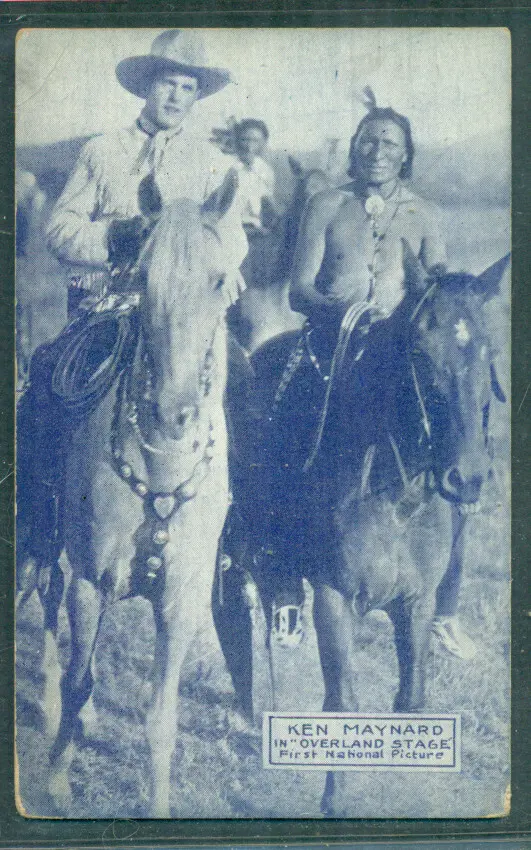
The cinematography is surprisingly sophisticated for its time. The use of low-angle shots to make the stagecoach appear like a lumbering, vulnerable beast is a stroke of genius. You can almost feel the rattle of the wheels and the heat of the sun. The black-and-white palette works in the film's favor, emphasizing the harsh contrasts of the desert.
There is a specific shot where the camera is mounted on the side of the stagecoach, looking back at the pursuing riders. The vibration of the camera adds a documentary-like realism to the chase. It’s chaotic, dirty, and visceral. It lacks the clean lines of a modern film, but it possesses a soul that is often missing from digital productions.
The ensemble cast, including Kathleen Collins and Paul Hurst, provide the necessary human stakes. While Maynard is the star, the fear in the passengers' eyes is what grounds the action. Without their vulnerability, Jessup’s heroics would feel empty. It’s a dynamic that was also explored in Irish Eyes, though in a much different setting.
The film offers a raw look at the frontier that feels less 'sanitized' than the Westerns of the 1950s. The stunts are genuine, and the sense of scale is impressive. Maynard is a magnetic presence on screen, even without saying a word.
The plot is extremely thin, serving mostly as a clothesline for the action sequences. Some of the supporting characters are caricatures rather than people. The film's treatment of the indigenous population is typical of the era—meaning it is problematic and one-dimensional.
If you are a student of cinema, yes. If you are a casual viewer, probably not. The Overland Stage is a film that requires the viewer to meet it halfway. You have to ignore the stilted acting of the minor characters and focus on the craft of the action. It is a masterclass in how to film a chase sequence with limited technology.
It stands as a fascinating comparison point to other films like Lord Saviles brott, which focuses on internal psychology rather than external action. The Overland Stage is all about the exterior—the dust, the sweat, and the gunsmoke. It’s a loud movie for a silent one.
"The Overland Stage isn't just a movie; it's a testament to the era when actors risked their lives for a five-second shot."
The Overland Stage is a rugged, dusty, and occasionally brilliant piece of Western history. It’s a film that knows exactly what it is and doesn't try to be anything more. It’s a vehicle for Ken Maynard’s stunts, and in that regard, it is a roaring success. While the narrative is as thin as a desert breeze, the visual impact remains. It’s a piece of the puzzle that explains how the American Western became a global phenomenon. Watch it for the history, stay for the stunts, and ignore the slow parts. It’s a 7/10 for genre fans and a 4/10 for everyone else.
IMDb 6.3
1935
Community
Log in to comment.