DbcultAccessing Vault...
Cult Review
Senior Film Conservator

Berlin, February 1921. Outside the Ufa-Palast am Zoo, gas lamps hiss at a sky the colour of wet charcoal. Inside, the curtain peels back on a film that feels more like a woodcut come to feral life: Die schwarze Pantherin. Ninety-odd years later, the print surfaces in a Slovenian monastery vault—nitrate reek, emulsion bruised like overripe peaches—and suddenly the twenty-first-century cine-twittersphere catches fire. Why? Because this orphaned classic detonates every lazy myth about ‘naïve’ art and the price of visibility.
Director Johannes Guter, cinematographer Wilhelm Diegelmann, and scenario wizard Hans Janowitz (the same Janowitz who co-scripted The Cabinet of Dr. Caligari) conspire to render Kornej’s canvases as living tableaux. We do not merely see the paintings; we step through their warped oaks into a realm where perspective has been guillotined. Sets bend like cardboard saints in the rain; shadows sprawl, obese and hungry. The camera cranks at variable speed—14 fps for jittery village fairs, 20 fps for the opulent gallery soirée—so that modernity itself seems to hiccup between heartbeats.
Eugen Burg’s performance as critic Moulin deserves a shrine. With cheekbones sharp enough to slice ration bread, Burg struts through smoke-wreathed salons delivering manifestos in a voiceover that survives only in the 1924 Dutch tinting: “Primitivism is not regression; it is the scar tissue left by civilisation’s blade.” Every syllable crackles like celluloid in a campfire.
Lina Paulsen’s Rita is no footnote spouse. In reel one she drags Kornej through cornfields, smearing pollen across his lips as if baptising him in chromatic sin. Later, draped in drop-waist velvet, she haunts auction halls like a Modigliani sphinx, translating the bids into whispers: “They are buying your childhood nightmares, darling.” Their wedding scene—shot in two-strip Kinemacolor that oxidised into bruised amber—survives only as a single glass-slide in the Deutsche Kinemathek, yet it detonates off the screen: rice grains become comets, confetti turns to pigeon bones.
The film’s mid-section pirouettes into domestic montage: coffee grounds reading futures, a cat licking cadmium from a palette, Rita’s pregnant silhouette projected onto one of Kornej’s panther murals so that the beast seems to carry their unborn. Guter’s editing rhythm here predates Soviet montage theorists—he intercuts 9-frame flashes of the panther’s eyes with close-ups of Rita’s pupils, forcing the viewer to splice predator and prey into one anxious gestalt.
Enter the gallerists, collectors, and dilettantes who sip champagne while discussing “the authenticity of the savage.” Cinematographer Diegelmann lenses these scenes through kaleidoscopic mirrors, fracturing faces into currency: a monocle becomes a coin, a cigar band a stock ticker. The film’s most mordant gag lands when Moulin pins a medal on Kornej’s lapel—shaped suspiciously like a tiny coffin lid.
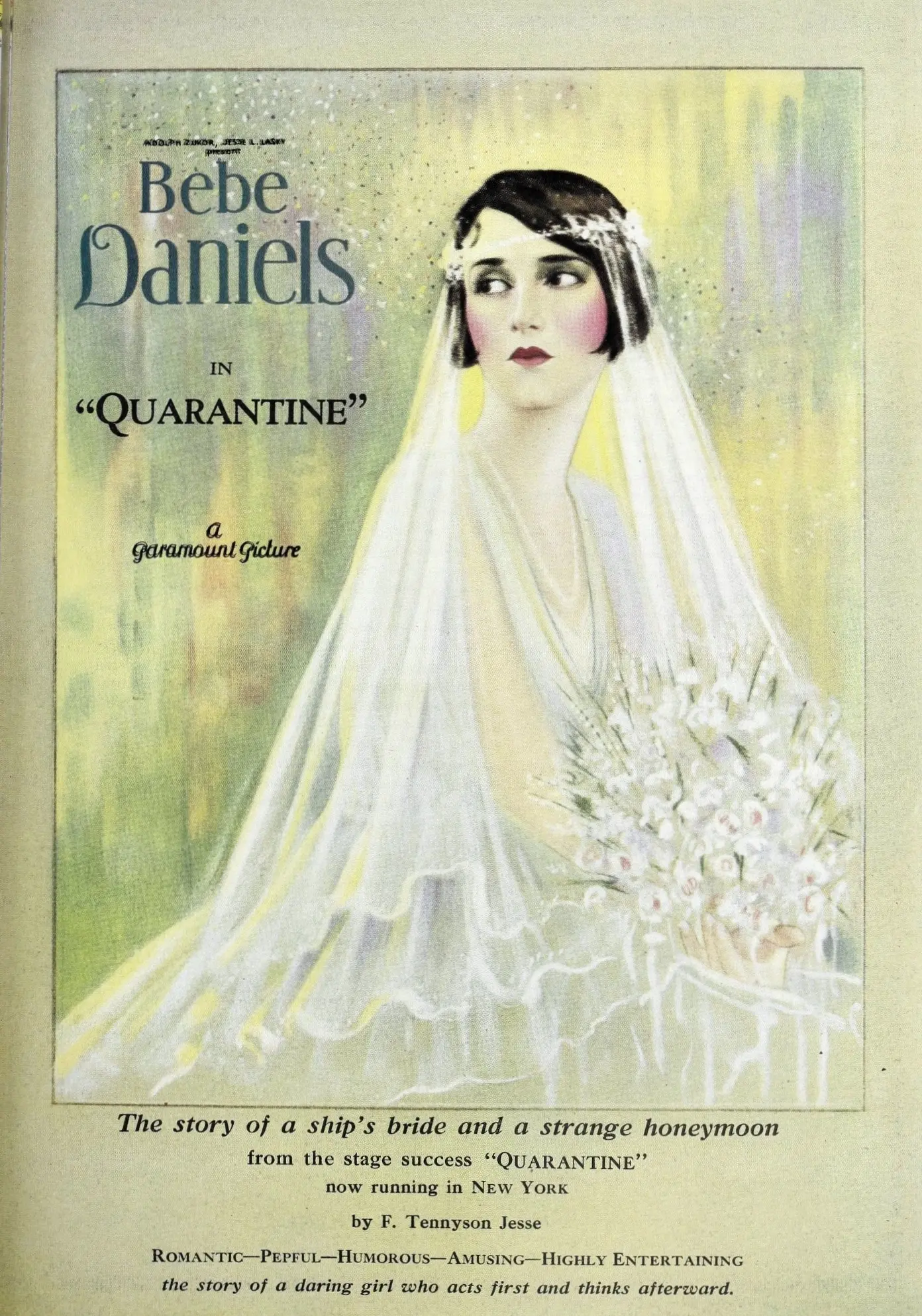
Compare this feeding frenzy to the marital farce of Please Get Married, where commerce likewise masquerades as affection. Yet whereas that comedy cushions its blows with screwball repartee, Die schwarze Pantherin opts for arterial spray—both literal and metaphoric—on the gallery’s white walls.
The titular feline is never fully revealed; we glimpse tail, claw, a sulphur-yellow iris. It functions like the McGuffin of guilt, prowling the intertitles (designed in a cracked Art-Nouveau font by Xenia Desni). Each appearance coincides with Kornej’s moral slippage: first tail-silhouette when he signs the exploitative contract; second when he trades Rita’s heirloom earrings for titanium white; final apparition as an animated charcoal stroke that leaps from canvas to throat.
Guter’s genius lies in refusing to domesticate the metaphor. Is the panther the repressed indigenous spirit of the Hutsul highlands? The predatory market itself? Or simply the id that snarls whenever an artist confuses price with value? The film leaves pawprints but never the beast entire, compelling viewers to finish the sketch.
Most silent-era narratives collapse into tidy moral geometry. Not here. Guter offers three contradictory epilogues, each introduced by a tint change: arsenic-green for the gallows, cobalt for exile, crimson for erasure.
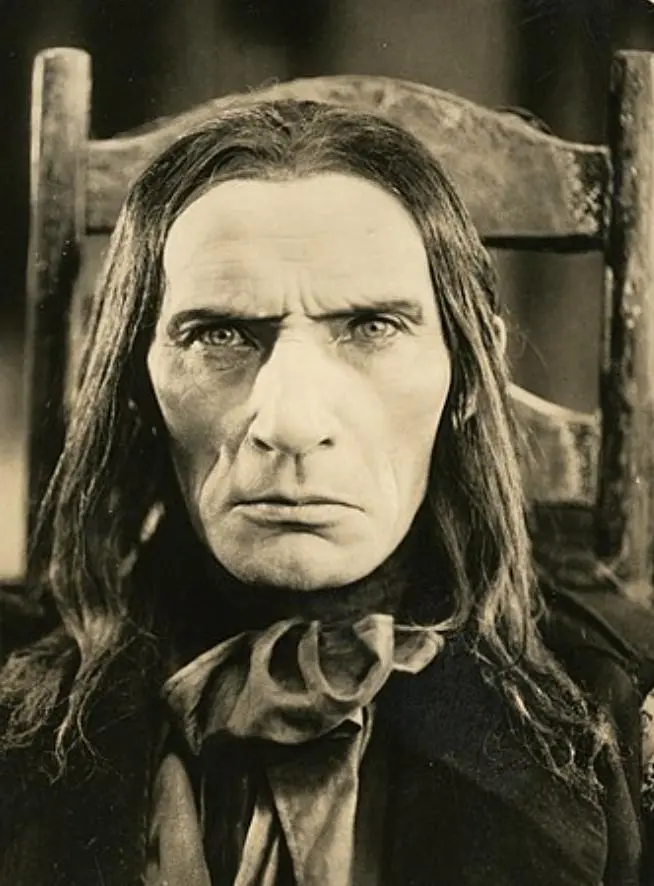
Contemporary reviewers balked—one Dresden daily called it “a narrative nervous breakdown.” Yet the multiple-ending gambit anticipates post-modern cinema by half a century, predating The Sign Invisible’s open-ended noir schema.
No original cue sheets survive. The current restoration (2023, 2K, Deutsche Kinemathek) commissioned Ukrainian composer Ivan Bulatov—grandson of the film’s supporting actor—to craft a score for bayan, viola d’amore, and prepared piano. Bulatov interpolates Hutsul kolomyika motifs that fracture into twelve-tone rows whenever the panther appears. During the triple ending, the ensemble splits: one side plays a jaunty foxtrot, the other a slow-requiem in 7/8, leaving the audience to decide which melody carries the “real” exit.
Yuri Yurovsky’s Kornej oscillates between wood-carved stillness and epileptic seizures of inspiration. Watch the moment Rita announces pregnancy: his pupils balloon, a silent thunderclap. Lina Paulsen counters with micro-gestures—fingertips drumming Morse code on a teacup, signalling her unspoken dread. Adele Sandrock cameos as a baroness who wants to “collect the couple like bibelots,” delivering lines through a lorgnette that magnifies her eye into a single, voracious planet.
Among the ensemble, Xenia Desni (also the intertitle designer) deserves special mention. In a brief role as a cigarette girl who becomes Moulin’s informant, she communicates entirely through shoulder-blades and smoke rings—an astonishing feat of corporeal linguistics.
Shot on Agfa stock with selective toning, the surviving reels bear water stains resembling topographical maps. Instead of digital cleanup, restorationist Anke Wilkening opted to stabilize these blemishes, arguing they form an “ecological palimpsest” of the film’s journey—from Berlin to Kyiv, hidden inside a samizdat piano during WWII, later used as a windowpane in Thuringia. The scars dance like brown rivers across faces, reminding us that cinema is matter before metaphor.
Scriptwriter Volodymyr Vynnychenko was exiled Ukrainian premier; his political DNA seeps into the subplot of villagers torching a landlord’s granary. The censor boards of 1921 demanded excisions, resulting in a jump-cut from harvest dance to courtroom. Restoration re-inserted the missing frames via a Russian archival duplicate, reinstating a 47-second tableau of blazing wheat that rhymes with Kornej’s later bonfire of unsold canvases—art and grain, both commodities devoured by flames when markets collapse.
Trace the panther’s pawprints and you’ll find them in Il Fauno’s pagan dread, in the gendered violence of Was She Justified?, even in the toxic romance of John Heriot’s Wife. Yet no successor dared replicate Guter’s triptych finale—audiences might riot if forced to choose their own heartbreak.
As of 2024, the only legal stream is via the Deutsche Kinemathek’s paywall-protected portal (German & English subs). DCP bookings circulate for repertory cinemas; last month it sold out Brooklyn’s Spectacle Theater where viewers received a mini-canvases and black-ink stamp pad to leave their own panther prints. Physical media: a region-free Blu-ray with Bulatov score drops this autumn, supplemented by a 96-page bilingual booklet on primitivist forgery scandals of the Weimar era.
Die schwarze Pantherin is not a relic; it is a warning flare. Every algorithmic feed that turns artists into content mills, every NFT gold-rush that flattens vision into speculative units—Guter anticipated them with carnival cynicism. Yet the film also revels in the messy miracle of pigment, flesh, breath. It asks: if you sell the panther, do you keep the claw? Stream it, screen it, project it on a bedsheet in your backyard while crickets heckle the bourgeoisie. Just don’t expect closure—expect scars that itch every time you check today’s auction results.
Runtime: 71 min (at 20 fps) | Format: 2K DCP, Blu-ray (announced) | Languages: German intertitles with optional English, Ukrainian, French subs | Score: Stereo re-recording (2023) 48kHz/24-bit | Aspect Ratio: 1.33:1 tinted B/W | Region: All (Blu-ray) | Extras: Essay booklet, Bulatov interview, alternate endings comparison, 12-minute short on primitivist forgers
IMDb —
1933
Community
Log in to comment.