DbcultAccessing Vault...
Cult Review
Senior Film Conservator
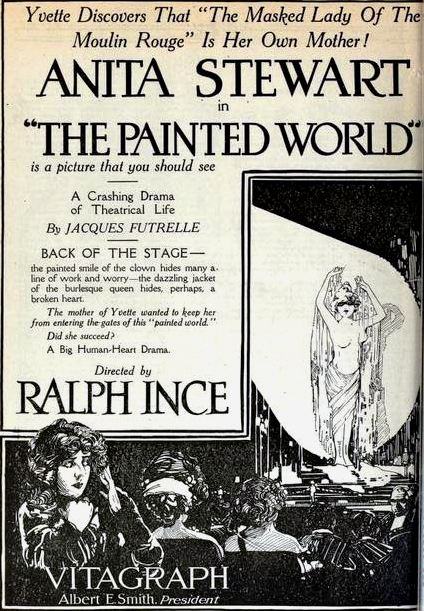
Navigating the sepia-toned corridors of 1919 cinema requires more than just a nostalgic lens; it demands an appreciation for the structural evolution of the melodrama. The Painted World, directed by the often-understated Marguerite Bertsch and adapted from the works of the tragic Jacques Futrelle, stands as a monumental testament to the era's preoccupation with social mobility and the 'sins' of the progenitor. While many films of the period relied on broad strokes, this Vitagraph production delves into the nuanced psychology of shame and the performative nature of class.
The film opens with a visceral juxtaposition: the smoky, chaotic energy of the burlesque hall versus the sterile, aspirational silence of the elite boarding school. Julia Swayne Gordon, portraying Elois, delivers a performance of profound gravitas. She isn't merely a mother; she is a cartographer of her daughter’s future, attempting to map out a territory she herself can never inhabit. This theme of the 'parental shield' was a recurring motif in silent cinema, often explored with less subtlety in works like Parentage. However, Bertsch’s direction allows the camera to linger on Elois’s face, capturing the silent erosion of her own identity as she funnels her earnings into Yvette’s upward trajectory.
Yvette, played with a delicate yet increasingly frantic energy by Janice Cummings, becomes the vessel for her mother’s unfulfilled dreams. The transition from student to socialite is rendered with a painterly eye, utilizing lighting that emphasizes her purity—a stark contrast to the harsh, high-contrast shadows associated with her mother’s world. When Yvette encounters Rex (E.K. Lincoln), the narrative pivots from a story of maternal ambition to one of existential crisis. Rex represents the 'Secret Kingdom' of the elite, a world where lineage is the only currency that matters. Unlike the protagonists in The Secret Kingdom, Yvette’s conflict is entirely internal; she is haunted by an atavistic fear that her 'low' blood will eventually betray her.
The second act of the film is where the 'painted world' of the title truly takes form. Yvette’s decision to embrace the burlesque life is not portrayed as a fall from grace in the traditional moralistic sense, but rather as a psychological surrender to what she perceives as her inescapable destiny. Here, the film shares a thematic kinship with The Rise of Jenny Cushing, though it subverts the redemptive arc by having the heroine descend into the depths of the theatrical demimonde before she can find her footing. The costume design in these sequences is opulent and distracting, a visual metaphor for the masks we wear to hide our perceived inadequacies.
Harry Northrup, playing the quintessential antagonist, provides the necessary friction. His presence serves as a reminder of the predatory nature of the industry, echoing the darker undertones found in Satanasso. The burlesque house is depicted as a crucible where the self is melted down and recast as a commodity. Yvette’s transformation into a 'queen' of this realm is a bitter victory; she is adored by the masses but remains utterly alienated from her own heart. The cinematography during her stage performances is surprisingly kinetic for 1919, using wide shots to emphasize her isolation amidst the spectacle.
The resolution of The Painted World is nothing short of operatic. Elois’s 'drastic measures' to rescue Yvette are not merely a plot device; they are an act of iconoclasm. By literally and figuratively tearing down the stage, Elois destroys the barrier between the 'painted' world and the 'real' one. This sequence is reminiscent of the emotional intensity found in The Bells, where the weight of the past finally collapses the present. The fire—whether literal or metaphorical in its destructive purity—cleanses the narrative of its pretenses.
Janice Cummings excels in these final moments. The realization that Rex’s love is not contingent on her pedigree, but on her essence, provides a catharsis that feels earned rather than manufactured. While some critics might find the happy ending a bit too tidy for such a complex setup, it functions as a necessary counterbalance to the preceding gloom. It offers a glimmer of hope that class boundaries are permeable, a sentiment also explored in Sins of the Parents, albeit through a more cynical lens.
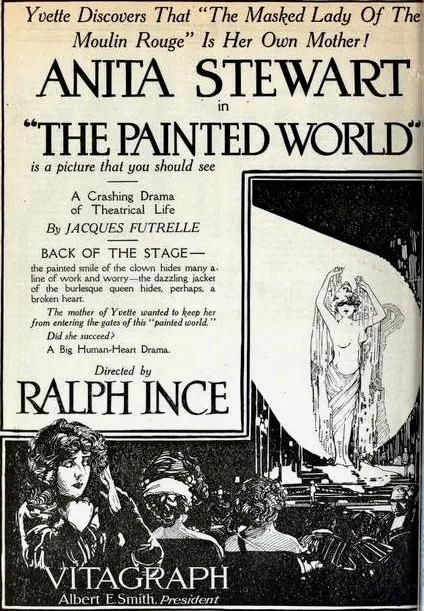
To discuss this film without acknowledging Marguerite Bertsch’s influence would be a critical oversight. As one of the few women in a position of power at Vitagraph, Bertsch brought a specific sensitivity to the mother-daughter dynamic that was often missing from the works of her male contemporaries. Her screenplay, based on Futrelle’s story, avoids the typical tropes of the 'fallen woman' and instead focuses on the 'burdened woman.' The film’s pacing is deliberate, allowing the emotional beats to breathe in a way that recalls the European sensibilities of Dukhovnye ochi.
The visual storytelling is further enhanced by the set design. The boarding school, with its looming arches and shadows, feels almost like a prison—a 'Crown Jewel' cage similar to the settings in Crown Jewels. In contrast, the burlesque theater is a riot of texture and light. This duality is central to the film's thesis: that we are all, in some way, performing for an audience, whether that audience is a group of rowdy theater-goers or the judgmental eyes of the upper class.
In the broader landscape of 1917-1919 cinema, The Painted World holds its own against more famous contemporaries. While it lacks the sheer scale of an epic, its intimate focus on the psychological toll of social ambition is remarkably modern. When compared to the school-life antics of The Varmint, Bertsch’s film feels like a sobering rebuttal, reminding the audience that for some, education is not a rite of passage but a desperate gamble. It also avoids the overt sensationalism found in Mrs. Balfame, opting instead for a slow-burn tension that culminates in its explosive finale.
The film’s exploration of identity also brings to mind the Scandinavian starkness of Fyrvaktarens dotter, where the environment itself acts as a character that shapes the protagonist's destiny. In The Painted World, the 'environment' is the social hierarchy of New York, a force as immovable and indifferent as any rocky coastline. The character of Rex, while perhaps the least developed, serves as the 'American Consul' of the story—a figure of authority and stability who must decide whether to uphold the status quo or follow his heart, a dilemma mirrored in The American Consul.
As the credits roll (or would have rolled in the silent era’s unique fashion), one is left with a profound sense of the precariousness of the human condition. The Painted World is a film about the courage it takes to be 'unworthy' and still claim happiness. It is a story that resonates because it acknowledges that the scars we carry—the 'Narbe am Knie' (the Narbe am Knie) of our social origins—never truly disappear; they just become part of a larger, more complex portrait.
While the film may not have the adventurous spirit of Robbery Under Arms or the grand vengeance of The Count of Monte Cristo, its stakes are equally high. It is a battle for the soul of a woman caught between two worlds, neither of which truly belongs to her until she learns to define herself. In an age where we are still obsessed with curated identities and 'painted' social media personas, this 1919 relic feels startlingly relevant. It is a masterclass in silent storytelling, a poignant reminder that even in a world of artifice, the truth has a way of burning through the canvas.
"A haunting, beautifully directed exploration of the masks we wear and the mothers who try to unmask us for our own good." — The Cinephile’s Ledger

IMDb 7
1934
Community
Log in to comment.