DbcultAccessing Vault...
Cult Review
Senior Film Conservator
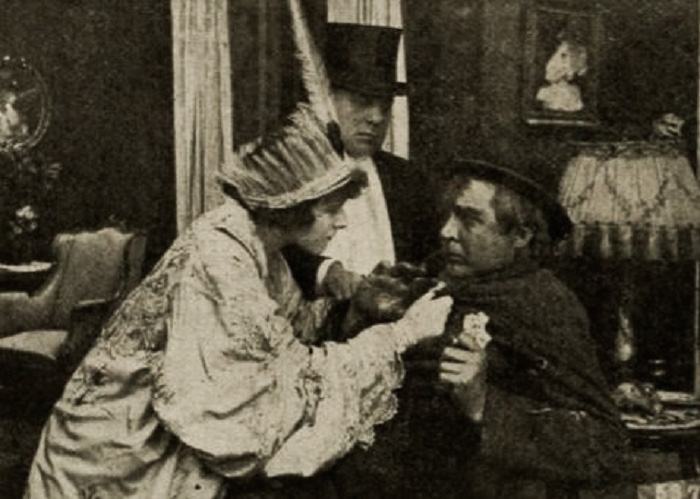
In the annals of early cinema, few narratives pierce the veil of societal hypocrisy and maternal desperation with the incisive clarity of The Painted World. This cinematic endeavor, a poignant exploration of identity, sacrifice, and the corrosive power of secrets, transcends its silent era origins to resonate with a timeless universality. Directed with an acute understanding of human frailty and the dramatic potential of moral quandaries, the film presents a searing indictment of a world that judges a woman by her profession while simultaneously demanding her unwavering devotion to an idealized domesticity.
At its core, The Painted World is a tragedy born from a mother's fierce, almost pathological love. Elois, portrayed with heartbreaking vulnerability by Janice Cummings, is an actress – a profession often relegated to the shadows of respectability in the early 20th century. Her life, already a performance, takes on a new, more profound stage with the unexpected arrival of her daughter, Yvette. This unplanned motherhood awakens in Elois not resentment, but a torrential, all-consuming maternal instinct, a desperate yearning to shield her child from the very 'painted world' she inhabits. The screenplay, meticulously crafted by Marguerite Bertsch and Jacques Futrelle, delves into the psychological toll of this ambition, illustrating Elois's relentless efforts to construct an impenetrable fortress of normalcy around Yvette.
Elois's strategy is elaborate, almost fantastical: she dispatches Yvette to a fashionable boarding school, spinning a grand illusion of a wealthy, perpetually traveling widow as her mother. This narrative, a fragile shield against the harsh realities of her own existence and the dissolute influence of Yvette's father, becomes Elois's magnum opus. The quiet desperation of her daily life, contrasted with the opulent fantasy she maintains for her daughter, forms the emotional bedrock of the film. One can almost feel the weight of this deception pressing down on Elois, a silent scream of a woman trapped between societal condemnation and an unyielding love.
The film’s brilliance lies in its nuanced portrayal of Yvette's perspective. From her privileged, sheltered existence at boarding school, the visits home become a source of profound unease. The perfumed woman, her mother, with her suffocating embraces and peculiar intensity, is a discomforting enigma. These interactions are not the warm, comforting reunions one might expect, but rather tense encounters shrouded in an unspoken tension. Yvette's fleeting, dream-like encounters with her father, dismissed by Elois as mere nocturnal imaginings, along with the fabricated tale of her mother's eye scar, plant the first insidious seeds of doubt, hinting at a truth far more complex and disquieting than her carefully curated reality.
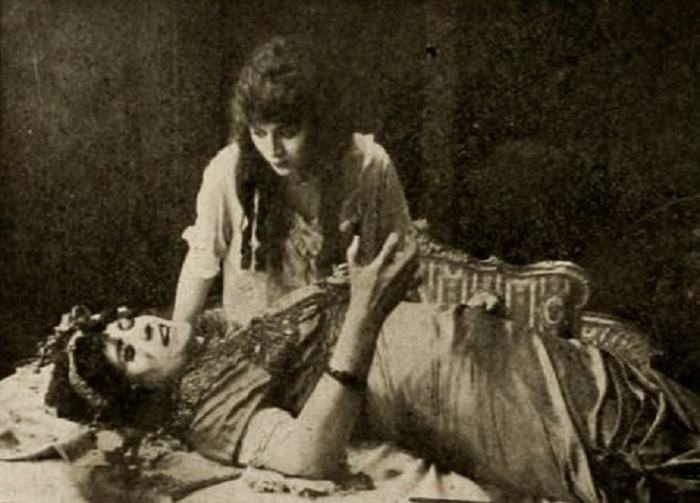
The return of Yvette (Anita Stewart, whose performance brilliantly conveys a burgeoning disillusionment) from her schooling marks the precipice of the film's central tragedy. On the threshold of womanhood, she returns to the home that has been both a sanctuary and a cage of lies. The fateful night Elois leaves her alone, the stage is set for the brutal shattering of Yvette's innocence. Her father, E.K. Lincoln, rendered pathetic and dangerous in his maudlin drunkenness, becomes the unwitting instrument of truth. In a scene thick with dramatic irony, he blurs the lines between reality and the 'painted world' by crudely revealing Elois’s profession as an actress. This confession is not merely information; it is an act of violence, dismantling the very foundation of Yvette's identity.
Yvette’s disbelief is palpable, a desperate clinging to the comfortable lie. Yet, a primal urge for truth compels her to the theatre, to witness the spectacle for herself. From the anonymous darkness of the balcony, she sees Elois, not as the elegant, refined lady of her imagination, but as a figure exposed, vulnerable, posing in a semi-nude tableau. This moment is the film’s emotional crescendo, a visual metaphor for the stripping away of all pretense. The veneer of refinement, painstakingly applied through years of elite education, crumbles, exposing a raw, primal core within Yvette. It is a moment of profound recognition, both devastating and liberating, as she confronts the stark reality of her origins.
What follows is a shocking, yet tragically understandable, act of rebellion. Without her mother's knowledge, Yvette plunges headlong into the very world Elois had desperately sought to protect her from. She becomes a burlesque queen, embracing the overt theatricality and perceived degradation of the stage. This transformation is not merely an act of defiance; it is an embrace of her inherited identity, a perverse mirroring of her mother's profession, albeit in a more overtly sensationalized form. Her choice speaks volumes about the societal pressures and limited avenues available to women, particularly those whose familial ties were deemed less than respectable. In a sense, Yvette reclaims her narrative, but at a terrible cost, mirroring the themes of societal judgment and personal agency seen in films like The Sin of a Woman, where female characters grapple with predetermined fates and the harsh consequences of their choices.
The film hurtles towards its devastating climax when Elois returns one night to find her dissolute husband present and her daughter conspicuously absent. The ensuing confrontation, a terrific scene of raw emotion and accusation, is abruptly interrupted by Yvette's entrance. But this is not the Yvette Elois sent to boarding school; this is a transformed, hardened woman, a full-fledged member of the 'painted world,' adorned in the trappings of burlesque. The moment of recognition for Elois is gut-wrenching – her daughter, her masterpiece of protection, is irrevocably lost to the very forces she fought so valiantly against.
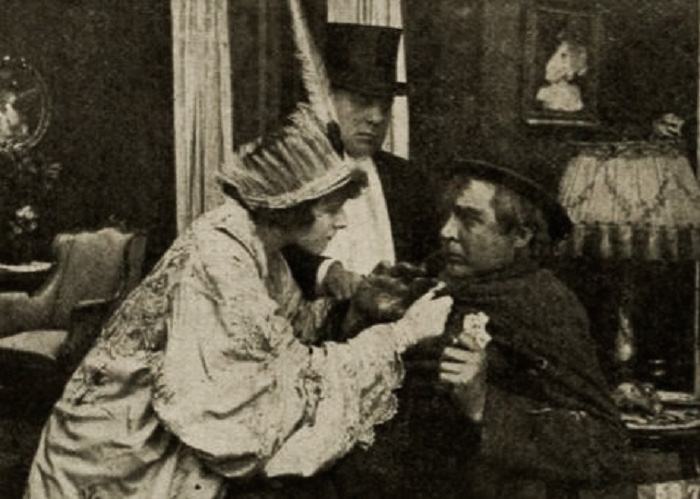
What Elois does next is both shocking and profoundly tragic, an act of maternal love twisted into a desperate, morally ambiguous sacrifice. Recognizing that Yvette's soul, her future, is imperiled, Elois makes the ultimate choice: she saves her daughter at the cost of her own body and moral standing. She lays a double crime at the feet of the man who has been the architect of all her misery – the father whose weakness and cruelty have poisoned their lives. The specifics of this 'double crime' are left to the viewer's imagination, but its implication is clear: Elois orchestrates his downfall, ensuring his capture and rendering him powerless to explain or defend himself. This final, desperate act ensures Yvette’s escape from the sordid cycle, even as it condemns Elois to an uncertain, likely grim, fate. It echoes the stark moral choices and societal pressures faced by women in films such as Sündige Liebe, where love and perceived sin are inextricably intertwined, often leading to devastating consequences for the female protagonist.
The Painted World is a masterful study in the performance of identity. Elois performs respectability for Yvette, Yvette performs innocence for the world, and eventually, Yvette performs burlesque. The film asks profound questions about authenticity: when is a performance a lie, and when is it a desperate attempt at survival? The title itself is a double entendre, referring not only to the theatrical stage but also to the artificiality of the societal roles people are forced to play. This thematic depth is reminiscent of works like The Naked Truth, which similarly explores the contrast between public façade and private reality, often with scandalous revelations.
The enduring power of The Painted World lies in its unflinching portrayal of maternal sacrifice. Elois's actions, however extreme, are driven by an elemental force that defies conventional morality. She is willing to brand herself a criminal, to sacrifice her own future, to ensure her daughter’s escape from a life she deems beneath her. This theme of a mother's self-immolation for her child's well-being is a recurring motif in literature and film, but here, it is rendered with a raw, unsentimental intensity. The film dares to suggest that true love can manifest in the most morally ambiguous of acts, particularly when societal structures offer no other recourse for women like Elois. It forces the audience to confront their own judgments about what constitutes a 'good' mother or a 'moral' life, especially in an era where women's autonomy was so severely circumscribed.
It is crucial to appreciate The Painted World within the context of early silent cinema. Without dialogue, the filmmakers relied heavily on visual storytelling, exaggerated gestures, intertitles, and the evocative power of the actors’ expressions. The tension, the heartbreak, the moral compromises – all had to be conveyed through pantomime and stark imagery. The film’s ability to articulate such complex psychological states and moral dilemmas without a single spoken word is a testament to the artistry of the era. The portrayal of burlesque, even in its early cinematic form, would have been considered quite daring for its time, pushing the boundaries of what was deemed acceptable on screen, much like the more overtly scandalous themes explored in early European cinema such as Cleopatra (though for different reasons of historical sensuality).
The performances, particularly from Cummings as Elois and Stewart as Yvette, would have been pivotal. Cummings’s ability to project both fierce devotion and crushing despair, often in the same frame, would have anchored the film’s emotional core. Stewart’s arc, from naive schoolgirl to defiant burlesque queen, required a transformation conveyed entirely through physical presence and subtle shifts in demeanor. R.A. Roberts as the dissolute father, though perhaps a more archetypal villain, serves as the necessary catalyst for the tragedy, his actions consistently undermining Elois's desperate efforts.
The Painted World stands as a powerful, if melancholic, testament to the lengths a mother will go to protect her child, even when that protection demands self-destruction. It is a narrative that challenges easy moral categorization, forcing viewers to grapple with the complexities of human nature and the societal pressures that shape individual destinies. The film's enduring legacy lies in its unflinching gaze at the 'painted world' – not just the theatrical stage, but the elaborate façades we all construct, and the devastating consequences when those illusions inevitably crumble. It is a compelling piece of silent cinema that deserves rediscovery, a stark reminder of the sacrifices hidden beneath the surface of respectability, and the enduring, often tragic, power of maternal love. Its exploration of female agency, even within circumscribed roles, offers a fascinating glimpse into the social consciousness of its time, making it a valuable historical and artistic artifact. The final scene, with the father cornered and powerless, is a grim, satisfying closure to a narrative steeped in moral ambiguity, leaving the audience to ponder the true cost of salvation.
IMDb 6.5
1932
Community
Log in to comment.