DbcultAccessing Vault...
Cult Review
Senior Film Conservator
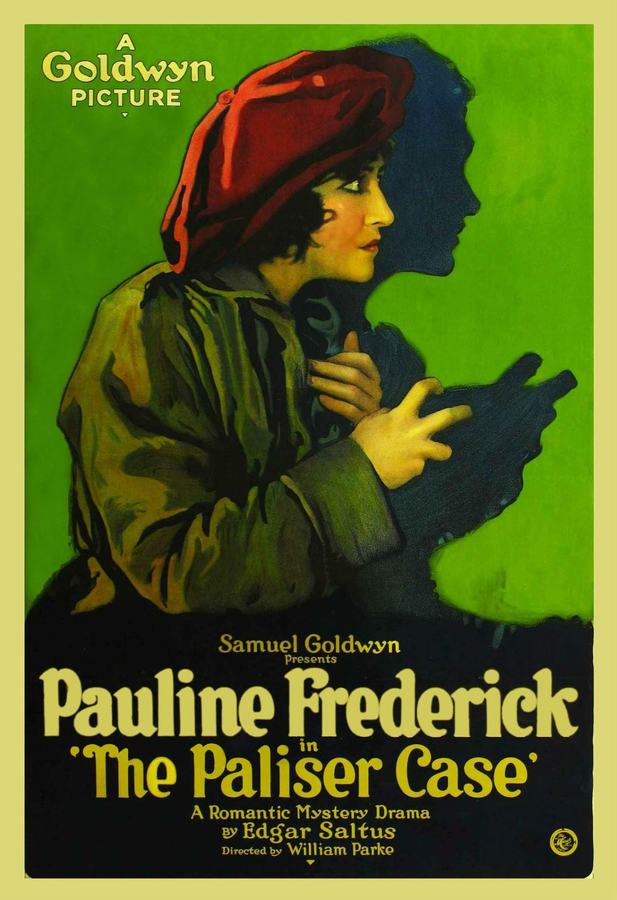
Stepping back into the annals of cinematic history, one occasionally unearths a gem that, despite its age and the inherent limitations of its medium, still resonates with a profound emotional core. Such is the case with 1920’s The Paliser Case, a silent film that masterfully weaves a tapestry of sacrifice, societal pressure, and a truly perplexing murder mystery. Directed with a keen eye for human drama, this picture, while perhaps not as widely celebrated as some of its contemporaries, offers a compelling narrative that holds up remarkably well, proving that timeless themes transcend the spoken word.
At its heart, the film is a stark portrayal of a woman’s plight in an era when personal autonomy was often overshadowed by familial duty and economic necessity. Our protagonist, played with exquisite nuance by the luminous Pauline Frederick, finds herself ensnared in a web of circumstances that compel her to enter into a marriage of convenience, or rather, inconvenience, with an utterly unscrupulous man. The motivations behind this grim pact are laid bare: her father faces financial ruin, and her hand in marriage is the grim currency required to salvage his fortunes. It’s a narrative device that, while common in early cinema, is executed here with a gravitas that makes Frederick’s character’s sacrifice palpable. Her internal struggle, conveyed through subtle gestures and expressive eyes, is the very bedrock upon which the film’s dramatic tension is built.
Pauline Frederick, a true star of her time, delivers a performance that anchors the entire production. Her portrayal of a woman caught between duty and despair is nothing short of captivating. She doesn’t merely act; she embodies the quiet anguish, the forced smile, and the deep-seated resignation of her character. Every flicker of her expression, every controlled movement, speaks volumes, allowing the audience to intuit the vast emotional landscape beneath her composed exterior. It’s a masterclass in silent film acting, demonstrating why she was such a revered figure. Her ability to convey complex emotions without uttering a single word is a testament to her artistry, drawing viewers into her world of silent suffering and ultimate resolve.
The film’s central conflict escalates dramatically with the untimely demise of the aforementioned unscrupulous husband. This isn't merely a plot point; it's a seismic event that shatters the fragile peace of our protagonist's forced domesticity and propels the story into the realm of a gripping murder mystery. The circumstances surrounding his death are immediately shrouded in suspicion, and the narrative takes an exhilarating turn as the investigation commences. What truly elevates The Paliser Case beyond a simple melodrama is the audacious twist that follows: not one, but three distinct individuals come forward, each confessing to the murder. This narrative gamble injects a thrilling dose of ambiguity and psychological depth, forcing the audience to question motives, scrutinize alibis, and ponder the very nature of truth and sacrifice.
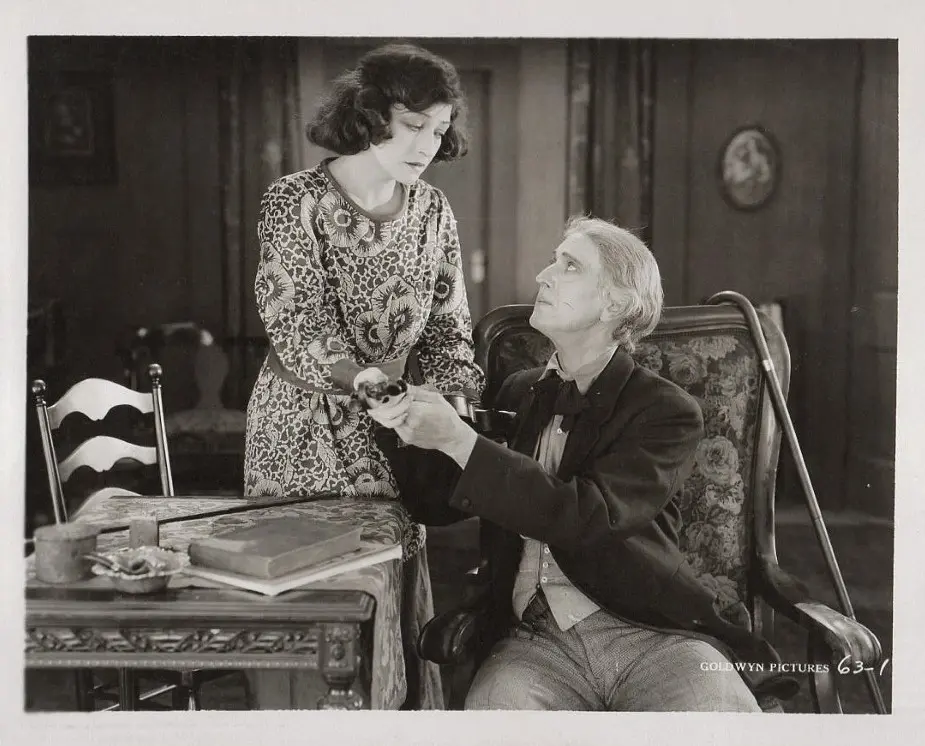
The ensemble cast, though often playing supporting roles to Frederick’s central figure, contributes significantly to the film’s overall impact. James Neill, as the beleaguered father, elicits genuine sympathy, his predicament serving as the catalyst for his daughter’s fateful choice. Warburton Gamble, portraying the despicable husband, manages to convey a sense of menace and moral bankruptcy that makes his eventual fate feel, if not justified, then at least dramatically inevitable. A. Edward Sutherland and Alan Roscoe, among others, embody the various individuals whose lives intersect with the central drama, each adding a layer of intrigue to the unfolding mystery. Their performances, though perhaps less overtly expressive than Frederick’s, are nonetheless effective in building a credible world around the central figures, ensuring that the stakes feel real and the consequences dire.
Thematically, The Paliser Case delves into profound questions of justice, honor, and the lengths to which individuals will go to protect those they love. The multiple confessions are not merely a clever plot device; they are a psychological puzzle, inviting viewers to consider the various forms of guilt—actual, perceived, and self-imposed—and the desperate desire to shield others from harm. This intricate dance of revelation and concealment keeps the audience on the edge of their seats, constantly shifting their allegiances and suspicions. The film forces us to confront the moral complexities of its characters, none of whom are entirely without blemish, yet many of whom act from a place of deep, if misguided, affection. It’s a testament to the screenplay by Edgar Saltus and Edfrid A. Bingham that these intricate motivations are conveyed with such clarity, even without spoken dialogue.
In terms of its cinematic craft, the film, while adhering to many conventions of the silent era, demonstrates a commendable command of visual storytelling. The use of intertitles is judicious, providing necessary exposition without overwhelming the visual narrative. The cinematography, though perhaps not groundbreaking by today’s standards, effectively frames the drama, utilizing close-ups to emphasize emotional states and wider shots to establish the oppressive settings. The pacing is deliberate, allowing the tension to build organically, culminating in a satisfying, if emotionally complex, resolution. One might draw a subtle thematic parallel to films like Alimony, which also explored the societal pressures and marital discord of the era, albeit with a different focus on legal and financial entanglements. Both films, in their own ways, highlight the constrained agency of women during this period, making their individual struggles all the more poignant.
The sheer audacity of the premise—three confessions for a single murder—is what truly sets The Paliser Case apart from many of its contemporaries. It transforms what could have been a straightforward domestic drama into a sophisticated psychological thriller. Each confession peels back a layer of the narrative onion, revealing hidden relationships, secret grievances, and profound loyalties. The film doesn’t merely present a mystery; it invites the audience to become detectives, sifting through the visual clues and the implied motivations presented by the characters. This engagement is a testament to its enduring appeal, demonstrating that a well-constructed plot, even without the benefit of sound, can be utterly captivating.
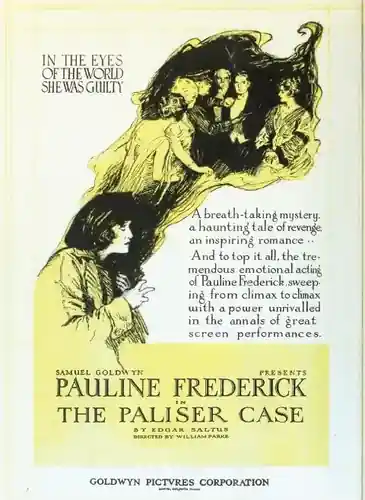
The socio-cultural backdrop of the film is also worth noting. It subtly critiques the rigid class structures and gender roles prevalent at the time. Our protagonist’s lack of choice in her marriage is a direct consequence of these societal norms, highlighting the vulnerability of women, particularly those from financially precarious backgrounds. The murder itself, and the subsequent efforts to protect various individuals, can be seen as a desperate struggle against an unforgiving system that often left little room for individual happiness or justice. This undercurrent of social commentary adds a layer of intellectual depth to the film, elevating it beyond mere entertainment to a piece of art that reflects and critiques its historical moment.
Considering other silent films of the era, The Paliser Case stands as a strong example of dramatic storytelling. While it doesn't possess the grand scale of an epic like Fabiola or the fantastical elements of early serials like Fantômas: In the Shadow of the Guillotine, its strength lies in its intimate focus on human psychology and moral dilemma. It’s a film that asks profound questions about culpability and redemption, questions that remain relevant even today. The tension isn't derived from car chases or explosions, but from the intricate dance of suspicion and revelation within a confined domestic sphere.
The climax of The Paliser Case is particularly satisfying, bringing together the various threads of the narrative in a manner that feels both earned and emotionally resonant. Without divulging too many specifics, it’s safe to say that the resolution manages to address the multiple confessions with a cleverness that respects the audience’s intelligence, while also delivering a poignant commentary on the sacrifices people are willing to make for love and loyalty. The film avoids easy answers, instead opting for a conclusion that underscores the complexities of human relationships and the often-hidden motivations that drive our actions. It’s a testament to the enduring power of classic storytelling, proving that a compelling narrative, well-acted and thoughtfully directed, can transcend the boundaries of time and technology.
In conclusion, The Paliser Case is a film that deserves to be rediscovered and appreciated by modern audiences. It offers a fascinating glimpse into the dramatic sensibilities of the silent era, showcasing a powerhouse performance from Pauline Frederick and a narrative that remains remarkably engaging. Its exploration of sacrifice, moral ambiguity, and the search for truth within a web of conflicting testimonies makes it a compelling watch. For enthusiasts of early cinema, or anyone with an appreciation for well-crafted mystery and human drama, this film is an absolute must-see. It’s a powerful reminder that the foundations of cinematic storytelling were laid with such intricate and emotionally rich narratives, proving that the silent screen could speak volumes without uttering a single word. Its legacy, though perhaps understated, is undeniably significant, cementing its place as a thoughtful and engaging piece of early American cinema.
IMDb —
1918
Community
Log in to comment.