DbcultAccessing Vault...
6.1/10
Senior Film Conservator
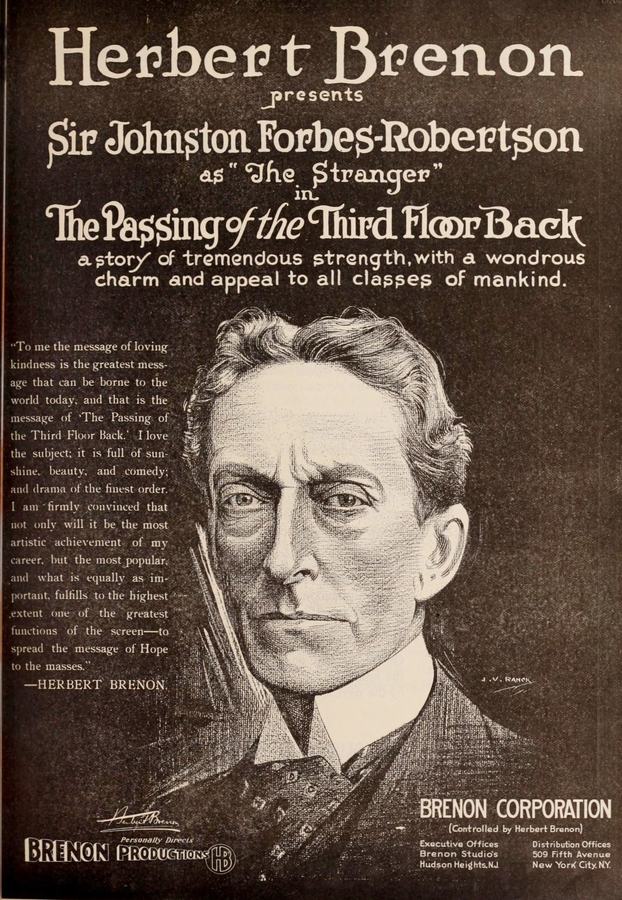
A definitive 6.1/10 rating for a film that redefined the boundaries of cult cinema. The Passing of the Third Floor Back remains a cornerstone of transgressive art.
Stepping back into the nascent years of cinema, one occasionally unearths a gem that transcends its technical limitations, speaking with an eloquence that defies the passage of a century. "The Passing of the Third Floor Back", a cinematic adaptation of Jerome K. Jerome’s beloved play, is precisely such a treasure. Released in 1916, amidst the tumultuous backdrop of the Great War, this film offered audiences a much-needed balm for the soul, a quiet contemplation on human nature, redemption, and the transformative power of belief. It's a testament to the enduring appeal of profound storytelling, demonstrating how even without spoken dialogue, the human spirit's complexities can be rendered with startling clarity and emotional depth.
The narrative unfolds within the confines of a dilapidated London boarding house, a veritable microcosm of societal anxieties and personal disillusionment. This is not the grand, bustling metropolis often depicted in early cinema, but a forgotten corner, where aspirations gather dust and cynicism reigns supreme. The residents, a motley assortment of individuals each burdened by their own silent struggles, exist in a state of weary resignation. Their lives, much like the peeling wallpaper and creaking floorboards of their temporary dwelling, seem to be slowly decaying. Director Herbert Brenon, a prolific filmmaker of the era, masterfully establishes this oppressive atmosphere, allowing the setting to become a character in itself, mirroring the internal desolation of its inhabitants.
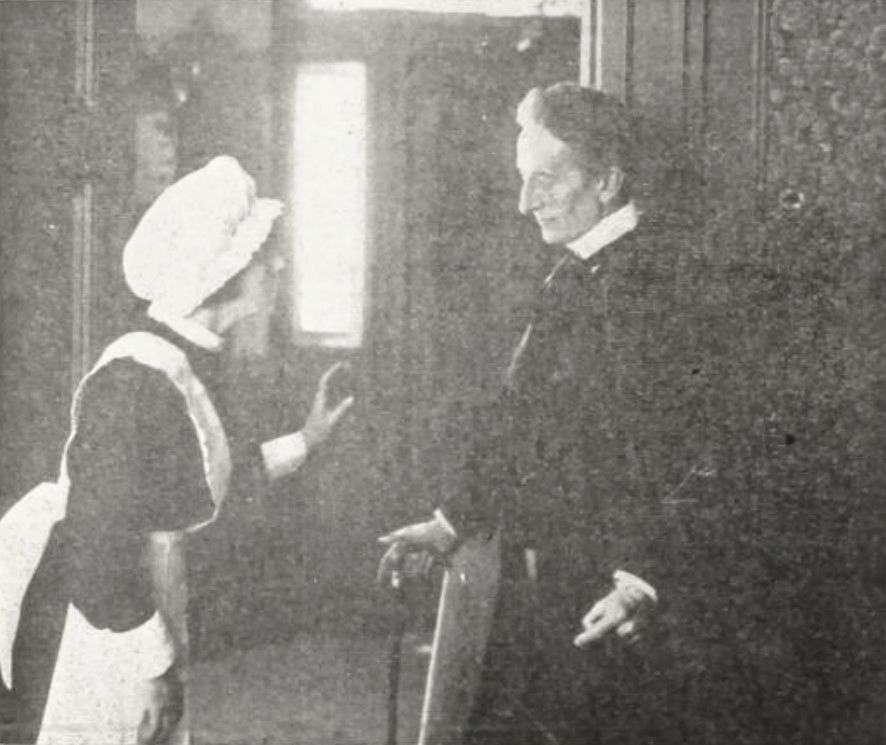
Into this moribund environment arrives The Stranger, portrayed with captivating gravitas by the esteemed stage actor Johnston Forbes-Robertson. His entrance is devoid of fanfare, a gentle ripple rather than a dramatic splash. He is simply a new lodger, occupying the unassuming back room on the third floor. Yet, from the moment he crosses the threshold, an almost imperceptible shift occurs. Forbes-Robertson’s performance is a masterclass in subtlety; his eyes, his posture, the measured pace of his movements, all convey a profound inner peace and an unwavering benevolence that stands in stark contrast to the prevailing mood of the house. He doesn't preach or perform miracles in the conventional sense; instead, he acts as a mirror, reflecting back to each individual the inherent goodness and potential they have long forgotten or actively suppressed.
"Forbes-Robertson’s portrayal of The Stranger elevates the film beyond mere melodrama, imbuing it with a spiritual resonance that resonates deeply. He is not just a character; he is an embodiment of empathy and quiet wisdom, a force for good whose power lies in gentle persuasion rather than overt intervention."
Consider the plight of the young woman, Miss Vivian, caught in the agonizing dilemma of her parents' insistence that she marry the odious Mr. Wright, a man whose lecherous intentions are thinly veiled beneath a veneer of respectability. Her internal conflict is palpable, a silent scream against societal expectations and personal degradation. The Stranger’s interaction with her is not one of direct instruction, but of gentle affirmation. He sees her true self, her dignity, her innate worth, and by simply acknowledging these qualities, he empowers her to find her own voice, to resist the path of least resistance. This nuanced approach to character development, where change emanates from within rather than being imposed from without, is what lends the film its enduring psychological depth. It’s a far cry from the more overt moralizing seen in some contemporary works, such as the clear-cut heroics of The Diamond from the Sky, where good and evil are often starkly delineated.
Then there are the artists, their dreams teetering on the brink of oblivion. An architect, his grand designs gathering dust, struggles with self-doubt and the crushing weight of unfulfilled ambition. A pianist, whose fingers once danced across the keys with joyous abandon, now finds his melodies silenced by a pervasive sense of discouragement. The Stranger approaches them not as a critic, but as a silent admirer of their potential. He offers no magic solutions, no sudden influx of patrons or opportunities. Instead, he subtly reminds them of the intrinsic value of their craft, the passion that once fueled their pursuits. His presence seems to clear the mental fog, allowing them to rediscover the wellspring of their creativity. This theme of artistic struggle and rediscovery is a timeless one, echoing through cinema history, though rarely presented with such understated grace in the early silent era.
The film’s genius lies in its exploration of the ripple effect of genuine human connection. The Stranger doesn't perform grand gestures; his influence is a series of small, significant moments – a compassionate glance, a thoughtful question, an unspoken understanding. These interactions, rendered without dialogue, rely heavily on the actors' nuanced facial expressions and body language, a hallmark of early silent film acting at its finest. Forbes-Robertson, with his theatrical background, brings an extraordinary command of these non-verbal cues, making The Stranger’s presence feel both ethereal and profoundly real. His performance anchors the entire film, providing a serene center around which the agitated lives of the boarders revolve.
The supporting cast, though perhaps less known today, delivers performances that are integral to the film's success. Augusta Haviland, Ricca Allen, and Dora Mills Adams, among others, craft believable portrayals of individuals grappling with their inner demons and societal pressures. Their transformations, gradual and often subtle, feel earned and authentic, making the film's message of self-improvement all the more potent. Unlike the often exaggerated characterizations found in serials like The New Adventures of J. Rufus Wallingford, where archetypes are played for comedic or dramatic effect, "The Passing of the Third Floor Back" opts for a more naturalistic approach, allowing the emotional arcs to unfold with quiet dignity.
Herbert Brenon’s direction, while perhaps not as revolutionary as some of his contemporaries, is remarkably effective in conveying the film’s spiritual undertones. He employs a straightforward yet sensitive visual language, allowing the camera to linger on faces, capturing the subtle shifts in emotion. The pacing, though deliberate, never feels sluggish, maintaining a steady rhythm that draws the viewer deeper into the narrative. The use of light and shadow, characteristic of early cinema, is particularly effective in highlighting the internal states of the characters – the gloom of despair giving way to the gentle illumination of hope. This visual storytelling is crucial in a silent film, and Brenon, along with cinematographers Walter Stradling and J. Roy Hunt, execute it with considerable skill.
The film's thematic core—that of recognizing and nurturing the inherent good within oneself and others—is universal and timeless. It’s a powerful counter-narrative to the prevailing cynicism that can often take hold, especially in times of hardship. The message isn't about escaping reality, but about transforming one's perception of it, and by extension, one's place within it. This spiritual awakening, achieved through self-reflection catalyzed by an external, benevolent force, aligns it with other introspective dramas of the era, though few achieve its particular blend of gentle profundity. One might draw a parallel to the introspective journeys in films like Destiny: or, the Soul of a Woman, which also explored the inner landscapes of its characters, albeit through a different narrative lens.
"Beyond its narrative simplicity, the film delves into the profound philosophical question of human agency. Are we mere products of our circumstances, or do we possess an intrinsic capacity for change and self-actualization? The Stranger’s role is not to dictate, but to inspire, to illuminate the path to self-emancipation."
The enduring relevance of "The Passing of the Third Floor Back" lies in its timeless portrayal of human vulnerability and resilience. It reminds us that even in the bleakest of settings, hope can blossom, often spurred by the unexpected kindness or insightful perspective of another. In an age saturated with spectacle, this film finds its power in quiet observation and the exploration of interior worlds. It's a gentle argument for empathy, for seeing beyond the surface, and for believing in the transformative potential that resides within every individual. This philosophical underpinning distinguishes it from more action-oriented narratives like Der Tunnel, which focused on grander, more tangible achievements, or the theatricality of The Clown, which explored performance and public perception.
The adaptation from stage to screen by George Edwardes-Hall and Jerome K. Jerome himself is notable for its fidelity to the source material’s spirit, while also embracing the unique possibilities of the cinematic medium. While stage plays often rely on dialogue to convey character and plot, silent films demanded a visual vocabulary. The filmmakers effectively translated the play’s introspective quality into visual cues, allowing Forbes-Robertson’s expressive performance to carry much of the narrative weight. This successful translation highlights the versatility of Jerome K. Jerome's original vision, proving its themes could resonate across different artistic forms.
While "The Passing of the Third Floor Back" might not possess the grand scale or dramatic flair of some of its contemporaries, its quiet intensity and profound moral message grant it a unique place in early cinema history. It’s a film that asks us to look inward, to question our own assumptions about ourselves and others, and to recognize the profound impact even the smallest act of kindness or understanding can have. It’s a spiritual allegory disguised as a domestic drama, a gentle reminder that true transformation often begins not with a bang, but with a whisper.
The film’s portrayal of the various inhabitants of the boarding house is particularly poignant. There’s the cynical old maid, the pompous businessman, the gossiping busybodies – each a caricature of human failing, yet imbued with a spark of potential that The Stranger gently coaxes to the surface. Their initial resistance to his subtle influence, followed by their gradual thawing and eventual self-realization, forms the emotional backbone of the narrative. It’s a masterful study of human psychology, revealing how deeply entrenched habits and self-perceptions can be, and how challenging, yet ultimately rewarding, it is to shed them. This nuanced depiction of character transformation is more intricate than the often straightforward morality tales of films like My Old Dutch, which, while heartfelt, tended to operate on broader strokes.
It is also worth noting the film’s subtle critique of societal structures and expectations. The pressure on Miss Vivian to marry for financial security rather than love, the struggles of the artists to gain recognition in a seemingly indifferent world, and the general air of resignation among the boarders all speak to the systemic challenges faced by individuals in the early 20th century. The Stranger’s influence, therefore, is not just personal but also implicitly societal, suggesting that a collective shift in perspective, driven by individual awakening, could lead to a more compassionate and equitable world. This underlying social commentary adds another layer of depth, distinguishing it from simpler character studies.
The film's historical context also enriches its viewing. Released during World War I, a period of immense global turmoil and despair, "The Passing of the Third Floor Back" offered a powerful message of hope and human resilience. It was a cinematic antidote to the pervasive gloom, a reminder that even when the world outside seemed to be tearing itself apart, the capacity for goodness and transformation within the human heart remained undiminished. Its spiritual message would have resonated deeply with audiences grappling with profound loss and uncertainty, offering a moment of quiet reflection and solace. This makes it a fascinating contrast to films that directly engaged with the war, or even the grand adventures of exploration like Dr. Mawson in the Antarctic, which offered a different kind of escapism and inspiration.
In an era when cinema was still finding its voice, "The Passing of the Third Floor Back" proved that storytelling didn't need elaborate special effects or sensational plots to make a profound impact. Its power derived from its simplicity, its focus on character, and its unwavering belief in the better angels of our nature. It's a film that lingers long after the credits roll, prompting introspection and a renewed appreciation for the often-overlooked moments of grace that define our lives. Its quiet revolution, a testament to the enduring power of empathy, remains as relevant today as it was over a century ago. It’s a cinematic experience that encourages us to look beyond the superficial, to seek the deeper currents of humanity, and to recognize the potential for goodness in every soul, even our own. This timeless quality positions it alongside other introspective works that delve into the human condition, such as The Foundling, which also explored themes of identity and belonging in a nuanced manner.
The legacy of "The Passing of the Third Floor Back" is not one of box office dominance or groundbreaking technical innovation, but rather a quiet, persistent influence on the moral and spiritual dimensions of cinema. It stands as a powerful example of how art can serve as a conduit for profound ethical inquiry, inviting viewers to engage with questions of purpose, integrity, and the responsibility we owe to ourselves and to each other. Its gentle yet firm assertion of human dignity, even in the face of despair, continues to resonate, offering a blueprint for films that seek to uplift and inspire without resorting to saccharine sentimentality. It truly is a film that understands the silent language of the soul, a cinematic whisper that speaks volumes.
This film, while not as widely discussed as some other silent era masterpieces, holds a significant place for its unique approach to moral philosophy. It avoids didacticism, opting instead for a narrative that allows characters to discover truths for themselves, making the viewer a participant in their journey of self-discovery. This collaborative spirit between film and audience is a subtle yet powerful aspect of its charm. It reminds us that sometimes, the most profound changes occur not through grand pronouncements, but through the quiet, consistent presence of a benevolent force, much like The Stranger himself. And in an industry often focused on the spectacular, the understated brilliance of "The Passing of the Third Floor Back" shines as a beacon for meaningful storytelling, proving that the most impactful narratives are often those that explore the quiet, internal landscapes of the human heart.
Final thoughts on its enduring appeal: What makes "The Passing of the Third Floor Back" truly remarkable is its ability to communicate complex spiritual and psychological concepts without a single spoken word. The expressions, the gestures, the subtle shifts in the actors' demeanor, all contribute to a rich tapestry of human emotion and transformation. It’s a masterclass in visual storytelling, demonstrating the profound communicative power of the silent medium when wielded by skilled artists. It beckons us to slow down, to observe, and to truly see the characters, allowing their silent struggles and eventual epiphanies to unfold with grace and conviction. In a world clamoring for attention, this film quietly earns its place as a timeless meditation on the human spirit's capacity for renewal.
IMDb 6.7
1935
Community
Log in to comment.