DbcultAccessing Vault...
Cult Review
Senior Film Conservator
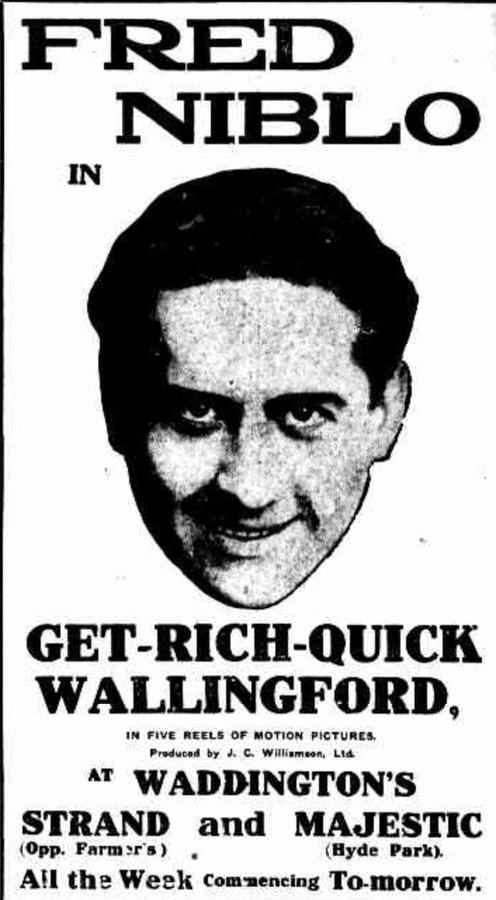
In the annals of early American cinema, a particular strain of storytelling often captured the national zeitgeist: the tale of the audacious entrepreneur, the silver-tongued charmer, the individual who sought to bend reality to their will, often for personal gain. Few films embody this spirit with as much verve and subtle commentary as Get-Rich-Quick Wallingford. This silent era marvel, born from the creative minds of W.J. Lincoln and Fred Niblo, and brought to life by a captivating ensemble, offers far more than a simple narrative of a con artist. It’s a nuanced exploration of ambition, gullibility, and the surprising pathways to redemption, all wrapped in a package of delightful comedic timing and surprisingly poignant character development.
The film introduces us to J. Rufus Wallingford, portrayed with impeccable swagger and an underlying vulnerability by Henry Carson Clarke. Clarke doesn’t just play a character; he embodies a force of nature. Wallingford isn't merely a trickster; he's a visionary of deceit, a maestro of manipulation who genuinely believes in the power of a good story, even if that story is entirely fabricated. His arrival in the tranquil, unsuspecting town of Battlesburg is akin to a meteor striking a placid lake, sending ripples of excitement and, ultimately, apprehension throughout its tightly knit community. With his loyal, if somewhat bumbling, sidekick Blackie Daw, played by Pirie Bush with a charming blend of innocence and complicity, Wallingford sets about constructing his most ambitious fraud yet: the 'Wallingford Pearly Button Company.'
The brilliance of the 'Pearly Button' scheme lies in its utter simplicity and its audacious premise. Wallingford doesn't promise gold; he promises buttons, but buttons of such revolutionary quality and demand that they will make investors fabulously wealthy. This concept, ludicrous on its face, becomes entirely plausible under Clarke’s Wallingford. He doesn't just sell an idea; he sells a dream, tapping into the inherent desire for easy wealth that has always simmered beneath the surface of the American psyche. The film deftly satirizes the speculative bubbles that have historically plagued economic landscapes, making its commentary surprisingly timeless. One can draw parallels to the frenzied, often illogical, investment schemes that continue to emerge, proving that human nature, particularly greed and the hope of a quick fortune, remains remarkably consistent across generations.
Pirie Bush's Blackie Daw serves as the perfect foil. His earnest attempts to understand Wallingford's intricate deceptions, often leading to hilarious misunderstandings, provide much-needed comedic relief and ground the more abstract machinations of Wallingford's mind. Their dynamic is a masterclass in comedic partnership, reminiscent of the charming duos seen in later buddy comedies, though with a distinctly silent-era flavor. The physical comedy, while not as overtly slapstick as some of the Keystone Comedies of the era, is woven seamlessly into the narrative, often arising from Blackie's literal interpretations of Wallingford's metaphorical pronouncements. Their interplay is a testament to the power of non-verbal communication, a cornerstone of silent film artistry.
The narrative truly deepens with the introduction of Fannie Battles, portrayed with remarkable intelligence and grace by Enid Bennett. Fannie is no damsel in distress; she is the moral compass of Battlesburg, a woman whose skepticism is rooted in principle rather than cynicism. Her initial distrust of Wallingford slowly evolves into a complex fascination, and it is through her eyes that the audience begins to see beyond Wallingford's dazzling exterior. Bennett's performance is subtle yet powerful, conveying a depth of character that challenges the prevailing tropes of female roles in cinema of that period. She represents not just a love interest, but a catalyst for change, a force that compels Wallingford to confront the ethical vacuum at the heart of his existence.
The burgeoning relationship between Wallingford and Fannie is handled with a delicate touch, avoiding overt sentimentality while conveying a genuine connection. It's a testament to the screenwriting prowess of Lincoln and Niblo, who understand that true character transformation often stems from profound human connection. This thematic thread, where a strong female character influences a morally ambiguous male protagonist, can be seen echoed in films like A Woman's Power or even the more melodramatic The Lady of Lyons; or, Love and Pride, showcasing a recurring societal fascination with the redemptive capacity of love and virtue.
Fred Niblo, credited as one of the writers, likely brought a significant understanding of dramatic pacing and character nuance to the script, given his directorial background and acting experience. The narrative unfolds with a meticulous rhythm, slowly building the tension as Wallingford's scheme expands, then introducing complications that threaten to unravel his carefully constructed world. The supporting cast, including Sydney Stirling and Eddie Lamb, contribute robust performances that flesh out the town of Battlesburg, making it feel like a living, breathing entity. Stirling, perhaps as the shrewd banker Mr. Bumpus, and Lamb, potentially as the naive Colonel Battles, play their parts with conviction, embodying the various shades of human susceptibility that Wallingford so expertly exploits. Their reactions, from initial awe to growing suspicion, are vital to the film's success, providing a believable backdrop against which Wallingford's drama plays out.
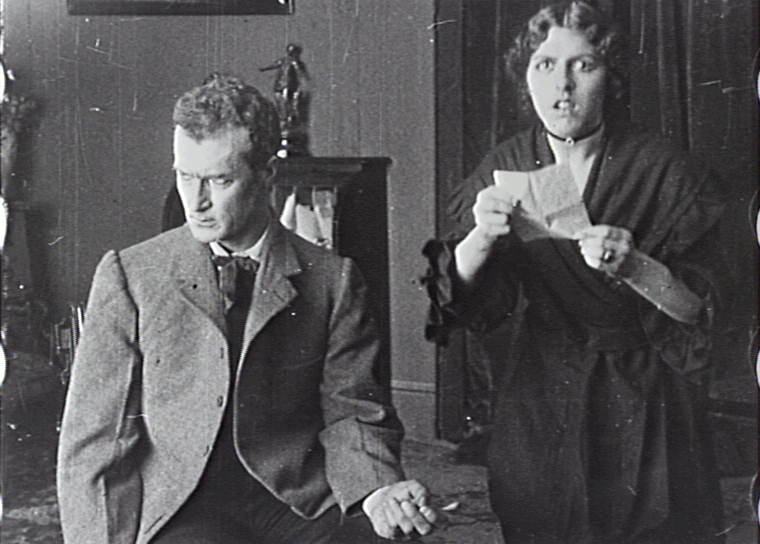
The cinematography, though adhering to the conventions of the silent era, is remarkably effective in conveying mood and character. Close-ups are used judiciously to highlight emotional shifts, particularly in Clarke’s nuanced expressions as Wallingford grapples with his conscience. The wide shots of Battlesburg establish its idyllic charm, making Wallingford's intrusion feel all the more disruptive. The visual storytelling, stripped of dialogue, relies heavily on these cinematic techniques, proving that a compelling narrative doesn't always require spoken words, only a keen understanding of human emotion and visual composition.
Get-Rich-Quick Wallingford is more than a simple comedy-drama; it’s a societal mirror. It probes the very essence of the American Dream, questioning whether ambition, unchecked by ethics, can truly lead to lasting happiness or merely a house of cards. The film's portrayal of Wallingford's initial success, built on an elaborate lie, speaks to the intoxicating power of charisma and the human tendency to believe what one desperately wants to be true. This theme of intricate deception and its potential unraveling finds echoes in films like The Master Mind, which similarly delves into the elaborate mental chess games played by cunning individuals.
Wallingford’s journey from unrepentant swindler to a man seeking genuine purpose is a compelling one, offering a hopeful message that even the most deeply ingrained patterns of behavior can be altered by genuine connection and a desire for integrity.
The film also subtly touches upon the contrast between rural innocence and urban sophistication (or rather, urban cunning). Battlesburg represents a simpler way of life, vulnerable to the machinations of an outsider. Yet, it also possesses an inherent strength in its community ties and moral fiber, which ultimately proves more resilient than Wallingford’s transient schemes. This tension between tradition and the disruptive force of modernity or external influence is a recurring motif in cinema, often explored to highlight societal shifts or the impact of individual agency on collective consciousness.
What makes Get-Rich-Quick Wallingford resonate even today is its timeless exploration of character. Wallingford isn't a one-dimensional villain; he's a complex individual whose charm is as much a part of him as his duplicity. His eventual turn towards a more ethical path, influenced by Fannie, is not a sudden, unbelievable conversion but a gradual shift, earned through introspection and genuine affection. This arc provides a satisfying emotional payoff, distinguishing the film from simpler morality plays. While some films of the era, such as The Nation's Peril, focused on grander societal threats or moral warnings, Wallingford grounds its ethical dilemmas in the personal, making the stakes feel intimately relatable.
The film's exploration of newfound wealth and its transformative power can also be seen in a different light when compared to films like Artie, the Millionaire Kid, where the acquisition of riches forms the central premise, though often from a more legitimate, if still dramatic, angle. Wallingford’s path is decidedly less legitimate, making his eventual choice to use his considerable talents for good all the more impactful. It's a narrative that suggests true wealth might not be measured in dollars, but in integrity and the respect of those you value.
In the grand tapestry of silent cinema, Get-Rich-Quick Wallingford stands out as a vibrant thread. It's a film that entertains with its wit and charm, but also provokes thought with its keen observations on human nature. Henry Carson Clarke's performance as Wallingford is a masterclass in silent acting, conveying a spectrum of emotions without uttering a single word. The film's enduring appeal lies in its ability to blend comedic escapism with a profound moral journey, proving that stories of ambition, deception, and the possibility of redemption are truly timeless, transcending the eras in which they are made. It's a delightful discovery for anyone interested in the rich history of film and a testament to the enduring power of compelling storytelling, regardless of whether sound accompanies the moving images.
The film’s resolution, where Wallingford helps transform his fraudulent enterprise into something genuinely beneficial, even if on a smaller scale, speaks volumes about the American spirit of reinvention. It isn't just about escaping punishment; it's about repurposing one's talents for constructive ends. This echoes a broader theme of justice and rectitude found in films such as The Majesty of the Law, where the establishment of order and moral correctness ultimately prevails. However, unlike a strict adherence to legal justice, Wallingford's redemption is more personal and character-driven, making it perhaps more resonant for an audience invested in individual transformation. It offers a more nuanced perspective on the idea of a 'second chance,' suggesting that even those who stray far from the path can find their way back, often guided by the unexpected forces of love and conscience.
Ultimately, Get-Rich-Quick Wallingford is a compelling cinematic artifact that deserves renewed attention. It's a reminder of the sophisticated narratives and performances that defined the silent era, proving that these early films were far from simplistic. They were rich tapestries of human experience, capable of humor, drama, and profound insight. For those seeking to understand the roots of American storytelling in film, and for anyone who appreciates a well-crafted tale of a charming rogue's journey, this film is an absolute treasure.
IMDb 6.3
1931
Community
Log in to comment.