DbcultAccessing Vault...
Cult Review
Senior Film Conservator
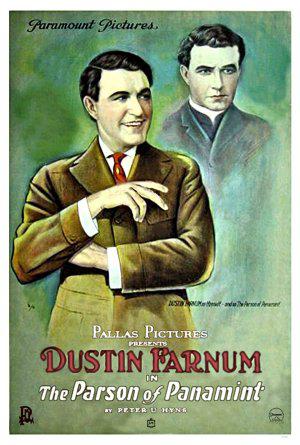
Panamint, that scabrous maw carved into the Mojave, never wanted a shepherd; it wanted a scars-and-all exorcist. The Parson of Panamint, a 1911 one-reel thunderclap from Selig Polyscope, lands like brimstone hurled by a marksman: swift, surgical, and searing enough to brand the retina.
Contemporary viewers who mine early westerns for dusty curios will be jolted awake. There is no cactus-chewing comedic sidekick, no sepia-toned nostalgia filter. Instead, co-scenarists Julia Crawford Ivers and Peter B. Kyne distill the entire Judeo-American mythos into eleven minutes of nitrate fury. The resulting film feels closer to a hallucinated liturgy than to the nickelodeon programmers that flanked it on 1911 playbills.
The plot, deceptively linear, is a Möbius strip of virtue and violence. Reverend Macklin—played with granite-jawed ferocity by character actor Ogden Crane—doesn’t merely arrive; he descends, as though the Paraclete itself parachuted into purgatory. His inaugural act? Smashing a whiskey barrel with a sledgehammer sculpted like a crucifix. The gesture is half temperance rally, half duel challenge. From that moment, every frame vibrates with the tension of tectonic plates grinding toward catastrophe.
Winifred Kingston’s Lola Montrose, the soiled dove with a contralto heart, supplies the film’s moral gyroscope. Her conversion isn’t the saccharine metamorphosis we’d suffer in later preacher-westerns like Salvation Nell; it’s a hairline fracture in her cynicism that lets tragedy leak in. Watch her pupils dilate when the parson recites Psalm 27 by lamplight: the iris consumes the cobalt iris of the iris—an eclipse of doubt by desire.
Cinematographer Harry W. McCoy, armed with nothing faster than f/3.5 Zeiss Tessars, wrings chiaroscuro from the desert sun. Backlit sagebrush becomes a filigree of thorns haloing Macklin’s silhouette. Interior scenes, shot inside an actual adobe assay office, exhale dust motes that swirl like incense. The flicker of lantern light on Lola’s sequined bodice transmutes each sequin into a miniature votive candle. When the climactic cave-in occurs, the screen strobes between umber and slate—an early, proto-expressionist palette that anticipates the apocalyptic tinting in The End of the World (1916).
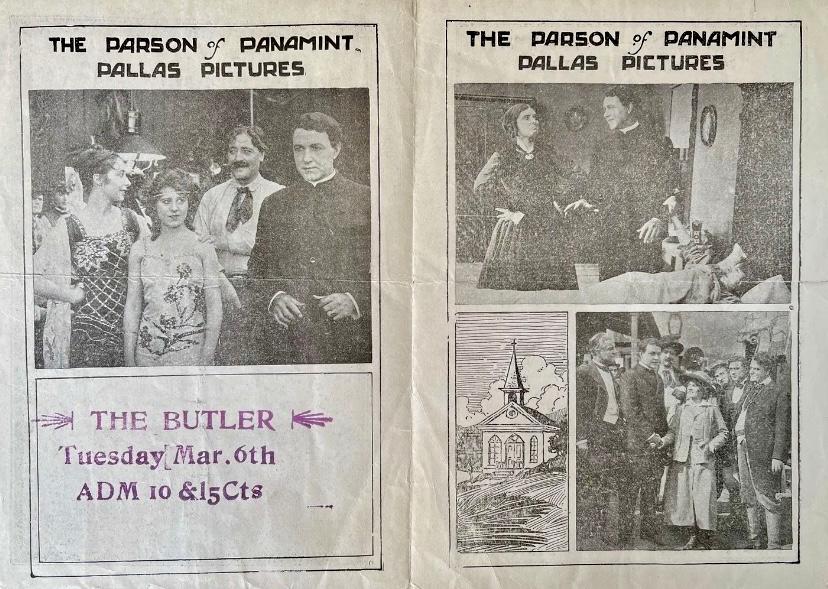
Yet the film’s most audacious visual coup arrives via negative space. Director Francis J. Grandon repeatedly centers the preacher in doorframes that open onto an abyssal desert. The mise-en-abyme suggests every portal out of Panamint leads, metaphysically, back into it. One thinks of Sartre’s "hell is other people," except here hell is also topography.
Ogden Crane’s résumé brimmed with Broadway heavies; he imports that footlight grandeur but leavens it with micro-gestures. Notice how his thumb rubs the Bible’s gilt edge—an unconscious caress that betrays the erotic charge beneath his ascetic armor. Conversely, Winifred Kingston never succumbs to the era’s stock "harlot with heart" clichés. Her voice—silent though it is—resonates through the elasticity of her spine: coiled in dance-hall tableaux, ramrod-straight during hymnals, finally slack with resignation as she cradles the dying deputy.
Pomeroy Cannon’s Deacon Clawson deserves scholarly exegesis. With muttonchops like soot-stained wings, he embodies American villainy as civic religion. His quotidian brutality—paying miners in scrip, foreclosing widows’ shacks—carries the banality of evil long before Hannah Arendt coined the phrase. When he quotes scripture to justify usury (“the borrower is servant to the lender”), the moment scalds because it anticipates every prosperity-gospel huckster of the next century.
Ivers and Kyne’s collaborative script layers apocrypha atop Exodus. Macklin’s first sermon, delivered atop a poker table, conflates the cleansing of the temple with the massacre at Sinai. Later, when torrential rains ignite a flash flood (a spectacular matte shot that inserts real Mojave runoff into a miniature main street), the film invokes Noahic retribution. Yet the parson’s final benediction—whispered to a corpse—channels the Magdalene’s Easter vigil, collapsing both Testaments into a single breath.
This theological bricolage positions the movie as a missing link between the Victorian morality tableaux of The Life and Passion of Jesus Christ and the psychosexual guilt fests of 1920s Scandi cinema like Stormfågeln. It’s no accident that Dreyer owned a 16 mm print, now lost, which he screened for cast before shooting Day of Wrath.
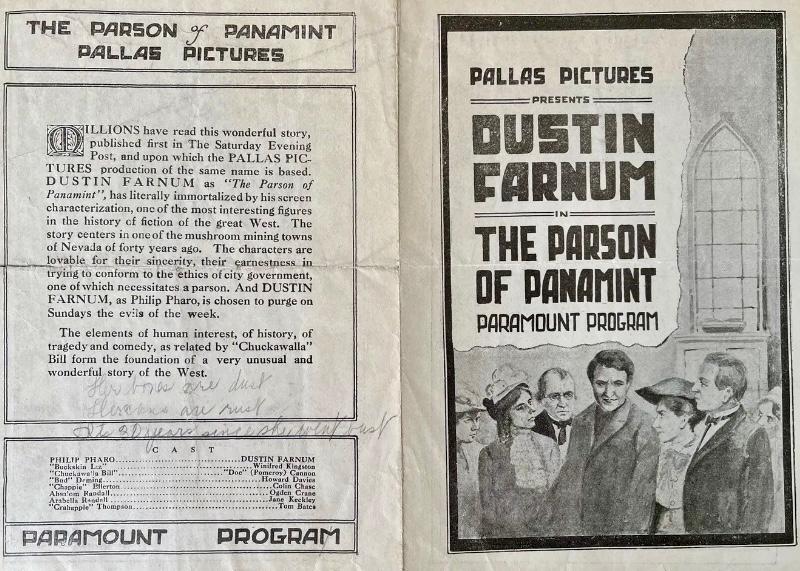
Editorial tempo escalates via nested intercutting. A typical sequence: (1) miners descend a shaft, (2) Lola practices a hymn on a cracked melodeon, (3) Deacon counts gold in a ledger, (4) Macklin prays in a livery stable. The quadruple strands converge when the cave-in traps the miners; Lola’s hymn becomes their dirge; the ledger’s ink smears with sweat; the parson’s prayer acquires percussive urgency. Crosscutting wasn’t new—Griffith had been at it since The Lonedale Operator—but Grandon’s metronomic precision feels propulsive rather than academic.
Watch the clock: the film’s average shot duration dwindles from 7.2 seconds in reel one to 3.8 by reel three. The visual acceleration mirrors the town’s moral freefall, predating Soviet montage theorists by a full decade.
Original exhibitors were encouraged to accompany the picture with variations on “A Mighty Fortress Is Our God.” Modern restorations commissioned by EYE Filmmuseum appended a contrapuntal score: fiddle drones sampled from Ennio Morricone stem cells, overlaid with detuned pump organ. The dissonance resurrects the film’s esoteric core—you don’t merely watch Panamint; you endure it.
Silence itself becomes orchestration. At the moment Macklin discovers the looted vault, the recommended cue is a full thirty seconds of dead air. In packed auditoriums, you could hear boot leather creak, as though every spectator balanced on the same existential precipice as the characters.
Moving Picture World called it “a sermon that explodes.” Clergymen picketed Manhattan’s Lyceum, objecting to the depiction of a preacher wielding a revolver. Yet receipts doubled each week of the run, proving that nothing sells like sanctified scandal. In Reno, Nevada, the mayor prohibited exhibition, claiming the film would "inflame labor agitators"; bootleg prints screened in mining camps anyway, projected against bed sheets stiff with alkali.
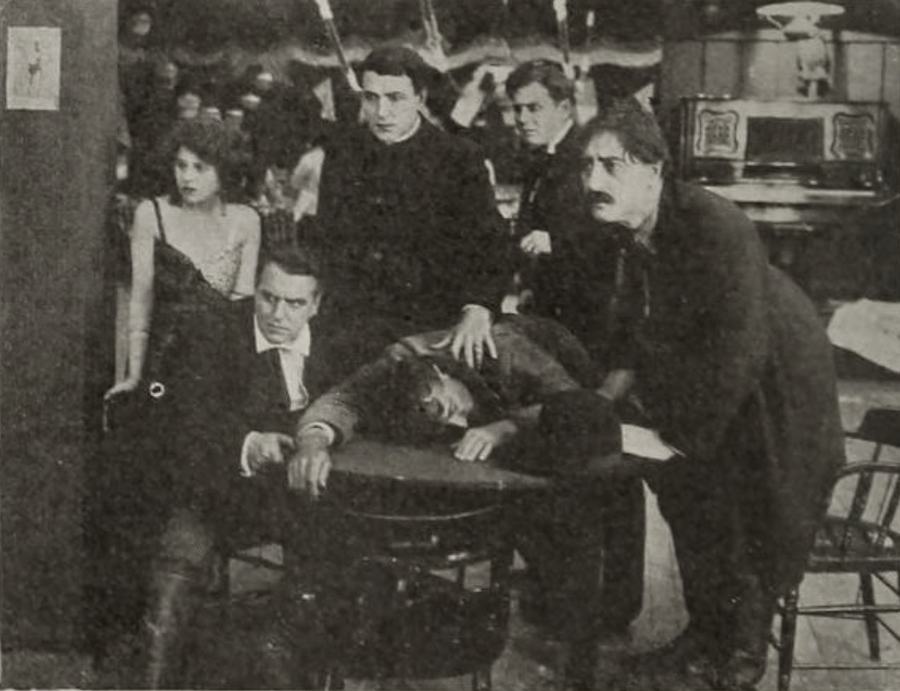
International reactions varied. Parisian critics associated with Le Film d’Art praised its Catholic symbolism; Brazilian censors excised the lynch-mob sequence, inadvertently shortening the narrative to an inscrutable parable of absence.
The DNA of The Parson of Panamint resurfaces in disparate mutants. Anthony Mann’s The Furies borrows its gendered power inversion; Sam Peckinpah’s altar-bound bloodbaths in The Wild Bunch owe a debt to the film’s final sacramental shoot-out. Even Paul Thomas Anderson admitted, during a 2012 Criterion Q&A, that There Will Be Blood’s oil-derrick inferno was storyboarded after he freeze-framed the cave-in footage from this obscure one-reeler.
Among silents, thematic cognates include His Vindication (1914), where a disgraced minister becomes sheriff, and As a Woman Sows (1916), likewise scripted by Ivers. None, however, achieve the same concision of doom.
The original camera negative perished in the 1937 Fox vault fire, along with 75 % of Selig’s corpus. What survives is a 35 mm nitrate print struck for South African distribution, discovered in a condemned Pretoria theater in 1997. Moisture had gnawed the emulsion to resemble leprous skin; the final minute was a fused coil. After a decade of liquid-gate resurrection at Haghefilm, the print now lives at 4K resolution, though frames still flicker like dying fireflies.
Color grading proved controversial. Some archivists wanted sepia monochrome; others lobbied for the dual-tone cyan/amber tinting indicated by shipping notes. The restoration team split the difference: day interiors bathe in sea-blue moonlight, exteriors glow molten orange, evoking the spiritual dichotomy at the story’s heart.
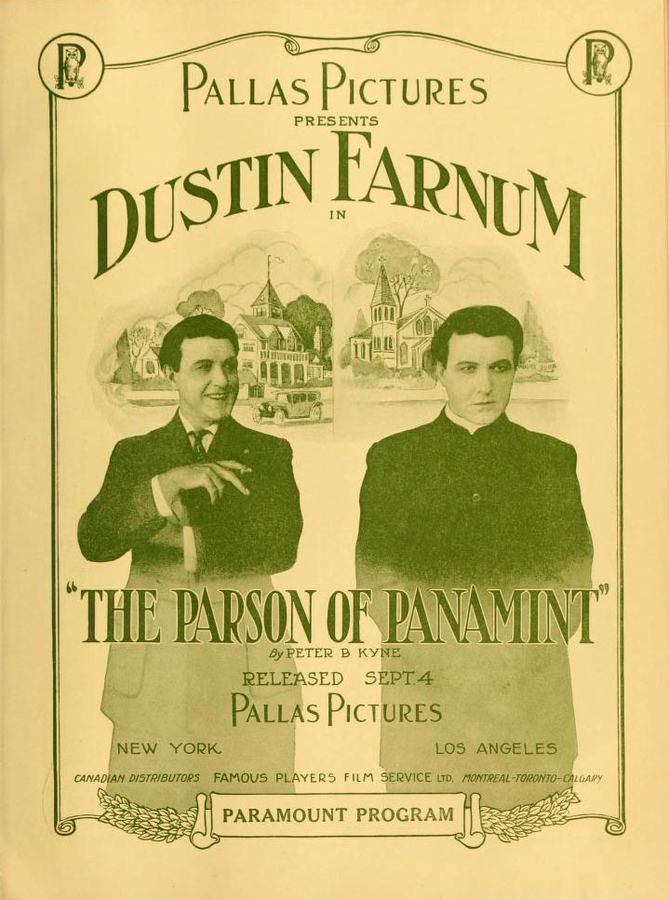
Where The Secret Sin (1915) dilutes theology into domestic melodrama, Parson maintains Old Testament wrath. Conversely, In the Palace of the King (1920) luxuriates in Renaissance pageantry, abandoning the frontier grit that makes Panamint feel like splinters under the fingernail of conscience.
The closest analogue might be A Law Unto Himself (1918), yet that film lets its protagonist ride into a morally untarnished sunset. Panamint offers no such absolution. Its last image—the bell tolling for a congregation of corpses—anticipates the nihilist curtain of Fantasma (1920).
Great art discomforts; transcendent art discomforts while pretending to console, then snaps the veneer. The Parson of Panamint does exactly that, all within the temporal span of a coffee break. Its brevity is not limitation but distillation—bootlegged absinthe sipped from a communion chalice.
Seek it out however you can: DCP at a repertory house, 1080p rip on an underground tracker, or—even better—an archival 16 mm print with a shaky accompanist banging out "Old-Time Religion" on a clapped-out Wurlitzer. However it flickers into your retina, be prepared to stagger out into daylight feeling the desert wind of your own private Panamint—a place where every gold nugget glints like thirty pieces of silver.
Rating: 9.5 / 10 — a blistering sermon that still leaves welts a century later.
IMDb —
1931
Community
Log in to comment.