DbcultAccessing Vault...
Cult Review
Senior Film Conservator
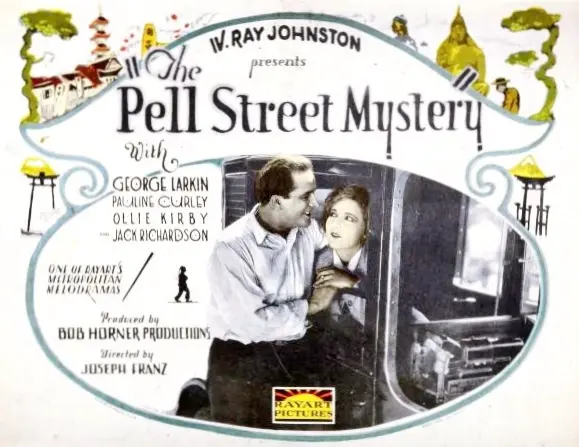
Cinema in the mid-1920s was navigating a transitional phase, oscillating between the theatrical melodrama of the past and the burgeoning realism of the modern era. The Pell Street Mystery, released in 1924, stands as a formidable testament to this evolution. While often overshadowed by the high-budget spectacles of the time, this film offers a concentrated dose of urban anxiety and investigative fervor that feels remarkably contemporary in its pacing. Directed with a keen eye for shadow and suspense, it utilizes the bustling, often dangerous atmosphere of New York's underbelly to tell a story that is as much about social stratification as it is about a singular act of violence.
The film opens with the grim discovery of Queenie Ross, a moment captured with a stark, almost documentary-like precision that sets it apart from more sanitized productions like Rose o' Paradise. Here, the stakes are immediate and lethal. We are introduced to Tip O'Neil, portrayed by the athletic and charismatic George Larkin, a man whose primary weapons are his wits and a relentless drive for the 'scoop'. Unlike the more whimsical protagonists found in The Fotygraft Gallery, O'Neil is a creature of the pavement, a character who understands that the truth is rarely found in the light of day.
George Larkin brings a unique energy to the role of Tip O'Neil. Known for his background in circus performance and stunts, Larkin imbues the reporter with a physical capability that was rare for the investigative archetype of the era. He doesn't just ask questions; he moves through space with a predatory grace. This is most evident in the sequence where O'Neil discovers the cuff link—a classic Hitchcockian MacGuffin before Hitchcock had even mastered the term. The realization that this piece of jewelry belongs to Count Verdaux (played with a chilling, aristocratic menace by Jack Richardson) transforms the film from a standard procedural into a high-stakes game of cat and mouse.
The narrative choice to have O'Neil go undercover as a tango dancer is a stroke of genius that highlights the cultural obsessions of the 1920s. The tango was more than just a dance; it was a symbol of exoticism and dangerous passion. By stepping into this role, O'Neil isn't just changing his clothes; he is entering a different social strata, one where the rules of the newsroom don't apply. This performance within a performance allows Larkin to showcase a duality that rivals the dramatic complexity found in Idolators. The chemistry between Larkin and Ollie Kirby, who plays the Count’s sweetheart Mazie, is palpable, creating a layer of sexual tension that complicates the protagonist's mission.
The visual language of The Pell Street Mystery is heavily indebted to the German Expressionist movement, though it remains firmly rooted in American pulp sensibilities. The use of light and shadow—particularly in the scenes involving the 'lights out' escape—prefigures the film noir movement of the 1940s. When the screen plunges into darkness, the audience is forced to share O'Neil's disorientation and vulnerability. This technique is far more sophisticated than the straightforward lighting found in contemporary dramas like The Girl I Loved.
The setting of Pell Street itself functions as a character. In the 1920s, Chinatown was often depicted through a lens of 'Yellow Peril' xenophobia, and while this film doesn't entirely escape those tropes, it uses the labyrinthine geography of Ah Foo’s rooms to create a sense of inescapable dread. The rescue of Nell (Pauline Curley) is not just a romantic gesture; it is a descent into an underworld where the protagonist must confront his deepest fears. Curley, moving away from the more traditional 'damsel' roles seen in Tess of the D'Urbervilles, provides Nell with a moment of agency when she saves Tip by cutting the lights, yet she remains the emotional anchor that drives the final act's intensity.
Structurally, the film is a marvel of economy. At a time when many films struggled with pacing, such as the occasionally sluggish Brigadier Gerard, The Pell Street Mystery maintains a relentless forward momentum. The transition from the discovery of the body to the final confession is handled with a narrative efficiency that mirrors the work of a seasoned journalist. The inclusion of the 'scoop' as the ultimate reward for the protagonist serves as a fascinating commentary on the ethics and motivations of the Fourth Estate during the Jazz Age.
When comparing this work to From Gutter to Footlights, we see a similar fascination with the transition between social classes, but The Pell Street Mystery is far more cynical. It suggests that the line between the law-abiding citizen and the criminal is as thin as a silk cuff link. The Count is not a cartoon villain; he is a reflection of the corruption that exists when power goes unchecked, a theme also explored in The Clean-Up.
The final confrontation in Ah Foo's quarters is a masterclass in silent action. The choreography of the fight scenes is visceral, lacking the staginess often found in Oliver Twist. Larkin’s physical prowess is on full display here, making the climax feel earned rather than merely convenient. The arrival of the police and the subsequent confession of the murderer provide a satisfying, if somewhat abrupt, resolution that was typical of the genre's demands for moral closure.
Looking back from a modern perspective, The Pell Street Mystery offers more than just historical curiosity. It is a blueprint for the investigative thriller. The character of Tip O'Neil paved the way for future cinematic journalists who would inhabit the smoke-filled rooms of the 1930s and 40s. The film’s exploration of technology and superstition, albeit more grounded than the supernatural elements in The Ouija Board, shows a society grappling with the unknown through the lens of logic and evidence.
Furthermore, the film's treatment of its female characters, while still bound by the conventions of its time, hints at a shifting dynamic. Pauline Curley’s Nell is not merely a prize to be won; she is an active participant in the narrative’s climax. This nuance is something often missing in international imports of the era, such as Kærlighedsspekulanten, which often leaned more heavily into archetypal melodrama. The subtle performances of the supporting cast, including Karl Silvera and Frank Whitson, add layers of authenticity to the world-building, making the Pell Street of the title feel like a living, breathing entity rather than a mere set.
In the broader context of 1924 cinema, which saw the release of heavy-hitters like Passing Night and The Good Provider, The Pell Street Mystery holds its own by refusing to be pigeonholed. It is a crime film, a romance, an action-adventure, and a social critique all rolled into one. It captures the frantic, often contradictory spirit of the American Dream—a dream that, for Tip O'Neil, is found not in the quiet suburbs, but in the heart of the mystery, under the flickering lights of the city streets.
Technically, the film benefits from sharp editing that keeps the various subplots—the murder, the tango infiltration, and the kidnapping—tightly interwoven. The use of close-ups during the cuff link discovery and the tango exhibition creates an intimacy that draws the viewer into the psychological state of the characters. This is a far cry from the distant, stage-like framing of Chains of the Past. Even the costume design, particularly the contrast between Tip's humble reporter attire and his flamboyant tango outfit, serves to heighten the themes of identity and deception.
The film also touches upon the fetishization of luxury, similar to the thematic core of Silk Stockings, where material objects serve as markers of guilt and desire. In The Pell Street Mystery, the cuff link is not just evidence; it is a symbol of the Count's arrogance, a piece of his world that he carelessly left behind in the world of Queenie Ross. This intersection of the high-born and the low-life is where the film finds its most potent drama.
Ultimately, The Pell Street Mystery is a quintessential piece of silent cinema that deserves a place in the pantheon of early crime thrillers. It manages to balance the sensationalism of the pulps with a genuine cinematic artistry. George Larkin’s performance remains a highlight, a reminder of a time when the leading man had to be both a dramatic actor and a physical daredevil. For anyone interested in the roots of the noir genre or the evolution of the cinematic hero, this film is an essential watch. It reminds us that while the technology of filmmaking has changed beyond recognition, the thrill of a well-told mystery and the pursuit of justice remain timeless. The scoop, as Tip O'Neil would tell you, is always worth the risk.
IMDb —
1929
Community
Log in to comment.