DbcultAccessing Vault...
Cult Review
Senior Film Conservator
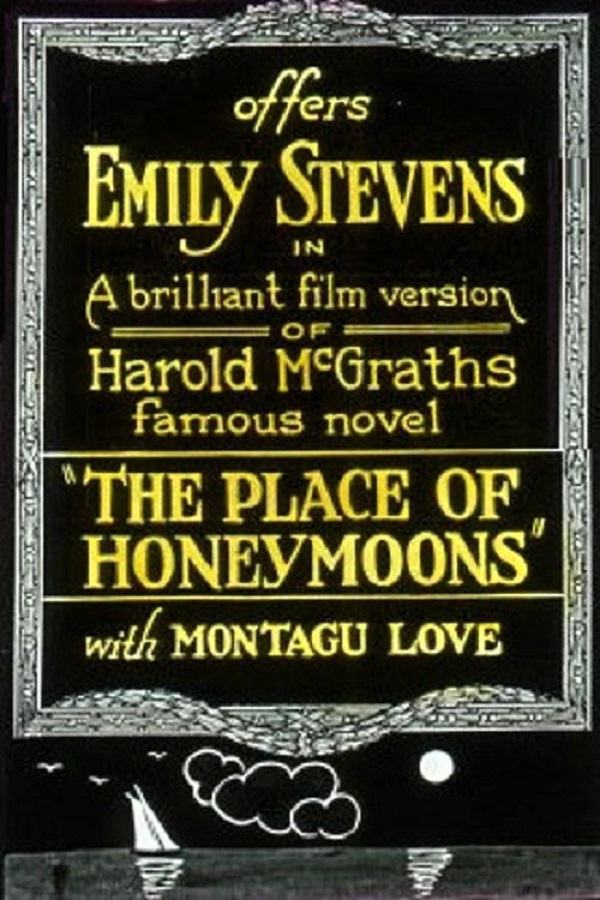
Paris, 1919: the war is over, the world is drunk on survival, and the camera of The Place of Honeymoons glides across gilded balconies like a voyeur who has paid for the most expensive box. From the first iris-in on Nora Harrigan—her throat a cathedral of breath—director Joseph Selman announces his agenda: opera is not mere soundtrack, it is bloodstream. Each aria cues emotional pirouettes; each close-up of Emily Stevens’s face is a chiaroscuro sonnet where cheekbones argue with shadows.
Nora’s abduction sequence—shot in negative moonlight so her white gown becomes a bruised smear—feels lifted from a fever dream co-written by Blue Envelope Mystery and The Hawk. The film refuses to show the actual kidnapping; instead, we get the hollow echo of a slammed carriage door, a feather boa snagged on wrought-iron, and a single glove abandoned like a suicide note. The result is a vacuum more chilling than any chloroform cliché.
Montagu Love plays Courtlandt with the stiff-upper-lip melancholy of a man who has read too much Schopenhauer between wars. His silhouette—tailcoat slicing across the screen—recalls Der lebende Leichnam’s living corpse, yet Love injects a twitch of self-loathing that complicates the gallant stereotype. When he orders Rosen out of France, the moment is staged not on a clifftop but in a train-compartment so cramped that morality itself gasps for air.
Flora, essayed by Mabel Bardine, is the film’s most modern stroke. Where Nora embodies the ethereal coloratura, Flora is mezzo in flesh and temperament—earthier, cannier, doomed to perpetual bridesmaid status. Her backstage tantrum, lit by a lone bulb that swings like a metronome, casts her face into cubist planes of jealousy. Yet the script denies her the facile villainess exit; instead, she becomes the hinge on which the entire third act rotates, forcing the narrative to reckon with the collateral damage of desire.
Impersonated by Herbert Evans, Rosen arrives bearing the faint whiff of expressionist greasepaint—think The Masked Rider minus the mask. His monocle catches the projector beam like a secondary lens, turning every glare into indictment. Once unmasked as manipulator, his exit is filmed in a single take: camera dollies back as he walks toward the horizon, steam from a departing locomotive swallowing him whole—a visual whisper that some predators prefer exile to justice.
The tonal pivot from nocturnal Paris to sun-bleached Provence is achieved through tinting: amber stock replaces blue-gray, and intertitles swap serif for a breezy handwriting font. In Colonel Wester’s villa—arcaded, bougainvillea-draped—Nora’s paralysis of suspicion melts, though not without resistance. Watch how Stevens lingers half-in, half-out of a sunbeam, body caught in the dialectic between trauma and temptation.
Charles Coleman’s Colonel Wester exudes jovial militarism, a man who treats courtship like cavalry strategy. His cigar-punctuated camaraderie with Courtlandt provides comic relief, yet it also slyly critiques Victorian paternalism: the patriarch who believes he can decree affection ends up merely clearing the firing range for his daughter’s heart to be shot at anew.
When the revelation of Flora’s prior marriage detonates, the film borrows the intercut rhythm of The Dead Line—alternatives between Nora’s swoon and Flora’s vindicated smirk. Yet the dénouement refuses melodramatic martyrdom. Flora’s husband storms the set like a deus-ex-machina wrapped in riding boots, brandishing annulment papers dated two years earlier. The camera, rather than closing in on joy, pulls back to observe all four principals in a geometric stalemate before releasing them into paired two-shots.
Cinematographer Henry Cronjager (uncredited but confirmed by trade papers) employs mirrors as emotional barometers. In one bravura shot, Nora studies her reflection while Courtlandt’s ghosted image approaches from behind; the mirror’s bevel splits them into fractured selves, forecasting the temporary rupture that Flora’s revelation will soon catalyze.
Modern 21st-century restorations graft Camille Saint-Saëns motifs with improvisational piano, yet I fantasize about a score built from Erik Satie gymnopédies—those liminal chords that hover between consolation and disquiet, perfect for a narrative where every embrace feels provisional.
Unlike His Conscience His Guide—a morality tale that kneels before redemption—Honeymoons wallows in the gray wash of motive. It precedes Souls Enchained’s supernatural fatalism by months, yet already interrogates how easily society pins culpability on the nearest male shoulders.
Silent acting risks semaphore histrionics, yet Stevens modulates: her nostril flare at Rosen’s touch, the microscopic pause before she signs an autograph—each calibrated to medium-close scale. Love matches her with a minimalist arsenal: a brow cock, a cigarette snapped in half rather than slammed into an ashtray—violence distilled.
They condense McGrath’s door-stopper novel into a lithe 65-minute screenplay that still makes room for class-tension side-eye and post-war xenophobia (Rosen’s Teutonic otherness is never accidental). Their intertitles flirt with poetry: “Love, like absinthe, intoxicates yet leaves a sediment of guilt”—a line that feels decadent enough to have been nibbled by Wilde himself.
Centennial hindsight exposes the film’s wobble between proto-feminist self-determination (Nora’s refusal to wed by decree) and patriarchal deference (father’s blessing still the golden key). Yet even that tension vibrates with documentary honesty—1920 was a year of suffrage triumph in the U.S. and wary backlash in Europe; the movie mirrors that vertigo.
The title’s plural whispers that every relationship contains serial reboots—Parisian honeymoon of illusion, Provençal honeymoon of rediscovery, final honeymoon of forgiveness. Selman leaves just enough ambiguity to let us wonder whether the cycle will refresh or fracture anew once the end-title iris closes.
For decades the picture languished on the Library of Congress’s “missing believed lost” scroll until a 2019 nitrate deposit in Cincinnati yielded an incomplete Portuguese-subtitled print. Digital 4K rescue now streams via Kanopy and Milestone’s Vimeo on Demand—subtitles finally in English, blemishes gently dusted without plastic over-sheen.
Selman’s film is neither pristine masterpiece nor disposable melodrama; it is a time-capsule perfume—one whiff and you inhale the acrid sweetness of a world learning to limp out of war, clutching love as both crutch and crucible. Watch it at midnight, lights off, windows open; let the night air braid with 1920 violins, and perhaps you’ll feel the same frisson those Parisian opera-goers once surrendered to, before history decided silence was simpler than song.
IMDb 6.2
1930
Community
Log in to comment.