DbcultAccessing Vault...
Cult Review
Senior Film Conservator
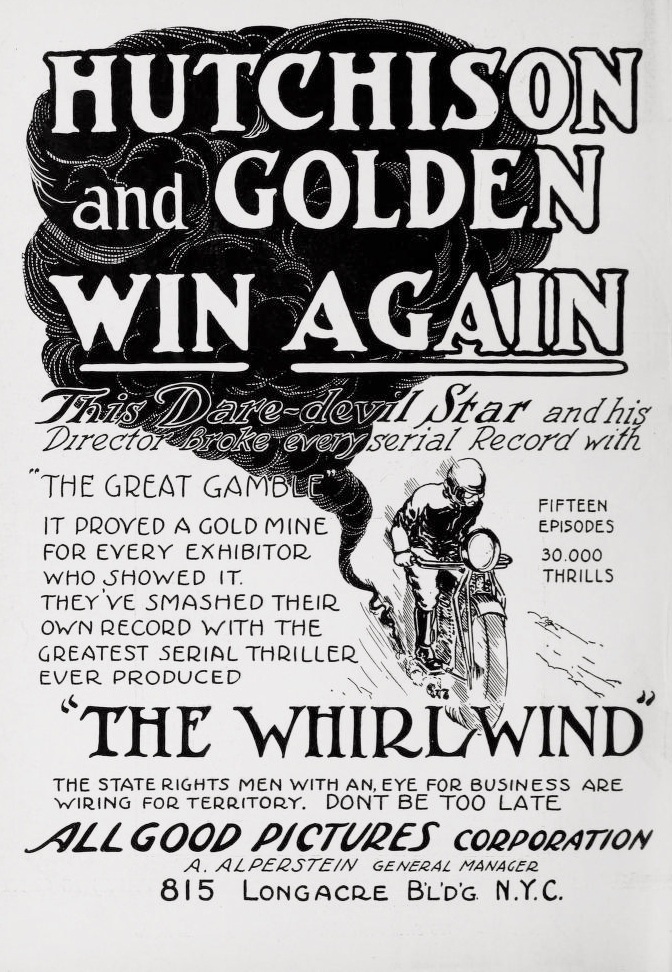
The first thing that strikes you is the silence—thick, velvet, predatory. Joseph A. Golden’s The Whirlwind (1918) arrives like a phantom telegram from an alternate century, a nitrate love-letter addressed directly to your subconscious. No intertitles waste time moralising; instead, the film trusts the guttering arc-light to spell out its gospel of grime. We open on a fairground at twilight, the sky bruised into arterial purple, the carousel horses frozen mid-gallop as though even they sense the coming rot. Earl Douglas steps into frame and the camera seems to inhale him: cheekbones sharp enough to cut celluloid, eyes like extinguished stars. He is both protagonist and plague, a man who carries his own weather—storm clouds bottled behind a smile.
Golden’s direction weaponises negative space. Watch how the canvas tent flaps billow just off-centre, revealing slivers of inner darkness that feel like invitations to your own extinction. The carnival’s geography is a Möbius strip: exit and entrance collapse into each other; every pathway circles back to the same kissing booth where Barbara Allen sells not affection but absolution at five cents a pop. Allen’s close-ups deserve a museum wing—her pupils dilate like black balloons, reflecting Edward Waters’ top-hatted impresario as he shuffles destiny like a crooked deck. Waters has the carnivorous elegance of a man who has already sold his own soul and now hawks bulk discounts on yours.
Comparisons to Le Cirque de la Mort are inevitable, yet where that film luxuriates in Grand Guignol spectacle, The Whirlwind opts for something more intimate: a slow strangulation by nostalgia. Notice the recurring motif of handbills—lurid lithographs promising "One Night Only" salvation—drifting through scenes like fallen leaves. Each time one lands on wet pavement, the ink bleeds until the promises liquefy into Rorschach blots of regret. The film understands that American carnival culture is itself a confidence trick played by time; we queue up to purchase back the innocence we never possessed.
Richard Neill’s strongman, credited only as "The Titan," performs feats that invert the heroic archetype. When he snaps iron chains, the camera lingers not on his triumph but on Barbara Allen’s face in the crowd—her lip quivers, not in admiration but in recognition that every broken shackle merely tightens an invisible one around her own throat. The film’s erotic charge is never consummated; desire festers in cigar smoke and the sour smell of sawdust. Karl Dane’s barker—imagine a praying mantis in a straw boater—chants rhyming couplets that sound like children’s skipping songs until you parse the lyrics and realise he’s auctioning human skin by the square inch.
Colour, though absent, feels hallucinated. The grainy monochrome swims before your eyes until you swear you can taste dark orange cotton-candy melting against molars. A fleeting shot of Morton Thatcher’s clown, face lit from below by a kerosene lamp, paints his greasepaint yellow in the mind—urine and sunshine and cowardice colliding. When Helen Griley pirouettes on the high wire, her silhouette flickers against a backdrop painted sea blue, though the pigment exists only in the viewer’s synaptic darkroom. Golden understood that monochrome is not absence but compression: every hue crammed into the narrow spectrum between blinding white and the abyss.
The plot, such as it is, unspools like a fever. Our drifter (Douglas) wins a rigged game of chance and claims a prize he never wanted: a ticket to the carnies’ after-hours initiation, a danse macabre where audience and performers swap roles under flickering footlights. From this pivot, the film becomes a hall of mirrors in which every reflection shows you a future you dread. Characters wager memories instead of money; the loser’s past is spliced into the winner’s dreams. The editing—jagged, elliptical—anticipates the montage theories Eisenstein would soon trumpet, yet Golden’s cuts feel more like bites, each severed frame drawing blood.
Earl Douglas delivers a masterclass in minimalist horror. His body language suggests a marionette whose strings have been clipped yet who keeps dancing out of spite. In one devastating sequence he simply sits on a bale of hay, staring at his own palms while carnival music bleeds through the walls. No intertitle intrudes; the silence swells until you hear your own heart arguing with itself. When tears finally come, they read as vandalism on that stoic façade, each drop an admission that stoicism was just another cheap act.
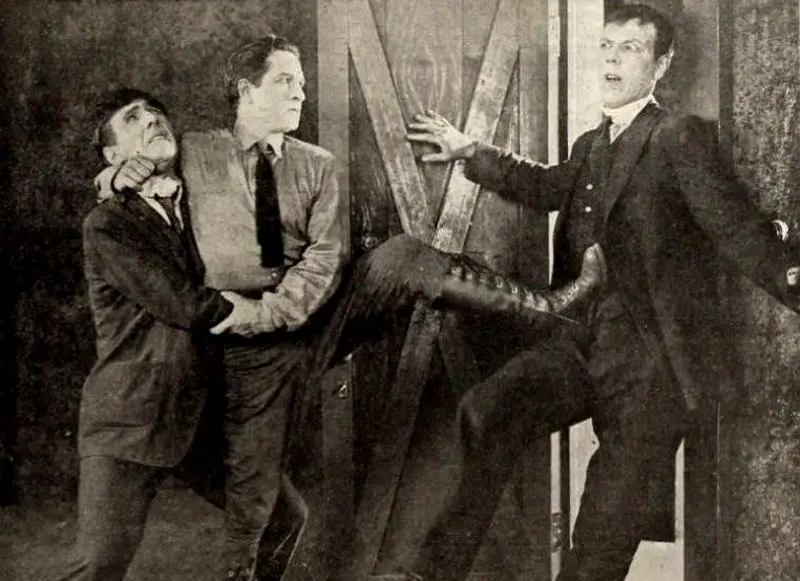
Barbara Allen, often dismissed as merely the "soprano love-interest," is in fact the film’s moral Geiger counter. Listen—yes, listen in silence—to how her breathing changes across scenes: controlled soprano trills in the public square devolve into ragged gasps backstage. The camera courts her face in chiaroscuro so severe that every pore becomes a crater. In a forgotten close-up, her tongue darts across cracked lips, tasting the copper of impending violence. That tiny gesture contains more erotic dread than entire modern thrillers.
The supporting ensemble operates like a Greek chorus on amphetamines. Charles Hutchison’s pickpocket flits through frames, lifting not wallets but the very continuity between shots. Ben Walker’s fire-eater literally consumes the film’s spare oxygen, leaving the viewer light-headed. Edith Thornton’s phrenologist fondles skulls while whispering fortunes that sound like ransom demands. Each performer is granted a micro-soliloquy, a sliver of celluloid in which to etch their epitaph.
Cinematographer John Lamont shoots shadows as if they were solid, and solids as if they might evaporate. Note the depth of field when Douglas stalks the midway at 3 a.m.: foreground bulbs burn with nuclear intensity while background tents recede into Stygian blur, creating a spatial vertigo that implicates the viewer—you cannot orient yourself, therefore you cannot escape. Compare this to the flat, proscenium compositions of contemporary Robin Hood spectacles; Golden’s camera is a predator, stalking both characters and audience.
The score, lost for decades, survives only in cue sheets: jagged xylophone runs, tuba belches that sound like dying elephants, violin glissandi that mimic human sobs. Modern restorations have commissioned new accompaniments, yet nothing matches the infernal music you hallucinate while watching the silent reel unspool. Your brain, desperate to fill the vacuum, supplies a soundtrack of distant thunder, cracked calliope, and the wet thud of body against sawdust. This phantom score becomes part of the text—proof that the film is not merely watched but secreted inside you.
Themes? Take your pick: capitalism as confidence trick; identity as costume; time as rigged roulette. Yet The Whirlwind refuses to moralise. When the final curtain drops, no one is redeemed, no tyrant toppled. The carnival merely folds its tents, migrates, reinfects. The last image—an abandoned lot at dawn, popcorn boxes tumbling like urban tumbleweeds—feels more apocalyptic than any nuclear mushroom. It is a vision of America as an endless midway where every exit sign points to another entrance.
Comparative glances: La crociata degli innocenti shares the same biblical fatalism, yet its martyrs die for a cause; Golden’s victims perish for the crime of wanting. The Fall of the Romanoffs chronicles the collapse of empires; The Whirlwind documents the collapse of the self. Where Vingarne romanticises artistic sacrifice, this film sneers at the very notion that art can transmute suffering.
Restoration status: the existing print, housed in an obscure Paris archive, is a 9.5 mm reduction print, water-damaged and missing approximately 11 minutes. Yet the gaps enhance the nightmare—continuity itself becomes casualty. Digital cleanup has scrubbed some emulsion scratches, yet the remaining flecks read like celluloid acne, adolescent eruptions of decay. Watch it on a big screen and the grain swarms like hornets; stream it on a laptop and pixels pixilate into ghost ships sailing across a midnight sea.
In the current cinematic climate—where every silent discovery is hyped as lost masterpiece—The Whirlwind earns its hyperbole. It is not merely a curio but a wound, one that refuses to scab. Long after the lights rise, you will find yourself scanning crowded streets for carnival posters, half-expecting Edward Waters’ grin to leer back. And when you finally hear a calliope in the distance, you will know the film has finished its decades-long migration from screen to bloodstream. The midway never left; it was only waiting for you to buy a ticket.
IMDb —
1914
Community
Log in to comment.