DbcultAccessing Vault...
Cult Review
Senior Film Conservator
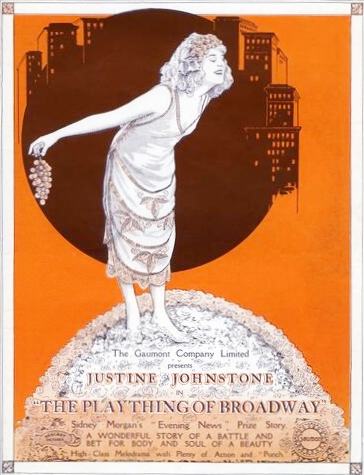
Set against the smoky opulence of 1930s New York, The Plaything of Broadway unfolds as a pre-code cinematic gem that marries lurid melodrama with proto-feminist undertones. Lola (George Cowl), a dancer trapped in a gilded gilded gilded cage of her own making, embodies the paradox of the era’s female archetypes—simultaneously a commodity and a cipher, objectified yet yearning for self-determination. The film’s opening scenes, bathed in chiaroscuro, establish the private club as a theater of excess, where wealthy patrons treat Lola as both spectacle and disposable plaything. This sets the stage for a narrative that will deconstruct and subvert these power dynamics with startling nuance.
The central bet—that Lola cannot seduce Dr. Jennings (Crauford Kent)—is initially framed as a crude power play, a game of dominance between the club’s patriarchs. Yet the film subverts expectations by transforming this wager into a vehicle for Lola’s moral awakening. Unlike the one-dimensional temptresses of contemporaneous films (e.g., The Decoy), Lola’s pursuit of Jennings is not driven by sexual conquest but by existential curiosity. Her failure to seduce him becomes a catalyst for introspection, a theme resonant with the proto-feminist currents of the pre-code era.
The film’s visual language reinforces this subversion. While Lola’s club performances are staged in glittering isolation—lit like a sacred artifact in a cathedral of vice—her scenes in the Lower East Side clinic are shot in naturalistic chiaroscuro, the stark lighting emphasizing the humanity of her new surroundings. This technical contrast mirrors the ideological chasm between the club’s artificiality and the clinic’s raw authenticity.
Jennings, far from the archetypal saintly savior, is rendered with commendable complexity. His initial disdain for Lola (“A woman who sells her body for pleasure has no claim to my respect”) is undercut by the film’s later revelations of his own moral compromises—accepting donations from the very men who frequent Lola’s club. This duality, deftly performed by Kent, elevates the narrative beyond a simple redemption arc. Jennings’ eventual partnership with Lola is not a moral victory but a pragmatic alliance, a theme that resonates with the collaborative spirit of The Silver Lining’s social realist ethos.
The club’s Art Deco splendor, replete with its gilded grilles and velvet ropes, contrasts jarringly with the clinic’s makeshift beds and crumbling brickwork. These set designs, more than mere aesthetics, serve as metaphors. The club’s architecture is a prison of luxury, its curved lines and mirrored surfaces reflecting Lola’s entrapment. Conversely, the clinic’s rectilinear, utilitarian design symbolizes the rigidity of social obligation, a space where healing requires dismantling both physical and metaphorical walls.
“The true cost of freedom is not measured in dollars but in the willingness to see the world as it is, not as we are told it should be.”
This thematic tension reaches its apex in the film’s third act, when Lola’s fundraising efforts for the hospital become a literal bridge between worlds. The construction site, filmed in a series of crane shots that ascend from the clinic’s squalor to the skeletal frame of the hospital, becomes a visual testament to incremental progress. It is here that the film most closely aligns with the social uplift narratives of Heroic France, though with a distinctly American cynicism about the purity of altruism.
Cowl’s portrayal of Lola is a masterclass in restrained intensity. Her physicality—fluid yet controlled—evokes the duality of a woman both performing and resisting performance. In her most affecting scenes, particularly those involving Mrs. Charles Willard’s (Garry McGarry) disapproving matriarch, Cowl modulates her voice from a coquettish purr to a steely resolve, a transformation that mirrors the film’s tonal shifts from melodrama to social critique.
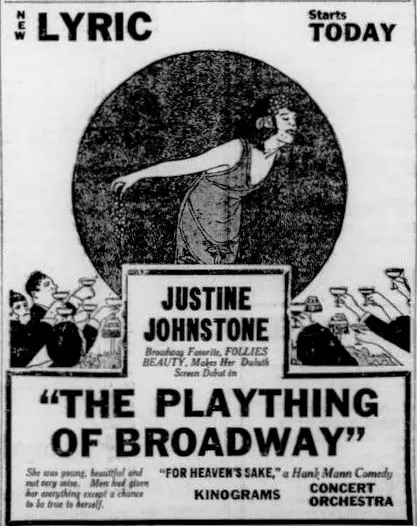
Kent’s Jennings, while occasionally hampered by the script’s didacticism, finds nuance in the character’s contradictions. His monologue about medical ethics, delivered amidst the clinic’s cacophony, is a standout moment where the film’s idealism briefly transcends its narrative constraints. Supporting players like Crauford Kent’s gruff but sympathetic clinic nurse and Lucy Parker’s sardonic club owner add texture to the film’s moral landscape.
The film’s technical achievements—particularly its use of deep focus and unconventional camera angles—place it among the most visually daring pre-code productions. A standout sequence involving Lola’s surveillance of Jennings employs a 360-degree rotating shot that mirrors her psychological disorientation. These formal innovations, while not as radical as those in Captain Swift, demonstrate a clear engagement with the cinematic language of the era.
The musical score, a blend of tango rhythms and somber piano motifs, further enriches the narrative. During the hospital’s inauguration scene, the swelling strings contrast with the rhythmic hammering of construction, a sonic metaphor for the collision of past and future. This juxtaposition of sound and image becomes a recurring motif, echoing the film’s central tension between exploitation and regeneration.
Reading The Plaything of Broadway through a modern lens, its proto-feminist undertones are unmistakable. Lola’s journey from object to subject mirrors the era’s shifting gender dynamics, yet the film never leans into easy triumphalism. Her final act—donating her most prized possession, a gilded fan symbolizing her time in the club, to the hospital—carries more weight for its understated symbolism than it would for overt rhetoric.
This nuanced approach distinguishes the film from contemporaries like I Accuse, where female agency is often reduced to courtroom theatrics. Here, Lola’s power lies not in dramatic confrontations but in her quiet resilience, a theme that resonates with the understated heroism of The City of Beautiful Nonsense’s anti-melodramatic ethos.
Though occasionally burdened by the moralizing tendencies of its era, The Plaything of Broadway remains a vital artifact of pre-code cinema. Its exploration of class, agency, and redemption through the lens of a woman’s evolution feels remarkably prescient. The film’s enduring relevance lies not in its resolution of these conflicts but in its unflinching examination of how systems of power shape—and are shaped by—individual choices.
For modern audiences, the film offers a fascinating window into the contradictions of its time. It is both a product of its era’s limitations and a harbinger of the more complex narratives that would emerge in the post-code Hollywood landscape. In Lola’s quiet transformation, we see the seeds of a cinematic tradition that continues to interrogate the intersections of power and identity, a legacy that echoes in the works of The Decoy and beyond.
IMDb —
1917
Community
Log in to comment.