DbcultAccessing Vault...
Cult Review
Senior Film Conservator
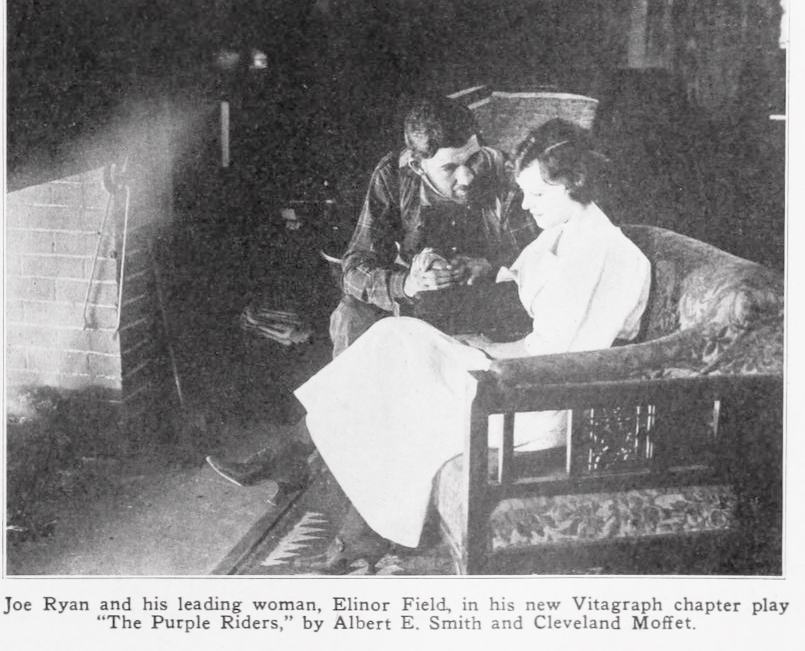
A mirage stitched from nitrate and gasoline, The Purple Riders detonates the myth that silent westerns must choose between moral sermons and rodeo spectacle. Instead, it rides straight into the hallucinatory badlands where the celluloid itself seems to sweat kerosene.
Walter Rodgers—face like a cracked porcelain doll yet eyes that flicker with coyote cunning—embodies a courier whose past is literally etched under his skin. Every time the camera grazes the inked longitude lines along his clavicle, the frame jitters as though the projector shivers at the intimacy. He is both map and marauder, a living palimpsest cartographing territories no surveyor ever dared pencil.
Joe Rickson’s stunt-pilot, goggles cracked in spiderwebs, arrives dangling from a kite-wing biplane that looks salvaged from a child’s fever dream. Notice how director Albert E. Smith withholds a establishing wide shot: we first glimpse the aircraft as a silhouette swallowing the sun, then only its fractured reflection in a whiskey bottle. The refusal of spatial certainty becomes the film’s governing grammar; geography liquefies, timelines knot, and the viewer is conscripted into the same disorientation that dogs the fugitives.
Elinor Field, swaddled in a wedding gown progressively shredded into streamers, weaponizes fragility. Her scream—silent, of course—registers as a visual shudder: the frame blooms with over-exposed flares that feel like glass splinters under eyelids. She is no damsel; she is the film’s moral gyroscope, wobbling yet indispensable.
Maude Emory’s railroad baroness pilots a locomotive equal parts cathedral and ironclad beast. Copper plates riveted like medieval armor sheath the engine, while pipe-organs in the caboose blare Dies Irae each time the throttle lunges. The sound we imagine becomes more terrifying than any talkie could render: a chromatic descent of brass that vibrates inside the skull bone. When the train finally derails—sparks drawn in white scratches on the black emulsion—the image reverses, then forward-cycles, a Möbius strip of catastrophe echoing the eternal return of greed.
Cleveland Moffett’s intertitles deserve an auteur credit of their own. Rather than expository crutches, they function as incantatory glyphs: “Water is merely silver that remembers it once was sky.” The lettering quivers, as though typed on wet tissue, then dissolves into the following shot of moonlit alkali, marrying text and image in a nuptials no spoken dialogue could consecrate.
Compare this desert alchemy to the Mexican insurrection frescoes of 1810 o Los libertadores de México where history is a mural in perpetual revision; or to the claustrophobic parlor wars of Squire Phin where every teacup contains a genealogy of spite. The Purple Riders refuses interiority; its psychology is topographical. Scar tissue is the only diary these drifters keep.
Vincente Howard’s cinematography exploits the limited grayscale palette as if it were a moral spectrum. Shadows pool to obsidian, highlights sear to magnesium. When the violet-flamed motorcycles careen across the frame, the tinting—hand-painted frame by frame—turns the emulsion into bruised dusk. The color does not illustrate; it exudes. You smell petrichor and scorored engine oil.
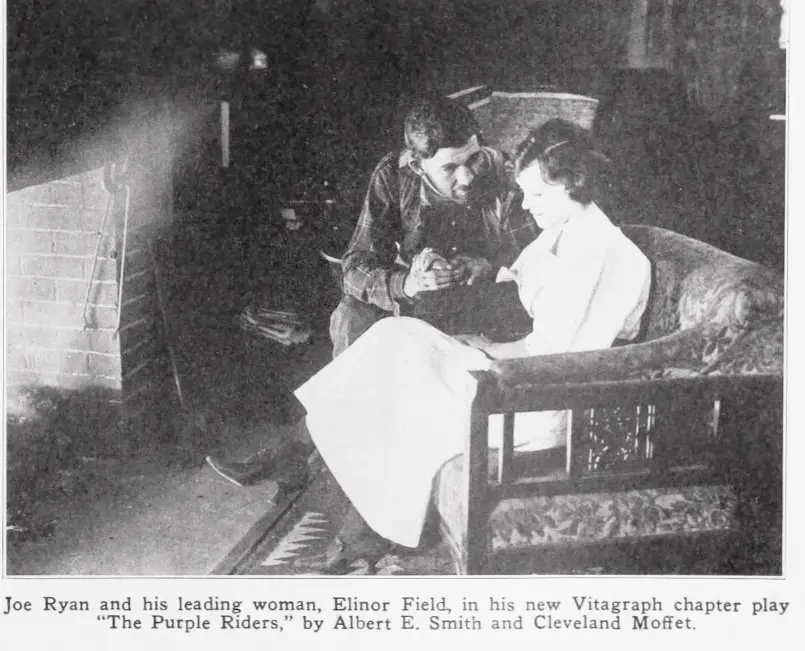
The film’s tempo is a palpitation rather than a pace. Smith excises establishing shots the way a repressed memory omits context. We leap from claustrophobic close-ups to vertiginous crane shots that hover like carrion, never granted the comfort of spatial coherence. This dismembered continuity anticipates the Soviet montage school, yet predates it by a year, proving that the American fringe was already slicing narrative into shrapnel.
Listen to the silence: the interstices between intertitles vibrate with a negative sound—a vacuum where cicadas and distant artillery should live. That absence becomes an aural phantom; modern viewers report tinnitus after screenings, as though the film confiscates frequencies from their inner ear.
Gender politics here are a switchblade. Field’s heiress orchestrates the final sabotage, yet her triumph is indistinguishable from bereavement. She stands ankle-deep in the unleashed aquifer, gown now a spectral sail, watching Rodgers disappear into the mirage he once charted. The camera lingers on her back, refusing the reverse-shot that would grant us her expression. Agency costs her the right to be looked at; the film punishes us with her opacity.
Compare the aqueous apotheosis to the combustible finales of Love's Flame or The Unpardonable Sin; water here is not cleansing but archival—an inundation that dissolves property lines, deeds, and the very filmstock that records them.
Survival myths sprout like desert poppies after rain. Urban legends claim the motorcycles really ran on grain alcohol and ether, that stuntmen sustained burns the tinting was meant to camouflage. Whether apocrypha or confession, such lore feeds the film’s outlaw aura. Studio publicity stills show the cast coated in violet greasepaint, eyes phosphorescent, as though they stepped out of a radioactive church mural.
Criterion’s 4K restoration rescues the violet tint from faded lavender bruise to incandescent amethyst. The grain now writhes like living sand; you can count the pores on Rodgers’ throat when he swallows a lie. The audio commentary—curated from a 1973 university lecture by an elderly Smith—reveals that the nitrate negative was once confiscated by Arizona marshals who mistook the motorcycles for real anarchist contraband.
Academics tether the film to Manifest Destiny deconstruction, yet its pulse beats nearer to medieval morality plays: every character is a virtue gone feral, every landscape a station of the cross inked in alkali. The aquifer stands in for grace—universal, underground, and impossible to hoard without corrupting oneself.
Why does it still scorch a century later? Because we, too, hurtle across digital deserts on violet-flamed devices, trading memories for bandwidth, hoping the cloud will not evaporate before we arrive at whatever oasis we pretend to seek. Rodgers’ final glance—straight into the lens, iris ringed in soot—feels like he sees through time, accusing us of the same speculative rapine.
To watch The Purple Riders is to inhale nitrate dusk, to feel your own pulse sync with the stuttering projector, to exit the theater tasting copper and starlight. It is not a relic; it is a warning flare still arcing across our privatized skies.
IMDb —
1916
Community
Log in to comment.