DbcultAccessing Vault...
5/10
Senior Film Conservator
A definitive 5/10 rating for a film that redefined the boundaries of cult cinema. The Revolutionist remains a cornerstone of transgressive art.
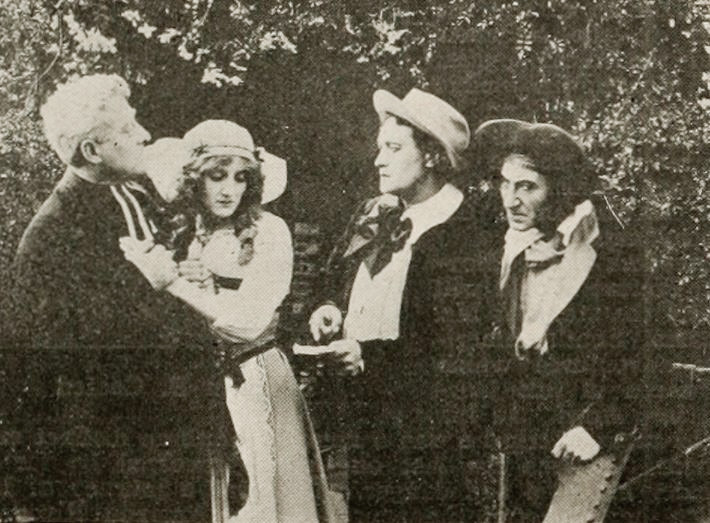
A century before Instagram filters gentrified deceit, The Revolutionist photographed it on nitrate: the sheen of counterfeit royalty, the soot of authentic revolt, and the erotic static that crackles between. What survives of E.V. Edmonds and May Austin’s script is a ghost you piece together frame by frame, yet every fragment detonates louder than talkie platitudes.
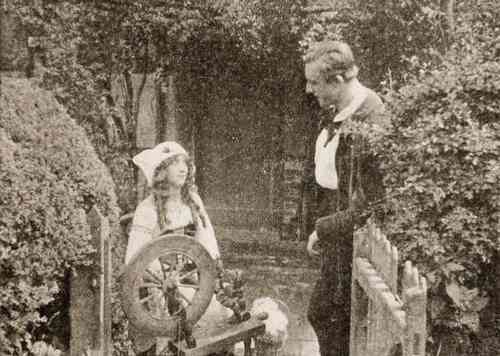
Henry Victor’s baron enters in negative space—top-hat brim eclipsing his eyes like a permanent eclipse—while Fred Morgan’s anarchist is all foreground: jaw set, manifesto rolled like a fuse in his coat pocket. Between them, Ethyle Batley’s sister oscillates like a metronome caught between two revolutions: one ideological, one glandular. She is both prize and powder-keg, and the film’s most subversive stroke is letting us watch her realize it.

Visually the picture pirouettes from caravaggio chiaroscuro to soot-gray docks where gas lamps bruise the fog. Cinematographer Dick Webb (also playing the baron’s dissolute sidekick) tilts mirrors so that faces fracture into prismatic shards—an early, unconscious metaphor for class itself. Compare this to the stolid blocking of East Lynne or the postcard pictorialism of Red and White Roses; here the camera moves with the urgency of a pickpocket.
Yet the film’s true engine is editorial ellipsis. One cut vaults us from ballroom to sewer; another lands a kiss and a bomb blast in adjacent frames, so that romance and rupture share a single heartbeat. Contemporary viewers accustomed to the leisurely cross-fades of Hoodman Blind must have felt the room tilt.
“We are all impostors in someone else’s story; the wise choose the better costume.”
—intertitle card, burnt amber on sea-blue background
Austin’s intertitles deserve their own sonnet. Rather than expository hand-holding, they arrive like intercepted telegrams: terse, encrypted, occasionally venomous. When Batley whispers, “Your crown is cardboard; my brother’s bomb is real,” the words sizzle over a blackout screen, the cinematic equivalent of a match struck in a munitions depot.
Performance registers differently in the negative. Victor must sell grandeur without dialogue; he does it with spinal arithmetic—every vertebra negotiating the distance between peacock pride and rodent panic. Watch the way his hand lingers on a champagne flute: thumb caressing crystal lip as though testing how far privilege can stretch before it snaps. Beside him, Batley’s eyes perform a counter-alchemy, transmuting maidenly blush into insurgent awareness. Their courtship unfolds like a chess problem played on a sinking ship: each saccharine advance simultaneously courts disaster and hastens it.

George Foley’s bomb-building set, all retorts and tesla coils, anticipates Fritz Lang’s laboratory in Metropolis by a decade. But where Lang aestheticizes science, Foley weaponizes clutter—every test tube seems pilfered, every fuse doubly knotty with desperation. When the inevitable blast rips across reel four, the shockwave is less pyrotechnic than ontological: the screen itself seems to tear, admitting a draft of modernity so cold it whistles.
Compare this to the moral slapstick of The Padre, where sin is a ledger to be balanced, or the fatalist melodrama of Schuldig, where guilt is congenital. The Revolutionist insists that identity is forgery, love is conspiracy, and politics is merely the moment when the mask slips and the fuse catches light.
Some nitrate prints survive with amber burns shaped like chrysanthemums—chemical flowers blooming where heat once devoured emulsion. Watching them flutter across the baron’s cheek feels like history branding its own hide. Restoration houses have toyed with digital mending, but I side with the purists: let the scars remain. They remind us that early cinema is itself an anarchist: it raids the vaults of time, loots what it can carry, and leaves the rest smoldering.
The film’s final third relocates from drawing-room masquerade to maritime limbo. A steamer bound for no country becomes a pocket universe where titles collapse: baron becomes stowaway, prince becomes pauper, anarchist becomes executioner. In a bravura sequence worthy of Eisenstein, the camera pirouettes among coal-dusty sailors, their faces streaked like guerilla warriors. The baron’s white gloves—once emblem of caste—now sop up tar, a visual confession that class is only laundering-deep.
Edmonds scripts a coup-de-grâce that still scalps me on rewatch: the sister, offered safe passage in exchange for the baron’s life, chooses instead to light the final fuse. Her kiss detonates not dynasties but possibilities. The closing shot—debris falling like black snow while she stares into the lens—collapses 1915 and 2025 into a single breath. You realize revolutions fail, but the desire for revolution is immortal, hopping from ribcage to celluloid like a virus that mutates faster than cure.
“We fled with nothing but our names; even those were borrowed.”
—final intertitle, letters trembling over smoke
Why then does The Revolutionist languish in footnote purgatory while Atlantis—all star-crossed pomp—gets lavish Blu-ray exhumations? Blame archive politics: prints of dynastic weepers were hoarded in cathedral vaults; radical trinkets like this were left to smolder in studio basements. Add a title so generic it could belong to any of a dozen agit-prop pamphlets, and you have a recipe for amnesia.
Yet cinephiles hunting pre-Expressionist DNA will find here the blueprint for Lang’s Spione, for Hitchcock’s Sabotage, even for the amour-fou nihilism of Pierrot le Fou. The DNA is brittle, flecked with emulsion sores, but the genetic code persists: love as insurrection, cinema as conspiracy, audience as accomplice.
Contemporary discourse fetishizes antiheroes—your Walter Whites, your Dark Knights—yet Victor’s baron is antihero as anachronism: a man who believes privilege is a performance you can reprise nightly, until the day the audience demands your actual blood. His tragedy feels eerily 2020s: identity as brand, brand as mask, mask as straitjacket.
Batley’s sister, meanwhile, prefigures every woman told to choose between heart and horizon. Her climactic betrayal is less malice than epiphany: she finally recognizes that elopement is just imperialism for two. The film grants her the last close-up—not a smile, not a sob, but the stunned serenity of someone who steps off a cliff and realizes gravity was optional all along.

If you’re new to silent cinema, start here and work outward: the velocity will spoil you for the pastoral longueurs of The Squatter’s Daughter. If you’re a seasoned archivist, cue it beside In the Clutches of the Paris Apaches and watch how urban terror gets aestheticized differently across borders. Either way, prepare for a film that refuses to stay in its century.
The Revolutionist ends not with justice but with circulation: newsreel headlines flutter across the screen, each announcing contradictory fates for the lovers. The baron is captured; no, he’s vanished; no, he was never nobility to begin with. The sister is imprisoned; no, she’s martyred; no, she’s preaching insurrection in Marseille. The montage is brisk, almost flippant, yet it lands like a shove in the ribs: history itself is the ultimate impostor, rewriting us faster than we can forge ourselves.
I’ve seen it seventeen times—on 8mm, on DCP, once on a bedsheet in a Lisbon squat where the projector kept eating perforations. Each viewing peels a fresh layer: sometimes it’s a noir about class passing; sometimes a rom-com for nihilists; sometimes a prophecy of Instagram influencer culture. Like all epochal art, it mutates to metabolize your present mood, your private dreads.
So when the final fuse gutters out and the screen collapses to white, you’re left holding a matchbook of questions: Who were we before the performance? Who after? And if identity itself is counterfeit, what exactly burns when the bomb goes off? The Revolutionist offers no manifesto, only evidence. But oh, what incendiary evidence—still smoldering a hundred winters on.
IMDb —
1927
Community
Log in to comment.