DbcultAccessing Vault...
Cult Review
Senior Film Conservator
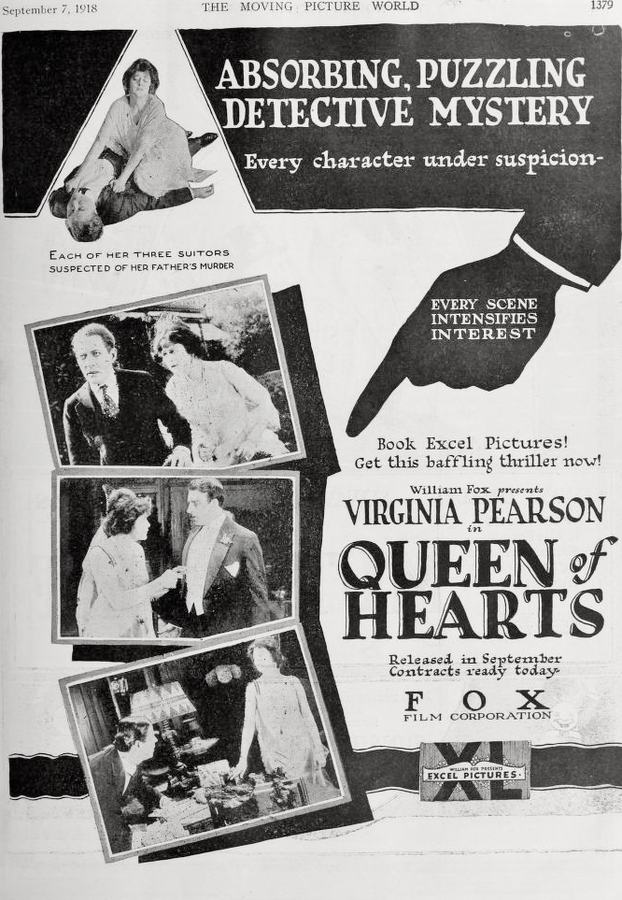
Step into the shimmering, shadowy world of early 20th-century cinema, where melodrama reigned supreme and narratives unfolded with a silent, yet potent, eloquence. Today, we're unearthing a forgotten gem from 1918, The Queen of Hearts. This film, a product of its era, offers a fascinating glimpse into the nascent art of storytelling on celluloid, delivering a tale brimming with intrigue, familial duty, and a young woman's audacious pursuit of justice. It's a testament to the enduring power of a compelling mystery, even when conveyed without a single spoken word.
The narrative unfurls against the backdrop of a New York society simultaneously enthralled by and discreetly disapproving of its burgeoning gambling scene. We meet Emil Cheraud, a man of refined tastes and questionable ethics, who has shrewdly carved out a niche as the proprietor of a fashionable, albeit illicit, gambling-house. His daughter, Pauline, a paragon of innocence and European refinement, is blissfully unaware of her father’s clandestine activities, cocooned in the cultural embrace of a French education. Her return, however, is not merely a homecoming; it’s the catalyst for a dramatic upheaval. The stark contrast between her sheltered existence and her father’s morally ambiguous world ignites a palpable tension, a conflict that forms the very bedrock of the film’s emotional landscape.
Pauline, portrayed with a compelling blend of naiveté and burgeoning resolve by Peggy Shanor, confronts her father, pleading with him to abandon his life of vice. Her earnest entreaties, delivered through expressive gestures and poignant glances characteristic of silent film acting, clearly resonate with Emil, played by Joseph W. Smiley. He capitulates, promising to shutter his establishment by the stroke of midnight. This moment of paternal acquiescence, however, is a fleeting calm before a devastating storm. Shortly after the appointed hour, Pauline discovers her father’s lifeless body in his library, the silence of the room punctuated only by the chilling finality of death. The promise, so recently made, now lies broken, shattered by an unseen hand. It’s a moment designed to shock and propel the protagonist into action, a classic narrative device that, even a century later, retains its visceral impact.
What follows is not a descent into despair, but an extraordinary display of fortitude. Pauline, rather than succumbing to grief or retreating into victimhood, makes a radical choice: she assumes command of her father’s gambling-house. This isn't an embrace of his former life, but a calculated, daring maneuver. Her objective is singularly focused: to ensnare her father’s killer. This transformation from sheltered ingénue to a determined, almost ruthless, investigator is one of the film’s most captivating elements. It speaks volumes about the shifting roles and capabilities of women, even within the constraints of the era’s societal expectations. Pauline becomes a silent Sherlock Holmes, navigating a treacherous world, her intelligence and emotional resilience her only weapons. One might draw a parallel to the independent spirit seen in films like Joan of Arc, though Pauline's battlefield is the card table rather than the literal one, her fight for justice no less fervent.
The film then introduces us to a triumvirate of suspects, each entwined with Pauline’s life and Emil’s demise, adding layers of romantic and moral complexity to the central mystery. There’s the man who owed Emil a substantial fortune, his desperation a clear motive. Then, a boastful suitor, whose past declarations of willingness to kill for Pauline’s affections now echo with a sinister resonance. And finally, Jimmie Dreen, portrayed by Edmund Burns, the man Pauline deeply loves. His entanglement is particularly tragic, as a coat button found at the crime scene points an accusatory finger directly at him. This dramatic irony—Pauline's beloved potentially being her father's murderer—fuels much of the film’s emotional turmoil and keeps the audience on tenterhooks. The film masterfully builds suspense, allowing doubt to fester, making every interaction between Pauline and Jimmie fraught with unspoken questions and painful suspicion.
The narrative, deftly crafted by writers Harry O. Hoyt and Adrian Johnson, leans heavily into the tropes of the silent film mystery, utilizing visual cues and heightened expressions to convey complex emotions and plot developments. The pacing, typical of the era, allows for moments of lingering tension and dramatic revelations, building towards a climax that promises resolution. The direction, while not overtly flashy, effectively frames the intimate drama against the opulent, yet dangerous, backdrop of the gambling house. The use of close-ups, though perhaps rudimentary by modern standards, effectively draws the audience into Pauline’s internal struggle, allowing us to witness her suspicion, her heartbreak, and her unwavering determination.
The performances, particularly Shanor’s, are central to the film’s impact. Silent film acting required a unique set of skills, an ability to communicate profound emotion through gesture, facial expression, and body language. Shanor navigates this demanding terrain with remarkable grace, imbuing Pauline with both vulnerability and steely resolve. Her portrayal elevates the character beyond a mere damsel in distress, crafting a proto-feminist figure who actively shapes her destiny. Joseph W. Smiley’s Emil Cheraud is suitably enigmatic, a man whose charm barely conceals a life of moral compromise, making his sudden demise all the more impactful. The supporting cast, including James A. Furey, Virginia Pearson, Adelaide Lawrence, John Webb Dillion, and Victor Sutherland, contribute to the rich tapestry of characters, each playing their part in the unfolding drama, from the loyal servant to the suspicious patrons of the gambling house.
Just when the evidence against Jimmie seems insurmountable, threatening to irrevocably shatter Pauline’s world, the plot delivers a classic silent film twist. Pierre, Emil’s loyal servant, steps forward with a confession. His motive, born not of grand malice but of desperate circumstance, is shockingly mundane: he killed his employer upon learning he was to lose his job. This sudden, almost abrupt, resolution might feel somewhat facile to a modern audience accustomed to more intricate psychological thrillers. However, within the context of early cinema, such narrative turns were common, designed to provide a clear-cut resolution to the moral quandary and allow for the triumphant re-establishment of order and romance. It’s a narrative device that, while perhaps simplifying the complexities of human motivation, effectively delivers the catharsis the audience craved.
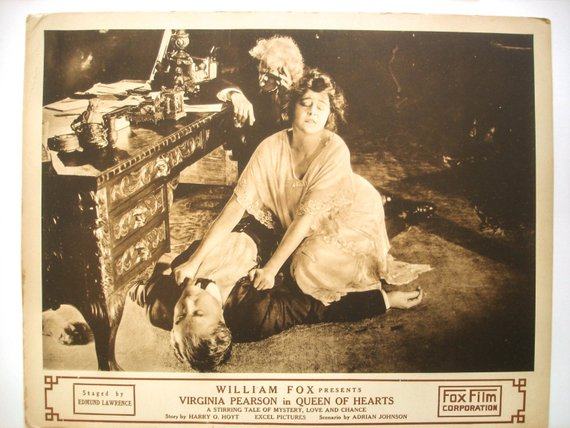
The relief that washes over Pauline, and indeed the audience, is palpable. The shadow of suspicion lifts from Jimmie, allowing their love story, which had been tragically overshadowed by murder, to finally blossom. The film concludes with Pauline agreeing to marry Jimmie, a conventional happy ending that reaffirms societal norms even after a journey through moral murkiness. This resolution, while satisfying, also speaks to the era’s preference for unambiguous morality and the ultimate triumph of good, or at least, innocence, over malevolence. One could compare this clear-cut resolution to other mysteries of the time, such as Sherlock Holmes films, where the detective's brilliance always brings a definitive, if sometimes complex, culprit to light, but The Queen of Hearts opts for a more emotionally driven, less intellectual, reveal.
Reflecting on The Queen of Hearts, it’s important to appreciate it not just as a standalone film, but as a product of its time. It’s a window into the narrative conventions, acting styles, and societal values of the late 1910s. The film, despite its age and the inherent limitations of silent cinema, manages to convey a compelling story of love, loss, and the pursuit of justice. It reminds us of the power of visual storytelling, where a glance, a gesture, or a carefully composed shot could communicate volumes more than dialogue ever could. The audacious spirit of Pauline, her willingness to step into a dangerous world to avenge her father, resonates even today, making her a memorable figure in the pantheon of early cinematic heroines.
The thematic richness, though sometimes overshadowed by the melodramatic plot, is certainly present. The film subtly explores the corrupting influence of wealth, the precariousness of social standing, and the lengths to which individuals will go for love or survival. The gambling house itself serves as a potent metaphor for the moral risks that permeate society, a place where fortunes are won and lost, and lives can be irrevocably altered. The contrast between the outward glamour and the underlying danger is a recurring motif, a visual representation of the societal hypocrisy of the era. This exploration of dark themes, while ultimately resolved in a comforting manner, gives the film a depth that transcends simple entertainment, placing it alongside other melodramas like Tigre reale, which similarly delved into the tumultuous emotional lives of its characters.
One cannot discuss silent film without acknowledging the artistry of its visual composition. While specific details of cinematography for The Queen of Hearts are scarce, the general principles of the era would have dictated a focus on clear narrative progression through mise-en-scène. Lighting, set design, and costume all played crucial roles in conveying atmosphere and character. The opulent setting of the gambling house, likely adorned with period-appropriate decor, would have been meticulously crafted to immerse the audience in Emil Cheraud’s world of high stakes and hidden dangers. The costumes worn by Peggy Shanor would have reflected Pauline’s transition from innocent schoolgirl to determined avenger, using fashion as a visual shorthand for her evolving character. The film, in its silent grandeur, would have relied on these visual cues to communicate the nuances of the plot and the emotional states of its characters, a fundamental aspect of early cinema's expressive power.
The legacy of such films, though often overshadowed by later, more technically advanced productions, is crucial for understanding the evolution of cinema. The Queen of Hearts, with its blend of mystery, romance, and a strong female protagonist, contributed to the developing grammar of film narrative. It demonstrated that complex stories could be told effectively without spoken dialogue, relying instead on the universal language of human emotion and action. The film’s ability to engage an audience, to build suspense and deliver a satisfying resolution, speaks to the foundational strengths of its storytelling. It’s a piece of cinematic history that, when viewed through a contemporary lens, offers both historical insight and genuine entertainment.
In conclusion, The Queen of Hearts stands as a compelling artifact from the golden age of silent cinema. It might not possess the grandiosity of epics like Joan of Arc or the intricate psychological depth of later noir films, but it delivers a potent dose of melodrama and mystery. Peggy Shanor’s performance is a particular highlight, anchoring the film with her portrayal of a woman who defies expectations to seek justice. The film’s journey from domestic tragedy to a thrilling whodunit, culminating in a surprising confession, ensures that even a century later, its narrative continues to captivate. It’s a testament to the enduring appeal of a well-told story, proving that sometimes, the most profound emotions are best conveyed in the quiet intensity of silence.
For those with an appreciation for the pioneering spirit of early filmmaking, The Queen of Hearts offers a richly rewarding experience. It’s a reminder that the foundations of modern cinema were built on such ambitious, emotionally resonant tales, crafted by dedicated artists like writers Harry O. Hoyt and Adrian Johnson, and brought to life by a talented ensemble cast.
Revisiting these silent era productions is more than just an academic exercise; it's an opportunity to connect with the raw, unfiltered essence of cinematic storytelling. Each frame, each gesture, is a deliberate choice, carefully orchestrated to evoke a response without the aid of spoken dialogue. The Queen of Hearts, with its dramatic twists and a heroine who takes destiny into her own hands, exemplifies the compelling power of this unique art form. It's a film that deserves to be rediscovered and appreciated for its historical significance and its enduring ability to entertain.
IMDb 7.4
1934
Community
Log in to comment.