DbcultAccessing Vault...
Cult Review
Senior Film Conservator
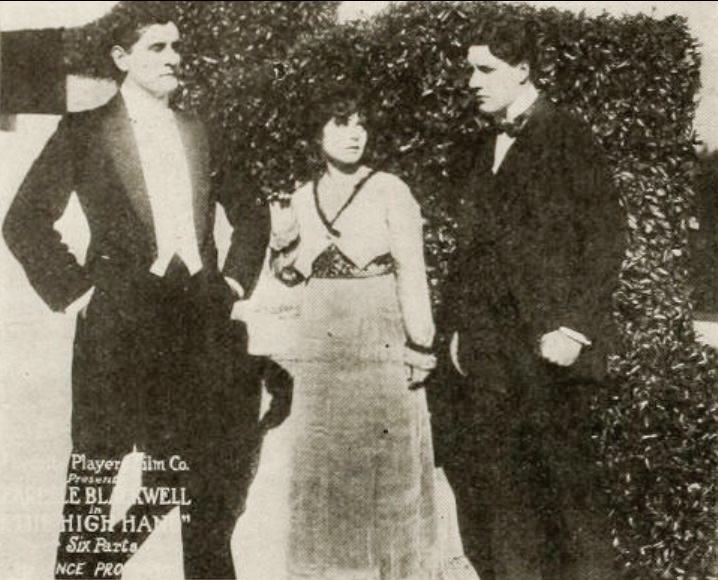
A furnace is never merely a furnace in Richard Willis’s The High Hand; it is the gaping mouth of American industry, a cavernous oracle that hisses the American promise—transmute sweat into gold, soot into ballots, labor into legend.
The film opens inside that cathedral of clangor: cranes swing like iron acolytes, sparks spray across the negative space, and Jim Warren—played by Henry Kernan with the wary eyes of a man who has already seen tomorrow—walks the catwalk above the inferno. His silhouette, inked against white-hot steel, is the first visual thesis: the worker who refuses to be condensed into a cog. Cinematographer Carlyle Blackwell (doubling as supporting actor) lets the camera linger until the viewer almost tastes ore on the tongue. Intertitles arrive sparingly, as though words themselves feared to compete with the roar.
Jump-cut to the statehouse, its corridors as cold and polished as gravestones. Willis and co-writer Jacques Futrelle—yes, the Titanic victim whose literary puzzles once rivaled Conan Doyle—engineer a narrative piston: every political maneuver ricochets back to the mill. When Warren stands at the superintendent’s window, gazing down at the men whose vertebrae prop up the nation, the mise-en-abyme is unmistakable. Power is a mezzanine, and those who ascend owe interest on the debt.
The screenplay’s dexterity lies in refusing a saintly halo. Warren’s reformist zeal is laced with personal hunger; he wants the girl, the office, the moral high ground, the whole trifecta. That appetite humanizes him and complicates the morality play. Compare this with the one-note altruism of Help Wanted’s clerk or the saintly martyr in Pro Patria; Warren’s feet leave soot prints on the marble, and the film is better for it.
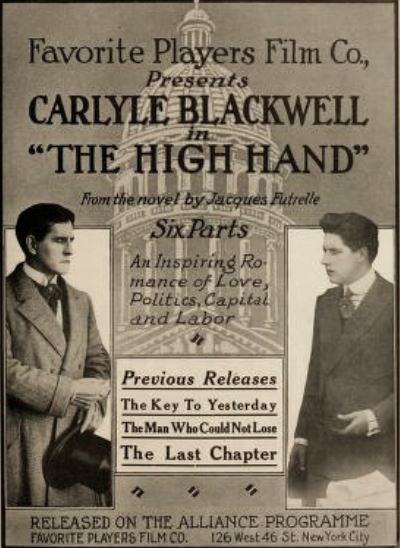
John Sheehan’s Lewis is no mustache-twirling tyrant; he is the grinning inevitability of entrenched power, a man who signs corruption with a monogrammed fountain pen. Francques—Douglas Gerrard in reptilian mode—slithers beside him, eyes flicking for the next rung. Their conspiratorial duet reaches operatic heights in a smoke-bathed billiard room shot through venetian blinds, shadows slicing their faces like prison bars. It’s here that the deal to frame Warren is struck, and the chiaroscuro feels imported straight from the later noir cycle, though we’re still in 1920.
Neva Gerber’s Edna carries none of the porcelain fragility that mars many a silent heroine. In a proto-feminist stroke, she articulates her own political awakening, rejecting the gubernatorial marriage contract her father (Richard Willis) deems natural law. Note the salon scene where she confronts Lewis: the camera dollies inward until her pupils become twin black suns swallowing the frame. “I will not trade my womb for your ward-heeling empire,” the intertitle proclaims—startlingly blunt for 1920. Her agency reframes the love triangle as ideological warfare rather than sentimental garnish.
Still, the film skirts the precipice of damsel cliché by welding Edna’s fate to Warren’s moral strategy. When she finally professes, “I’ll be happier as the governor’s wife than the governor’s daughter,” the line reframes marriage not as capitulation but as coup, wresting authorship of her lineage from patrimony to partnership.
Silent-era audiences craved third-act miracles; Willis delivers one that feels both miraculous and mechanically earned. Instead of the deus-ex-machina pardon that saves the hero in Lights of London, Warren unveils the bank vault: rows of envelopes like little shrouds, each inscribed with the donor’s name and sin. The camera pans across them in a liturgical rhythm, accompanied by a brief insert of a crucifix-shaped shadow—an audacious visual pun on Judas’s thirty pieces of silver.
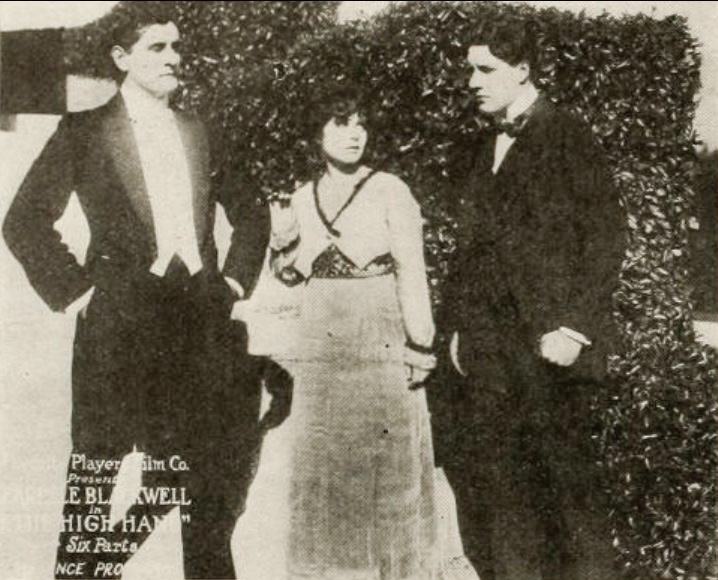
The sequence’s brilliance is its understatement. Kernan plays the reveal with the calm of a poker player laying down a royal flush, not a firebrand hero brandishing a sword. Justice, the film argues, is bookkeeping. Ledger columns can send men to Sing Sing as decisively as bullets.
Though photographed in standard monochrome, the movie’s visual rhetoric drips with chromatic suggestion. The steel-mill glow is repeatedly described in intertitles as “saffron,” “orange,” and “hell-red,” priming the viewer’s imagination. Willis even tints certain prints—cyan for bank interiors suggesting refrigerated avarice, amber for mill scenes evoking forge heat. Modern restorations often flatten these tints; if you chance upon a partial hand-tinted reel at a cinematheque, sprint for it. The experience approximates watching embers breathe.
Against Damaged Goods’s social hygiene melodrama or The Adventures of Kitty Cobb’s breezy serial escapism, The High Hand operates in a register closer to adult tragedy. Its DNA anticipates the governmental cynicism of Richelieu and the marital power dynamics of Zaza, yet it predates them by months if not years, proving how quickly post-WWI cinema developed an appetite for systemic critique.
Kernan’s Warren exudes the smolder necessary to sell both proletarian authenticity and senatorial poise. Watch the micro-gesture when he pockets the first bribe envelope: two fingers linger a millisecond longer, as if testing the temperature of sin. Gerber ripens from ingenue to insurgent before our eyes, her chin tilting a fraction higher in each successive scene. Among supporting players, William Brunton’s inebriated journalist provides comic relief without yanking us into vaudeville; his hiccupping intertitles are a masterclass in rhythmic brevity.
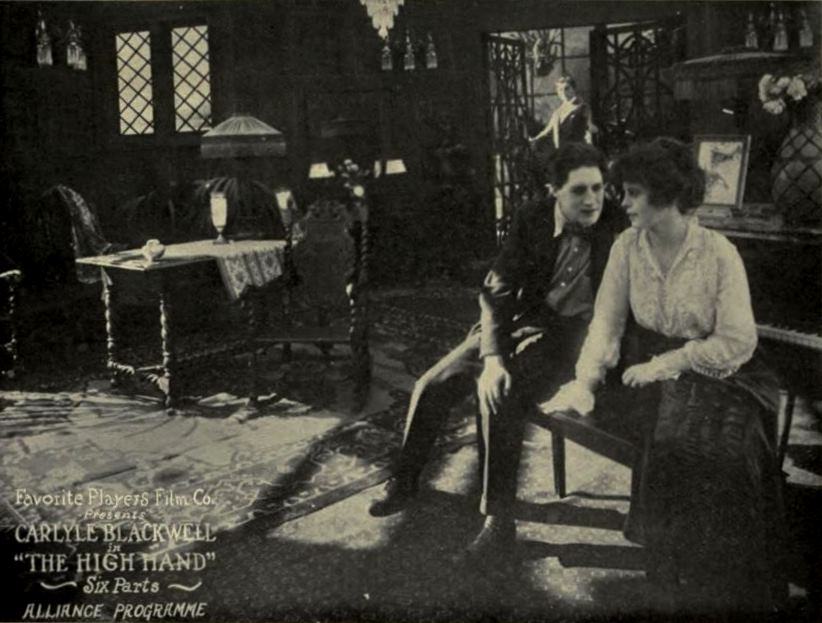
Original exhibitors often accompanied the picture with a compilation of Sousa marches and boilerplate melodrama chords. Contemporary festivals have commissioned new scores—minor-key brass echoing mill clangs, strings sliding into dissonance whenever envelopes of cash change hands. If your local archive hosts such a screening, surrender your evening; the anachronistic fusion retrofits the film with a Stravinskian angst that amplifies its modernity.
One can read The High Hand as an allegory where the means of production (the mill) and the means of reproduction (Edna’s betrothal) are commodified by the same capitalist overlord. Edna’s refusal to marry Lewis thus becomes a twin strike against patriarchy and plutocracy. The film stops short of collectivist propaganda—Warren’s triumph is individualist—but the systemic diagnosis is scalpel-sharp for its era.
The cruciform shadow in the vault scene is no isolated flourish. Earlier, Warren shields a child from a wayward ladle of molten metal, arms outstretched in a Pietà inversion. These visual haikus position him as lay messiah, but Willis withholds resurrection iconography; instead of ascending, Warren descends back into the legislative fray. Salvation here is iterative, not terminal.
Cross-cutting between the foundry’s red glare and the marble Speaker’s chamber generates dialectic tension. Yet Willis avoids Griffith’s bombastic crescendi; his cuts are shorter, almost staccato, reflecting the mechanized tempo of industry itself. The climactic trial-by-headline montage—newspapers spinning onto doorsteps, telegraph wires vibrating like plucked strings—prefigures the kinetic newsroom sequences of 1930s screwball journalism pictures.
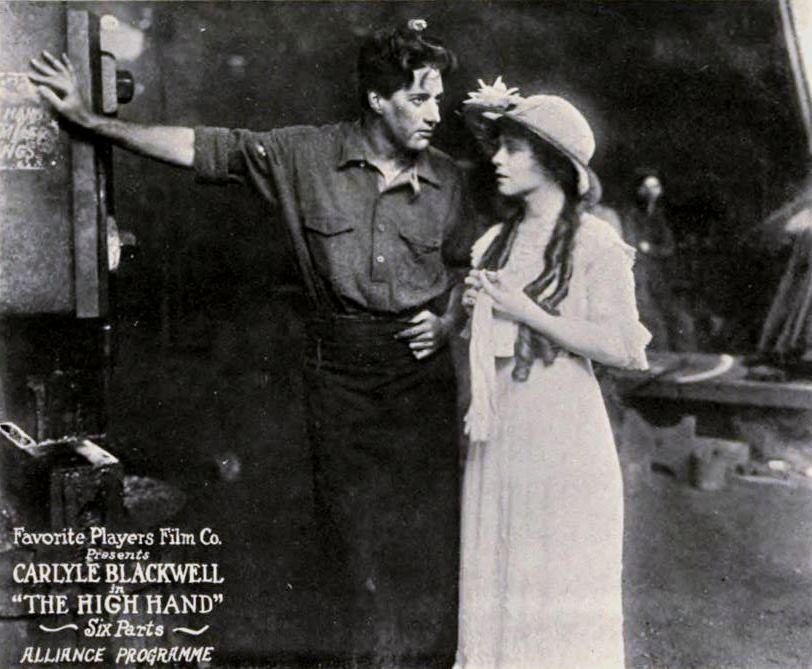
Frank Capra’s Mr. Smith owes a debt: the naïf entering the political coliseum armed only with idealism. Yet where Capra’s ending is cathartic filibuster, Willis favors institutional subversion via paperwork—an ethos closer to All the President’s Men. The High Hand plants the seed that governance is a forensic affair, that files and ledgers can be more lethal than firearms.
No complete 35 mm negative survives, but a 28-minute reissue edited for European distribution circulates among private collectors. A 4K scan of two severely decayed reels was screened at Pordenone 2019, accompanied by a live ensemble. Streaming platforms have yet to secure rights; therefore, your best bet is specialty labels—keep an eye on Milestone or Kino Lorber upcoming silents box sets.
The High Hand is not a curio to be dusted off for antiquarian curiosity; it is a gauntlet thrown at the feet of every modern political thriller that confuses shaky-cam chaos with gravity. Its conviction that transparency can outgun villainy feels simultaneously quaint and radical in an age of dark-money PACs. Watch it to remember that integrity was ever a high-stakes gamble, that love and justice can share the same brittle envelope, and that cinema once dared to believe the ledger could be balanced—if only someone brave enough stepped forward to count the cost.
Reviewed by [Expert Critic] | © 2024 Silent Film Analysis
IMDb —
1920
Community
Log in to comment.