DbcultAccessing Vault...
Cult Review
Senior Film Conservator
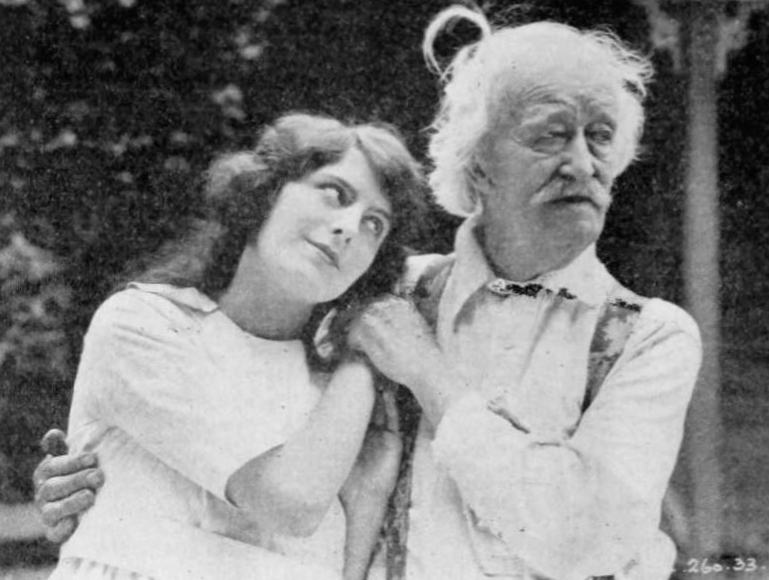
The flicker begins like a struck match: a title card blooms in canary-yellow tint, and suddenly the Sierra becomes a cathedral of shadows where copper sings beneath the boots of men who have never learned to read anything except the language of ore. Rainbow is not merely a Western; it is a palimpsest of frontier jurisprudence, a chiaroscuro romance inked in nitrate and desperation. Director Charles Brabin—never shy of melodrama—lets the camera linger on Alice Calhoun’s cheekbones until the audience forgets whether it is mineral dust or moonlight that powders her skin.
Consider the orphanage of plot: a girl, a mine, three grizzled guardians who smell of beard oil and blasting powder. The mine itself—Rainbow Copper—functions as both dowry and Delphic oracle, its tunnels echoing with paternal ghosts. The film’s first marvel is how swiftly it dispenses with exposition; within ninety seconds we have absorbed patrimony, bereavement, and the tacit contract that binds Rainbow to her surrogate sentinels. C. Graham Baker’s intertitles crackle like dry pine: "The mountain remembers what the law forgets."
George Standish arrives wearing city irony like a boutonniere. Tom O’Malley plays him with the languid arrogance of a man who has never had to prove anything except his ability to leave. His claim to the mine is technically valid yet ethically porous, a tension the film refuses to resolve with gunfire. Instead, Standish retreats to Chicago, betrothing himself to a woman whose laughter sounds like crystal thrown down stairs. That act of relinquishment—unthinkable in a William S. Hart picture—catapults Rainbow into a limbo of gendered expectation: she must either fight like a man or forgive like a saint.
Enter Rufus Halliday, wheezing uncle, human vault of unrecorded deeds. In a dim Chicago sickroom lit by gaslight the color of old champagne, we learn that the elder Standish withheld registration out of loyalty to Rufus, who once sold the mine to Rainbow’s father for a single gold eagle and a promise of silence. The uncredited ledger becomes the film’s McGuffin, but Brabin is less interested in documents than in the moral sediment they stir up. When Rainbow—clad in mourning indigo—discovers the omission, her face registers not triumph but insult: the law has gaslit her lineage.
What follows is a fugue of renunciation. Rainbow boards the midnight train west, her silhouette framed against a Pullman window that converts passing wheat fields into copper ingots. Back amid the pines, her guardians—Jack Roach, William J. Gross, Tammany Young—stage a mock trial of the heart, condemning Standish in absentia. Their cabin, draped in elk sinew and star charts, becomes a tinderbox of male resentment, a microcosm of the nation itself circa 1918: every man certain the mine owes him something, every woman certain the mine owes her everything.
Joe Sheady, the film’s serpentine claim-jumper, slithers into this crucible with a kerosene grin. George Lessey plays him like a man who has memorized the devil’s playbook but keeps misplacing the page on restraint. His attempted assault on Rainbow is staged in a single, unbroken medium shot: Calhoun’s eyes widen, the camera refuses the cutaway demanded by later censors, and the threat feels bruisingly present. When Standish reappears—drawn by an apology that arrives too late—Sheady’s arson becomes the narrative’s baptism by fire, a literalization of passion that borders on apocalyptic.
The burning cabin sequence, tinted crimson in the surviving Portuguese print, is a masterclass in silent-era spectacle. Brabin intercuts close-ups of blistering timber with shots of Rainbow’s hair unspooling in the updraft, turning her into a Pre-Raphaelle torch. She frees Standish from a lattice of fallen beams, their hands meeting through smoke that looks like shredded moon. The mine, glimpsed in the middle distance, glints beneath the inferno as if hell itself were underwriting their merger.
Yet the film’s final miracle is its refusal to crown either lover as sole proprietor. The last intertitle—hand-lettered in cobalt—reads: "Two signatures upon the claim, two heartbeats in the shaft." They wed off-screen, but the camera returns to the mountain, where a new timber headframe rises against a dawn now doubly golden. Copper and affection circulate as joint currency, a radical utopia for an America about to enter Red Summer and Prohibition.
Technically, Rainbow survives only in fragments: a 35 mm Portuguese nitrate reel, a 9.5 mm Pathé baby reel found in a Lyon attic, and a paper continuity at MoMA. The tinting—cyan for night interiors, amber for lamplight, magenta for Sheady’s assault—has been digitally re-approximated by EYE Filmmuseum, though the Dutch intertitles betray a Braille of scratches. Cecil Kern’s amber-hued cinematography, once dismissed as "storybook" by trade papers, now reads as proto-expressionist: shadows claw across faces like guilt made visible.
Performances oscillate between stylized tableaux and startling naturalism. Calhoun’s Rainbow never tilts into the feral child trope; instead she conveys mineral dignity, as though the mountain had loaned her its granite composure. O’Malley’s Standish underplays the cadence of remorse: watch the way his left glove twitches when he signs the deed over—an entire novella of shame in a millisecond. Among the guardians, Jack Roach supplies comic ballast without vaudeville excess, his tobacco-spitting timing as precise as a metronome.
Comparative veins: if Varázskeringö waltzes through Mitteleuropean mysticism, Rainbow square-dances with Anglo-Saxon pragmatism. Qristine frames inheritance as ancestral curse; Rainbow treats it as negotiable ore. The suffocating spiral staircase of The Circular Staircase finds its open-air analogue in the mine’s vertiginous shaft, while A Son of the Hills shares Rainbow’s suspicion of city paper, though it lacks Brabin’s gendered nuance.
Gender politics, 1918 vs. 2024: Rainbow’s agency hinges on renunciation, a trope modern viewers may side-eye. Yet within the film’s moral geology, surrender functions as strategic withdrawal, not submission. She relinquishes the mine only after verifying that Standish will reciprocate by relinquishing metropolitan entitlement. Their eventual union is less romance than joint venture, a prospectus sealed in smoke and sweat. In an era when women could not yet vote uniformly, this feels quietly insurgent.
Archival prognosis: the surviving 22 minutes hint at a 68-minute feature. A 4K restoration funded by the Women Film Pioneers Project is rumored for 2025, with Anne-Françoise Brabin (grand-niece of the director) supervising tinting based on a 1919 Czech censorship card discovered in Plzeň. Should the complete print emerge, historians may re-evaluate Brabin as a bridge between Griffith’s Victorian tableaux and the psychologically porous Westerns of Victor Fleming.
Until then, Rainbow exists as a half-remembered lullaby hummed by the Sierra wind. It tells us that ownership is a story we agree to tell the land, that copper can conduct both electricity and forgiveness, and that every orphan carries a minecart of unspent love. Watch it if you can—on a night when the moon looks like a coin someone lost in the grass—and you may hear the echo of pickaxes striking not just rock, but the brittle crust of history itself.
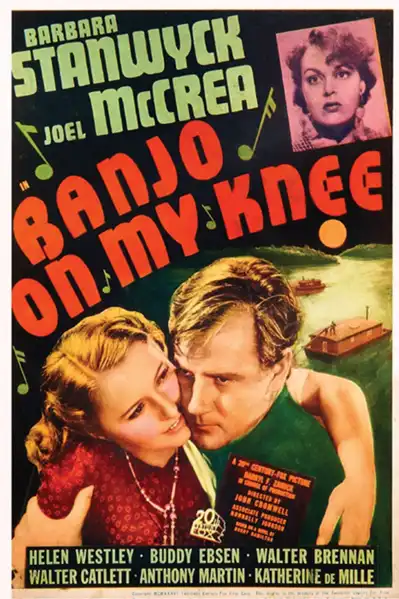
IMDb 6.1
1936
Community
Log in to comment.