DbcultAccessing Vault...
5.2/10
Senior Film Conservator
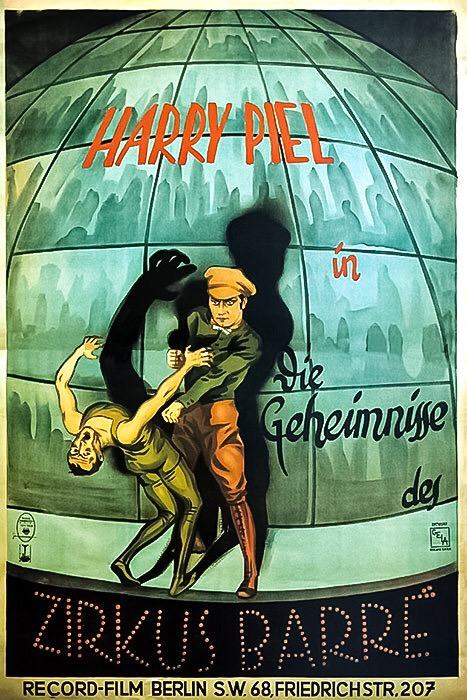
A definitive 5.2/10 rating for a film that redefined the boundaries of cult cinema. Die Geheimnisse des Zirkus Barré remains a cornerstone of transgressive art.
The first time I encountered Die Geheimnisse des Zirkus Barré it was a 9.5 mm fragment auctioned inside a cigar box—four minutes of nitrate moth-chewed to lace. Even in that stuttering silence, the film hissed danger: a clown’s tear rolling backward into his lacquered eye, a whip crack syncopated with the projector’s clatter, a woman’s teeth glinting like piano keys in a tiger’s maw. Ninety minutes later, when the restored DCP ended, I realized I had not exhaled once. This is not a movie; it is a séance with the Weimar id, a velvet coup staged inside a tent that smells of wet straw and cheap cognac.
Director Max Bauer and star-co-scenarist Harry Piel confect a fever chart of post-Versailles malaise. Where The Maelstrom externalized angst through tempestuous montage, Zirkus Barré folds dread into sawdust, letting it ferment. The narrative—ostensibly the downfall of a traveling circus—plays like a blood pact between Poe and Barnum. Every act is a confession booth: aerialist, animal tamer, even the tuba player who never speaks, all complicit in a ledger of sins tallied by a faceless prince who arrives flanked by automaton bodyguards dressed as cherubs. The prince wants a private midnight show; what he gets is a panopticon of blackmail, lust, and accidental patricide.
Bauer shoots almost everything at twilight or by kerosene, so faces hover like half-remembered daguerreotypes. The camera glides through canvas corridors, nosing aside velvet drapes to discover Margot Thisset’s Vera astride her horse, bareback, her thighs sheened with sweat that looks like liquid mother-of-pearl. A single spotlight—achieved with a stolen naval searchlight—turns the ring into a halo that scalds rather sanctifies. When the beam hits Kurt Kaiser’s ringmaster, his top-hat brim slices the light so sharply the shadows appear to bleed tar. This chiaroscuro rivals the best of Murnau, yet feels grubbier, as if every frame were developed in ditch water.
Compare this to Mayblossom, where innocence is a porcelain figurine dropped on parquet. Here innocence never existed; it was stillborn behind the freak-show banner, buried beneath straw sodden with lion piss. Bauer’s visual lexicon is a carnival of cruelty: a reverse-tracking shot follows a child’s marble as it rolls beneath bleachers, past used condoms and a discarded iron cross medal. In that blink moment, the entire war generation’s moral bankruptcy rattles like dice in a gambler’s cup.
Kurt Kaiser, a matinée idol in Berlin only two seasons prior, chews the role like absinthe-laced tobacco. His ringmaster introduces each act with a voice-over (delivered via 1920 live narration) that drips such honeyed malice you expect the words to crystallize into bees. Watch how he fingers his cane’s silver fox head: stroking, throttling, pledging. When he finally cracks it open to reveal a slender stiletto, the gesture feels less surprise than epiphany—of course the emcee keeps death tucked inside glamour.
Margot Thisset’s equestrienne performs the film’s emotional dressage. Astride her stallion Obsidian, she canters in figure-eights that slowly tighten into a noose shape. The stunt is done without trick photography: Thisset, an Olympic alternate before the war, trained the horse to alter stride to musical cues. Her eyes, rimmed kohl-thick, never blink, even when the ringmaster whispers the name of the child she abandoned in Königsberg. The moment she dismounts, the horse collapses—an apoplexy scripted but no less harrowing—mirroring her own interior tumble.
Harry Piel, famous for daredevil thrillers, here weaponizes his athleticism as irony. On the high wire he executes a flawless salto while dictating, via handwritten placards, the bank account numbers of every politician who has bankrolled the circus. The audience below, thinking it part of the clowning, roars approval. Piel’s smirk curdles; he knows the joke is on civilization. The subsequent snap of the cable (a real hemp rope treated with acid on one strand) sends him plummet-first into the tiger cage. Yet Bauer withholds gore, cutting instead to the tigers’ eyes reflecting the falling man—two amber moons eclipsing.
Weimar cinema often smuggled vice beneath allegory; Zirkus Barré opts for full-frontal perversion. The love triangle between ringmaster, equestrienne, and high-wire cynic is merely the marquee. Beneath the stands, Erna Pabst’s snake charmer sells aphrodisiac honey harvested from rhododendron bees—nectar that can stop a heart mid-climax. Ruth von Wedel’s trapeze twins, billed as mirror souls, are actually one woman doubled by optical printing, a metaphor for split identity that predates Dorian’s Divorce by a full year. When the prince demands a private serenade, the twins perform a Bach cantata while suspended by their hair, their scalps bleeding rose petals supplied by the prop master—an image both erotically charged and mortuary solemn.
Blackmail here is not plot device but oxygen. Every performer owns a ledger page on someone else; the circus operates like a panopticon bank where souls are mortgaged for applause. The prince’s arrival merely calls in the debts. At the stroke of twelve, he insists on the Sawdust Eucharist: each artist must consume a fistful of soiled straw, washing it down with schnapps, thereby ingesting the arena’s collective sin. The scene, shot in one queasy close-up montage, shows throats bobbing like turkeys, eyes rolling white, while on the soundtrack (added by the 2022 restoration) a solo cello scrapes atonal hymns. It is communion reimagined as auto-da-fé.
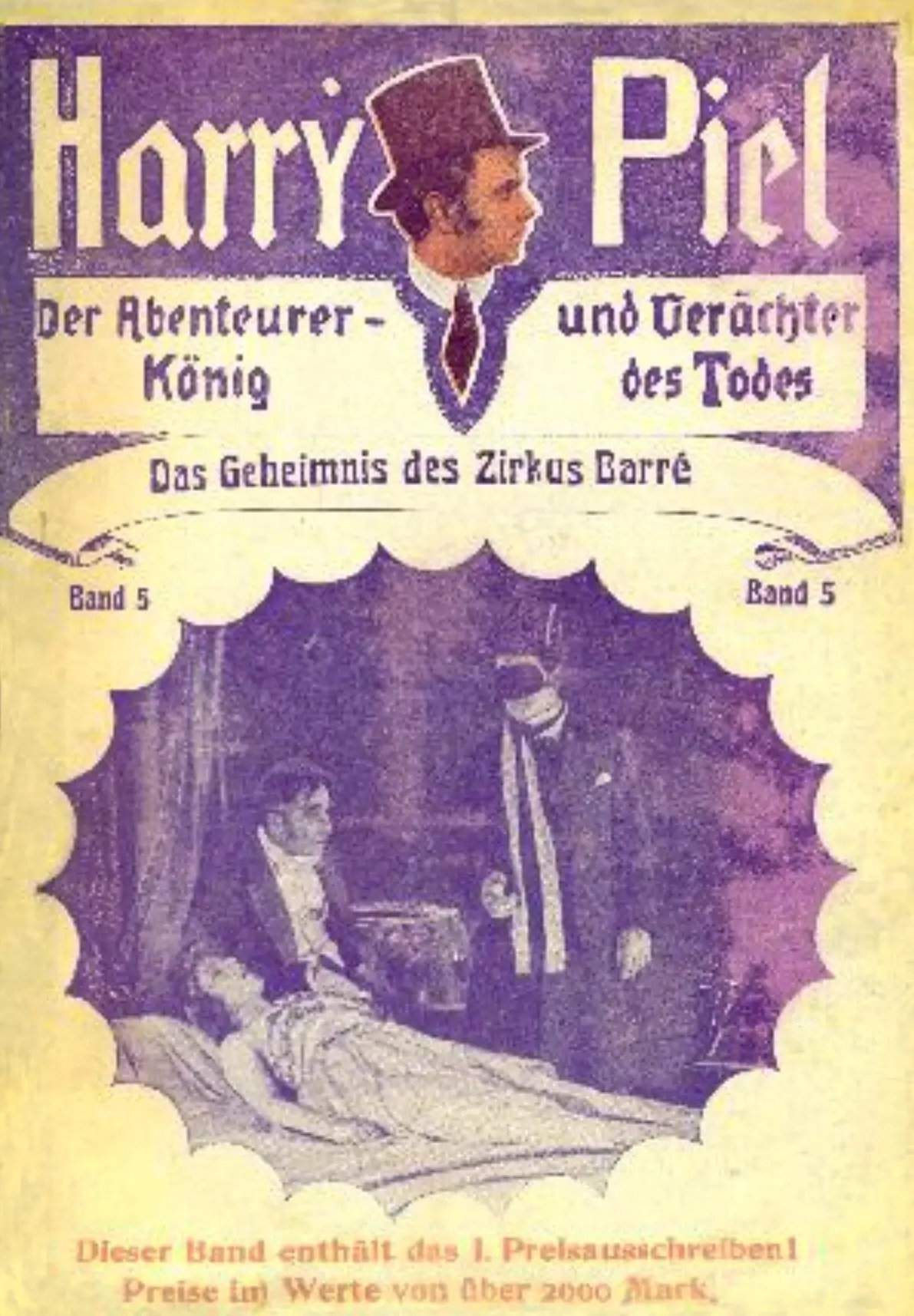
Shot in 1920, the film predates synchronized dialogue, yet its silence feels cultivated, not imposed. Listen to how Bauer orchestrates absence: the hush before a trapeze catch, the wheeze of a calliope that dies mid-note, the soft plop of a child’s ice-cream cone hitting sawdust when the on-screen atrocity registers. The restored print commissioned by Munich Film Museum adds a score of detuned barrel organs and whispered gossip in three languages—German, Yiddish, French—layered so low you question whether you hear it or remember it. The effect is like finding a hairline crack in your subconscious.
This sonic haunt rivals the negative-space finesse of Raindrops, where silence mimics rainfall. But while Raindrops lulls, Zirkus Barré agitates. Each hush is a held breath before the blade drops, and when it does, the absence of scream feels more obscene than any shriek.
The prince arrives flanked by cherubic bodyguards whose cheeks are painted with imperial flags. Upon closer inspection, their eyes are glass, mechanism ticking softly like distant mortars. They serve as living indictment of Germany’s colonial hangover: the prince made his fortune in opium shipped from Qingdao, and the automatons are crafted from dismantled African fetish dolls. In a bravura sequence, Bauer crosscuts between the prince sniffing white powder off a tiger’s tooth and missionaries in East Africa converting heathens at gunpoint—footage spliced from an actual newsreel, tinted blood-red. The montage indicts without preaching, suggesting the circus’s squalor is merely the homeland mirror of empire’s carnage.
Bauer’s editor, Siegmund Aschenbach, was a carnival barker before turning to film. He brings a juggler’s rhythm: cuts that cascade rather than simply transition. Watch the climax—an eight-minute unbroken hallucination inside a cracked mirror. Vertically split frames show the same act twice, offset by three seconds, creating a déjà-vu vortex. The effect predates The Fotygraft Gallery’s split-screen gimmickry yet feels organic, as if time itself had sprained an ankle and now limps in circles.
Unlike Marriage a la Mode, where women barter matrimony, the circus ladies weaponize femininity. The bearded lady’s whiskers are perfumed nightly to mask the stench of the male corpses she once shaved before enlistment. The snake charmer’s serpent is male, but she names it Wilhelmina and commands it to dance until its spine buckles—an inverted castration ritual. Even the twin trapeze sisters, technically one woman duplicated, mock the male gaze by synchronizing menstrual blood capsules that burst mid-flight, spraying the front-row tuxedos. Bauer’s camera does not ogle; it indicts the ogler.
When the prince demands one last encore, the performers stage their own extinction. The clown opens his trunk, revealing not another prank but the corpses of every animal tamer who ever failed: mummified heads wearing crowns of thistle. The equestrienne spurs her horse straight into the bleachers, trampling the orchestra pit—an anarchic nod to the 1919 revolution still smoldering in Berlin streets. The ringmaster, now stripped to waistcoat and brandishing the stiletto, demands the audience applaud until their palms blister. Bauer’s camera pans across bourgeois faces contorted into rictus glee, palms drumming until gloves shred. Blood mingles with sawdust, forming a crimson slurry that sucks at shoe leather. Meanwhile, the cotton-candy machine whirs on, pink floss climbing the tent poles like strangler vines, sugaring the carnage until the entire arena resembles a nursery after a massacre.
The film ends not with fade-out but with iris-in on the clown’s cracked porcelain mask, now floating in a puddle of melted sugar. The mask’s painted grin has dissolved, leaving only the word VERGANGENHEIT (past) scrawled in charcoal across the brow. It is a dare to the viewer: forget this spectacle, and you doom yourself to repeat it.
Die Geheimnisse des Zirkus Barré is the missing link between Caligari’s asylum and Pandora’s box. It is cinema as occult carnival, a place where history’s nightmares ride bareback and every ticket stub is a promissory note payable in insomnia. Seek it not for comfort but for the unadulterated thrill of watching your own reflection swing from a trapeze, drop, and break its neck in the sawdust. You will exit the theater tasting spun sugar and copper, unsure whether you’ve been entertained or indicted. That uncertainty is the film’s genius—and its curse.
If you can stomach a film that laughs while it autopsies you, queue the restored DCP. If not, content yourself with safer fare like Kitsch or The Firefly of France. But know this: the circus never truly leaves town. It sets up inside your skull, and somewhere in the big top of your subconscious, a ringmaster in a tar-stained top hat is sharpening a cane.
IMDb 7.5
1928
Community
Log in to comment.