DbcultAccessing Vault...
6.1/10
Senior Film Conservator
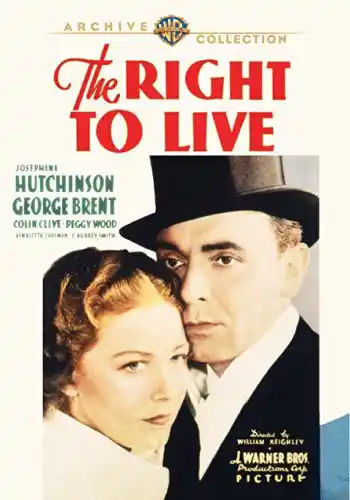
A definitive 6.1/10 rating for a film that redefined the boundaries of cult cinema. The Right to Live remains a cornerstone of transgressive art.
If you are looking for something to watch while you fold laundry on a rainy afternoon, The Right to Live is actually a pretty solid choice. It is definitely for people who like those old-fashioned dramas where everyone talks in very proper sentences while their lives are falling apart.
If you need explosions or fast pacing, stay away. You will be bored out of your mind within ten minutes.
The movie starts with Maurice and Stella. They are happy, or at least they look happy in that way people did in movies back in 1935.
Then a plane crash happens. We don't really see it, because budgets were what they were, but suddenly Maurice is in a wheelchair and he is not handling it well.
Colin Clive plays Maurice. You might know him as the guy who shouted "It's alive!" in Frankenstein, and he brings that same kind of shaky, nervous energy here.
He is just... vibrating with sadness. It makes the whole house feel heavy.
Then his brother Colin shows up. George Brent plays him as this very healthy, very tan guy who just radiates "I can walk and you can't" energy without even trying.
You can see where this is going. Stella, the wife, is stuck between a husband who is basically a ghost and a brother-in-law who is very much alive.
It’s based on a play by W. Somerset Maugham called The Sacred Flame. You can tell it was a play because 90% of the movie happens in like two rooms.
The lighting in the library is actually kind of cool. There are these long shadows that make it look like everyone is trapped in a cage.
I noticed this one scene where Stella is pouring tea and her hand shakes just a tiny bit. It is a small thing, but it felt more real than any of the big speeches they give later.
There is also a nurse, Wayland, who is just creepy. She hangs out in the background of shots like a gargoyle.
She knows everything. You can tell by the way she adjusts her cap that she’s judging everyone in the room.
The movie gets much better once Maurice starts realizing that his wife and brother are getting "close." He doesn't scream about it; he just gets very, very quiet.
That quietness is actually scarier than if he had just thrown a vase. It’s the kind of silence that makes you want to turn the volume up just to make sure your speakers aren't broken.
The dialogue is a bit much sometimes. People say things like "I want you to be happy" when they clearly mean "I want to jump out of a window."
It reminds me a bit of the slow-burn tension in Mrs. Wiggs of the Cabbage Patch, though this is way darker and less about being poor.
One reaction shot of the nurse lingers for so long it almost becomes a different movie. I thought maybe the film had stuck, but no, she’s just staring.
It’s not a perfect film. It’s a bit stiff and some of the supporting actors feel like they are reading off a grocery list.
But if you want to see Colin Clive be the king of angst, it’s worth the hour and twenty minutes. He really does the "tortured soul" thing better than almost anyone from that era.
The movie tries really hard to be a big moral lesson about sacrifice and love. Honestly, I think it’s just a movie about three people who are really bad at communicating.
The music is also a bit loud. It swells up during these emotional moments and it feels like the movie is poking you in the ribs saying, "Hey! Be sad now!"
I liked it, mostly. It’s got that weird, dusty 1930s charm where everything feels slightly haunted even if there are no ghosts.
Just don't expect a happy ending. This isn't that kind of story.
"I have the right to live!" someone shouts at some point. I think that's where they got the title. Groundbreaking.
Overall, it’s a decent watch if you like theatre-style movies. It’s better than a lot of the other stuff from that year that just feels like fluff.
It’s messy and the middle drags a bit, but the performances keep it from sinking. Especially Clive. He’s just so miserable it’s captivating.
IMDb —
1919
Community
Log in to comment.