DbcultAccessing Vault...
4.3/10
Senior Film Conservator
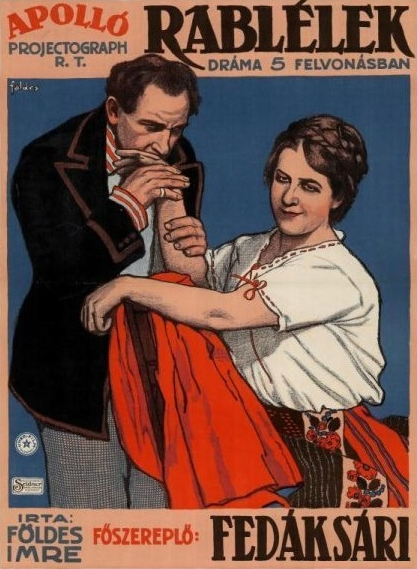
A definitive 4.3/10 rating for a film that redefined the boundaries of cult cinema. Rablélek remains a cornerstone of transgressive art.
The genesis of cinematic language is often found in the overlooked corners of European history, specifically within the fertile creative soil of Budapest in the early 1910s. Rablélek (1913), a film that stands as a monumental pillar in the early career of Michael Curtiz (then Mihály Kertész), offers a masterclass in the transition from theatrical melodrama to pure visual storytelling. While the global audience might associate Curtiz with the polished artifice of Hollywood’s Golden Age, this silent opus reveals a director obsessed with the visceral textures of human suffering and the architectural constraints of the frame.
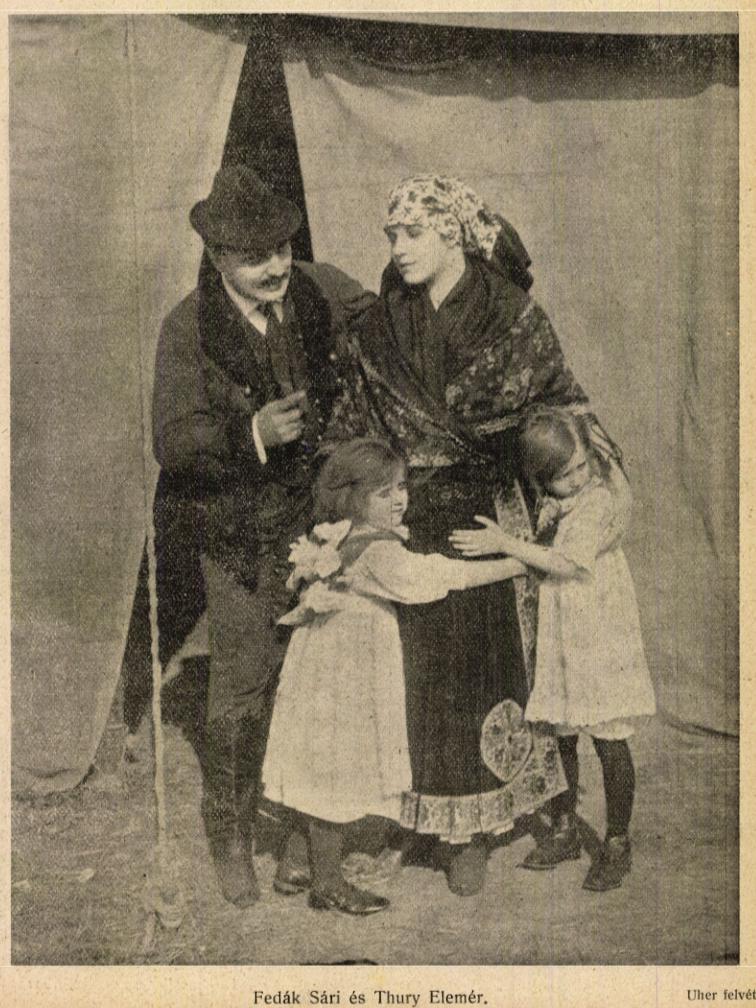
To understand the gravity of Rablélek, one must first reckon with the sheer cultural force of Sári Fedák. In an era where acting was often synonymous with broad, histrionic gestures—a style seen in more archaic productions like The Life of Moses—Fedák brings a surprising interiority to her role. Her performance is not merely a sequence of poses; it is a psychological excavation. She portrays the 'enslaved soul' not as a victim of external chains, but as a person whose spirit is being slowly eroded by the cold indifference of her environment. Her eyes, captured in lingering medium shots that were revolutionary for 1913, convey a narrative of silent rebellion that words would only diminish.
The supporting cast, featuring Alfréd Deésy and Márton Rátkai, provides a robust framework for Fedák’s brilliance. These actors, many of whom were veterans of the Hungarian stage, adapt to the camera with a nuanced understanding of space. Unlike the more fantastical or pulp-driven French contemporaries such as Fantômas: In the Shadow of the Guillotine, the performances in Rablélek are grounded in a gritty realism that anticipates the Kammerspielfilm movement. There is a tangible weight to their interactions, a sense that the air in the room is heavy with unspoken grievances.
Curtiz’s direction in Rablélek is nothing short of prophetic. He utilizes the mise-en-scène to mirror the protagonist's internal state. The interiors are cluttered with the detritus of the upper class—heavy velvet drapes, ornate furniture, and gilded frames that act as literal and figurative bars to her cage. This use of environment as a psychological extension of the character is far more sophisticated than the staging found in The Fates and Flora Fourflush, which relied on more traditional, flat compositions.
The cinematography, though limited by the technology of the time, demonstrates an early understanding of chiaroscuro. Shadows are not just absences of light; they are active participants in the drama. They swallow the characters during moments of moral crisis and stretch across the floor like grasping fingers. This visual depth aligns the film more closely with the dark, urban mysteries of Shadows of the Moulin Rouge than with the bright, epic vistas of Samson. There is a persistent sense of dread that permeates the film, a feeling that the protagonist is being watched by an invisible, judgmental eye.
The screenplay by Imre Földes avoids the pitfalls of simplistic moralizing. Instead, it offers a complex critique of the social contract. The 'enslavement' referenced in the title is multi-faceted: it is economic, it is gendered, and it is profoundly spiritual. Földes understands that true tragedy arises not from grand villainy, but from the everyday compromises that strip a person of their dignity. This thematic density elevates Rablélek above the more sensationalist fare of the era, such as Zigomar contre Nick Carter, which prioritized thrills over character depth.
The narrative pacing is deliberate, allowing the audience to feel the slow passage of time that characterizes the protagonist's life. We are invited to inhabit her boredom, her fleeting hopes, and her eventual resignation. This focus on the mundane aspects of suffering is what gives the film its enduring power. It doesn't rely on the explosive action of From Dusk to Dawn or the historical sweep of The Scottish Covenanters. Instead, it finds the epic within the intimate.
When placing Rablélek alongside its contemporaries, its unique position in the filmic canon becomes clear. While Nell Gwynne explored the historical spectacle of personality, Rablélek is far more concerned with the sociological forces that shape an individual. It lacks the pastoral idealism of The Life of a Jackeroo, opting instead for a cold, urban cynicism. The film is a precursor to the social realism that would later dominate European cinema, moving away from the escapism of The Legacy of Happiness toward a more confrontational style of art.
Even the title itself suggests a preoccupation with the metaphysical, a theme also explored in Fides, yet Curtiz grounds this in a physical reality that feels dangerously contemporary. The 'soul' here is not a theological construct but a psychological one, vulnerable to the pressures of the material world. This focus on the psyche is what differentiates the film from the more externalized conflicts of Vendetta or the documentary-style observation of With Our King and Queen Through India.
Technically, Rablélek demonstrates Curtiz’s early experimentation with camera movement and editing as a means of building tension. There are moments where the camera seems to hover, expectant, creating a sense of voyeurism that implicates the viewer in the protagonist's plight. This isn't the simple documentation of a stage play; it is the birth of a cinematic grammar. The way Curtiz cuts between the opulence of the drawing-room and the starkness of the servant quarters creates a rhythmic dissonance that reinforces the film’s class-conscious themes.
The film’s restoration and preservation are crucial, for it represents a missing link in the evolution of the feature film. In 1913, the medium was still defining its boundaries, oscillating between the short-form 'attractions' and the long-form narrative. Rablélek leans heavily into the latter, proving that silent film could sustain complex emotional arcs over an extended duration. It shares a certain DNA with The Keys to Happiness, yet it trades that film’s optimism for a more profound, and perhaps more honest, sense of existential despair.
We must also consider the environment in which Rablélek was produced. Budapest was a city of extreme contrasts—a glittering metropole on the surface, but one teeming with radical political movements and social unrest beneath. The film captures this tension perfectly. The 'enslaved soul' is a metaphor for the Hungarian people themselves, caught between the waning power of the Austro-Hungarian Empire and the uncertain promises of modernity. Sári Fedák, a national icon, becomes the vessel for these anxieties, her performance resonating with a public that was itself feeling the stirrings of a coming revolution.
The inclusion of actors like Elemér Thury and Ernö Király further reinforces the film's connection to the cultural zeitgeist. These were performers who understood the pulse of the city, and they brought a lived-in authenticity to their roles that is often missing from more commercialized productions. Their presence ensures that Rablélek remains a vital document of its time, a snapshot of a society on the brink of total transformation.
Ultimately, Rablélek is a film that demands to be seen not just as a historical curiosity, but as a vibrant work of art. It challenges the viewer to look beyond the surface of the silent image and to engage with the profound human truths that lie beneath. Michael Curtiz’s vision is uncompromising, Sári Fedák’s performance is transcendent, and the film’s thematic relevance remains startlingly intact. It is a haunting reminder that the struggle for autonomy—the fight to free the 'enslaved soul'—is a universal and timeless endeavor.
As we look back at the cinematic landscape of 1913, Rablélek stands tall among its peers. It possesses a gravity and a grace that few films of any era can claim. It is a testament to the power of the moving image to capture the deepest recesses of the human experience, and a definitive proof that Michael Curtiz was a master of his craft long before he ever set foot in Hollywood. To watch Rablélek is to witness the birth of modern cinema, a dark and beautiful awakening that continues to resonate over a century later.
For those seeking to understand the roots of psychological drama, this film is an essential text. It bridges the gap between the theatrical past and the cinematic future, offering a glimpse into the soul of an artist—and a nation—in the midst of a profound awakening.
IMDb 6.7
1924
Community
Log in to comment.