DbcultAccessing Vault...
Cult Review
Senior Film Conservator
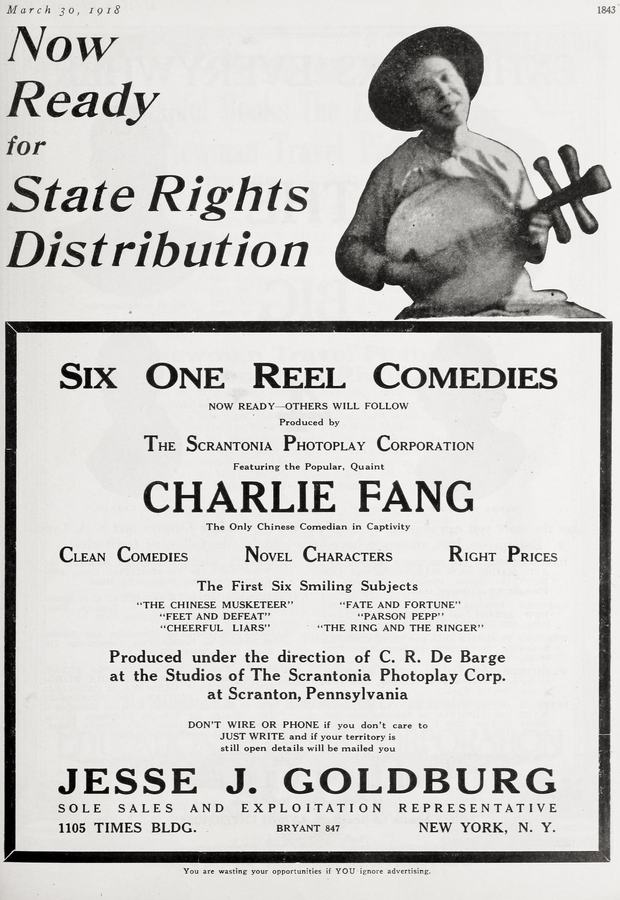
Helena Vance's latest cinematic offering, 'The Ring and the Ringer', is not merely a film; it is an intricate tapestry woven from threads of existential dread, artistic obsession, and the unsettling fluidity of identity. From its opening frames, the picture asserts a commanding presence, drawing viewers into a world both meticulously detailed and disquietingly surreal. It’s a work that eschews easy categorization, preferring to linger in the liminal spaces between psychological thriller, philosophical drama, and a haunting character study. Vance, a filmmaker known for her audacious vision and uncompromising narrative choices, outdoes herself here, crafting a labyrinthine experience that demands both intellectual engagement and emotional surrender.
At its core, the narrative revolves around Elias Thorne, portrayed with breathtaking nuance by the ever-compelling Charles Fang. Thorne is a horologist, a master artisan whose life is a symphony of precision and solitude, punctuated by the delicate mechanisms he coaxes into existence. His workshop, a sanctum of gears and springs, is less a place of business and more a monastic cell where he communes with the very essence of time. Fang embodies this reclusive genius with a quiet intensity that is utterly captivating. His performance is a masterclass in understated emotion, conveying volumes through a mere glance, a subtle tremor in his hands, or the almost imperceptible slump of his shoulders. We witness the meticulousness that defines Thorne, the almost spiritual reverence he holds for his craft, and the profound isolation that has become his default state. This isn't just a man who makes rings; this is a man whose very being is intertwined with the intricate dance of creation and the weight of legacy.
The inciting incident, the theft of Thorne's magnum opus – a ring whispered to possess mystical properties, a temporal anomaly in miniature – serves not as a simple plot device but as a profound disruption to his meticulously ordered universe. This isn't merely about property loss; it's about the violent tearing away of a piece of his soul. The ring is more than metal and stone; it's the culmination of his life's work, a tangible manifestation of his genius, and perhaps, a vessel for his very identity. Its disappearance forces Thorne out of his self-imposed exile, propelling him into a nocturnal urban landscape that feels both alien and eerily familiar. Vance's direction here is masterful, using chiaroscuro lighting and disorienting camera angles to underscore Thorne's descent into an unfamiliar world, a world where the boundaries of his reality begin to fray.
The city itself becomes a character, a sprawling, indifferent entity that reflects Thorne's growing disorientation. Its labyrinthine alleys and shadowy corners mirror the winding paths of his own psyche. The score, a haunting blend of discordant strings and ethereal ambient sounds, perfectly complements the visual narrative, creating an atmosphere of pervasive unease. Every creak, every distant siren, every whispered conversation seems to contribute to the pervasive sense of a world unmoored. It's a testament to Vance's directorial prowess that the film maintains this tension throughout, never resorting to cheap jump scares but instead building a slow, insidious dread that burrows deep under the skin.
The true heart of the film, and where its thematic brilliance truly shines, lies in Thorne’s encounter with 'The Ringer.' This enigmatic figure, whose motivations remain opaque and whose presence is spectral, is not a conventional antagonist. Instead, they operate as a psychological foil, a living enigma that forces Thorne to confront uncomfortable truths about his own artistry, his ego, and the very nature of creation. The 'Ringer' is less a thief and more a catalyst, a trickster figure who challenges Thorne's sense of ownership over his art and, by extension, his self. Is the 'Ringer' a mirror, reflecting Thorne's own anxieties and unacknowledged desires? Or are they a dark shadow, an externalization of the fears that plague every creator: the fear of imitation, of being surpassed, of losing control over one's own legacy?
The dynamic between Thorne and the 'Ringer' is a compelling dance of cat and mouse, but one where the roles are constantly shifting. It's a battle of wits and wills, but more profoundly, a struggle for existential definition. Charles Fang's portrayal of Thorne's escalating desperation and confusion is masterful. We see him unravel, not in a melodramatic fashion, but with a quiet, agonizing dignity. His journey is reminiscent of the protagonist in The Man Who Found Himself, albeit plunged into a far more disorienting and abstract quest for self-reclamation. Here, however, the 'self' that needs finding is not merely lost, but actively being contested and redefined by an external force that feels eerily internal.
Vance delves deep into the philosophical quandaries surrounding authenticity and artistic ownership. If an object is stolen, does its essence change? If another can replicate or even embody the spirit of a creation, what then of the original creator's unique claim? These questions are subtly woven into the fabric of the narrative, challenging the audience to ponder the ephemeral nature of genius and the tangible reality of its manifestations. The film suggests that true artistry transcends mere possession; it resides in the act of creation itself, and perhaps, in the impact it has on the world, irrespective of who holds the physical artifact.
The visual language of the film is crucial to conveying these complex ideas. Cinematographer Elara Thorne (no relation to the character, one presumes) employs a palette dominated by deep blues, muted grays, and the occasional stark splash of amber, creating a mood that is at once somber and strangely alluring. The close-ups on Thorne's hands, the intricate details of his workshop, and the almost hypnotic gleam of the stolen ring are rendered with an exquisite precision that mirrors Thorne's own meticulousness. Each frame feels deliberately composed, contributing to the film's overall sense of controlled artistry. The editing is equally thoughtful, allowing scenes to breathe, building suspense through deliberate pacing rather than frantic cuts. This measured approach invites contemplation, allowing the audience to truly immerse themselves in Thorne's psychological unraveling.
Charles Fang’s performance as Elias Thorne is nothing short of a revelation. He carries the weight of the film on his shoulders, portraying Thorne's transformation from a solitary craftsman to a man on the precipice of an existential crisis with profound conviction. His subtle shifts in demeanor, the increasing weariness in his eyes, the subtle tremor in his voice – all contribute to a portrait of a man slowly being stripped bare of his certainties. It's a performance that will undoubtedly be remembered come awards season, a testament to Fang's incredible range and his ability to inhabit characters with such complete immersion. He doesn't just play Thorne; he *becomes* him, inviting us into the deepest recesses of his troubled mind. His internal struggle, a profound Voice of Conscience echoing through his own psyche, is palpable throughout.
The supporting cast, though perhaps less prominent, also delivers strong performances that anchor Thorne's journey. Their interactions, though often brief, add layers to the narrative, hinting at the wider world Thorne has deliberately excluded himself from. Vance's direction ensures that even the most fleeting appearances leave an impression, contributing to the film's rich, textural quality. The dialogue, sparse but potent, is carefully crafted to reveal character and advance thematic concerns without ever feeling expository. Each line feels earned, contributing to the overall sense of a finely tuned machine.
The quest for the ring is less a conventional detective story and more a philosophical odyssey. Thorne is not merely searching for an object, but for answers about himself, his purpose, and the very fabric of reality. The 'Ringer' acts as a guide, albeit a malevolent one, through this labyrinth of self-discovery. The film often feels like a waking dream, with elements of the surreal bleeding into the mundane, challenging both Thorne and the audience to question what is real and what is merely perception. This blurring of lines, this deliberate ambiguity, is one of Vance's greatest strengths, forcing active engagement rather than passive consumption.
In its exploration of a protagonist forced to confront an external force that feels intrinsically linked to his internal world, 'The Ring and the Ringer' shares thematic resonance with films like The Way Out, where characters must navigate deeply personal and often metaphorical pathways to escape their psychological prisons. However, Vance takes this concept further, suggesting that the 'prison' might be of Thorne's own making, and the 'way out' might involve a radical re-evaluation of his entire existence. The film is a Challenge to both its protagonist and its audience, daring us to question our preconceived notions of identity and artistic legacy. It’s a film that lingers long after the credits roll, its unsettling questions echoing in the mind.
Ultimately, 'The Ring and the Ringer' is a triumph of audacious vision and meticulous execution. Helena Vance has crafted a film that is intellectually stimulating, emotionally resonant, and visually stunning. It’s a challenging watch, certainly, but one that rewards patience and thoughtful engagement with a profound and unforgettable cinematic experience. It doesn’t offer easy answers, nor does it neatly tie up its narrative threads in a conventional bow. Instead, it leaves us with a sense of lingering unease, a feeling that the questions it raises are far more important than any definitive resolution. This is not a film to be passively consumed; it is a film to be experienced, dissected, and contemplated. It solidifies Vance's reputation as one of the most exciting and uncompromising voices in contemporary cinema.
The film’s greatest strength lies in its ability to marry grand philosophical themes with an intimate, character-driven narrative. Charles Fang's Elias Thorne is a character for the ages, a man whose journey into the heart of his own obsession is both terrifying and deeply human. The 'Ringer,' though never fully elucidated, remains a potent symbol, a force of nature that compels Thorne to confront his deepest fears and re-evaluate everything he holds dear. The climax, a dizzying confrontation that is less physical and more a clash of wills and identities, is masterfully orchestrated, leaving the audience breathless and intellectually stimulated. It’s a film that will undoubtedly spark debate and discussion, a testament to its enduring power and relevance. Vance has not just made a film; she has created a world, a state of mind, and a profound meditation on what it means to create, to lose, and to ultimately redefine one's self in the face of an encroaching, unsettling truth. A truly essential viewing experience for anyone seeking cinema that dares to challenge and provoke.
IMDb —
1914
Community
Log in to comment.