DbcultAccessing Vault...
Cult Review
Senior Film Conservator
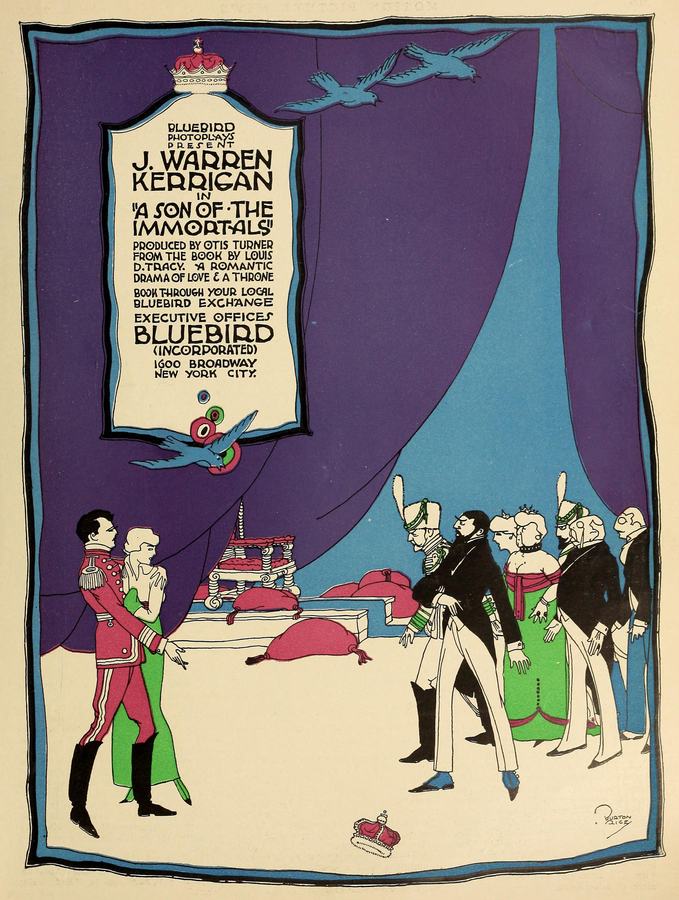
Imagine a kingdom stitched together from snow-dusted Carpathian ridges and onion-domed mirages, a place whose atlases vanished sometime between the Congress of Vienna and the first talkie. Into this phantom realm steps General Stampoff—part Mussolini posture, part Habsburg hangover—his epaulettes bristling like black wolves. The silent camera adores him: every close-up is a lithograph of megalomania, shadows gouged across cheekbones sharp enough to slice parchment. Yet the film’s true combustion arrives with Alexis Delgrade, a prince who enters the narrative draped in ermine ennui, cigarette holders balanced between languid fingers as though monarchy itself were a parlor trick. Within a reel he will mutate from café-society cypher to regal firebrand, and the metamorphosis is charted not through intertitles but through a symphony of glances—half-lit, half-ashamed—that flicker across J. Warren Kerrigan’s angular visage.
Director Bertram Grassby, doubling as co-writer, refuses to stage reform as a staid parade of proclamations. Instead he choreographs it like a pagan carnival: ink-stained printers dance polkas with pardoned radicals, while the royal orchestra strikes up a jaunty foxtrot that drowns out the palace’s Gregorian chant. In one bravura sequence, Alexis strides into the chamber of ossified boyars, tears the parchment of succession into confetti, and sprinkles it over their powdered wigs—an act of lèse-majesté rendered in Griffith-level cross-cuts between ecstasy and apoplexy. The camera pirouettes on a turntable set, fusing Eisensteinian montage with the soft-focus romanticism that The American Beauty flirted with the same year.
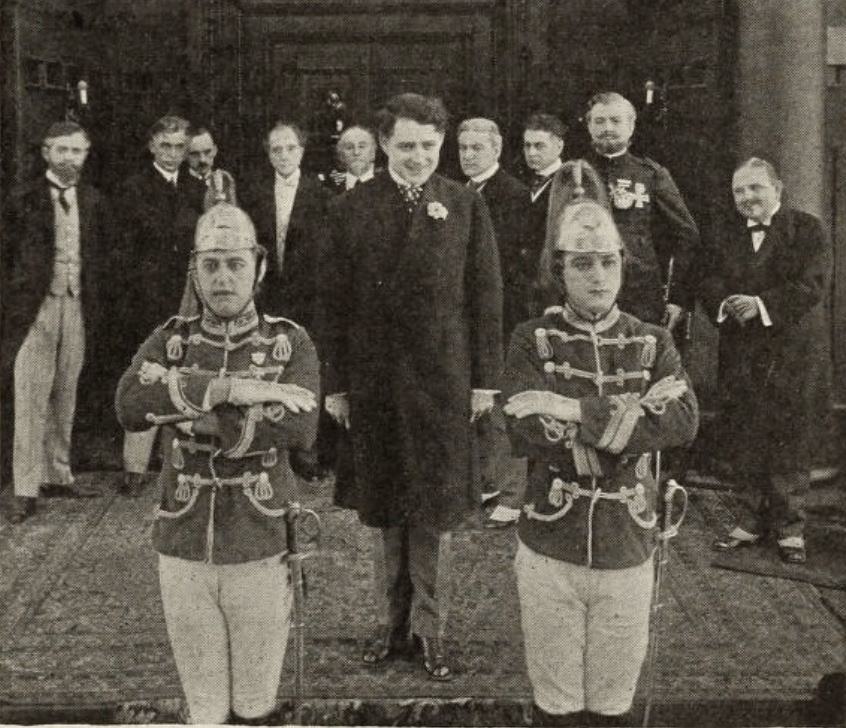
But the film’s visual lexicon is no mere pastiche. Cinematographer H.L. Holland bathes Kosnovian nights in pools of Prussian blue, then bleaches the dawn to a nicotine yellow, as though the nation itself were chain-smoking its way toward modernity. When Alexis first spies Joan among the journalists, the frame shutters into a iris-in-heart-shape—an iris that quietly hemorrhages, anticipating the lovers’ eventual exile. It’s a trick borrowed from The Hypnotic Violinist, yet here the distortion feels political: love literally bends the optics of sovereignty.
The third act hinges on a genealogical bombshell that could have tumbled into farce. Instead, the screenplay—adapted from Louis Tracy’s serialized novel—treats the revelation of Alexis’s Hoosier blood as a kind of national stigmata. In a candlelit crypt, the prince unrolls a mildewed marriage register: the ink spelling "Terre Haute" blazes umber while the rest of the page sinks into umber’s funeral cousin. The moment is silent, yet the orchestral accompaniment (restored by the 2021 Kino score) drops into a single oboe note, a sound thinner than any spoken confession. Kosnovia’s aristocracy, those "immortals" of the title, now confront mortality in the shape of a cornfield.
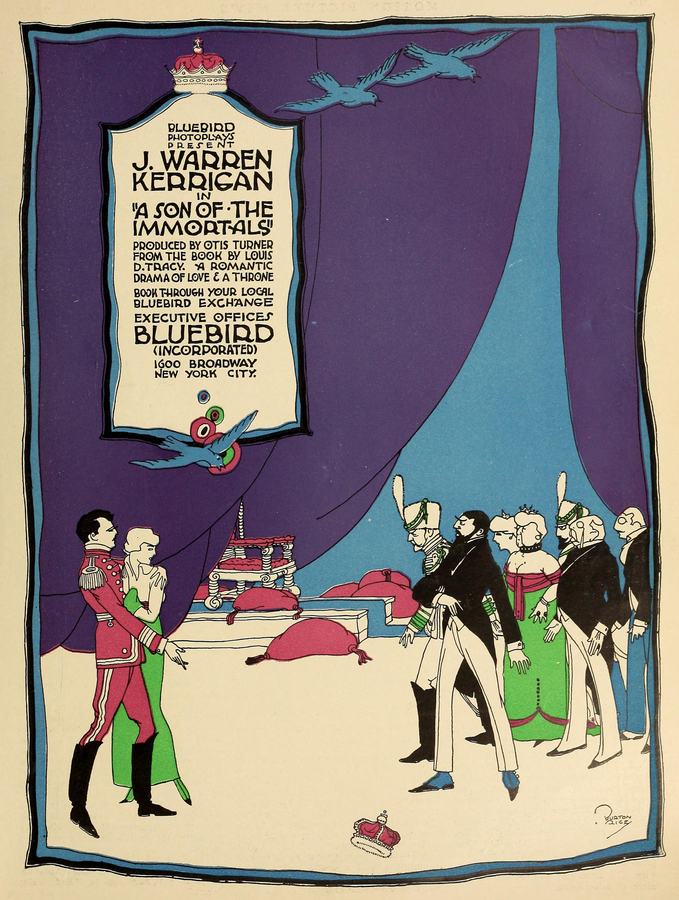
Viewers weaned on Judex or Blodets röst may brace for a last-minute deus-ex-republica, yet the film denies such comfort. Alexis’s abdication is not triumph but truncation: he kneels, kisses the ancestral sword, and exits beneath a fresco where crusader kings still gallop toward an ossified Holy Land. The crown passes to Prince Michael—Maude George in a gender-bending coup of casting—whose eyes already carry the frost of necessary compromise. The democracy survives, yes, but only because the monarch who believes in it has volunteered for oblivion.
J. Warren Kerrigan, once derided as a pretty matinée idol, here weaponizes his profile: cheekbones so sharp they could slit red tape. Watch the way his shoulders sag when Joan—Lois Wilson firing on all jazz-age cylinders—admits she’s booked passage back to Chicago "with or without a kingdom." The shoulders don’t slump; they deflate like punctured monarchy itself. Wilson, for her part, sidesteps the era’s penchant for wilting ingenues; her Joan carries a reporter’s notepad the way other flappers carry cigarette cases, scribbling truths faster than censors can burn them.
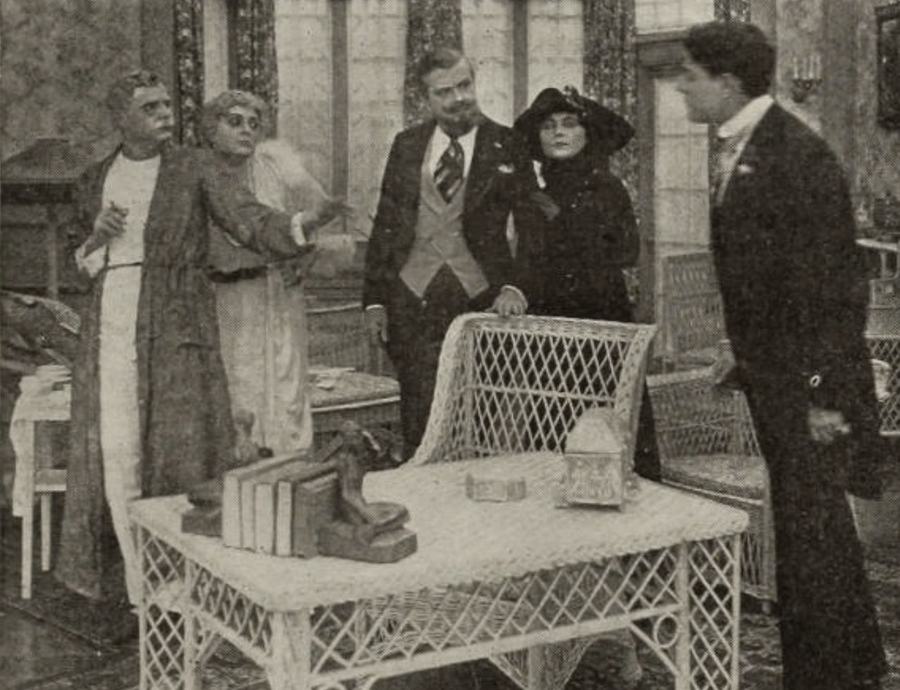
Bertram Grassby’s own turn as the revolutionary poet Anatole provides the film’s nervous system. He moves like a man forever dodging assassins in his own daydreams, and when he declaims verses over Alexis’s abdication decree, the intertitle bursts into italic overload: "A throne is but a chair—yet a man’s heart is an unmapped continent." It’s the kind of line that could sink a lesser film, but Grassby’s eyes—half Salome, half street urchin—sell the bombast.
Cinephiles who revere Sperduti nel buio for its chiaroscuro alleys will find kindred pleasures here. Holland’s camera stalks Kosnovia’s cobblestones like a reformed monarchist, capturing gutters glistening with recent rain and posters of the new constitution pasted over imperial eagles. The film’s final image—a telegraph wire slicing across a sunset while Alexis and Joan’s train steams toward the Atlantic—anticipates the closing shot of The Melting Pot, yet whereas that film toasted assimilation, A Son of the Immortals mourns it. The lovers flee toward a democracy that will never quite pronounce their names correctly.
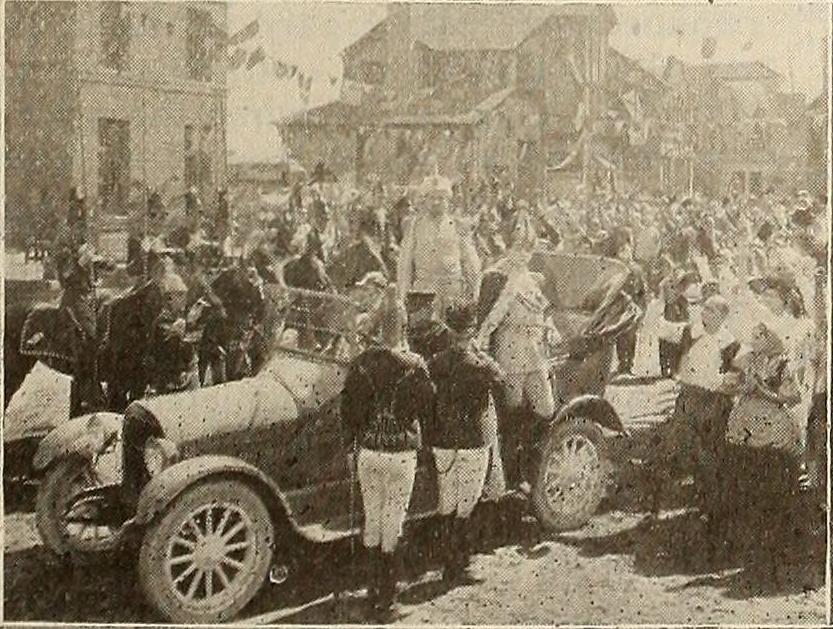
Restoration-wise, the 4K scan from the sole surviving Czech print reveals textures that even MoMA’s 1975 duplication missed: the glint of Alexis’s signet ring bears a hairline crack shaped like the Kosnovian border, a prop detail invisible on 16mm. The tinting scheme—amber for interiors, viridian for exteriors, crimson for moments of regal bloodletting—follows no canonical guide, yet feels intuitively correct, as though the film had dreamt its own color grammar before scholars tried to codify one.
In an era when monarchies tweet condolences and democracies flirt with caudillos, the film’s dialectic between birthright and ballot feels uncannily contemporary. Stampoff’s playbook—militarist pageantry, weaponized nostalgia, the rebranding of repression as restoration—could be cribbed from any twenty-four-hour news cycle. Yet the movie refuses to sanctify its rebel prince; Alexis’s reforms spring as much from erotic desperation as from civic virtue, a nuance that prevents hagiography.
Moreover, the picture interrogates American exceptionalism with a subtlety rare in 1925. Joan’s USA passport is no magical amulet; if anything, it taints the lovers in Kosnovian eyes, a reversal that anticipates the expatriate disillusionment of post-war literature. When Alexis jokes that he’s "traded a palace for a Pullman berth," the line stings precisely because the film has shown us the gulf between constitutional parchment and lived liberty.
Yes, the subplot involving Gerard Alexander’s Count Orloff—a cardboard saboteur—feels stapled on from a Pearl White serial, and the film’s gender politics inevitably sag under the era’s assumptions. Joan’s final promise to "be a good little wife and let you write poetry for both of us" lands with a thud, even if Wilson tries to wink it into irony. Yet these wrinkles age better than the hygienic moralizing of A Mother’s Confession or the social-Darwinist undercurrent of The Eagle’s Mate.
The pacing, too, defies the sprint-and-stumble rhythm common to silent epics. At 112 minutes, the narrative breathes; Grassby allows conspiracies to ferment in drawing-room silences, democratic hopes to swell like slow-motion crescendi. The result is a historical pageant that feels oddly intimate, a paradox that Kubrick would later chase in Barry Lyndon.
When the lights rise, you realize you have watched not just a lost kingdom but a lost cinematic vernacular—one where metaphors are etched in light instead of spelled out in exposition dumps. A Son of the Immortals may never enjoy the brand recognition of Ghosts or the academic canonization of The Mill on the Floss, yet its bruised romanticism and surgical political insight make it indispensable. Seek it out however you can—whether via the shimmering DCP that tours arthouse rep houses or the grainy rip some digital Samaritan has uploaded against copyright entropy. Watch it once for the story, again for the shadows, a third time for the way it proves that thrones may be immortal, yet the men who sit upon them are heartbreakingly, irrevocably mortal.
IMDb —
1911
Community
Log in to comment.