DbcultAccessing Vault...
5.5/10
Senior Film Conservator
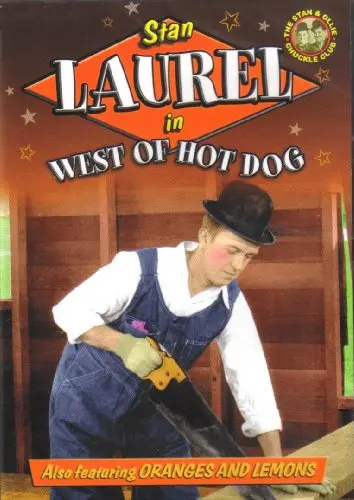
A definitive 5.5/10 rating for a film that redefined the boundaries of cult cinema. West of Hot Dog remains a cornerstone of transgressive art.
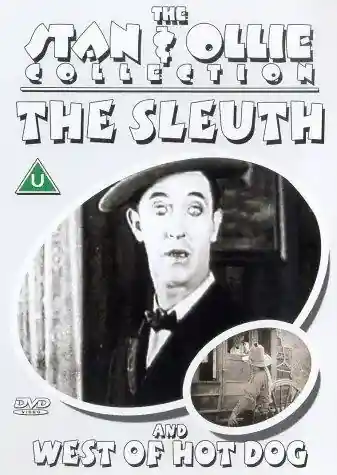
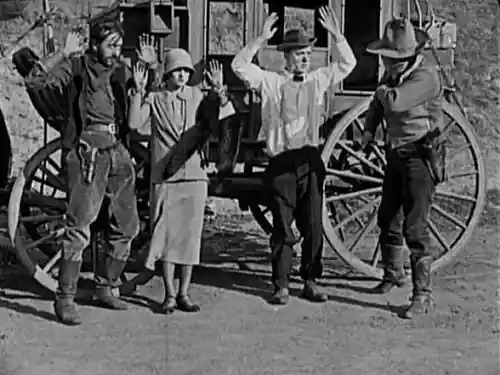
The cinematic landscape of the silent era, often painted with broad strokes of melodrama and slapstick, occasionally yielded a nuanced gem that defies simple categorization. "West of Hot Dog" stands as a testament to this truth, a peculiar fusion of Western tropes and Stan Laurel’s nascent comedic genius, presented with an understated charm that belies its simple premise. From the moment the unassuming Stan, a veritable fish out of water in the rugged frontier, inherits 'The Last Chance Saloon,' the stage is set for a comedic battle of wills, where the weapon of choice isn't always a six-shooter, but often a bewildered, yet determined, gaze. This isn't merely a tale of good versus evil in the dusty expanse; it's an exploration of character, of how an improbable protagonist, seemingly destined for a quick exit, can confound expectations through sheer, unadulterated stubbornness.
The film’s brilliance, in large part, emanates from the masterful performance of Stan Laurel. Even in these earlier works, long before his iconic partnership with Oliver Hardy solidified his legend, Laurel exhibits a profound understanding of physical comedy and a subtle mastery of expression. His portrayal of Stan is a delicate balance of wide-eyed innocence and an almost pathological inability to grasp the gravity of his perilous situation. We witness his initial, almost reflexive, terror at the sight of Bad Mike and his menacing cohorts, a fear so palpable it elicits both sympathy and a chuckle. Yet, beneath this veneer of timidity, a curious resilience begins to simmer. It's not a heroic, chest-thumping defiance, but rather a quiet, almost accidental, refusal to be intimidated. This 'rolypoly stubbornness,' as the plot synopsis so aptly describes it, becomes Stan’s shield, a baffling force that disarms his antagonists more effectively than any quick draw. His reactions are often delayed, his understanding perpetually a beat behind, creating a comedic rhythm that is uniquely his own. This characterization elevates "West of Hot Dog" beyond mere slapstick; it imbues the narrative with an unexpected psychological depth, albeit one filtered through a comedic lens.
The conflict itself, orchestrated by Tay Garnett's astute writing, is deceptively simple but rich with comedic potential. Bad Mike's relentless attempts to "off" Stan for his legacy are met not with counter-schemes, but with Stan's sheer, unyielding presence. The humor derives from the escalating absurdity of Mike’s efforts and Stan’s almost unconscious ability to thwart them. Imagine the frustration of a seasoned outlaw, accustomed to swift, brutal efficiency, confronted by a man who simply refuses to follow the script. This dynamic creates a captivating tension, where the audience is left to wonder not if Stan will escape, but how he will bungle his way out of each predicament. The film smartly plays on the audience's expectation of the Western hero, only to subvert it with a protagonist who is everything but. It’s a delightful deconstruction of the genre, presenting a world where courage isn't always about bravado, but sometimes about just being too obtuse to give up.
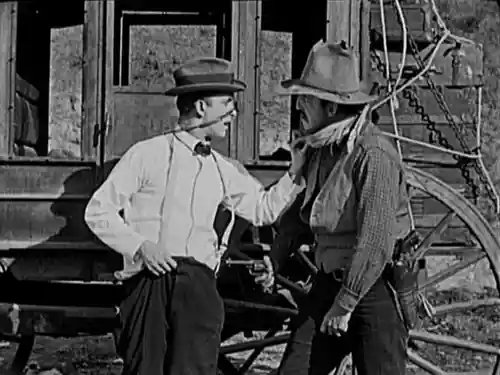
The supporting cast, while perhaps overshadowed by Laurel's magnetic performance, plays a crucial role in grounding the narrative. Lew Meehan as Bad Mike embodies the archetypal villain of the era, his scowling visage and menacing demeanor providing the perfect foil for Stan's innocence. His frustration, as Stan inadvertently dodges every trap, is almost as comedic as Stan's predicament. Julie Leonard, though given less screen time, adds a touch of necessary humanity and often serves as a catalyst for Stan's more active (or reactive) moments. Her presence introduces a romantic element, however subtle, that further complicates Bad Mike's schemes and provides Stan with an additional, albeit often unacknowledged, motivation to survive. The interplay between these characters, though often wordless, speaks volumes through exaggerated gestures and expressions, a hallmark of silent film acting.
Comparing "West of Hot Dog" to other films of its period reveals its unique position. While films like "The Light of Western Stars" or "Desert Gold" embraced the earnest melodrama and heroic archetypes of the Western genre, "West of Hot Dog" dared to inject a potent dose of absurdity. It doesn't mock the genre outright, but rather playfully twists its conventions. One might draw a parallel to later, more sophisticated parodies, but in its time, this was a bold move. The film avoids the darker, more cynical undertones that would later characterize some comedic takes on the West, opting instead for a lighter, more whimsical approach. Even when Stan is in genuine peril, the underlying current of humor ensures that the audience remains engaged and amused, rather than genuinely distressed.
The writing by Tay Garnett is particularly noteworthy. Crafting a compelling narrative within the constraints of silent cinema, especially one that relies heavily on character-driven humor rather than purely situational gags, requires a keen understanding of visual storytelling. Garnett masterfully constructs scenarios that allow Laurel's physical comedy to shine, while simultaneously advancing the plot with a clear, albeit meandering, trajectory. The pacing is deliberate, allowing moments of tension to build before being deflated by Stan's unwitting actions. This careful calibration of suspense and release is a testament to Garnett's skill, ensuring that the audience is always entertained, never bored. It's a blueprint for comedic narrative that many subsequent films, even those with dialogue, would do well to emulate.
The visual aesthetic of "West of Hot Dog" is quintessential silent-era Western, yet rendered with a certain clarity and purpose. The dusty sets, the rustic saloon, the stark outdoor landscapes—all contribute to an authentic backdrop against which Stan’s incongruity becomes even more pronounced. The cinematography, while not groundbreaking for its time, effectively frames the action and allows the actors’ expressions to convey the bulk of the story. Close-ups on Stan’s bewildered face, or Bad Mike’s exasperated grimace, are used judiciously to amplify the comedic effect. The film relies heavily on visual gags and expressive body language, a universal language that transcends the absence of spoken dialogue. This reliance on visual storytelling is where many silent films either soared or stumbled, and "West of Hot Dog" certainly soars, thanks to the precision in its execution.
One cannot discuss "West of Hot Dog" without acknowledging its place in the broader evolution of screen comedy. It represents a significant stepping stone in Stan Laurel's career, showcasing the unique comedic persona he was meticulously refining. While not as complex in its narrative as some of the later Laurel and Hardy features, it clearly demonstrates the foundational elements of his character: the bewildered innocence, the accidental triumph, the profound ability to exasperate his antagonists without ever intending to. This film, alongside contemporaries like "The Boomerang", reveals a period of experimentation and growth for many comedic talents, where the boundaries of what was funny were constantly being pushed. The sheer inventiveness of the gags, though simple, speaks to a creative energy that defined the era.
The film's legacy, while perhaps not as widely celebrated as Laurel's later works, is nonetheless significant. It offers a fascinating glimpse into the formative years of a comedic legend and provides a charming, often hilarious, take on a genre typically devoid of such lightheartedness. It's a reminder that even in the most perilous of circumstances, humor can be found, and that the unlikeliest of heroes can emerge victorious, not through strength or cunning, but through an almost divine ineptitude. The contrast between the grim determination of Bad Mike and the bumbling resilience of Stan creates a comedic tension that is both timeless and deeply satisfying. This delicate balance is what gives the film its enduring appeal, allowing it to resonate with audiences even a century later.
The sheer audacity of pitting a character as seemingly helpless as Stan against the seasoned villainy of Bad Mike is where the film finds its heart. It’s a classic underdog story, but one where the underdog doesn’t suddenly discover hidden martial arts skills or a secret intellect. Stan remains, at his core, the same slightly bewildered, easily frightened individual. His victories are less about strategic brilliance and more about the sheer, improbable luck that seems to follow him, or perhaps, the sheer ineptitude of his adversaries when confronted with such an unconventional target. This subversion of expectations is crucial to the film’s comedic success. It doesn't ask us to believe in Stan's heroism, but rather to delight in his accidental triumphs, making him incredibly relatable and endearing. This approach differentiates it from many straightforward Westerns of the period, which often relied on clear-cut heroes and villains, like
IMDb —
1918
Community
Log in to comment.