DbcultAccessing Vault...
6.9/10
Senior Film Conservator
A definitive 6.9/10 rating for a film that redefined the boundaries of cult cinema. Dokuro remains a cornerstone of transgressive art.
Is Dokuro worth watching today? Short answer: yes, but with significant caveats that demand a particular kind of viewer. This isn't a film designed for casual consumption; it’s a demanding, historically significant piece of early Japanese cinema that rewards patience and an appreciation for raw, unfiltered performance.
This film is unequivocally for cinephiles, historians, and those fascinated by the foundational blocks of cinematic storytelling. It is emphatically NOT for audiences seeking modern pacing, polished production values, or easily digestible narratives. If you shy away from silent-era conventions or slow-burn historical dramas, Dokuro will likely test your limits.
To engage with Dokuro is to step back into a formative era of filmmaking, an age where the power of performance and thematic weight often superseded technical sophistication. The film’s core strength lies in its unflinching portrayal of defiance, set against the brutal backdrop of Christian persecution in Edo-period Japan. It’s a narrative that, despite its age, still pulsates with a very human struggle.
The film’s historical context is crucial. During the Edo period, Christianity was outlawed, and practitioners faced severe torture and execution. To depict a Christian lord, even a tragic one, was to touch upon a raw nerve in Japanese history. Dokuro, therefore, functions not just as entertainment but as a historical document of societal anxieties and individual courage.
This film works because of its singular, unforgettable central performance and its bold thematic resonance. It captures a moment of historical and emotional intensity with a striking, visceral power that transcends its technical limitations.
This film fails because its archaic presentation, particularly for modern viewers, can be a barrier. The pacing is deliberate, the visual language sparse, and without a keen interest in historical context or early cinema, its impact can be lost.
You should watch it if you are a dedicated film historian, a student of Japanese culture, or someone seeking to understand the roots of dramatic acting and storytelling before the advent of sound fully transformed cinema.
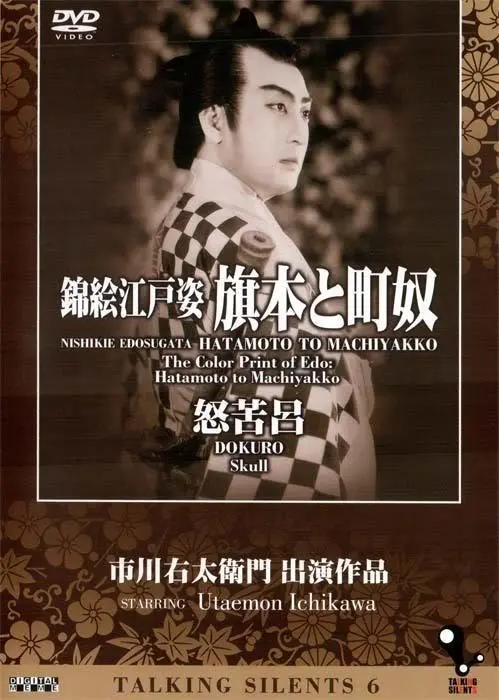
The magnetic force pulling Dokuro forward is undeniably Utaemon Ichikawa. His portrayal of the doomed Christian lord is not merely acting; it's an embodiment of raw, unyielding spirit. The plot description's emphasis on his "extraordinary memorable final scenes in which he takes on his enemy with a gash in his forehead and a wild, unkempt mane" is not hyperbole; it is the film's defining image, its very heart.
Ichikawa, a titan of early Japanese cinema, delivers a performance that feels almost primal. He doesn't just convey suffering; he becomes the suffering, the defiance, the very essence of a man pushed to his absolute breaking point. The wild, unkempt mane isn't just a visual detail; it's a symbol of his descent into a state beyond societal norms, a man stripped bare of everything but his conviction.
The gash on his forehead serves as a brutal, physical manifestation of his internal agony and the violence inflicted upon him. It’s a visceral choice that elevates the scene beyond mere combat to a profound statement on martyrdom. This isn't a graceful, choreographed fight; it's a desperate, almost animalistic struggle for dignity in the face of annihilation. Ichikawa's physicality in these moments is astonishing, conveying a lifetime of struggle and a final burst of defiant energy.
His silent acting, relying on exaggerated gestures, piercing gazes, and a profoundly expressive face, communicates volumes without a single spoken word. It’s a masterclass in a form of acting that modern audiences rarely experience, demanding a different kind of engagement, a willingness to read emotion in subtle shifts and grand pronouncements.
I would argue that Ichikawa's performance here is more than just memorable; it's revolutionary for its time, pushing the boundaries of what cinematic heroism could look like—not as an unblemished ideal, but as a scarred, desperate, yet ultimately unyielding force. It’s a performance that truly stands the test of time, an anchor in the often turbulent waters of early cinema.
Given the film's age and rarity, detailed information on its director and cinematographer is often scarce, yet the visual language of Dokuro speaks volumes about the techniques and aesthetics prevalent in early Japanese cinema. The direction, while perhaps lacking the kinetic energy of later samurai epics, focuses intently on framing and composition to emphasize the emotional weight of each scene.
The cinematography, likely stark and monochrome, would have relied on dramatic lighting and deep shadows to enhance the tragic tone. Imagine the intensity of Ichikawa's final scenes, with his wild hair and gash, highlighted by harsh, almost expressionistic lighting, casting long shadows that underscore his isolation and impending doom. This isn't about realism; it's about conveying emotional truth through visual metaphor.
Pacing in such films is typically deliberate, often slower than contemporary cinema. This allows moments of contemplation and builds a sense of inevitable tragedy. The slow build-up makes Ichikawa's explosive final stand all the more impactful, a release of tension that has been carefully cultivated throughout the narrative. The tone is consistently somber, almost elegiac, reflecting the tragic fate of its protagonist.
While modern viewers might find the rhythm challenging, it’s precisely this measured pace that allows the emotional beats to land with such force. The film doesn't rush; it allows the audience to sit with the unfolding despair and the protagonist's unwavering resolve. This deliberate approach is a testament to a different philosophy of storytelling, one that values immersion over acceleration.
At its heart, Dokuro is a profound meditation on faith and defiance in the face of overwhelming odds. The Christian lord’s refusal to renounce his beliefs, even when it means certain death, is the central pillar of the narrative. This isn’t a preachy film; it’s an exploration of the human capacity for conviction, for holding onto an ideal even when it costs everything.
The film expertly portrays the isolation of the individual against the might of the state. The Edo period’s persecution of Christians was systematic and brutal, and the lord’s struggle is a microcosm of a larger societal conflict. His tragic fate is presented not as a failure, but as a grim victory of spirit, a testament to an unyielding soul.
There's also a powerful undercurrent of inevitable fate. From the outset, the audience knows this is a "tragic fate." The tension, therefore, doesn't come from wondering *if* he will fall, but *how* he will fall, and what impact his struggle will have. This narrative structure, common in tragedies, allows the film to focus on the journey and the protagonist's internal strength rather than a suspenseful outcome.
An unconventional observation: the film’s portrayal of Christian faith feels less about theological specifics and more about the universal human need for something to believe in, something to die for. It transcends religious dogma to become a story about the strength of conviction itself, making it resonate even with secular audiences.
Yes, Dokuro is absolutely worth watching for specific audiences. It offers a rare glimpse into early Japanese cinema and a powerful performance. It's a challenging watch, but rewarding for those who appreciate historical context and the raw artistry of silent-era acting.
For anyone with a serious interest in film history, particularly Japanese cinema, Dokuro is an essential viewing experience. It provides invaluable insight into the evolution of dramatic storytelling and the foundational performances that shaped an entire industry. Utaemon Ichikawa’s final scenes alone justify the effort required to seek out and appreciate this film.
However, it’s crucial to temper expectations. This is not a film that caters to modern sensibilities. Its pace is deliberate, its visual aesthetic minimalist by today's standards, and its reliance on silent-era acting conventions requires a different kind of engagement from the viewer. If you’re accustomed to fast cuts, intricate plots, and constant dialogue, Dokuro will feel like a foreign language.
It's a piece of living history, a testament to the enduring power of human drama, even through the lens of a century-old camera. It works. But it’s flawed. The flaws, however, are often a product of its era, not necessarily its artistic intent, and understanding that context is key to unlocking its true value.
Dokuro stands as a powerful, albeit demanding, testament to the resilience of the human spirit and the foundational artistry of early Japanese cinema. It is not a film to be consumed lightly, but rather studied and appreciated for its historical weight and the sheer force of Utaemon Ichikawa's central performance. While its age and pacing present significant hurdles for a modern audience, those willing to invest the time and intellectual curiosity will be rewarded with a profound and memorable cinematic experience. It's an indispensable piece of film history, a raw gem that continues to resonate with its themes of unwavering conviction and tragic heroism. Don’t expect a comfortable ride, but prepare for an impactful journey into a bygone era of storytelling.

IMDb —
1917
Community
Log in to comment.