DbcultAccessing Vault...
Cult Review
Senior Film Conservator
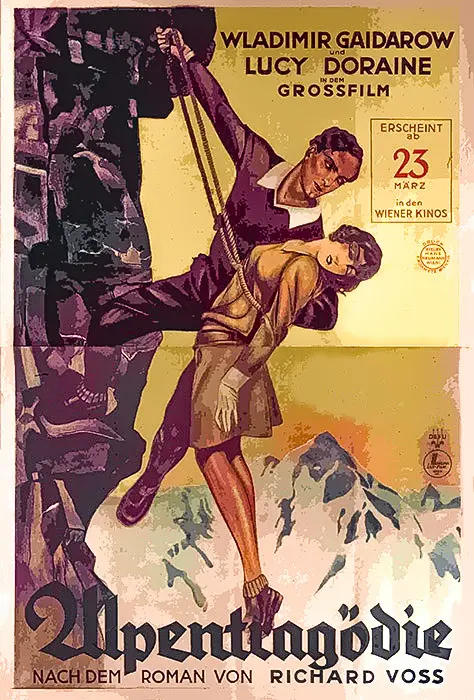
Alpentragödie is a difficult film to recommend to anyone who isn't already deeply invested in the technical evolution of Weimar cinema. It is not a lost masterpiece, and it certainly isn't a hidden gem that changes how we view 1927. Instead, it is a sturdy, occasionally plodding melodrama that survives primarily on the back of Fritz Kortner’s screen presence. If you are looking for the sweeping, spiritual grandeur of a Leni Riefenstahl or Arnold Fanck mountain epic, you will be disappointed. This film is more interested in the dirt under the fingernails than the clouds around the peaks.
For the casual viewer, the answer is no. The pacing is deliberate to a fault, and the dramatic beats feel heavily telegraphed. However, for those who want to see how the German 'Bergfilm' genre could be stripped of its mysticism and replaced with a cynical, almost soap-operatic grit, it offers a specific kind of reward. It is a film for the completist who wants to see the range of 1920s European drama beyond the big-budget spectacles.
This film works because: Fritz Kortner brings a level of psychological intensity that the script doesn't quite deserve. His face is a landscape of its own, often more interesting than the actual mountains behind him.
This film fails because: The narrative relies on shopworn coincidences and a static directorial style that makes the outdoor sequences feel strangely confined.
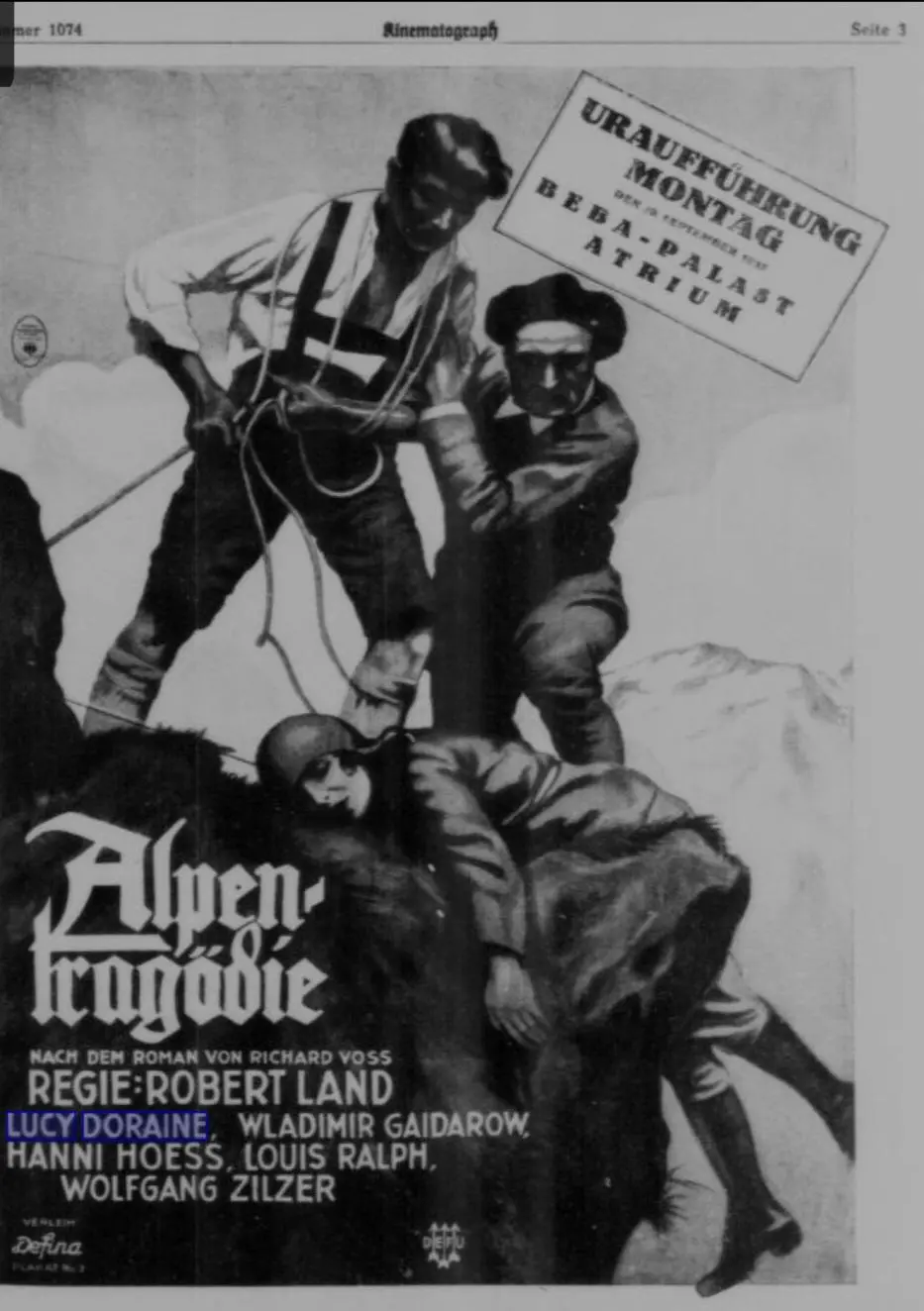
You should watch it if: You are a fan of expressionist acting styles and want to see how silent film stars navigated the transition into more grounded, naturalistic settings.
In many silent films of this period, the mountains are treated as a character—a silent god that demands worship. In Alpentragödie, the mountains are just a dangerous workplace. Director Robert Land doesn't seem interested in the sublime. He treats the slopes as a trap. This lack of romanticism is the film’s most honest quality. When the characters are out on the ledges, there is a palpable sense of physical exhaustion rather than spiritual awakening. This is a sharp departure from the trend of the time, making the film feel more like a precursor to the gritty realism of the 1930s than a product of the mid-20s.
The indoor scenes, however, suffer from a certain stiffness. The blocking is theatrical, with actors often lined up in a way that suggests a stage play rather than a living world. While films like Two Women managed to find a more fluid way to handle domestic tension, Alpentragödie feels trapped by its own sets. The contrast between the open air and the cramped rooms is clearly intentional, but it’s handled with a heavy hand that slows the momentum of the second act.
Fritz Kortner is the gravity around which the rest of the cast orbits. His performance is a reminder of why he was such a force in German theater. He doesn't just act; he looms. Even in moments of silence, his eyes suggest a man who is constantly calculating his next move or nursing a hidden grievance. Beside him, Arnold Korff provides a necessary, if somewhat bland, counterweight. Korff’s doctor is the 'civilized' element of the story, but his performance lacks the jagged edges that make Kortner so magnetic.
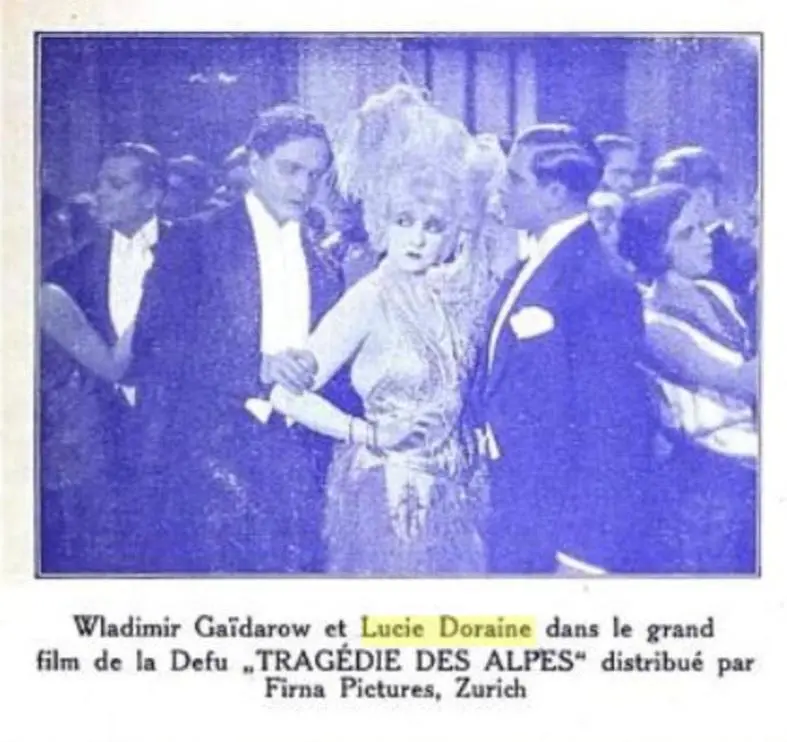
The female leads, including Lucy Doraine and Hanni Hoess, are given less to do than their male counterparts. They are often relegated to being the objects of desire or the victims of circumstance. This creates a dramatic imbalance. While the film tries to build stakes around their fates, it’s hard to care when the script treats them as plot devices rather than people. For a more balanced look at female agency in silent drama, one might look toward The French Doll, which, despite its own flaws, gives its lead more room to breathe.
The cinematography by Günther Krampf is competent but uninspired. There are moments where the lighting in the mountain passes creates a stark, high-contrast look that borders on the expressionistic, but these are few and far between. Most of the film is shot in a straightforward, almost documentary-like fashion. This isn't necessarily a bad thing, but when the story is this thin, you find yourself wishing for a bit more visual flair to fill the gaps.
The editing is where the film truly shows its age. Transitions are abrupt, and several sequences feel like they go on for three or four beats too long. There is a specific scene involving a mountain rescue that should be the emotional peak of the film, but the rhythm is so off that the tension evaporates before the climax. It’s a reminder that the grammar of the action sequence was still being written in 1927, and not everyone had mastered the pen.
"The mountain is not a sanctuary here; it is a witness to the pettiness of the people who climb it."
Pros:
- Fritz Kortner’s commanding performance.
- Decent location work that avoids the 'postcard' look.
- A refreshing lack of forced sentimentality regarding nature.
Cons:
- Static and uninspired interior direction.
- Weak character development for the female leads.
- Pacing that makes a 90-minute film feel like two hours.
Alpentragödie is a functional piece of 1920s filmmaking that serves as a decent vehicle for its stars but fails to leave a lasting mark on the genre. It is a blunt, occasionally effective drama that trades beauty for bitterness. If you can handle the slow burn and the theatrical acting, it’s a worthwhile look at the darker side of the mountain film. Just don't expect to be moved by the view.
IMDb 4.3
1934
Community
Log in to comment.