DbcultAccessing Vault...
6.9/10
Senior Film Conservator
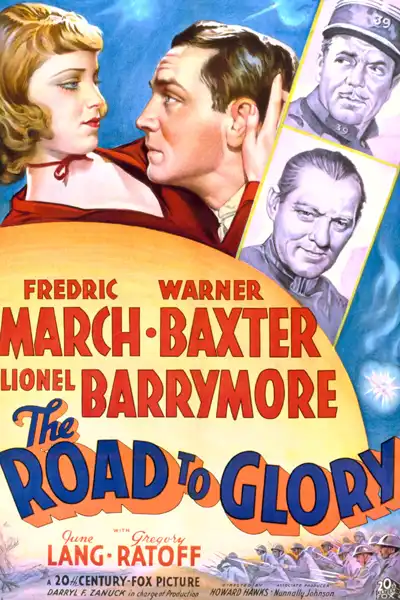
A definitive 6.9/10 rating for a film that redefined the boundaries of cult cinema. The Road to Glory remains a cornerstone of transgressive art.
Alright, so The Road to Glory from way back in 1936? Yeah, it's actually pretty solid if you're into those old-school war dramas, especially the ones that don't shy away from how grim trench life was. If you appreciate early sound-era acting and a story that feels heavy, this one's for you.
But if you need fast pacing or explosions every five minutes, you'll probably find it a bit of a drag. It’s definitely not for folks who expect a modern blockbuster feel. It just isn't that kind of movie. 🕰️
This film really digs into the dirt and claustrophobia of the trenches. It’s World War I, and you feel the mud, the constant threat of shelling, the sheer exhaustion. The camera often just sits there, watching the soldiers wait. You get a real sense of that *waiting* being part of the horror.
There's this particular shot, maybe twenty minutes in, where the men are just crammed together, smoking, trying to look busy but really just killing time before the next whistle blows. You can almost smell the damp earth.
Fredric March plays Lt. Denet, and he starts off with a kind of youthful swagger, a bit too eager. It’s interesting to watch that slowly, *slowly* get chipped away. By the end, he's a different person. Not a dramatic, sudden change, but a slow, creeping weariness that just settles over him.
Lionel Barrymore, as Capt. La Roche, has this gruff kindness about him. He's seen it all. He delivers lines with a sort of weary wisdom that feels earned, not just acted. He’s the grizzled veteran type, but not a caricature.
The whole thing with Nurse Monique, played by June Lang, felt a little out of place at first, like, 'Oh, here's the mandatory love triangle.' But it quickly gets swallowed up by the larger, more pressing dread of the war itself. It becomes another layer of *human* complexity, not just a distraction.
There’s a scene where Denet is trying to talk to her, and the sound of distant artillery is just constant. It makes their conversation feel so fragile, so temporary. Like, does any of this even matter when there’s an attack coming any minute? 🤔
The writers, including William Faulkner, really capture the mundane cruelty of war. It's not always big, flashy battles. It’s the day-in, day-out grind. The loss of morale. The arbitrary death. You see men just *disappear*.
One moment that really stuck with me: a soldier is joking, laughing even, about something trivial. Then a shell hits nearby, and the laughter just stops dead. The silence after is incredibly loud. It’s such a simple beat, but it says so much.
The pacing is definitely slow. You could call it deliberate, or you could call it a bit of a slog, depending on your mood. But it forces you to sit with the characters, to feel their helplessness. This isn't a movie that rushes you through the experience.
The film doesn't really have a 'hero' in the traditional sense. Everyone is just trying to survive. The rivalry between Denet and La Roche over Monique, it never really escalates into anything huge. It's more of a quiet tension, another burden on men already carrying too much.
I found myself wondering, what did audiences in 1936 think of this? It must have felt incredibly raw, even then. It’s not a feel-good film. Not even close. It's a stark reminder.
The ending isn't neat. It's exactly what you'd expect from a film that tries to be honest about war. No grand speeches, no easy answers. Just a quiet, heavy feeling that lingers. It leaves you a little drained, but also a bit thoughtful.
It's definitely worth seeing if you're a history buff or just appreciate how cinema handled serious topics back then. It's not perfect, some of the dialogue feels a little stilted by today's standards, but its heart is in the right place. It’s All Quiet on the Western Front, but with a slightly different flavor. More about the slow burn of personal despair.
IMDb —
1924
Community
Log in to comment.