DbcultAccessing Vault...
Cult Review
Senior Film Conservator
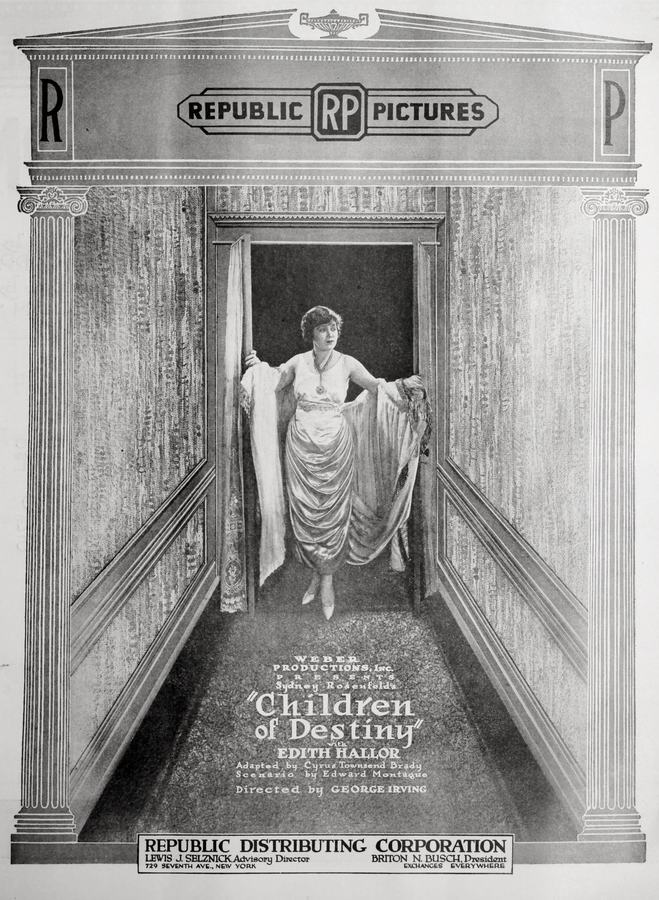
From the shadowy salons of Neapolitan aristocracy to the staid corridors of Washingtonian society, Children of Destiny unfurls a sprawling tapestry of human frailty, moral reckoning, and the tenacious grip of fate. It’s a melodrama, yes, but one imbued with a psychological depth that elevates it beyond mere histrionics. This isn't just a story; it's an examination of the choices we make, the burdens we carry, and the unexpected paths to redemption that sometimes emerge from the darkest corners of despair. The film, a product of a bygone era of cinematic storytelling, nevertheless manages to tap into universal themes that resonate with a startling clarity even today. It’s a testament to the enduring power of narrative when crafted with a keen understanding of the human heart's complex machinery.
The initial act plunges us into a world where appearances are paramount and true character often lurks beneath a veneer of civility. Isabelle Hamlin, portrayed with a nuanced blend of innocence and burgeoning awareness by Edith Hallor, finds herself entangled in a marital snare. Her husband, Richard Hamlin (Emory Johnson, delivering a performance of chilling duplicity), is not the man she believed him to be. His rakish proclivities and moral bankruptcy slowly, agonizingly reveal themselves, casting a long shadow over their union. This slow-burn realization of betrayal is exquisitely handled, allowing the audience to witness Isabelle's inner world crumble, piece by agonizing piece. It's a classic setup, certainly, but one that feels acutely personal through Hallor's expressive portrayal. The sense of entrapment, of a woman awakening to a harsh reality, is palpable.
Into this volatile domestic landscape steps Count Di Varesi, a figure of nobility and quiet strength, brought to life by the compelling Arthur Edmund Carewe. His presence offers Isabelle not just a potential escape, but a mirror reflecting the dignity and respect she's been denied. The burgeoning affection between them feels less like a transgression and more like a natural gravitational pull towards decency. The ensuing duel, a dramatic crescendo that sees Di Varesi wounded, is a pivotal moment, not just for its physical violence but for the sudden, almost supernatural turn of events that follows. Richard Hamlin's paralysis, striking him down precisely as he attempts to murder Isabelle, introduces an element of karmic justice that feels both shocking and oddly satisfying. This moment is a masterstroke of melodramatic plotting, transforming a conventional love triangle into a profound moral dilemma. It echoes the dramatic, life-altering consequences seen in films like The Toll of Mammon, where moral failings lead to inescapable reckonings.
Isabelle's reaction to Richard's paralysis is where the film truly delves into the complexities of human morality. Rather than seizing freedom, she is consumed by a guilt that, while perhaps misplaced in the eyes of an objective observer, is entirely authentic to her character's deep-seated sense of duty and compassion. Her resolution to devote her life to caring for her incapacitated husband is a monumental act of self-sacrifice, one that defines the next two decades of her existence. This period, glossed over in the narrative's forward momentum, speaks volumes about the societal expectations placed upon women, the internal moral compass that guides them, and the profound weight of commitment. It’s a choice that shapes not just her life, but, as we soon discover, the destiny of her daughter. This kind of long-term, self-imposed penance, often born of a singular dramatic event, can be found in the emotional core of films like Restitution, where characters grapple with profound moral debts.
Twenty years later, the scene shifts to Washington, D.C., a world away from the emotional crucible of Naples. Here, we meet Rose (William Courtleigh Jr., in a gender-bending casting that was not uncommon in the era, adding an intriguing layer to the character's journey), Isabelle and Richard's daughter, now engaged to a promising young attorney. She represents a new generation, seemingly untouched by the dramatic entanglements of her parents, yet unknowingly tethered to them by an invisible thread of destiny. The re-entry of Count Di Varesi into their lives, now an attaché at the Italian Embassy, is not merely a plot device; it's the catalyst that unravels decades of secrets and sets in motion a new wave of emotional turmoil. His discovery that Rose is his biological daughter is a revelation that reverberates through every character's carefully constructed reality.
Di Varesi's benevolent offer to settle a fortune on Rose, intended as an act of paternal love and responsibility, backfires spectacularly. The truth of her parentage, once revealed, proves too much for her fiancé, who breaks their engagement. This devastating blow highlights the rigid social mores of the time, where illegitimacy carried a heavy stigma, capable of shattering reputations and futures. Rose’s subsequent flight to Monte Carlo, embracing the persona of a 'woman of mystery' with intentions of a 'wild life,' is a poignant act of rebellion and despair. It’s a desperate attempt to reclaim agency in a world that has suddenly stripped her of her identity and future. This dramatic transformation, from an innocent fiancée to a disillusioned femme fatale, mirrors the societal pressures and scandalous paths explored in films such as The Panther Woman or Snares of Paris, where women navigate the precarious tightrope of reputation and desire.
The emotional journey of Rose is central to the film's thematic exploration of identity and self-acceptance. Her initial shock gives way to a profound sense of abandonment, leading her to seek solace in a superficial existence. However, the film wisely avoids a descent into nihilism. Instead, it introduces Edwin Ford, a character embodying steadfast love and unwavering support. His presence acts as an anchor, pulling Rose back from the brink of self-destruction and reminding her of the possibility of genuine connection and happiness. This redemptive arc, where love triumphs over societal judgment and personal despair, is a classic trope, yet it feels earned here, a gentle balm after so much turmoil. It speaks to the enduring belief in the power of human connection to heal even the deepest wounds, a theme beautifully echoed in the steadfast devotion seen in Rio Grande, albeit in a different context.
The final act brings a sense of closure, albeit one tinged with the melancholic understanding of lives spent in quiet suffering. Richard Hamlin’s death frees Isabelle from her self-imposed penance, allowing her to finally embrace a future with Di Varesi, a union long deferred by circumstance and moral obligation. This resolution for the older generation paves the way for the younger. Upon learning of her parents’ long-awaited marriage and the lifting of the shadow of her past, Rose and Edwin return to America, their happiness complete. The film culminates not just in a happy ending, but in a profound sense of resolution and justice, where the children of destiny, having navigated the turbulent waters of their inherited past, finally find their own shores of peace. It's a powerful statement on the cyclical nature of life, the enduring strength of the human spirit, and the eventual triumph of love, even if it takes decades to manifest.
The narrative, meticulously crafted by writers Edward J. Montagne, Cyrus Townsend Brady, and Sydney Rosenfeld, demonstrates a keen understanding of dramatic pacing and character development. They weave a complex web of relationships and moral dilemmas, ensuring that each twist and turn feels earned. The script, even in its silent film format, conveys a richness of emotion and intent that is truly remarkable. The themes of inherited identity, the consequences of past actions, and the search for authentic selfhood resonate deeply, much like the intricate familial dynamics explored in Inherited Passions. The exploration of a woman's journey through scandal and societal judgment also brings to mind the bold narrative choices in Satan's Rhapsody, where characters grapple with profound moral and social challenges.
The ensemble cast delivers performances that are both era-appropriate in their theatricality and surprisingly modern in their emotional authenticity. Edith Hallor, as Isabelle, carries the emotional weight of the film with grace and conviction. Her transformation from a naïve wife to a woman hardened by sacrifice, yet ultimately capable of renewed love, is compelling. Arthur Edmund Carewe's Di Varesi is the epitome of quiet dignity and unwavering devotion, a noble counterpoint to Emory Johnson's deliciously villainous Richard Hamlin. Johnson' imbues Hamlin with a casual cruelty that makes his eventual fate feel like a just, if theatrical, comeuppance. William Courtleigh Jr. (as Rose) navigates the character's dramatic arc with a youthful intensity, convincingly portraying both her initial innocence and her later disillusionment and eventual re-discovery of hope. Frederick Garvin, though perhaps in a smaller role, contributes to the film’s rich tapestry of characters, adding layers to the societal backdrop against which these personal dramas unfold. The interplay between these actors, often relying on subtle gestures and profound glances in the absence of spoken dialogue, is a masterclass in silent film acting. Their ability to convey such complex emotions without words is a testament to their craft and the power of visual storytelling.
Children of Destiny is more than just a historical curiosity; it’s a robust piece of cinematic storytelling that speaks to timeless human experiences. It reminds us that while the trappings of society and the conventions of storytelling may evolve, the core struggles of love, loss, betrayal, and redemption remain perpetually relevant. The film, with its dramatic twists and profound emotional undercurrents, offers a compelling glimpse into the moral and social fabric of its time, while simultaneously providing a universal narrative of endurance and hope. It invites us to consider the long-term echoes of our decisions and the possibility of finding solace and happiness even after navigating the most arduous of personal journeys. For those appreciative of classic melodrama infused with genuine emotional heft, this film is a deeply rewarding experience, standing proudly alongside other character-driven narratives of the era. It demonstrates that even in the silent era, films could achieve profound emotional resonance and explore the intricate dance between fate and free will with remarkable dexterity.
IMDb 7.7
1924
Community
Log in to comment.