DbcultAccessing Vault...
5.7/10
Senior Film Conservator

A definitive 5.7/10 rating for a film that redefined the boundaries of cult cinema. La secta de los misteriosos remains a cornerstone of transgressive art.
The dawn of the 20th century was an era of profound transformation for the cinematic medium, and within the Spanish landscape, Alberto Marro stood as a titan of early narrative construction. His 1917 opus, La secta de los misteriosos, is not merely a relic of a bygone age; it is a foundational text of the detective genre that resonates with the same rhythmic tension found in contemporary thrillers. To watch this film today is to witness the birth of a visual language that would eventually culminate in the noir and heist traditions of the mid-century.
Alberto Marro, often overshadowed by his contemporaries in the broader European canon, demonstrates a sophisticated grasp of pacing in La secta de los misteriosos. Unlike the sprawling moral panoramas of D.W. Griffith’s Intolerance, which sought to encompass the entirety of human history, Marro focuses his lens on the claustrophobic tension of the chase. The film operates on a principle of mechanical precision, where every movement of Detective Hernandez is a counter-stroke to the maneuvers of the criminal underworld.
The plot, involving a necklace split into two halves, serves as a brilliant narrative engine. This device creates an inherent sense of incompleteness that drives the audience forward. In many ways, it mirrors the structural complexity seen in The Shielding Shadow, where the interplay of light and dark, presence and absence, dictates the emotional stakes. Marro understands that the treasure is not the gold at the end of the journey, but the intellectual duel between the law and the lawless.
Joaquín Carrasco delivers a performance as Detective Hernandez that is remarkably restrained for the silent era. In a period often characterized by theatrical gesticulation, Carrasco utilizes his physical presence to convey a sense of weary determination. He is the proto-detective, a man of logic in a world increasingly dominated by the irrational 'sect' of the title. His pursuit of the three thieves—played with a palpable, desperate energy by Francisco Aguiló, Elena Bernís, and José Durany—is less about the recovery of jewelry and more about the restoration of social order.
The chemistry between the thieves is a highlight. They are not a monolithic block of villainy but a fractured group of opportunists, much like the desperate characters found in The Last of the Mafia. Their internal frictions provide a secondary layer of conflict that Hernandez expertly exploits. Elena Bernís, in particular, brings a nuanced complexity to her role, hinting at the 'femme fatale' archetypes that would later be explored in films like Temptation.
When we contextualize La secta de los misteriosos against its global peers, we see a fascinating intersection of styles. While American films like Stop Thief! leaned into the comedic elements of larceny, Marro maintains a somber, almost gothic atmosphere. There is a weight to the world he depicts—a sense that the 'fantastic treasure' carries a curse of greed. This thematic depth aligns it more closely with the existential dread found in What the Gods Decree.
Furthermore, the film’s fascination with exoticism and the 'sect' suggests a kinship with The Princess of India. Both films utilize the allure of the 'other' to heighten the mystery, yet Marro grounds his story in the gritty reality of urban Spain. The 'mysterious' nature of the sect is not just a plot point; it is a commentary on the hidden layers of society that the industrial revolution failed to illuminate.
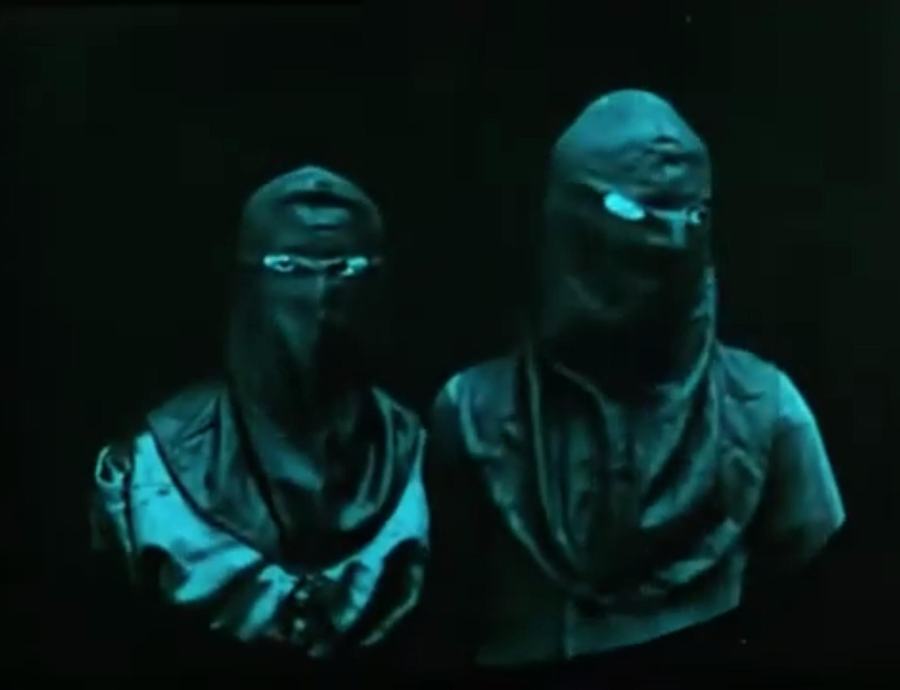
Technically, the film is a marvel of its time. The use of location shooting in Barcelona provides a texture that studio-bound productions of the era lack. The narrow alleys and expansive docks become characters in their own right, facilitating a sense of scale that mirrors the epic scope of The Eleventh Hour. Marro’s camera is surprisingly mobile, tracking Hernandez through the labyrinthine streets with a fluidity that prefigures the handheld aesthetics of later decades.
The lighting, though limited by the technology of 1917, is utilized to dramatic effect. Shadow is used to conceal the thieves, while Hernandez is often bathed in a starker, 'honest' light. This visual dichotomy reinforces the moral clarity of the detective’s mission. It’s a stark contrast to the soft-focus romanticism found in The Goose Girl or the ethereal, artistic posturing of Inspiration.
At its core, La secta de los misteriosos is an interrogation of human desire. The necklace is a symbol of unity—two halves that must be joined to find completion. However, the tragedy of the film lies in the realization that the pursuit of this unity leads to total fragmentation. The thieves are torn apart by their own avarice, a narrative arc that echoes the family disputes in Children of the Feud.
Hernandez represents the emerging middle-class professional: the man who works for a salary and a sense of duty rather than the ephemeral promise of hidden gold. This conflict between old-world myths (the treasure) and new-world systems (the detective) is what gives the film its lasting power. It lacks the sentimentalism of The Waif, opting instead for a cynical, more realistic view of human nature. Even in the face of 'fantastic' elements, Marro keeps the emotional stakes grounded in the dirt and sweat of the chase.
Produced during a time of global upheaval, the film captures a sense of localized anxiety. While Germany was producing works of nationalistic fervor like Mit Herz und Hand fürs Vaterland, Spain’s cinema was carving out a niche in the detective and adventure serials. Marro was at the forefront of this movement, creating content that was both commercially viable and artistically daring.
The film’s influence can be traced through the lineage of Spanish thrillers, where the 'treasure hunt' is often a mask for a deeper psychological journey. The rugged landscapes and the moral ambiguity of the trail remind one of the grit found in The Beckoning Trail or the romanticized danger of The Love Trail. Yet, La secta de los misteriosos remains distinct in its focus on the 'mysterious'—the idea that even in a world of logic, there are corners of the human experience that remain dark and impenetrable.
To dismiss this film as a mere antiquity is to ignore the sophisticated craft on display. The way Marro handles the revelation of the necklace’s secret, the choreographed tension of the final confrontation, and the stoic resolution of Detective Hernandez all point to a filmmaker in total control of his medium. It is a work of significant lexical diversity in its visual storytelling, using every frame to build a world that is as dangerous as it is alluring.
For students of cinema and casual viewers alike, La secta de los misteriosos offers a window into a pivotal moment in film history. It is a reminder that the thrill of the hunt and the mystery of the unknown are universal themes that transcend the silence of the screen. As Hernandez closes his case, we are left with the lingering image of the necklace—a reminder that some treasures are best left in the shadows of the past, while the stories they inspire continue to illuminate our present.
IMDb 5.7
1923
Community
Log in to comment.