DbcultAccessing Vault...
5.1/10
Senior Film Conservator
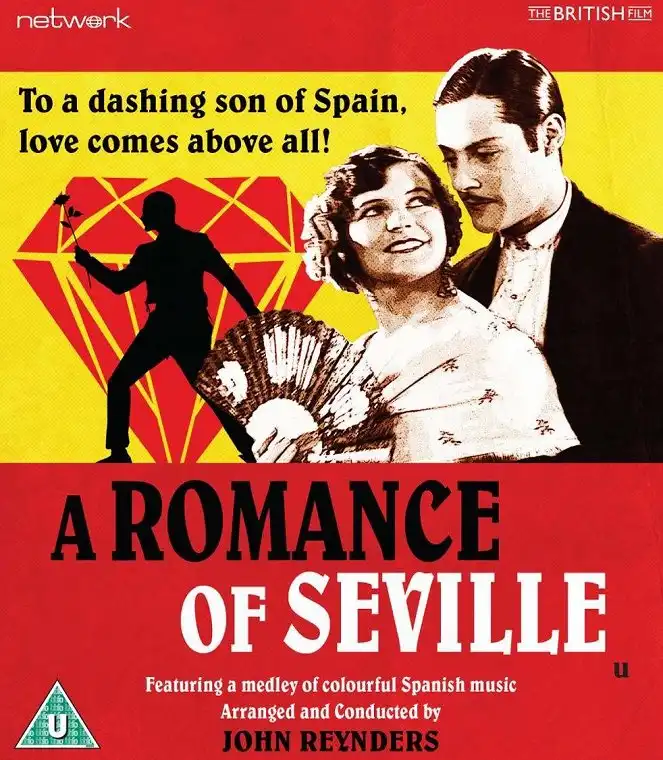
A definitive 5.1/10 rating for a film that redefined the boundaries of cult cinema. The Romance of Seville remains a cornerstone of transgressive art.
Alright, so 'The Romance of Seville.' Is this one worth digging up today? Well, that really depends on what you're looking for. If you're a devotee of early cinema, or just someone who enjoys a good, *unapologetic* melodrama, you might find some weird charm here. Folks who need fast plots or subtle acting are probably going to have a rough time. 😬
The setup is pure old-school heartache. You've got an artist, supposedly betrothed, who spots this other girl. And she, of course, is tangled up with a jewel thief. It's a classic web, honestly, one that felt familiar even back then.
What really sticks with you is just how earnest everything feels. The artist, played by Hugh Morton, spends a good deal of the film with this sort of brooding intensity. Every glance at Koblenzova’s character, Carmen, is just packed with longing. You can almost feel the movie trying to convince you this moment matters. And sometimes, it does!
Carmen herself, played by Koblenzova, has this wonderful, almost theatrical way of showing emotion. A slight tilt of her head, a wide-eyed gaze, and you know exactly how she’s feeling. It's a style you don't see anymore, and it’s kinda refreshing in its directness. Especially in that scene where she's torn between the two men, her expression just *sells* it.
Then there’s the jewel thief. He’s supposed to be menacing, I guess. But honestly, Cecil Barry's portrayal leans a bit more into 'cartoonishly villainous' than 'genuinely threatening.' His sneer becomes almost funny after a while. One particular moment, where he’s polishing a stolen necklace, he just keeps looking around conspiratorially, even though no one else is in the room. It’s a bit much.
The Seville setting is lovely, or at least, the sets *try* to be. There are some really picturesque backdrops, especially for the outdoor market scenes. You get a real sense of place, even if some of the painted backdrops are a bit wobbly if you look too closely.
Pacing-wise, yeah, it’s a slow burn. There’s a scene early on where the artist is just… painting. For what feels like an eternity. It goes on about 20 seconds too long, and the silence starts to feel awkward rather than emotional. You just want him to *do* something, anything.
But then it picks up, especially when the jewel thief's plans start to unravel. There's a chase sequence near the end that, while not exactly fast-paced by modern standards, has a surprising amount of energy. It’s mostly people running through narrow streets, but the way the camera follows felt pretty dynamic for its time.
The movie gets noticeably better once it stops taking itself *too* seriously and lets the inherent drama of the situation carry the weight. It never quite reaches the heights of its ambitions, but it’s definitely not without its own peculiar charm. If you're patient, and maybe have a soft spot for bygone eras of filmmaking, you might just find something to appreciate.
It's a curious little film, The Romance of Seville. Not a masterpiece, but definitely a piece of history. You can feel the effort, even when it’s a bit clumsy. It reminds me a bit of the charming, slightly unpolished feel of something like Scrambled Wives, where the sincerity outweighs any technical shortcomings.
IMDb —
1917
Community
Log in to comment.