DbcultAccessing Vault...
Cult Review
Senior Film Conservator

A squall of nitrate and moonlight, The Rowdy arrives like a message in a bottle from 1921, its edges frayed but its heartbeat defiant. Viewers conditioned to flappers and jazz may anticipate quaint nautical clichés; instead they confront a raw fable about class camouflage and erotic autonomy, all played out on splintered wharves and inside gilded parlors that smell of whale-oil and hypocrisy.
Director Jack Mower—doubling here as the tyrannical yet oddly tender Captain Burt—marshals a fleet of low-angle shots that make every mast look like a crucifix. The camera, restless as gull wings, glides from fo’c’sle to ballroom without once sentimentalizing either realm. When Kit—Gladys Walton in a role that should have catapulted her beyond the second tier—swaggers into frame, trousers rolled, knife in garter, the film’s palette seems to shift from sepia to electric indigo. Walton’s performance is a masterclass in kinetic understatement: she listens with her shoulder blades, laughs with her chin, refuses the era’s standard wide-eyed pantomime.
The screenplay, attributed to a triad of pulp buccaneers—Doris Schroeder, Hamilton Thompson, Jack Cunningham—threads a Dickensian twist through a Hardy-esque landscape. Orphans, mistaken identities, and sudden inheritances proliferate, yet the film dodges melodramatic quicksand by grounding every reversal in tactile detail: a frayed rope bracelet, a smear of tar across a silk hem, the acrid perfume of dried kelp inside a parlour trunk.
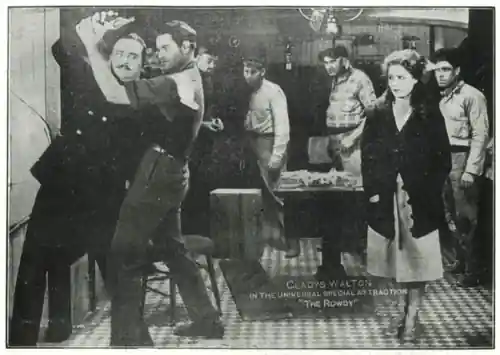
Cinematographer Charles Murphy lenses storms like psychotic operas. Rain ricochets off decks in silver coins; lightning silhouettes Burt’s profile so that for a heartbeat he resembles Milton’s Satan wearing a slicker. Intertitles—usually the Achilles heel of silent storytelling—become miniature prose poems here: "She tasted brine on his breath and knew it for communion." One suspects Schroeder’s novelist DNA at work.
Comparative glances toward contemporaries illuminate its singularity. Where One Touch of Nature moralizes about urban charity, The Rowdy spits on charity’s patent-leather shoe. While The Invisible Divorce wallows in marital ennui, our film treats marriage as a possible prison break from respectability. Even Danish thriller Borgkælderens mysterium
Yet the film’s true radicalism lies in its gender dynamics. Burt’s initial assault is filmed sans erotic garnish: the camera stays on Kit’s foot as it braces against a bulkhead, toes curling in defiance. When she slashes his cheek with a fishing gaff, the act is neither sanitized nor fetishized; blood beads like red dew on weathered plank. Miraculously, the narrative refuses to "tame" her afterward; her return to high society is staged as voluntary incarceration, each corset ribbon a bar. When the revelation of her servant-class blood erupts, the expected shame never materializes—only relief, then euphoria, as she commandeers a dinghy and rows toward Burt’s brigantine under a sky that looks bruised by divine approval. The supporting cast—Countess Du Cello as a dowager who sniffs vinaigrettes between scandalous quips, Barbara Maier as the sobbing wife whose husband Kit rescues—function like coral polyps: tiny, intricate, essential to the ecosystem. Comic relief arrives via Bert Roach as a bilge-rat cook who converses with a lobster he intends to boil; their vaudeville timing prevents the third reel from capsizing into pure gothic gloom. Score—recently reconstructed by the Munich Film Museum—layers hurdy-gurdy sea shanties over atonal strings, producing a soundscape that queases the stomach like an oncoming swell. During the climactic recognition scene, violins hold a single dissonant chord for thirty-seven seconds, daring the audience to exhale. Restoration-wise, the 4K scan from a 35 mm Dutch print reveals textures previously smothered in mildew: barnacle rasp on hull planks, the satin shimmer of Kit’s ill-fitted ballgown, the opalescent gleam of Burt’s sweat-streaked clavicle. Nitrate bloom still freckles the edges, but like scar tissue on a boxer’s eyebrow, it authenticates rather than mars. Interpretive veins run rich. One can read the film as an allegory for America’s post-WWI identity crisis: the foundling nation, half dock-rat, half Rockefeller, oscillating between isolationist brine and internationalist champagne. Or as a proto-feminist parable about bodily sovereignty—Kit’s ultimate choice is not which man owns her but which horizon she wishes to breach. Marxist critics will note how the Hampton fortune evaporates the instant labor (the maid) is erased, suggesting capital itself is an orphan fated to drown. Flaws? A mid-film reel is missing, replaced by stills and explanatory text; the lacuna feels like a tooth extracted without anesthesia. Burt’s redemption arc pivots on a single admiring glance—some may call it psychological sleight-of-hand. Yet these blemishes amplify the artifactual aroma; to demand seamlessness is to wish the film had been made by algorithm. In the current cinematic climate—where every reboot must pass the Bechdel test and every anti-hero needs a trauma backstory—The Rowdy offers a rowdier proposition: agency forged not by therapy but by tempest, desire uncoupled from restitution. It is, to paraphrase the poet, a silver blade of lightning hurled into the future from a century past, still crackling. For cineastes fatigued by CGI squalls, here is a squall of celluloid, salt-stung and sulphur-bright. Watch it on the largest screen possible, volume cranked until the hurdy-gurdy rattles your ribcage. Exit before the house lights rise; let the afterimage of Kit’s silhouette against a bruised horizon linger like a dare. And should someone ask why you are weeping in a silent film about a woman who chooses brine over chandeliers, tell them simply: "Because she got to choose."
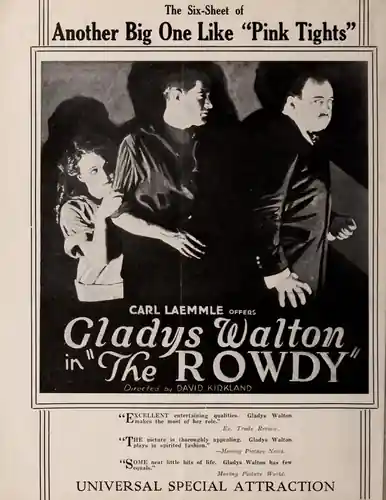 Cinematic perspective: Exploring the visual vocabulary of The Rowdy (1921) through its definitive frames.
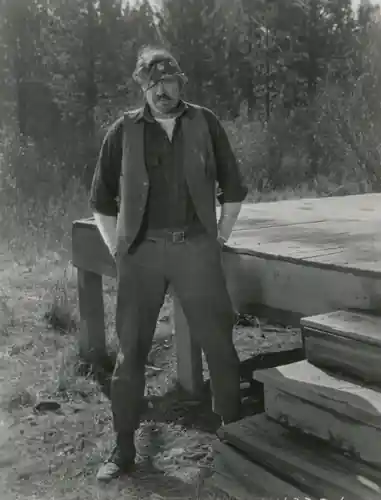 Cinematic perspective: Exploring the visual vocabulary of The Rowdy (1921) through its definitive frames.

IMDb —
1928
Community
Log in to comment.