DbcultAccessing Vault...
Cult Review
Senior Film Conservator
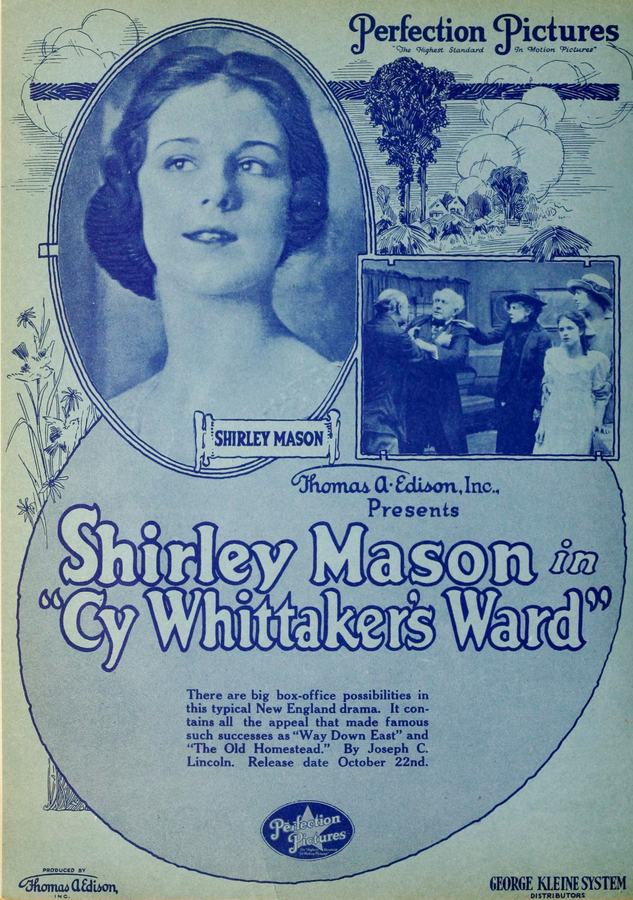
In the annals of early cinema, certain narratives emerge not just as entertainment but as poignant reflections of human resilience against the backdrop of societal complexities. Cy Whittaker's Ward stands as a remarkable example, a film that deftly weaves together themes of justice, familial devotion, and the insidious nature of political corruption within the seemingly quaint confines of a New England village. The return of William Wadsworth's Cyrus Whittaker, a retired sea captain whose weathered countenance speaks volumes of a life lived on the ocean's unforgiving expanse, to Bayport after an absence of over two decades, is more than a simple homecoming. It is an act of re-engagement, a re-anchoring into a community that, beneath its placid surface, has fallen prey to the manipulative grasp of Herman Atkins, portrayed with understated menace by W.H. Burton. This initial conflict, sparked by Cy's principled stand against Atkins's preferred candidate for the local schoolteacher, immediately establishes the moral compass of our protagonist. His unwavering support for Miss Daws, a decision rooted in merit rather than political expediency, ignites a simmering feud, setting the stage for a dramatic confrontation that transcends mere civic disagreement. It’s a clash of fundamental values: the integrity of an independent spirit against the corrosive influence of entrenched power, a theme that resonates with the moral fortitude seen in films like Unjustly Accused, where an individual stands firm against systemic injustice. The film's opening acts deftly introduce this dynamic, portraying Cy not as a meddling outsider, but as a steadfast guardian of community ideals, unwilling to let the moral fabric of his beloved Bayport unravel without a fight. His immediate intervention on behalf of Miss Daws underscores his unwavering commitment to justice and merit, a characteristic that defines his every subsequent action and decision.
The narrative truly finds its emotional core with the arrival of young Emily Thomas, brought to Cy's doorstep by a twist of fate and a note from his relative, Sarah Oliver. Shirley Mason's portrayal of Emily is imbued with an innocence and vulnerability that immediately captivates, drawing not only Cy but the audience into her plight. The revelation that Emily is the daughter of Cy's former sweetheart, her mother having passed and her father imprisoned, casts a shadow of poignant tragedy over her young life. Yet, from this sorrow, a profound and beautiful bond emerges. Cy, a man whose life had been defined by the solitary rhythms of the sea, discovers an unexpected wellspring of paternal affection. His attachment to Emily is depicted with a tenderness that is both heartwarming and deeply moving, showcasing a transformation from a stoic captain to a doting guardian. This unexpected familial connection elevates the film beyond a simple political drama, infusing it with a potent emotional resonance. It explores the idea that family is not solely defined by blood but by the profound connections forged through love, responsibility, and shared experience. This theme of unexpected guardianship and the deep emotional bonds that form around it can be seen echoing in other period dramas that delve into the complexities of familial affection, though perhaps with different societal backdrops, such as the profound emotional depth found in My Madonna, where the essence of nurturing love transcends conventional boundaries.
The tranquility Cy and Emily find is, regrettably, ephemeral. The release of Richard Thomas, Emily's biological father, from prison introduces a new, destabilizing force into their lives. Hugh Gillen's portrayal of Richard is complex; he is not a simple villain, but a man burdened by his past, desperate to reclaim what he believes is his. His arrival in Bayport creates an immediate tension, a palpable threat to the delicate equilibrium Cy has painstakingly established. The film masterfully builds this dramatic conflict, juxtaposing Cy's gentle, steadfast love for Emily against Richard's more complicated, perhaps even self-serving, motivations. This clash of paternal figures – one driven by altruistic love, the other by a sense of entitlement and perhaps a desire for redemption – forms a powerful emotional fulcrum. The audience is drawn into the dilemma, understanding Cy's fear of losing Emily while also acknowledging Richard's claim. This narrative device, where an established, loving guardianship is challenged by a biological parent's re-emergence, is a timeless dramatic trope, often explored in literature and film to great effect. The stakes are incredibly high, not just for Cy's happiness, but for Emily's future, caught in the crosscurrents of adult desires and legalities.
As Cy, driven by his inherent sense of justice and his deep love for Emily, begins to investigate the man who defrauded Emily's grandfather, the narrative takes a darker turn. Richard Thomas, realizing Cy's investigative prowess could expose his own complicity or at least complicate his life, enters into a cynical alliance with Herman Atkins. This unholy pact is a stroke of narrative genius, uniting the personal threat of Richard with the systemic corruption of Atkins, creating a formidable and seemingly insurmountable obstacle for Cy. The demands are clear and chilling: drop the suit, abandon the pursuit of justice, or lose custody of Emily. The film portrays Cy's agony with profound sensitivity, highlighting the moral quandary he faces. His principles, his desire for justice, are pitted against his overwhelming fear of losing the child who has become the very center of his world. This dramatic tension is expertly maintained, drawing the audience into Cy's internal struggle. The power dynamic shifts dramatically, with Cy, once a pillar of strength, now vulnerable to the combined forces of personal grievance and political manipulation. The desperation he feels, the willingness to compromise his ideals for the sake of his ward, underscores the depth of his love, making his subsequent concession all the more heartbreaking. The film thus explores the agonizing choices individuals are forced to make when their most cherished relationships are held hostage by external forces, a theme that resonates with the desperate measures taken by characters in narratives like The Great Leap: Until Death Do Us Part, where personal stakes dictate monumental decisions.
Just as despair threatens to engulf Cy, and the forces of corruption seem poised for victory, the narrative delivers a powerful and satisfying twist. The timely arrival of Sarah Oliver, a character whose presence has been felt through her initial note, proves to be the catalyst for justice. Sarah, with her keen memory and sharp intellect, recognizes Herman Atkins as the very man responsible for defrauding Emily's grandfather. This revelation is a masterstroke, not only exposing Atkins's duplicity but also validating Cy's instincts and restoring the moral order. It transforms the political boss from a mere antagonist into the central villain, tying all the narrative threads together with compelling precision. The moment of recognition is potent, a sudden burst of light piercing through the shadows of deceit. It shifts the power dynamic decisively, turning the tables on Atkins and Richard Thomas, who are now exposed and vulnerable. This climactic unveiling of truth is a classic narrative device, allowing for a triumphant resolution where justice, though delayed, is ultimately served. The film’s pacing, particularly in these final moments, is expertly handled, building suspense and then releasing it in a cathartic wave of vindication. The film's ability to hold its secrets, only to reveal them at the most impactful moment, is a testament to its compelling storytelling, a quality shared by other suspenseful dramas of the era, where hidden truths are central to the plot's unraveling, much like the intricate reveals in The Sable Blessing.
In an era defined by the absence of spoken dialogue, the effectiveness of a film hinged entirely on the nuanced performances of its cast, their ability to convey complex emotions and motivations through gesture, expression, and physicality. William Wadsworth, as Cyrus Whittaker, delivers a performance of quiet strength and profound emotional depth. His eyes, often conveying a world of experience, shift from stern resolve to tender affection, allowing the audience to intimately understand Cy's internal struggles and unwavering commitment. His physicality, that of a man accustomed to command yet capable of immense gentleness, anchors the film with an undeniable authenticity. Shirley Mason, as Emily, is a revelation, embodying innocence and resilience in equal measure. Her expressions, particularly during moments of fear or joy, are remarkably articulate, drawing immediate empathy. W.H. Burton's Herman Atkins is a study in subtle villainy; his power is not overtly theatrical but rather a pervasive, insidious force, communicated through calculated glances and an air of self-assured authority. The ensemble cast, including Wallis Clark, George O'Donnell, and Mary Elizabeth Forbes, contribute to the rich tapestry of Bayport's community, each delivering performances that, while perhaps less central, add texture and believability to the unfolding drama. The collective strength of these silent performances ensures that the narrative's emotional beats land with precision and impact, making the story's stakes feel genuinely high. Their ability to communicate such intricate character arcs without a single spoken word is a testament to the artistry of early cinematic acting, a skill that distinguished many performers of the time, much like the compelling visual storytelling seen in `The Goose Girl`.
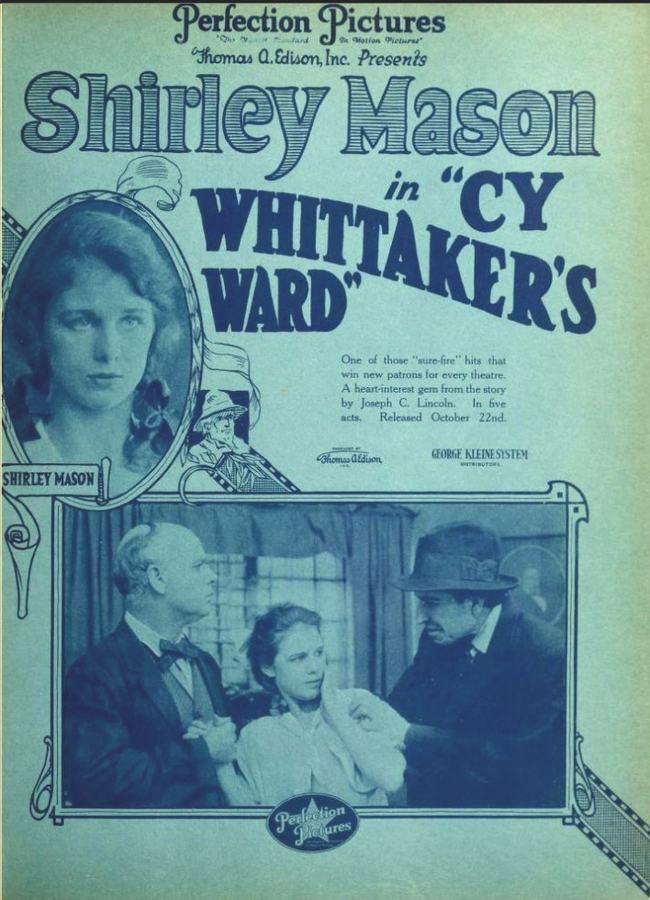
Samuel Greiner's direction of Cy Whittaker's Ward is a masterclass in early cinematic storytelling, showcasing a sophisticated understanding of visual narrative and pacing. The film unfolds with a deliberate rhythm, allowing the audience to fully immerse themselves in Bayport's world and the intricate relationships within it. Greiner utilizes intertitles not merely as expository tools but as extensions of the narrative, providing crucial insights into character thoughts and motivations, and often echoing the poetic cadence of the era's literature. The cinematography, while perhaps technically constrained by the period, effectively captures the essence of small-town life, contrasting its picturesque beauty with the underlying shadows of corruption. The framing of shots often emphasizes the isolation of Cy in his moral stand, or the vulnerability of Emily, creating visual metaphors that deepen the film's thematic resonance. The editing contributes significantly to the film's dramatic tension, particularly during the confrontations between Cy and Atkins, or the moments of quiet despair after Cy's concession. Each scene transitions with a purpose, building momentum towards the climactic revelation. The film avoids gratuitous melodrama, instead opting for a more grounded, realistic portrayal of human emotions, which makes its dramatic beats all the more impactful. This measured approach to storytelling, allowing character and plot to develop organically, distinguishes it from more sensationalist fare of the time, placing it among the more thoughtfully constructed dramas. The careful crafting of narrative flow and emotional build-up is a hallmark of well-executed films from any era, and Greiner’s work here demonstrates a clear command of the medium, creating a compelling and cohesive experience for the viewer, a skill also evident in the considered storytelling of A Lady of Quality, which similarly relies on strong narrative construction.
Beyond its engaging plot, Cy Whittaker's Ward resonates deeply with timeless themes that continue to hold relevance. At its heart, it is a story about justice – not just legal justice, but moral justice, the unwavering pursuit of what is right in the face of overwhelming odds. Cy's battle against Herman Atkins is a microcosm of the larger struggle against political corruption and the abuse of power, themes that were as pertinent in the early 20th century as they are today. The film also offers a profound exploration of paternal love and the meaning of family. Cy's bond with Emily transcends biological ties, demonstrating that love and commitment are the true foundations of kinship. His willingness to sacrifice his own principles for her well-being highlights the immense power of this love, a central emotional anchor for the entire narrative. Furthermore, the film subtly critiques the social structures and vulnerabilities within small communities, where a single powerful individual can exert undue influence, and where appearances can often mask deeper, darker truths. It's a commentary on the fragility of democracy and the importance of individual integrity in upholding societal values. The film's resolution, while providing a satisfying sense of triumph, also leaves the viewer pondering the ease with which such injustices can take root, making it more than just a simple melodrama. It prompts reflection on the vigilance required to maintain a just society, a contemplation also evoked by the moral dilemmas presented in films like Dikaya sila, where the forces of power and individual will clash dramatically.
In an era of rapid cinematic innovation and evolving narrative forms, Cy Whittaker's Ward stands out not for groundbreaking special effects or avant-garde techniques, but for its profound humanism and its compelling, character-driven story. It is a film that understands the power of emotional connection and the enduring appeal of a hero who fights for what is right, even when the odds are stacked against him. The film's exploration of guardianship, political corruption, and the ultimate triumph of truth over deceit provides a timeless narrative framework. Its ability to evoke strong emotions – empathy for Emily, admiration for Cy, indignation at Atkins – speaks to the universal nature of its themes. For modern audiences, it offers a fascinating glimpse into the social mores and storytelling conventions of early 20th-century American cinema, while simultaneously delivering a narrative that remains remarkably resonant. It serves as a reminder that the essence of compelling storytelling lies not in technological spectacle, but in deeply etched characters, moral dilemmas, and the universal quest for justice and belonging. The enduring appeal of such narratives, where personal virtue confronts systemic vice, ensures its place as a significant work, much like the continued cultural relevance of East Is East, which explores cultural and familial tensions with enduring impact. Its quiet power and emotional integrity make it a film well worth rediscovering, a testament to the enduring craft of its creators and the timeless nature of its message. It is a piece of cinematic history that not only entertains but also offers insight into the societal values and moral complexities that shaped its era, reflecting a broader human experience that transcends the passage of time. The film's careful construction of conflict and resolution, its nuanced portrayal of human relationships, and its ultimate message of hope and justice solidify its position as a noteworthy contribution to the silent film era, a true gem for those who appreciate the artistry and depth of early cinematic endeavors.
The challenge of conveying intricate emotional landscapes without spoken dialogue is one that silent filmmakers met with remarkable ingenuity. In `Cy Whittaker's Ward`, this challenge is embraced with particular grace. The subtle shifts in Cy’s posture, the fleeting expressions on Emily’s face, and the imperceptible tightening of Atkins’s jaw all contribute to a rich, non-verbal dialogue that is often more potent than words. The film relies heavily on visual cues and the audience's innate ability to interpret human emotion, a testament to the universal language of body and gaze. The use of close-ups, though perhaps not as frequent or dramatic as in later periods, is carefully deployed to emphasize moments of profound feeling – a tear welling in Cy's eye, a flicker of fear in Emily's. This deliberate restraint prevents the film from descending into exaggerated histrionics, maintaining a level of dignity and realism that elevates the drama. The actors, particularly Wadsworth and Mason, master this art of expressive silence, communicating volumes through their eyes and their movements. This ability to articulate complex narratives and deep emotional states through purely visual means is a hallmark of the silent era's finest works, showcasing a form of cinematic communication that, while superseded by sound, remains a powerful artistic expression. It's a reminder of how much can be conveyed with a well-placed glance or a carefully timed gesture, a skill that requires immense discipline and understanding of human psychology from the performers, making films of this period, like Barnaby Rudge, enduring examples of visual storytelling prowess.
The village of Bayport itself functions almost as a character in `Cy Whittaker's Ward`, a seemingly idyllic backdrop against which the drama of human nature unfolds. Its small-town charm, with its close-knit community and familiar faces, initially presents an image of innocence and simplicity. Yet, this very intimacy also makes it fertile ground for the kind of political manipulation and personal vendettas that Atkins and Thomas exploit. The film effectively uses the setting to amplify the stakes; in a larger, more anonymous city, Cy's battles might be lost in the crowd, but in Bayport, every decision, every conflict, resonates through the entire community. The local school, the town hall, the quiet streets – these are not just locations but stages where the moral fabric of society is tested. The sense of community, both supportive and potentially stifling, adds another layer of complexity to Cy's struggle. His reputation, his standing within Bayport, is constantly at play, making his principled stands all the more courageous and his compromises all the more painful. This interplay between individual actions and community perception is a powerful aspect of the narrative, highlighting how personal dramas can become public spectacles in tight-knit environments. The film's portrayal of Bayport thus becomes a commentary on the dual nature of small-town life: its capacity for warmth and solidarity, but also its susceptibility to gossip, control, and internal strife, much like the communal dynamics explored in Alone in New York contrasts with the vast, impersonal urban landscape.
Ultimately, `Cy Whittaker's Ward` leaves a lasting impression due to its unwavering moral clarity. Despite the moments of despair and compromise, the film never loses sight of the fundamental distinction between right and wrong. Cy Whittaker embodies a steadfast moral compass, a beacon of integrity in a world fraught with ethical ambiguities. His journey is one of perseverance, of facing down personal fear and systemic corruption with an unyielding belief in justice and the power of love. The film's resolution, while providing catharsis, also subtly reinforces the idea that vigilance is required to protect these values. It reminds us that even in the face of seemingly insurmountable odds, the truth has a way of emerging, and that genuine human connection can be the most powerful weapon against deceit. The film's message, delivered through compelling characters and a tightly woven plot, transcends its historical context, offering a timeless meditation on the human spirit's capacity for goodness and its enduring fight against the forces that seek to diminish it. It is a valuable piece of cinematic history that continues to resonate, not just as an artifact of its time, but as a compelling human drama that speaks to universal truths, much like the impactful narratives of personal struggle and triumph found in films such as Life Without Soul, which delves into the philosophical implications of existence and morality.
IMDb —
1917
Community
Log in to comment.