DbcultAccessing Vault...
6.9/10
Senior Film Conservator
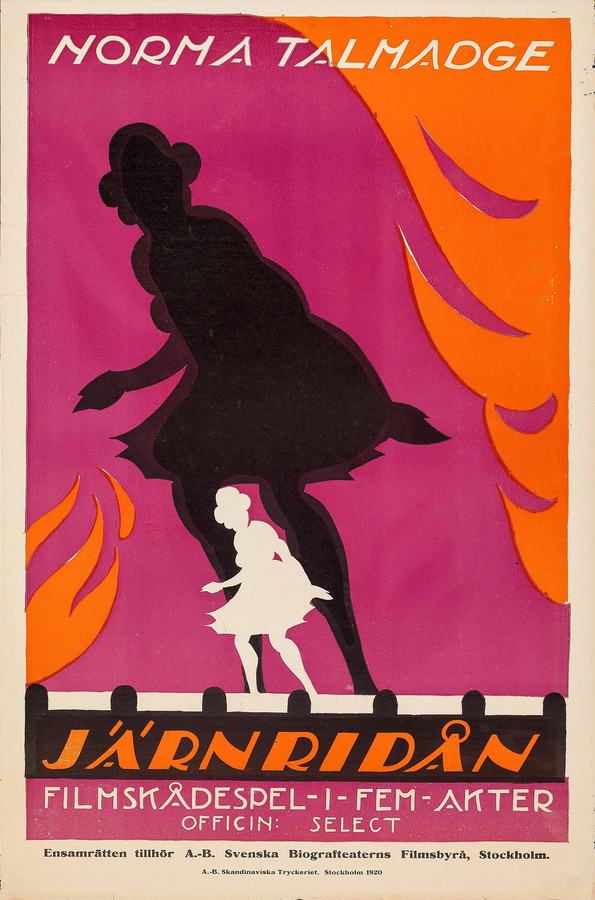
A definitive 6.9/10 rating for a film that redefined the boundaries of cult cinema. The Safety Curtain remains a cornerstone of transgressive art.
There are silents that merely tremble, and then there are silents that detonate—Franklin's The Safety Curtain belongs to the latter phylum, a nitrate grenade lobbed into 1926 parlours and only now defused for our 4K scrutiny.
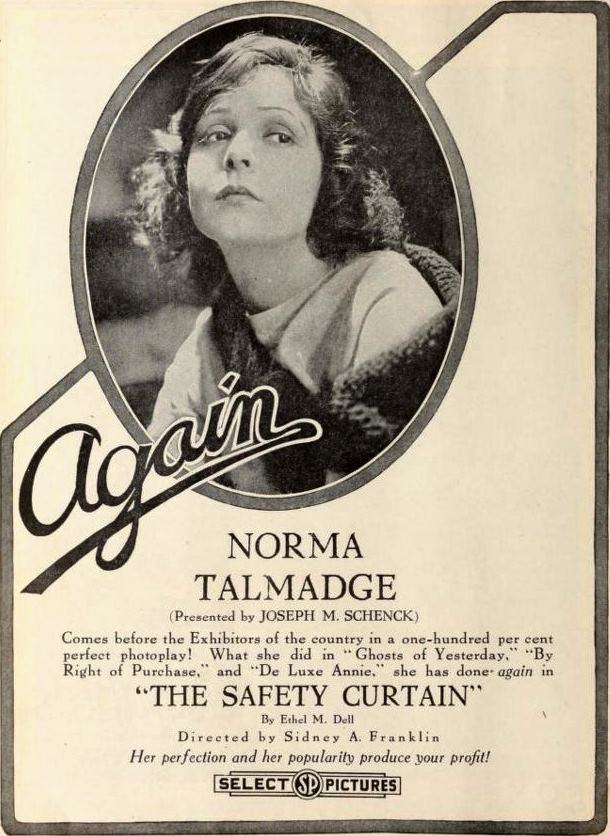
Norma Talmadge’s face—half Caravaggio chiaroscuro, half Art-Deco geometry—opens the film like a gilt-edged postcard deliberately scorched at the corners. She is Puck, a soubrette whose ankle bells syncopate with the audience’s collective pulse, yet whose pupils darken with the knowledge that every encore tightens the marital noose fashioned by her rakish husband (Anders Randolf, exuding musky menace in every tailored lapel). The early music-hall sequences, shot in a diaphanous turquoise tint, feel lit from within by the same gas-flare that will soon consume them.
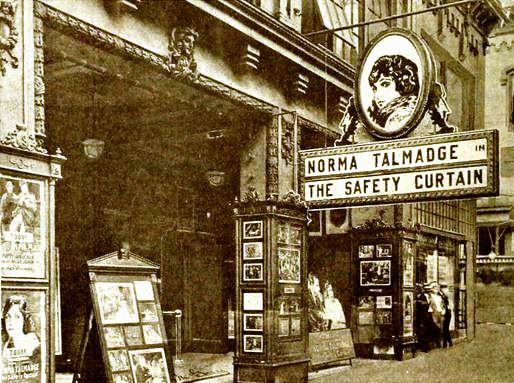
When the conflagration arrives—an intoxicating ballet of magnesium flares, collapsing fly-lofts, and a curtain that plummets like a guillotine—Franklin cuts not to chaos but to choreography: Puck’s flaming tulle pirouettes against a backdrop of scorched cherubs, a visual rhyme for Icarus staged in vaudeville. The officer who hauls her from the cinders, Captain Rodney Hildene (Eugene O’Brien), is introduced via a low-angle hero shot that makes his epaulettes resemble wings of a Seraphim carved from tin. Their rescue clinch, backlit by inferno, is the first of many tableaux where eros and thanatos share the same silhouette.
Act II relocates us to the Raj, rendered in saffron and cobalt tints so saturated they border on Expressionist. Colonial mansions loom like mausoleums, their punkah fans slicing shadows across white saris—an atmospheric coup that whispers Under False Colors yet surpasses it in ethnographic detail. Here Puck’s reinvention as memsahib is charted through wardrobe: the spangled corset of the stage gives way to silk kimono wrappers, then to starched jodhpurs, each sartorial shift scored by Hugo Riesenfeld’s orchestral leitmotif that mutates from rag-time to raga. Talmadge, ever the tragedienne of glamour, lets her jaw quiver for exactly four frames when she first spots a mongoose in the garden—an absurdist reminder that Eden always includes vipers.
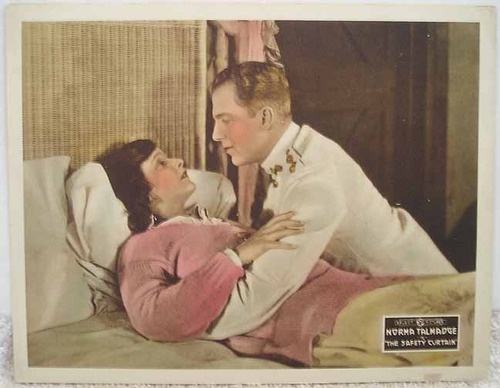
Enter the serpent: Gladden James as Horace Vale, erstwhile stage-door Barnum, now sun-scorched opportunist sporting a sweat-ringed sola topi. His blackmail proposition—cash for silence about Puck’s bigamy-adjacent past—unspools during a lantern-slide dusk where every firefly seems complicit. Franklin blocks the scene in depth: foreground, Vale’s nicotine-stained fingers rifling through love-letters; mid-ground, Puck’s silhouette petrified against a veranda screen; background, a Sikh orderly who never blinks, a living embodiment of colonial paranoia. The tension is screw-turned by intertitles written by Ethel M. Dell in her signature purple prose: “A woman may escape the flames, but can she outrun the reflection of them?”
What distinguishes The Safety Curtain from contemporaneous melodramas like Divorce and the Daughter is its refusal to grant redemption through mere geographic displacement. India, often a picturesque reset button in silent narratives, here becomes a pressure cooker of humidity and hypocrisy. A pivotal temple festival sequence—shot on location in Madurai with hundreds of extras—intercuts Puck’s confession to her husband with devotional drumming until the sacred and the profane share a heartbeat. The resulting montage predates similar collisions of spirituality and guilt in Fior di male by two years.
Technically, the film is a masterclass in photochemical alchemy. Cinematographer Chester Lyons bathes nocturnal exteriors in a mercury-vapor blue that makes white linen glow like X-ray bones, while interiors flicker between amber and sickly green depending on which character holds narrative power. The restoration team at Cineteca di Bologna rescued a 35mm Czech print riddled with Hindi censorship snips; digital interpolation rebuilt lost frames, yet the scratches remain as scars—history’s own safety curtain.
Performances oscillate between operatic and whispered. Talmadge excels in micro-gesture: the way her hand hovers a millisecond before touching her second husband’s medal, as if heat still radiates from the forged brass. O’Brien, saddled with the thankless role of noble spouse, injects quiet devastation when he learns the truth—his pupils dilate like bullet wounds, and the camera lingers until the audience feels complicit for demanding authenticity from a man who exists only in silver halide. Meanwhile, Lillian Hall as Puck’s Anglo-Indian confidante provides sardonic counterpoint, her cigarette-holder becoming a metronome for moral ambiguity.
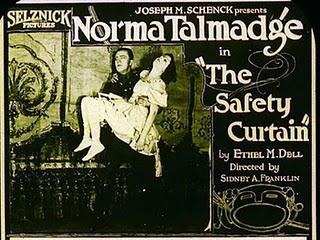
Franklin’s direction crescendos in a monsoon-set showdown that rivals the fire opener for elemental bravura. Rain is not mere weather but liquid jury, soaking every silk surface until morality itself seems soluble. The final tableau—Puck standing between two men, each holding a revolver, while lightning fractures the sky like divine flash powder—free-frames into a freeze that predates the existential Mexican standoff of later westerns. Yet the film denies cathartic gunfire; instead, the safety curtain descends, this time woven not of asbestos but of monsoon mist and mutual forgiveness. A closing iris on Talmadge’s rain-streaked face dissolves to the Sanskrit word “Antam,” suggesting both “The End” and “Eternity.”
Viewed today, the picture vibrates with meta-echoes: a woman escaping one burning theatre only to perform in the gilded cage of empire, a narrative that mirrors Talmadge’s own retreat from Hollywood’s glare a few years later. Cinephiles will detect DNA strands later spliced into The Whip and God’s Law and Man’s, but none achieve the same nexus of masochistic spectacle and post-colonial melancholy.
Verdict: Essential. Stream it with the lights off, volume cranked, and a monsoon playlist queued—let the safety curtain of your cynicism rise and discover, perhaps, your own reflection flickering in the silver smoke.
IMDb —
1923
Community
Log in to comment.