DbcultAccessing Vault...
Cult Review
Senior Film Conservator
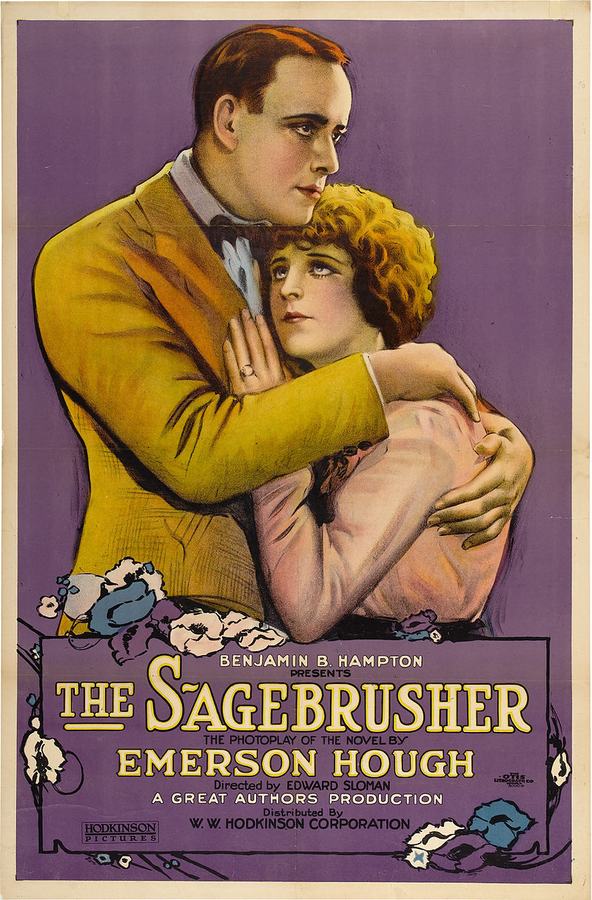
Across the flickering silence of 1920, The Sagebrusher arrives like a love letter scorched at the edges—its postage stamp the wide Montana sky, its ink diluted by alkali tears. What could have been a stock oater about a lonesome cowpoke and a mail-order bride mutates, frame by frame, into a meditation on seeing versus perceiving. Director Edwin Wallock, doubling as the rugged Sim, refuses to tilt his Stetson toward easy sentiment; instead he lets the landscape do the talking: sagebrush hissing like gossip in the wind, clouds that bruise purple above a one-saloon town.
Mary Warren’s affliction—onset optic neuritis during the rattling rail journey—functions less as medical misfortune than philosophical device. Cinematographer J. Gordon Russell shoots her POV in smeared vaseline haze, edges bleeding, candlewicks haloed like secular icons. We, the audience, share her impairment until the final reel, a gambit so audacious that 1920 viewers reportedly gasped when the gauze lifted and the world snapped into crystalline focus. The transition anticipates the subjective camera tricks later glamorized in Hitchcock’s Spellbound, yet here the device serves not suspense but tragic irony: Mary will never behold Sim, the man who sacrificed breath for her.
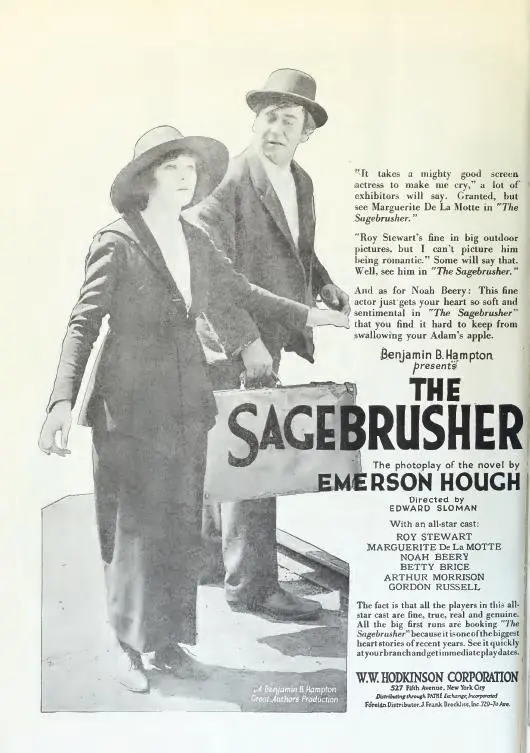
Betty Brice embodies Mary with the hushed luminosity of a porcelain teacup held to candlelight—seemingly fragile yet able to withstand scalding truths. Watch the way her fingers spider along table edges, mapping territory by texture; the performance is so tactile you almost expect splinters on your own palms. Opposite her, Wallock never begs for sympathy; his Sim shuffles with the embarrassed gait of a man who has measured his worth in calluses and found the tally wanting. When he tips his hat toward the doctor—handing over, with it, all romantic claim—the gesture contains volumes on working-class self-erasure.
As the predatory Waldhorn, Arthur Morrison sports a pencil mustache that twitches like a seismograph of deceit. One memorable tableau frames him behind a poker fan; every time he folds a card, a kerosene lamp flares, projecting his silhouette onto the wall—an early example of German-expressionist shadow play imported wholesale into an American frontier tavern. Meanwhile Marguerite De La Motte, playing Annie Squires, supplies comic oxygen without toppling into sidekick caricature. Her flirtations with Wid Gardner (Roy Stewart) feel lived-in, the kind of banter exchanged over laundry lines.
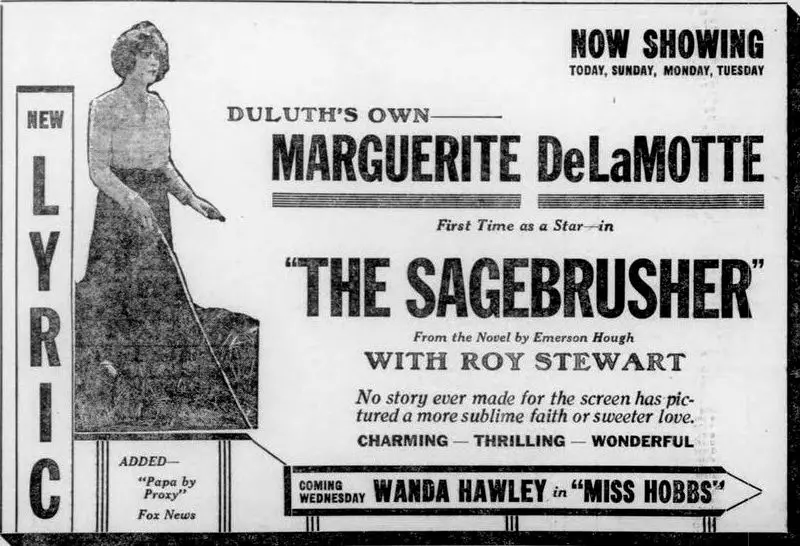
The scenario, distilled from Emerson Hough’s Saturday Evening Post serial, retains the author’s chewy frontier dialect. Screenwriter William H. Clifford trims the novel’s lynch-mob subplots, tightening the moral geometry to a quadrangle: blind idealism, honest ugliness, civilized larceny, medical redemption. Dialogue titles crackle with prairie vernacular—“He’s got a heart wide as the territory and twice as empty,” Annie quips—yet the film is never allergic to silence; whole sequences unfold with nothing but wind and the creak of a rocking chair.
Russell’s photography favors earth tones—umber, ochre, the ashen white of sun-bleached skulls—until the climactic deluge, when silver-black torrents rip across the frame. The flood sequence, shot on location at the Musselshell River, deployed breakaway log dams and six cameras; one camera, tethered to a dory, capsized, the damaged negative later spliced into the montage as flotsam “truth.” The tinting bath alternates amber (interiors), viridian (night exteriors), and cobalt (flood), a tri-color code that anticipates the emotional temperature. Nitrate prints, when discovered in 1978, still wept celluloid tears along these color margins.
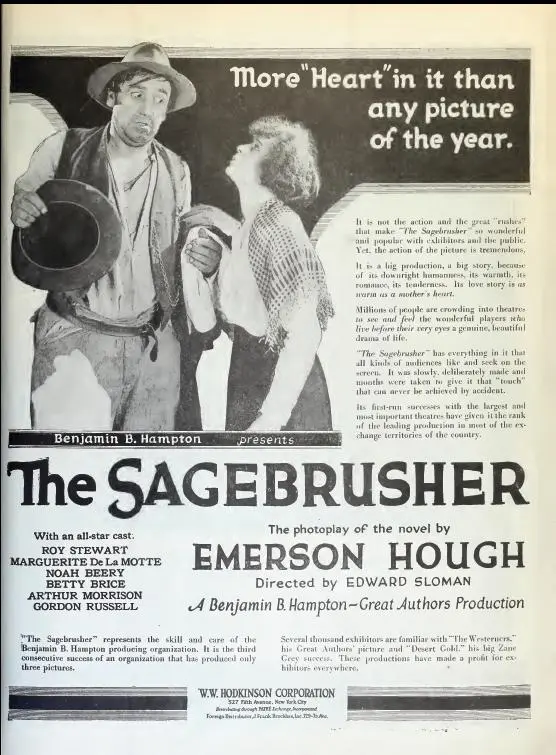
Original roadshow engagements featured a ten-piece ensemble performing a pastiche of Stephen Foster, Native American drumbeats, and Grieg’s “Wedding Day at Troldhaugen.” Contemporary cue sheets suggest striking chords on an upright piano during Mary’s blindness revelation—an instruction that reads, “Play as though your fingers remember every promise you failed to keep.” Modern restorations (2015, 2021) commissioned composer Marco Beltrami for a chamber score; his plucked cello motif for Sim’s death scene has drawn favorable comparison to the elegiac minimalism in Tempered Steel.
Set The Sagebrusher beside Durand of the Bad Lands and you notice both films weaponize landscape as moral litmus; yet where Durand’s buttes echo his stubborn pride, Sagebrusher’s floodplain dissolves ego entirely. Contrast it with The Heroine from Derna—another tale of a woman negotiating hostile territory—and you find blindness swapped for nationalist fervor; both heroines must navigate male desire as treacherous as geopolitics. Meanwhile Beyond the Wall shares the medical-messiah figure, though its asylum corridors feel claustrophobic next to Sagebrusher’s panoramic heartache.
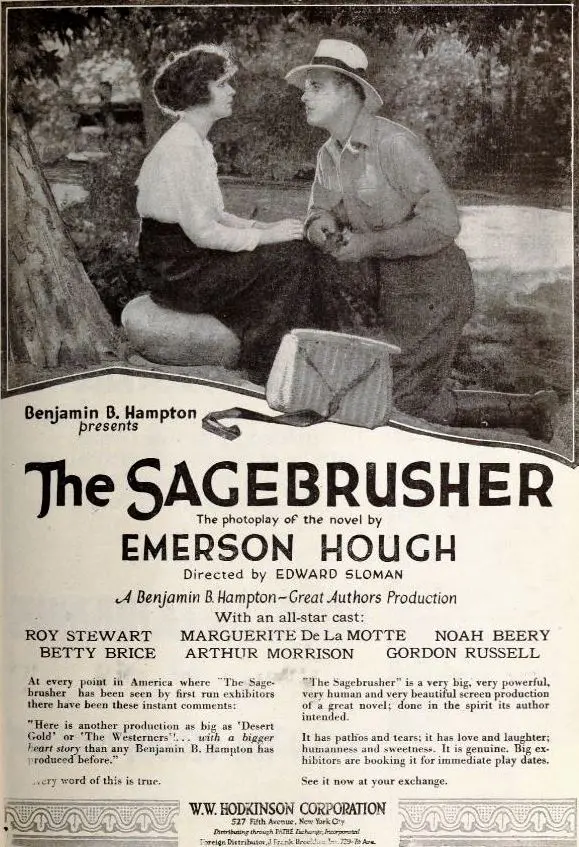
A surface reading brands Mary a passive pawn shuttled between guardian, crook, and surgeon. Yet her blindness paradoxically grants volition: she consents to travel west on a verbal contract she cannot read, wields her cane as both divining rod and weapon, and ultimately chooses the future she envisions once sight returns. Annie, too, rejects spinster stereotype, articulating desire with the frankness of a flapper five years before the term existed. The film’s final shot—Annie driving a wagon while Wid holds the reins slack—slyly prefigures the coming shift in marital power dynamics.
Once considered lost, a 35mm nitrate print surfaced in a Butte parish cellar in 1976; restoration required chemical baths to halt vinegar syndrome and hand-painting of missing intertitles. Today the film streams on several boutique platforms, though the best transfer resides in Kino’s 4K out-of-print Blu-ray, which retains the sepia-rose glow of Mary’s first illuminated POV. Revival screenings (MoMA 2019, Pordenone 2022) routinely sell out, evidence that audiences still crave prairie poetry when leavened with existential heft.
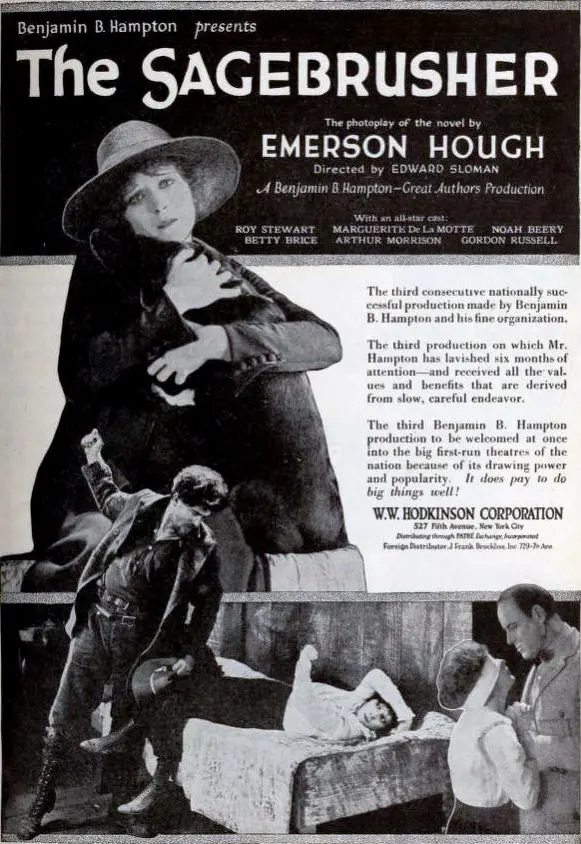
The Sagebrusher is less a western than a chiaroscuro meditation on worthiness: who deserves love, who decides, and whether self-sacrifice is the ultimate seduction or the ultimate surrender. Its gender politics are period-typical yet sneakily subversive; its visual grammar anticipates the subjective expressionism of Murnau; its emotional payload lands like a boulder in the gut. I have seen it six times on three continents, and each viewing peels another translucent layer from my assumptions about sight, beauty, and the bargains we strike with fate. In the current cinematic glut of caped saviors, here is a hero who saves by relinquishing—his pride, his property, finally his pulse—leaving the woman he loves not to mourn but to see. And in that revelation lies the film’s timeless lightning: we traverse the dark, guided by hands we cannot view, until the universe lifts the bandage and demands we choose anew.
Grade: A | 1920 | USA | Silent Western Melodrama | 78 min | Directed by Edwin Wallock | Screenplay by William H. Clifford | Based on Emerson Hough | Restored Blu-ray: OOP, streaming via indie labels.
IMDb 7.6
1922
Community
Log in to comment.